Vieux Lac
La surface tranquille du Vieux Lac de Tata recèle un secret surprenant concernant son existence même.
L'histoire complète se débloque dans le tour
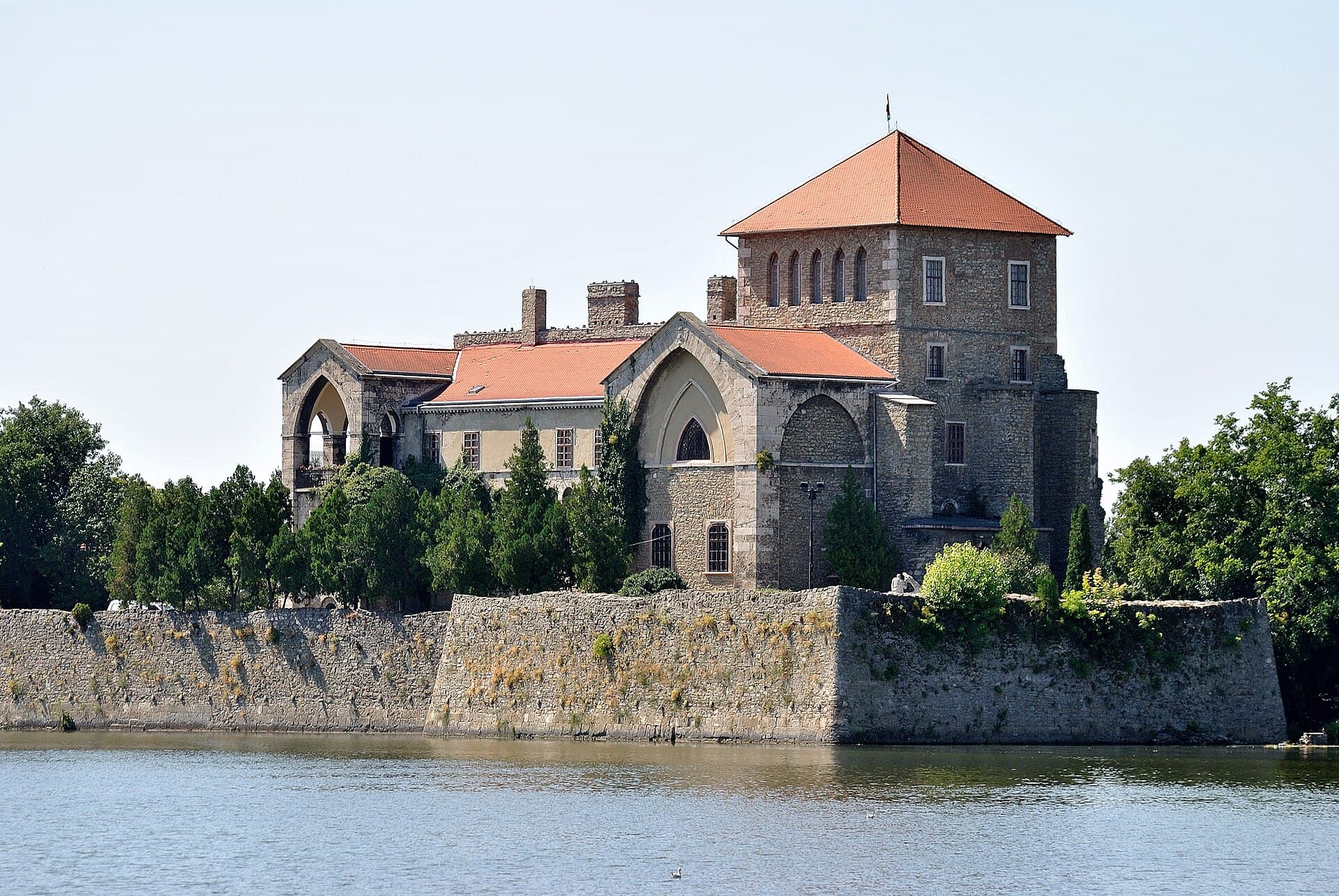 EtelkaCsilla / CC BY-SA 3.0, via Wikimedia Commons
Visite audio autoguidée de Tata — parcours GPS à pied, lecture hors ligne, narration en 32 langues.
“Là où la grandeur baroque rencontre les eaux ancestrales.”
Pas les cartes postales. Les histoires que même les habitants ignorent — soufflées à l'oreille, là où elles se sont passées.
La surface tranquille du Vieux Lac de Tata recèle un secret surprenant concernant son existence même.
Ce palais majestueux fut autrefois le théâtre d'un moment charnière de l'histoire européenne.
Le musée, abrité dans le château de Tata, porte le nom d'un maître artisan dont l'héritage a façonné l'identité artistique de la ville.
Découvrez tous les secrets de Tata
Chaque adresse, chaque révélation en entier — dans ton oreille, là où elle s'est passée.
Tu choisis tes lieux. Tu marches. La voix te révèle ce que les autres ignorent.


Votre visite audioguidée de Tata vous attend — choisissez vos lieux, votre langue, et lancez-vous dès votre arrivée.
AcheterLume intègre un guide en réalité augmentée. Levez votre téléphone : sa caméra montre la rue devant vous, avec une flèche lumineuse posée sur l'image réelle qui pointe toujours vers votre prochain arrêt — aucune carte à déchiffrer, aucun mauvais virage. Comme tout dans Lume, ça fonctionne entièrement hors-ligne.
Tata, souvent appelée la « Ville des Eaux », est une ville captivante du nord-ouest de la Hongrie, nichée entre les montagnes de Gerecse et de Vértes. Son paysage est défini par le vaste Vieux Lac (Öreg-tó) et le plus petit lac Cseke, qui confèrent une atmosphère tranquille, presque villageoise, malgré son importance historique. À une courte distance de Budapest, Tata offre une évasion rafraîchissante avec son centre-ville piéton, son architecture historique et ses nombreux espaces verts.
L'attrait de la ville réside dans l'entrelacement harmonieux de son environnement naturel avec des siècles de patrimoine bâti. Du majestueux château de Tata, sentinelle veillant sur le Vieux Lac, à l'élégant palais Esterházy et au vaste parc anglais, Tata invite les visiteurs à ralentir et à explorer ses multiples facettes. C'est une destination qui séduit aussi bien les passionnés d'histoire que les amoureux de la nature, promettant une escale paisible ou un détour axé sur la nature plutôt qu'une expérience urbaine trépidante.
La région autour de Tata est habitée en continu depuis la préhistoire, avec des découvertes archéologiques remontant à 50 000 ans avant J.-C. Plus tard, elle est devenue une colonie romaine, les sources de Tata fournissant de l'eau à l'important camp militaire romain de Brigetio. La première mention connue de Tata dans les registres écrits date de 1221.
Le château de Tata, une caractéristique marquante de la ville, a été initialement construit par la famille Lackfi à la fin du XIVe siècle. Il a véritablement prospéré sous les règnes du roi Sigismond de Luxembourg (1397-1409) et du roi Matthias Corvin (1458-1490), qui l'ont transformé en une résidence royale d'été prisée, Matthias le reconstruisant dans un style Renaissance. Cependant, sa position stratégique en a également fait un champ de bataille fréquent. Pendant l'occupation ottomane, le château a changé de mains à plusieurs reprises et a subi des dommages importants, étant même dynamité par les Ottomans en 1683, puis incendié par les Habsbourg.
Le XVIIIe siècle a marqué un âge d'or pour Tata lorsque la famille Esterházy a acquis la ville et ses domaines en 1727. Ils ont lancé de vastes projets de construction, conduisant à l'érection de palais, d'églises et de bâtiments publics baroques. Le palais Esterházy, un bel exemple d'architecture baroque, a été construit entre les années 1760 et 1770, devenant un centre de vie diplomatique et sociale. La famille a également créé le Jardin Anglais, l'un des premiers jardins publics de Hongrie dans ce style, en 1783.
Au XIXe siècle, Tata est devenue un centre important pendant l'ère des réformes hongroises. La ville a continué à se développer en un pôle industriel au XXe siècle, avec des usines et des manufactures, y compris la Rába Automobile Company, établie dans les années 1930. En 1938, le village voisin de Tóváros a été annexé, et la ville a été brièvement renommée Tatatóváros avant de revenir à Tata un an plus tard. Tata a obtenu le statut officiel de ville en 1954 et continue de préserver son architecture historique et son charme, ce qui en fait une destination populaire pour ceux qui recherchent la culture hongroise traditionnelle et la beauté naturelle.
Commencez votre exploration par l'emblématique Château de Tata, une forteresse médiévale-Renaissance captivante située directement sur les rives du Vieux Lac. À l'intérieur, le musée Kuny Domokos présente l'histoire de la ville, des artefacts romains et des poteries locales. Adjacent au château se trouve l'élégant Palais Esterházy, un chef-d'œuvre baroque qui a autrefois accueilli la royauté et propose désormais une exposition interactive sur la vie de la famille Esterházy. Son parc environnant est également magnifiquement rénové.
Promenez-vous dans le vaste Parc Anglais (Angolkert), l'un des premiers jardins paysagers de Hongrie, avec ses ruines artificielles, une mosquée turque et un théâtre en plein air. Pour les amoureux de la nature, le Sentier Pédagogique Fényes offre une expérience unique avec son chemin de bois serpentant à travers les forêts marécageuses, offrant des opportunités d'observer la flore et la faune locales comme les tortues et les castors. Ne manquez pas la Colline du Calvaire, offrant des vues panoramiques sur la ville et abritant une chapelle baroque et un musée géologique en plein air, où vous pourrez explorer des roches de l'ère mésozoïque.
Parmi les autres sites remarquables, citons les moulins à eau historiques sur l'île aux Moulins, l'église paroissiale catholique romaine de style baroque tardif à deux tours sur la place Kossuth, et le Musée de la Minorité Allemande abrité dans le moulin Nepomucenus.
Tata offre un charme distinct à chaque saison, ce qui en fait une destination toute l'année. Le printemps (mars-mai) est idéal pour explorer les parcs et jardins luxuriants qui éclosent, avec des températures douces parfaites pour les activités de plein air comme la randonnée et le vélo autour des lacs. L'été (juin-août) apporte un temps chaud, parfait pour profiter des lacs, assister à des festivals et flâner dans les rues historiques. L'automne (septembre-novembre) met en valeur un feuillage d'automne saisissant autour des lacs, offrant un temps agréable et moins de foule pour les visites. L'hiver (décembre-février) transforme Tata en un pays des merveilles paisible, idéal pour une retraite confortable avec des vues sereines sur le lac et une atmosphère festive autour de Noël.
Tata est idéalement située à environ 70 km de Budapest, facilement accessible par la route et le rail. L'autoroute M1 (E60, E75) de Vienne à Budapest traverse les limites extérieures de la ville, et une ligne de chemin de fer dessert également la ville. Le centre-ville est très agréable à pied, et les vélos sont un excellent moyen d'explorer la beauté des paysages. Les coûts sont généralement plus abordables qu'à Budapest, avec des dépenses quotidiennes allant de 30 € à 50 € pour les routards. Le hongrois est la langue officielle, mais l'anglais est également parlé, en particulier dans les zones touristiques. Tata convient mieux à une escale paisible d'une nuit ou à un détour axé sur la nature plutôt qu'à une base à long terme, car la vie nocturne et l'effervescence urbaine sont limitées.
Tata en coréen, en chinois ou en hébreu — et dans 29 autres langues, chaque étape narrée par une voix native. La plus large gamme de langues de tous les audioguides autoguidés.
Disponible en :