Convento de São José
Within the walls of a beautifully restored convent, a small, unassuming door tells a poignant tale of desperate mothers and compassionate nuns.
Full story unlocks in the tour
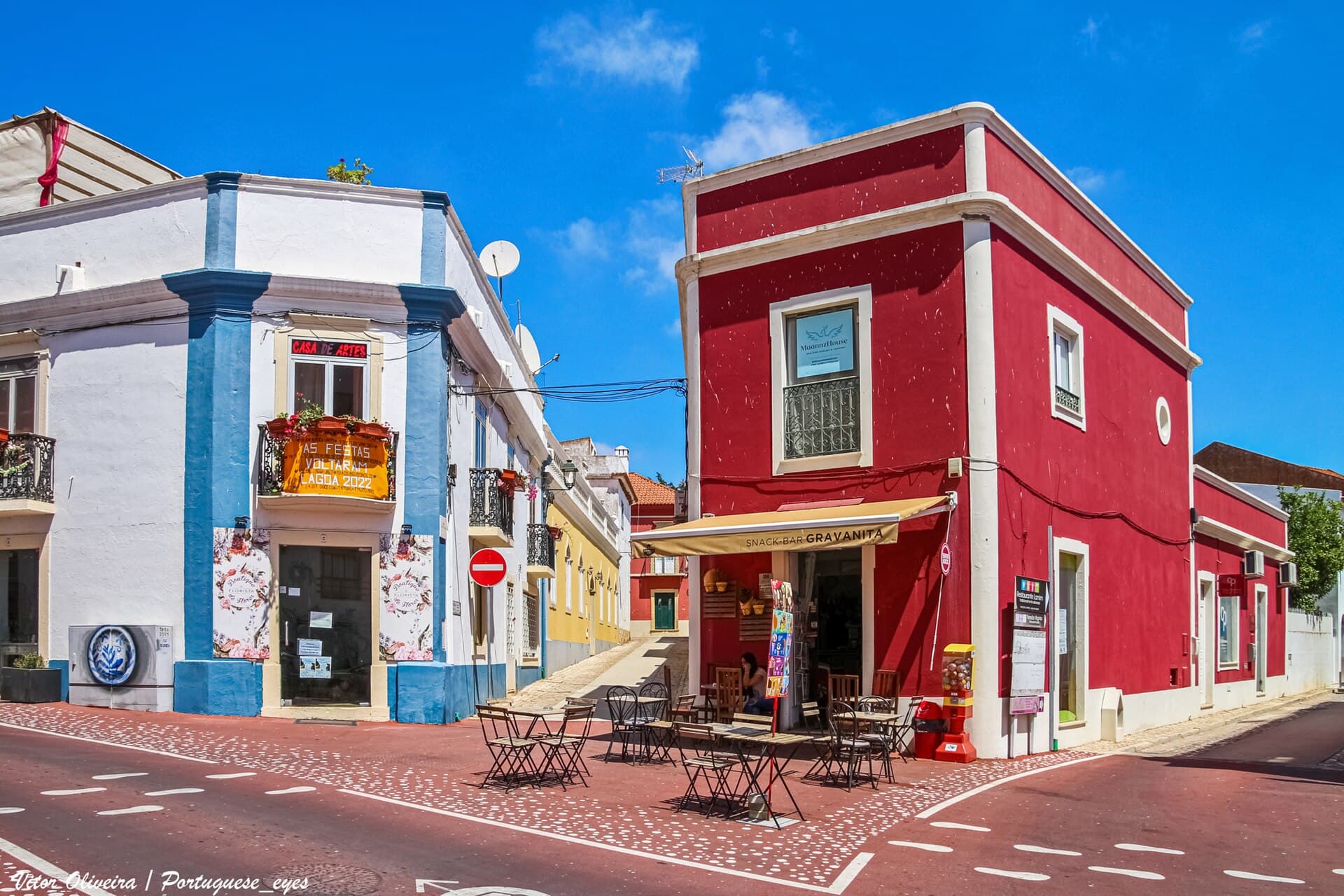 Vitor Oliveira from Torres Vedras, PORTUGAL / CC BY-SA 2.0, via Wikimedia Commons
Self-guided audio walking tour of Lagoa — GPS route, offline playback, story-driven narration in 32 languages.
“Where golden cliffs meet ancient whispers, and the sea holds its breath in sunlit grottos.”
Not the postcards. The stories even locals don't know — whispered in your ear, right where they happened.
Within the walls of a beautifully restored convent, a small, unassuming door tells a poignant tale of desperate mothers and compassionate nuns.
The very name of Lagoa hints at a landscape that has largely vanished, a watery past now only a memory.
To reach one of Lagoa's most picturesque beaches, you don't just walk down to the sand; you enter through a passage carved into the cliff face.
Discover every secret of Lagoa
Every address, every reveal in full — in your ear, right where it happened.
You pick your stops. You walk. The voice reveals what the others miss.


Your self-guided audio tour of Lagoa is ready — pick your landmarks, choose your language, and start the moment you arrive.
BuyLume has a built-in augmented-reality guide. Hold your phone up and its camera shows the street ahead of you, with a glowing arrow laid over the real view that always points to your next stop — no map to puzzle over, no wrong turns. Like everything in Lume, it works fully offline.
Lagoa, a municipality in the heart of Portugal's Algarve region, offers a captivating blend of dramatic coastline and authentic inland character. While the town of Lagoa itself is modest and often bypassed by those heading directly to the coast, it serves as the administrative center for some of the Algarve's most iconic beaches, sea caves, and picturesque fishing villages.
Beyond the golden cliffs and turquoise waters, Lagoa maintains a strong agricultural tradition, particularly known for its wine production. The municipality invites visitors to slow down, explore its whitewashed streets, discover historical sites, and savor the authentic flavors of the Algarve, from fresh seafood to locally produced wines.
Whether you are drawn to exhilarating coastal adventures, cultural exploration, or simply unwinding amidst natural beauty, Lagoa provides a perfect base for an unforgettable Portuguese experience.
## From Ancient Settlements to Modern Character Lagoa's history stretches back to ancient times, with archaeological evidence, including menhirs and ancient cemeteries, pointing to human presence in the area since prehistoric periods. The region later saw occupation by both Romans and Moors, who capitalized on Lagoa's strategic position on a small hill. During the Middle Ages, the town developed as a center of trade and culture, though it remained primarily a fortified hamlet until the early 13th century when the Moors officially designated it a town.
The 14th century marked a period of rapid development for Lagoa, aided by favorable conditions. However, a significant turning point in its history arrived with the devastating Lisbon earthquake of 1755, which largely destroyed the original settlement. The town's subsequent reconstruction in the 18th century is evident in many of its existing monuments and buildings, showcasing a resilient spirit.
In 1773, Lagoa was officially elevated to the status of a town, and its own municipality was formed. The late 19th century brought prosperity through the fishing industry and its associated canning factories. While these industries once formed the backbone of the local economy, modern Lagoa has seen tourism emerge as the primary economic driver, complementing its long-standing tradition of wine production. Today, Lagoa continues to evolve, balancing its historical roots with the demands of a tourist destination while retaining its authentic Algarvian character.
## Coastal Defenses and Cultural Landmarks Lagoa's coastal zone was historically vulnerable to attacks by Barbary pirates and corsairs. To protect its inhabitants, various defensive structures were erected along the coastline. These included fortresses such as Nossa Senhora da Rocha, Carvoeiro, and São João de Ferragudo, alongside numerous lookouts and redoubts like the tower of Lapa or Marinha. These fortifications are a testament to the region's turbulent past and its strategic importance.
Inland, the town's architectural heritage includes the Igreja de Nossa Senhora da Luz (Church of Our Lady of Light), originally dating from the early 16th century but largely rebuilt after the 1755 earthquake. Next door, the Convento de São José, built around 1710, has been repurposed into Lagoa's cultural center, hosting exhibitions and events while preserving some original features. These structures, along with the traditional whitewashed houses adorned with characteristic Algarvian chimneys, offer glimpses into Lagoa's enduring cultural identity.
Lagoa's allure lies in its captivating coastline and charming villages. The star attraction is undoubtedly the Benagil Cave (Algar de Benagil), a magnificent sea cave with a dramatic circular opening in its ceiling, best explored by kayak, paddleboard, or boat tour from nearby Benagil Beach.
For hikers, the Percurso dos Sete Vales Suspensos (Seven Hanging Valleys Trail) offers a spectacular 5.7km cliff-top walk from Praia da Marinha to Praia de Vale Centeanes, revealing sea arches, collapsed grottos, and expansive viewpoints.
Lagoa is home to some of Europe's most beautiful beaches. Praia da Marinha is celebrated for its clear waters and distinctive M-shaped rock arch. For a more secluded experience, seek out Praia do Carvalho, accessed through a tunnel carved into the cliff, or Praia de Albandeira, with its natural rock arch.
Beyond the coast, visit the Convento de São José, now a cultural center, and the Igreja de Nossa Senhora da Luz in Lagoa town. Explore the traditional fishing village of Ferragudo, with its narrow streets and views across the Arade River, or the lively resort of Carvoeiro with its clifftop boardwalks and cafes. For family fun, Slide & Splash water park and Sand City (FIESA), an international sand sculpture exhibition, are popular choices. Do not forget to sample local wines at one of Lagoa's many vineyards, such as Quinta dos Vales.
The best times to visit Lagoa are during the shoulder seasons of May-June and September-October. During these months, the weather is pleasantly warm (daytime highs typically range from 24-28°C), the sea is inviting for swimming, and the crowds are significantly smaller than in the peak summer months of July and August. Spring also brings blooming wildflowers, particularly along the coastal trails.
While July and August offer the warmest temperatures (up to 31°C) and clearest skies, they also coincide with the busiest tourist season and highest prices. Winter (November-March) is mild and quieter, with temperatures between 10-18°C, though some tourist facilities may operate on reduced hours. Rainfall is more concentrated in the winter months.
A car is highly recommended for exploring Lagoa and its surrounding attractions, as many beaches and points of interest are spread across the coastline and poorly served by public transport. Parking is generally available at most beaches, though it may be paid during the summer and can fill up quickly.
Lagoa offers a range of accommodation, from cliff-top resorts to more budget-friendly options, particularly in areas like Carvoeiro and Ferragudo. The local cuisine is a highlight, with fresh seafood dishes like cataplana (seafood, tomato, and potato stew) and gambas piri piri (spicy king prawns) being traditional favorites.
While English is widely spoken in tourist areas, learning a few basic Portuguese phrases will enhance your experience and is appreciated by locals. The currency used is the Euro (€).
Lagoa in Korean, in Chinese or in Hebrew — and 29 more languages, every stop narrated by a native voice. The widest language range of any self-guided audio tour.
Available in: