Puente Mayor
Ce pont durable, souvent appelé 'romain', porte un nom qui suggère une origine bien plus ancienne que sa date de construction réelle.
L'histoire complète se débloque dans le tour
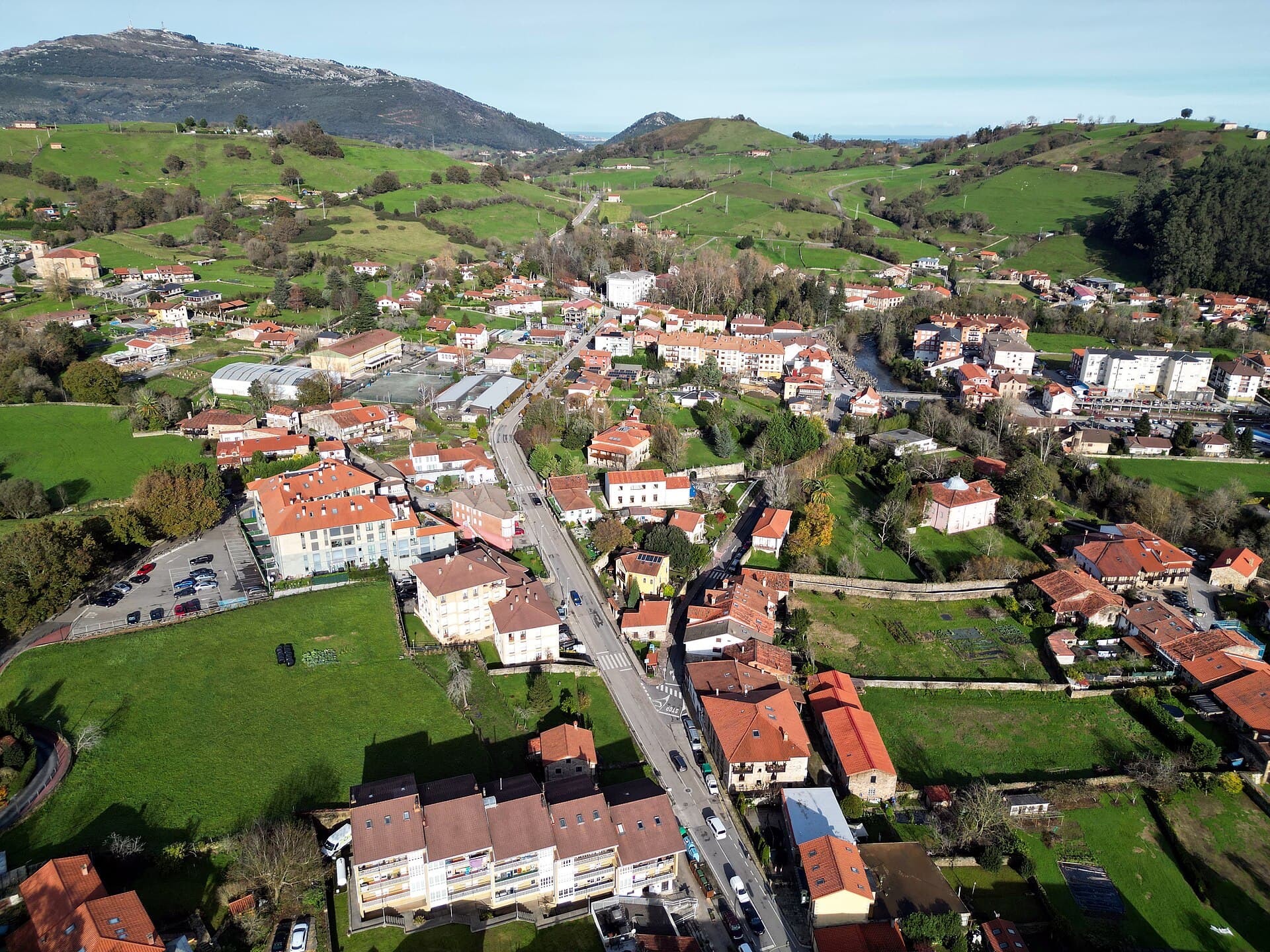 Jesús Gómez Fernández / CC BY 4.0, via Wikimedia Commons
Visite audio autoguidée de Liérganes — parcours GPS à pied, lecture hors ligne, narration en 32 langues.
“Là où la rivière Miera coule, les légendes persistent et la pierre raconte une histoire.”
Pas les cartes postales. Les histoires que même les habitants ignorent — soufflées à l'oreille, là où elles se sont passées.
Ce pont durable, souvent appelé 'romain', porte un nom qui suggère une origine bien plus ancienne que sa date de construction réelle.
Ce palais majestueux de Liérganes présente un élément architectural distinctif sur sa chapelle, suggérant un mélange inattendu de dévotion privée et d'accès communautaire.
Les deux collines qui encadrent Liérganes portent un surnom plutôt ludique et anatomique, attribué par les habitants locaux.
Découvrez tous les secrets de Liérganes
Chaque adresse, chaque révélation en entier — dans ton oreille, là où elle s'est passée.
Tu choisis tes lieux. Tu marches. La voix te révèle ce que les autres ignorent.

Votre visite audioguidée de Liérganes vous attend — choisissez vos lieux, votre langue, et lancez-vous dès votre arrivée.
AcheterLume intègre un guide en réalité augmentée. Levez votre téléphone : sa caméra montre la rue devant vous, avec une flèche lumineuse posée sur l'image réelle qui pointe toujours vers votre prochain arrêt — aucune carte à déchiffrer, aucun mauvais virage. Comme tout dans Lume, ça fonctionne entièrement hors-ligne.
Liérganes, un village de Cantabrie, en Espagne, est un lieu où le temps semble ralentir, permettant à sa profonde histoire et à son folklore enchanteur de se déployer. Reconnu comme l'un des plus beaux villages d'Espagne, Liérganes attire les visiteurs avec son architecture des XVIIe et XVIIIe siècles bien préservée, évidente dans ses chemins de pierre et ses 'casas pasiegas' traditionnelles avec leurs balcons en bois. La rivière Miera serpente à travers le village, offrant un cadre pittoresque à ses structures historiques et invitant à des promenades tranquilles le long de la rivière.
Le village est encadré par deux modestes collines, Marimón et Cotillamón, affectueusement appelées 'Las Tetas de Liérganes' par les habitants. Liérganes est également célèbre pour sa connexion à la légende de l''Hombre Pez', ou Homme-Poisson, une figure mythique qui ajoute une couche unique d'émerveillement à l'identité de la ville. Cette convergence du patrimoine architectural, de la splendeur naturelle et de la légende durable fait de Liérganes une destination attrayante pour ceux qui recherchent une expérience espagnole authentique.
L'histoire de Liérganes remonte à l'époque romaine, évoluant progressivement au fil des siècles. Le cœur urbain du village, classé site historique et artistique national en 1978, présente une précieuse architecture classiciste des XVIIe et XVIIIe siècles. Cet épanouissement architectural fut une conséquence directe d'un essor économique à cette époque, largement alimenté par une usine d'artillerie locale qui fonctionna entre 1617 et 1830.
L'aspect le plus célébré du passé de Liérganes est peut-être son lien avec la légende de l''Hombre Pez' (Homme-Poisson). L'histoire, qui remonte à la fin du XVIIe siècle, est centrée sur Francisco de la Vega Casar, un jeune homme de Liérganes connu pour ses exceptionnelles prouesses en natation. En 1674, il disparut alors qu'il nageait dans la rivière Miera près de Bilbao. Cinq ans plus tard, en 1679, une étrange créature aquatique, semblable à un humain, fut capturée par des pêcheurs dans la baie de Cadix, loin au sud. La créature, décrite comme ayant la peau pâle, des cheveux roux clairsemés, des ongles corrodés et des bandes d'écailles, ne pouvait prononcer qu'un seul mot : « Liérganes ».
Un frère d'un couvent voisin, en entendant le mot, comprit sa signification et ramena la créature à Liérganes. La mère et les frères et sœurs de Francisco le reconnurent, bien qu'il soit resté la plupart du temps silencieux et distant pendant ses neuf années de retour au village avant de disparaître à nouveau dans la mer. L'histoire a gagné en crédibilité lorsqu'elle a été examinée par l'écrivain des Lumières Benito Jerónimo Feijoo, qui a affirmé que le conte était vrai.
Le complexe historique et artistique du village, connu sous le nom d'El Mercadillo, présente une collection de maisons traditionnelles, de chapelles et de palais importants. Parmi ceux-ci figurent le Palais de la Rañada (également appelé Palais Cuesta-Mercadillo), datant de 1718, et l'Église de San Pedro Ad Vincula, un temple gothique-renaissance du XVIIe siècle. Le Puente Mayor, un pont de pierre à deux arches sur la rivière Miera, est un symbole de la ville, bien que son nom commun, 'Pont Romain', soit un abus de langage, car il a été construit au début du XVIIe siècle. Adjacente au pont se trouve un ancien moulin de 1667, qui abrite maintenant le Centre d'interprétation de l'Homme-Poisson.
Commencez votre exploration dans le vieux centre du village, connu sous le nom d'El Mercadillo, où des chemins de pierre serpentent devant des demeures des XVIIe et XVIIIe siècles méticuleusement préservées. Observez les 'casas pasiegas' traditionnelles avec leurs balcons en bois distinctifs. Le Puente Mayor, un pont de pierre emblématique à deux arches enjambant la rivière Miera, sert de point de repère central et d'endroit privilégié pour les photographies.
À côté du pont, visitez le Centre d'interprétation de l'Homme-Poisson, situé dans un moulin historique de 1667, pour approfondir l'intrigue de la légende de l''Hombre Pez'. L'Église de San Pedro Ad Vincula, une église gothique-renaissance du XVIIe siècle, est l'église paroissiale principale du site historique et artistique. Il est également remarquable de mentionner le Palacio de la Rañada (Palais Cuesta-Mercadillo), un palais du XVIIIe siècle qui illustre l'architecture classiciste de Liérganes.
Pour une expérience différente, le Balneario de Liérganes, une station thermale historique entourée d'un grand domaine, offre un aperçu des loisirs du XIXe siècle et est connue pour ses eaux sulfureuses. Au-delà du village, envisagez une visite au Musée-Palais Elsedo dans la ville voisine de Pámanes, une merveille architecturale du XVIIIe siècle abritant une importante collection d'art moderne et contemporain. Le paysage naturel environnant, avec la rivière Miera et les collines Marimón et Cotillamón, offre des opportunités de promenades tranquilles et de vues panoramiques.
La période la plus agréable pour visiter Liérganes pour les activités par temps chaud s'étend de fin juin à début septembre, lorsque les températures varient généralement entre 21°C et 23°C. Pendant cette période, le ciel est le plus clair et les précipitations sont les plus faibles. Le printemps (mars à mai) et l'automne (septembre à novembre) offrent également un temps agréable avec des températures douces et moins de foules, ce qui les rend propices aux visites touristiques et aux expériences culturelles. La saison plus fraîche, de fin novembre à mi-mars, apporte des conditions plus froides, plus humides et plus venteuses.
Liérganes est idéalement situé en Cantabrie, à environ 27 kilomètres de Santander, la capitale régionale. Il est facilement accessible en voiture, et le village dispose également de sa propre gare, offrant des liaisons de transport en commun. Pour ceux qui voyagent en voiture, de nombreuses places de parking gratuites sont disponibles, y compris des aménagements pour les camping-cars près de la gare.
Le village lui-même est compact et très propice à la marche, ce qui facilite son exploration à pied. Des chaussures confortables sont recommandées pour se promener sur les chemins de pierre. À Liérganes, ne manquez pas de goûter à la gastronomie locale, qui comprend des viandes exquises, du poisson de rivière, des fromages frais et à la crème, et des pâtisseries renommées comme les 'sacristanes' et le 'chocolate con churros'. L'office de tourisme, situé près de la rivière dans le centre du village, peut fournir des informations sur les itinéraires de promenade et d'autres activités.
Liérganes en coréen, en chinois ou en hébreu — et dans 29 autres langues, chaque étape narrée par une voix native. La plus large gamme de langues de tous les audioguides autoguidés.
Disponible en :