Prairie Dog Town
Lubbock holds a unique community where hundreds of small residents have their own designated 'town.'
Full story unlocks in the tour
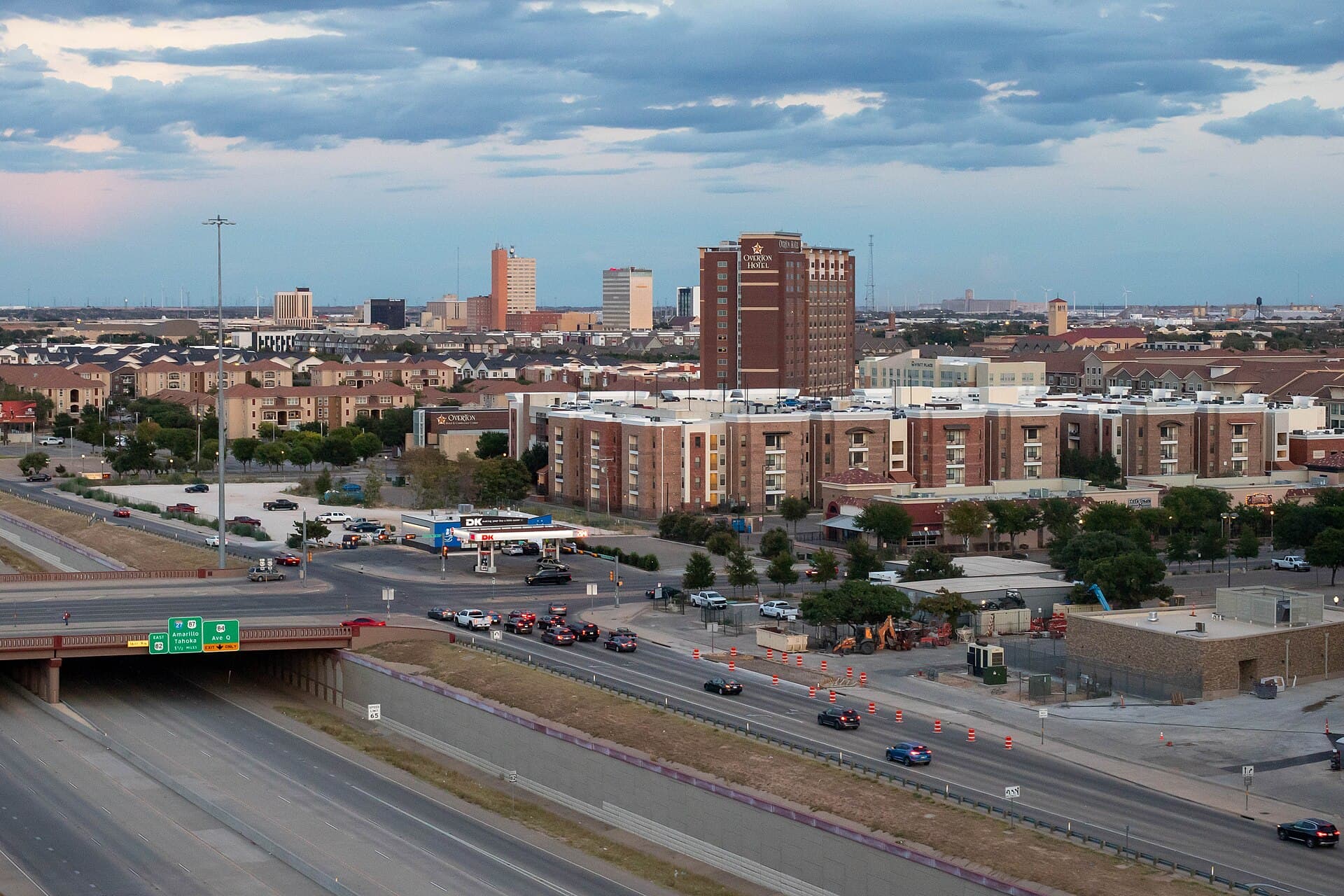 Noah Puente / CC0, via Wikimedia Commons
Self-guided audio walking tour of Lubbock — GPS route, offline playback, story-driven narration in 32 languages.
“Where West Texas winds carry the echoes of rock and roll and ranching.”
Not the postcards. The stories even locals don't know — whispered in your ear, right where they happened.
Lubbock holds a unique community where hundreds of small residents have their own designated 'town.'
One of Texas's enduring wineries began crafting its vintages within a dry county.
A museum in Lubbock preserves the legacy of a crucial, yet often overlooked, group of World War II pilots.
Discover every secret of Lubbock
Every address, every reveal in full — in your ear, right where it happened.
You pick your stops. You walk. The voice reveals what the others miss.


Your self-guided audio tour of Lubbock is ready — pick your landmarks, choose your language, and start the moment you arrive.
BuyLume has a built-in augmented-reality guide. Hold your phone up and its camera shows the street ahead of you, with a glowing arrow laid over the real view that always points to your next stop — no map to puzzle over, no wrong turns. Like everything in Lume, it works fully offline.
Lubbock, often called the "Hub City," extends across the vast expanse of the Llano Estacado, a region of the Great Plains in West Texas. It serves as a significant economic, educational, and healthcare center for the surrounding multicounty area. This city, with a population exceeding 250,000, blends the feel of a college town—home to Texas Tech University—with the deep-rooted cultural heritage of ranching and agriculture that defines West Texas.
Beyond its agricultural prominence as the world's largest contiguous cotton-growing region, Lubbock offers a diverse cultural landscape. From its lively music scene, forever linked to rock and roll legend Buddy Holly, to its commitment to preserving the heritage of the American West, Lubbock provides a singular blend of experiences.
The story of Lubbock begins with a practical compromise. In 1890, two rival groups of town promoters, one led by Frank E. Wheelock and the other by W. E. Rayner, merged their settlements, Old Lubbock and Monterey, to form the city we know today. The county itself, established in 1876, was named after Thomas Saltus Lubbock, a former Texas Ranger and a signer of the Texas Declaration of Independence. Lubbock was officially incorporated on March 16, 1909, the same year the first railroad arrived, marking a significant turning point for the nascent city.
Initially, Lubbock developed as a ranching center, a natural fit for the open plains. However, the discovery of artesian well water transformed the landscape, allowing for mixed farming and the eventual rise of cotton and grain as major crops. This agricultural shift, coupled with the arrival of the Santa Fe Railroad, propelled Lubbock into becoming one of the country's leading inland cotton markets and an agricultural-industrial center. The region continues to be the largest contiguous cotton-growing area globally.
Lubbock's growth accelerated significantly after World War II, with its population increasing nearly fivefold between 1940 and 1970. The establishment of Texas Technological College (now Texas Tech University) in 1923 brought intellectual and cultural advancements that further fueled the city's expansion. Despite a devastating tornado in May 1970, one of the costliest in Texas history, Lubbock rebuilt and continued to evolve. A notable change occurred in 1972 when the city ended nearly a century of Prohibition, shedding its distinction as the largest "dry" city in the United States by allowing the purchase and consumption of alcohol. Today, Lubbock remains a dynamic city with a diverse economy, a lively arts and music scene, and a strong sense of community.
Begin your exploration at the Buddy Holly Center, a performance and visual arts center dedicated to the rock and roll icon and other West Texas musicians. The center, housed in a former railway depot, features a permanent gallery with artifacts from Holly's childhood and career, including his Fender Stratocaster and distinctive horn-rimmed glasses. The J.I. Allison House, where many of Holly's hits were penned with Crickets drummer Jerry Allison, is also on the grounds and open for tours.
For a glimpse into the region's agricultural past, visit the National Ranching Heritage Center on the Texas Tech University campus. This 27-acre historical park features a collection of nearly 50 authentic ranching structures dating from the 1780s to the 1950s, relocated from various sites across the Southwest. You can explore homesteads, a railroad depot, a barn, and a schoolhouse, and even take a trolley tour.
Experience a unique wildlife encounter at Prairie Dog Town in Mackenzie Park. This free attraction, established in the 1930s, is home to a protected colony of black-tailed prairie dogs, offering entertaining viewing of these social rodents. Visitors often bring treats like carrots and celery to feed them. Finally, delve into a lesser-known chapter of World War II history at the Silent Wings Museum, the only museum globally dedicated to the American WWII Military Glider Program. The museum, located at the Lubbock Preston Smith International Airport, houses a fully restored CG-4A glider and exhibits detailing the experiences of glider pilots.
The best times to visit Lubbock for comfortable weather and outdoor activities are from mid-March to mid-May and again from mid-September to October. During these periods, you can expect mild temperatures and lower humidity. Summers, particularly July, are hot with average highs around 93°F (34°C) and can exceed 100°F (38°C) on some days. Winters are cooler, with January being the coldest month, averaging a low of 29°F (-2°C). Lubbock experiences around 18 inches of rain annually, with June typically being the wettest month.
Lubbock Preston Smith International Airport (LBB) is located just north of the city, offering convenient air access. The city is easily navigable by car, and its organized layout makes getting around straightforward. Lubbock is known for its affordability, with a cost of living generally lower than the national and Texas averages. While public transportation options exist, a car is recommended for exploring the wider area and attractions outside the immediate city center. Accommodations range from well-known hotel chains to unique local stays. Lubbock also offers a diverse culinary scene, from classic Texas barbecue to upscale dining experiences.
Lubbock in Korean, in Chinese or in Hebrew — and 29 more languages, every stop narrated by a native voice. The widest language range of any self-guided audio tour.
Available in: