Gruene Hall
This modest dance hall holds a surprising claim to fame in the music world.
Full story unlocks in the tour
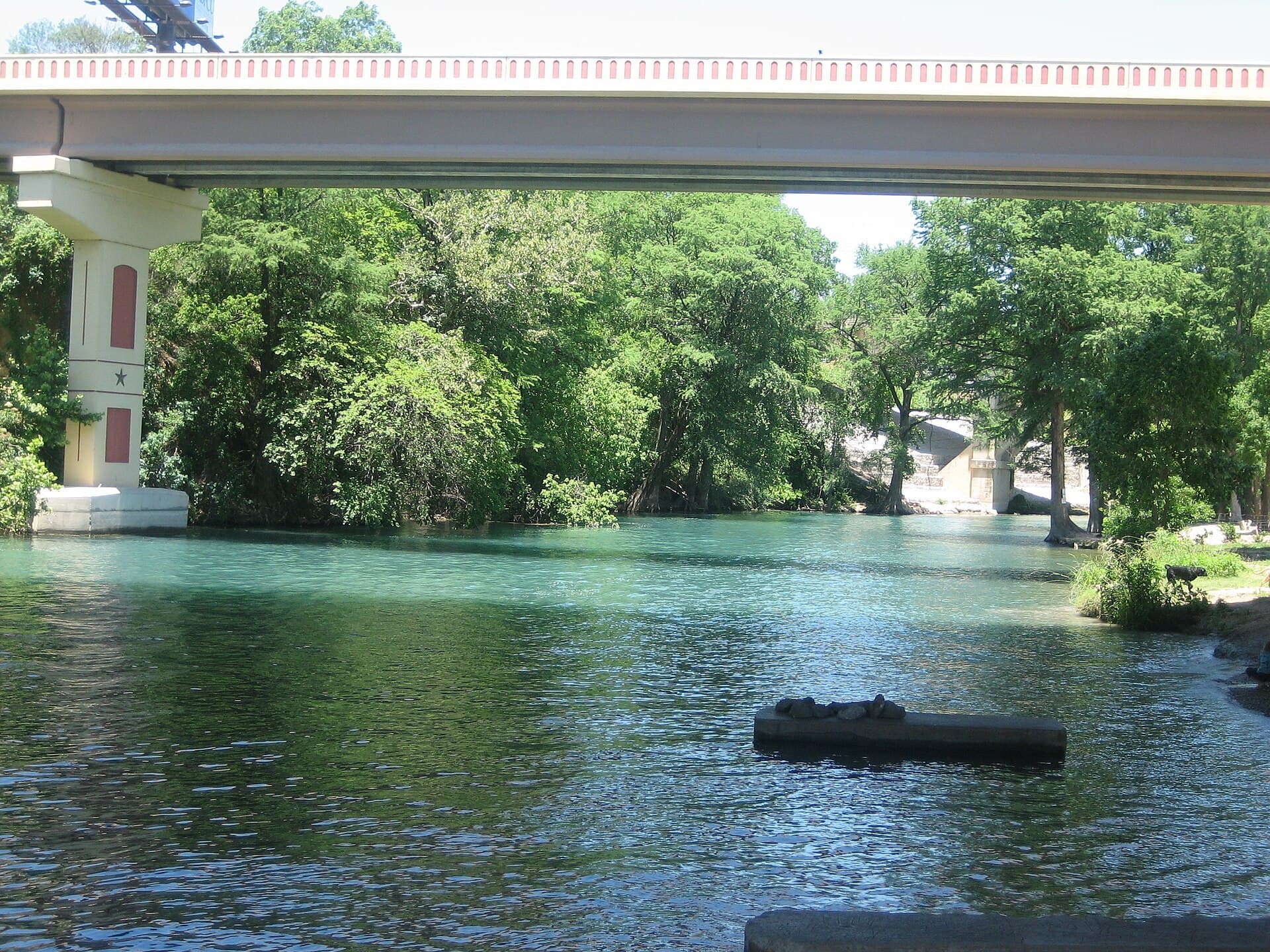 Billy Hathorn at English Wikipedia / CC BY-SA 3.0, via Wikimedia Commons
Self-guided audio walking tour of New Braunfels — GPS route, offline playback, story-driven narration in 32 languages.
“Where German heritage meets Texas rivers.”
Not the postcards. The stories even locals don't know — whispered in your ear, right where they happened.
This modest dance hall holds a surprising claim to fame in the music world.
The Comal River is known for its refreshing, consistent temperature, but the reason behind it is a geological marvel.
New Braunfels' famous Wurstfest, a celebration of German heritage, was inspired by a very personal story.
Discover every secret of New Braunfels
Every address, every reveal in full — in your ear, right where it happened.
You pick your stops. You walk. The voice reveals what the others miss.

Your self-guided audio tour of New Braunfels is ready — pick your landmarks, choose your language, and start the moment you arrive.
BuyLume has a built-in augmented-reality guide. Hold your phone up and its camera shows the street ahead of you, with a glowing arrow laid over the real view that always points to your next stop — no map to puzzle over, no wrong turns. Like everything in Lume, it works fully offline.
New Braunfels, Texas, offers a distinctive blend of German heritage and Hill Country charm, situated at the confluence of the Guadalupe and Comal Rivers. Founded by German immigrants in 1845, the city retains a palpable connection to its European roots, evident in its architecture, street names, and lively cultural traditions.
Visitors are drawn to New Braunfels for its spring-fed rivers, which provide opportunities for tubing, kayaking, and swimming, offering a refreshing escape from the Texas heat. The city also presents a lively music scene, historic districts, and family-friendly attractions, making it a popular destination for both relaxation and adventure.
Beyond its recreational appeal, New Braunfels is a city that actively preserves its past while embracing growth. It balances economic development with a commitment to environmental stewardship and cultural preservation, offering a unique experience where history and natural beauty converge.
## Founding and German Immigration New Braunfels was established on March 21, 1845, by Prince Carl of Solms-Braunfels, Commissioner General of the Mainzer Adelsverein, also known as the Noblemen's Society. Prince Carl led a significant group of German immigrants to Texas with the vision of creating a "New Germany" in the region. The settlement was named Neu Braunfels in honor of his hometown in Germany, with "Braunfels" translating to "brown rock."
The first settlers forded the Guadalupe River on Good Friday, March 21, 1845, near the present-day Faust Street bridge. They quickly set about building a fort, the "Zinkenburg," named for civil engineer Nicolaus Zink, and began to divide land, construct homes, and plant crops. Prince Solms also laid the cornerstone for the Sophienburg, intended as a permanent fort and headquarters for the immigrant association. By 1850, New Braunfels had grown to become the fourth-largest city in Texas, with a population of 1,723, trailing only Galveston, San Antonio, and Houston.
## Growth and Development The fertile land and abundant water resources from the Comal and Guadalupe Rivers allowed the community to thrive. Early businesses included stores, millworks, and craft shops, which quickly established New Braunfels as a commercial hub for the surrounding agricultural area. Many immigrants brought artisanal skills and business acumen, contributing to the town's rapid development. The Neu Braunfelser Zeitung, a German-language newspaper established in 1852, continued publication until 1957, eventually merging with the English-language New Braunfels Herald to form the Herald-Zeitung.
By the early 1880s, New Braunfels was connected by telegraph and rail lines to Austin and San Antonio. Textile factories along the Comal River were actively shipping cotton and woolen products. The following decade saw the introduction of electric streetlights and the first telephone line. Tourism began to accelerate after World War II with the completion of Interstate Highway 35 and the capitalization on the city's natural and historic attractions, particularly the recreational potential of the Guadalupe River and Canyon Lake.
## Gruene Historic District Within the city limits of New Braunfels lies the Gruene Historic District, founded by the sons of Ernst and Antoinette Gruene. This community once featured a bank, post office, school, general store, lumberyard, gristmill, dance hall, and cotton gin, with access to two railways for shipping cotton. Its most renowned feature was Gruene Hall, built in 1878 by Henry D. Gruene. The district faced decline due to the failure of the cotton crop from boll weevils and bank failures after 1929. In the early 1970s, developers planned to demolish the town, but preservation efforts led to Gruene's addition to the National Register of Historic Places in 1975. Today, Gruene remains a lively hub for shopping, dining, and entertainment, preserving its 19th-century buildings.
New Braunfels offers a variety of attractions that highlight its unique blend of German heritage and natural beauty. The Comal and Guadalupe Rivers are central to the city's appeal, providing opportunities for tubing, kayaking, and swimming. The Comal River, fed by springs, maintains a consistent 72-degree Fahrenheit temperature year-round, making it ideal for water activities.
For a taste of history and live music, visit Gruene Hall, Texas's oldest continually operating dance hall. This iconic venue has hosted numerous legendary musicians and continues to offer live performances daily. The surrounding Gruene Historic District provides a charming setting for shopping, dining, and exploring well-preserved 19th-century buildings.
Families often visit Schlitterbahn Waterpark, a major attraction built around the Comal River. Landa Park, with its springs feeding the Comal River, offers green spaces, walking trails, and recreational facilities. For those interested in the city's founding, the Sophienburg Museum and Archives chronicles the history of the German immigrants who established New Braunfels.
Each fall, the city celebrates its German heritage with Wurstfest, a ten-day "Salute to Sausage" featuring Bavarian food, drink, and polka music.
The best time to visit New Braunfels largely depends on your desired activities. For warm-weather activities like tubing and swimming in the rivers, the peak season runs from mid-May to late September, with July being the warmest month, averaging 84.2°F.
If you prefer milder weather and fewer crowds, the shoulder seasons of March to May and September to October are excellent. Spring is particularly good for outdoor recreation such as hiking, biking, and kayaking. Winter offers a quieter experience for shopping, dining, and exploring downtown.
New Braunfels is conveniently located between San Antonio and Austin, easily accessible via I-35. The city offers a range of accommodations, from boutique hotels to vacation rentals. Parking information for downtown and river access points is available through the city.
When planning river activities, be aware of specific rules, especially regarding items allowed on the Comal River. Cooler searches may occur, and glass items are typically prohibited. While floating the Comal River usually takes around 3 hours, this can vary with river depths. The city provides resources for current river conditions and flow rates.
For dining, New Braunfels offers diverse options, including German fare, riverside restaurants, and Texas barbecue. The downtown area is a thriving district with unique shops, restaurants, bars, and art galleries.
New Braunfels in Korean, in Chinese or in Hebrew — and 29 more languages, every stop narrated by a native voice. The widest language range of any self-guided audio tour.
Available in: