Meaux Cathedral
The grand Meaux Cathedral, a symphony of Gothic styles, holds a secret within its venerable walls that speaks to a turbulent past.
Full story unlocks in the tour
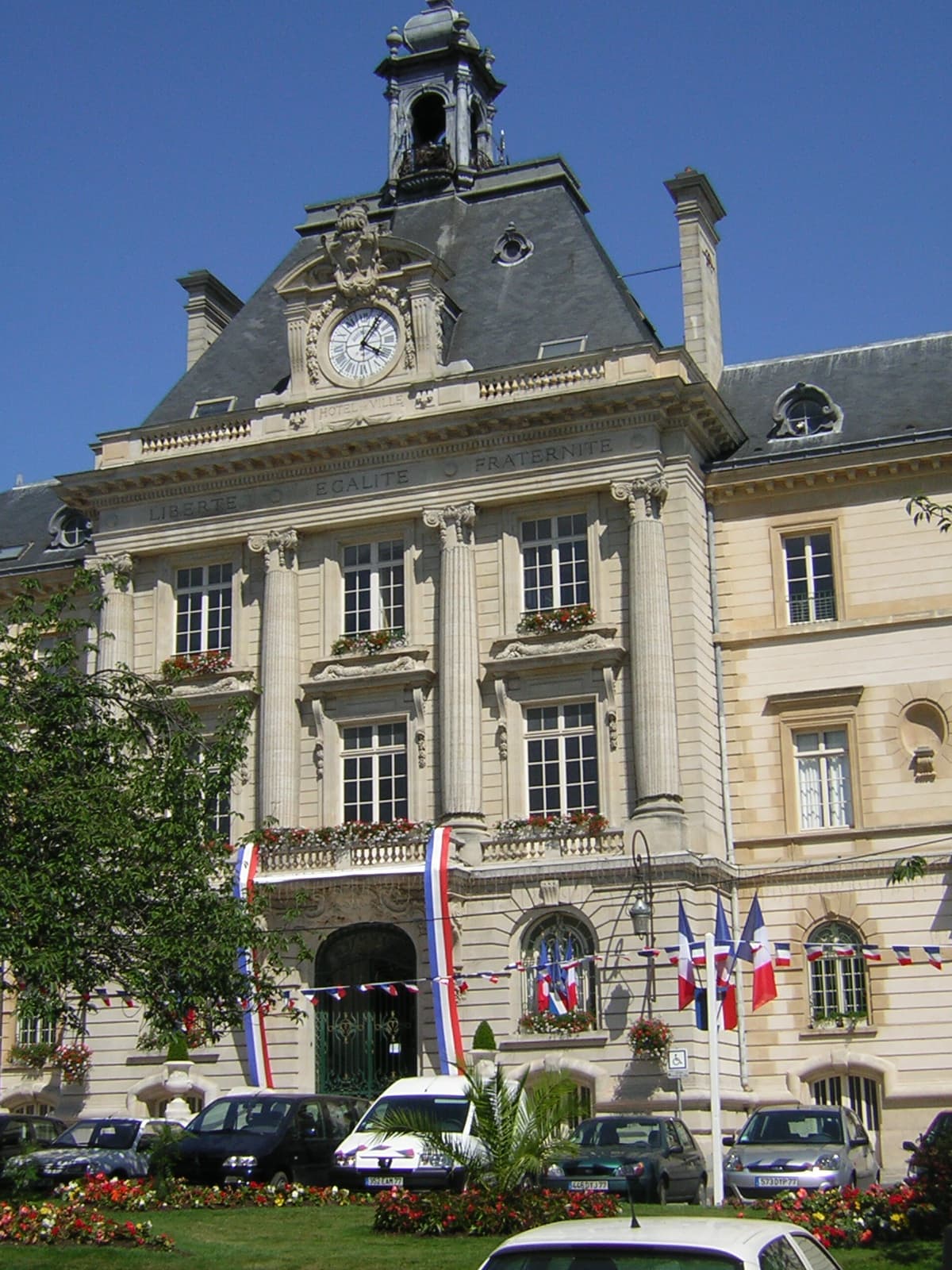 B25es / Public domain, via Wikimedia Commons
Self-guided audio walking tour of Meaux — GPS route, offline playback, story-driven narration in 32 languages.
“Meaux: Where ancient stone and the scent of Brie evoke lingering history.”
Not the postcards. The stories even locals don't know — whispered in your ear, right where they happened.
The grand Meaux Cathedral, a symphony of Gothic styles, holds a secret within its venerable walls that speaks to a turbulent past.
Beyond its celebrated cheese, Meaux offers a mustard with a centuries-old secret recipe, carefully guarded by a local family.
King Henry V of England, a formidable conqueror, met an unexpected end shortly after his victory at Meaux, a death more insidious than any battlefield wound.
Discover every secret of Meaux
Every address, every reveal in full — in your ear, right where it happened.
You pick your stops. You walk. The voice reveals what the others miss.


Your self-guided audio tour of Meaux is ready — pick your landmarks, choose your language, and start the moment you arrive.
BuyLume has a built-in augmented-reality guide. Hold your phone up and its camera shows the street ahead of you, with a glowing arrow laid over the real view that always points to your next stop — no map to puzzle over, no wrong turns. Like everything in Lume, it works fully offline.
Meaux, a historic city in the Seine-et-Marne department of France, lies approximately 40 kilometers (25 miles) east-northeast of Paris, situated in a loop of the Marne River. Known primarily for its renowned Brie de Meaux cheese and traditional mustard, the city offers a compelling blend of cultural heritage and natural beauty.
With a history spanning over two millennia, Meaux was an important urban center during the Gallo-Roman period and became an episcopal see as early as the 5th century. Its well-preserved historic center, particularly the episcopal city, invites exploration, revealing layers of architectural styles from different eras.
Beyond its culinary renown, Meaux serves as a significant hub in the northern part of its department, surrounded by agricultural land, the Montceaux Forest, and the picturesque valleys of the Grand and Petit Morin. The city's strategic location along the Marne and Ourcq Canal has shaped its development, offering scenic river stops and paths for leisurely strolls.
## From Ancient Meldes to Medieval Stronghold Meaux, originally known as Latinum by the Romans and later Meldi after a Gaulish tribe, possesses a history stretching back over 2,000 years, establishing itself as an episcopal see in the 4th century. Its strategic position on the Marne River made it a significant urban center during the Gallo-Roman era, with archaeological remains still visible today.
During the Middle Ages, Meaux was a contested territory. From 923 to 1361, it was under the control of the Counts of Champagne. A pivotal moment in its medieval history was the Siege of Meaux, fought from October 1421 to May 1422 during the Hundred Years' War. Led by King Henry V of England, the siege was a brutal affair, lasting seven months and resulting in significant casualties, primarily from disease among the besieging forces. The town's defense was led by the Bastard of Vaurus, a figure described as cruel yet brave. The siege concluded with the surrender of the town and garrison, though Henry V himself fell ill during the prolonged battle and died shortly after.
## Religious Strife and Renaissance Flourishing Meaux played a notable role in the Wars of Religion in the late 16th century, becoming the first diocese in France to offer refuge to Protestant reformers. This period was marked by intense conflict, and Meaux was tragically the scene of some of the massacres of Huguenots on St. Bartholomew's Day in 1572.
The 17th century saw Meaux rise to prominence, largely due to Jacques-Bénigne Bossuet, an influential theologian and orator who served as Bishop of Meaux from 1681 to 1704. His legacy is preserved in the former episcopal palace, which now houses the Bossuet Museum, and his tomb can be found within the cathedral.
## Modern Significance and World War I Meaux continued to evolve, with urban development expanding beyond its ancient core. The 19th century saw the construction of the Canal de l'Ourcq in 1806, improving inland navigation, and the establishment of the rail line connecting Meaux to Paris in 1849.
A significant event in modern history for Meaux was its role in World War I. The city was the site of the First Battle of the Marne in September 1914, where German troops were halted at its gates, a turning point in the early stages of the war. This historical importance is commemorated by the Musée de la Grande Guerre, one of Europe's largest museums dedicated to the conflict.
Begin your exploration in the historic heart of Meaux, the episcopal city. Here, the Cathédrale Saint-Étienne stands as a testament to Gothic architecture, showcasing styles from the 12th to the 15th centuries. Its interior, with soaring vaults and abundant natural light, is particularly striking. Adjacent to the cathedral is the Bossuet Museum, housed in the former Bishops' Palace, which dates back to the 12th century and was later rebuilt in the 17th century. The museum features collections spanning from 16th-century art to 19th-century sculptures, alongside artifacts detailing the town's history. The formal Bossuet Garden, designed in the 17th century in the shape of a mitre, offers a tranquil space for reflection.
Discover the remnants of Meaux's past by walking along the Gallo-Roman and medieval ramparts, especially around the Bossuet Garden, which offer views of the city. For a deeper dive into local culture, visit the Maison du Brie de Meaux, an exhibition dedicated to the history and production of the celebrated cheese, complete with workshops and tastings. Do not forget to sample Moutarde de Meaux Pommery, a traditional whole-grain mustard with a unique flavor.
Further afield, the Musée de la Grande Guerre (World War I Museum) is a crucial stop. This expansive museum, one of Europe's largest on the conflict, offers immersive exhibits, including reconstructed trenches and multimedia presentations, detailing the First Battle of the Marne.
The most pleasant times to visit Meaux are during late spring or early autumn, when the weather is mild and flowers are in bloom. From May to September, temperatures are comfortable, ranging from 20°C to 26°C (68°F to 79°F), offering a good balance of sunny and rainy days for exploring. July is typically the warmest month, with average highs of 24°C (75°F), while February is the coldest, averaging 8°C (46°F). For warm-weather activities, mid-June to mid-September is ideal. While winters are cold and often cloudy, they can be suitable for visiting indoor attractions like museums.
Meaux is easily accessible from Paris, located just over 40 kilometers northeast of the capital. You can take the Transilien Line P train directly from Gare de l'Est in Paris, with the journey lasting approximately 25-40 minutes. If you have a Navigo Pass for Paris, your train journey to Meaux (within Zone 5) is covered.
Once in Meaux, the city's compact layout makes many attractions walkable, particularly the episcopal city. For destinations further afield, a local bus network operates throughout the town, with the main bus station adjacent to the Meaux train station. Taxis and ride-sharing services are also available. While English is often understood in tourist areas, knowing a few basic French phrases is always appreciated.
Consider checking the local tourism office, located near the cathedral on Place Charles de Gaulle, for additional information and guided tour options.
Meaux in Korean, in Chinese or in Hebrew — and 29 more languages, every stop narrated by a native voice. The widest language range of any self-guided audio tour.
Available in: