Mollendo's Old Port
Mollendo once served as the bustling gateway to southern Peru and Bolivia, a crucial nexus for trade. Today, its original port stands in a state of evocative disuse.
Full story unlocks in the tour
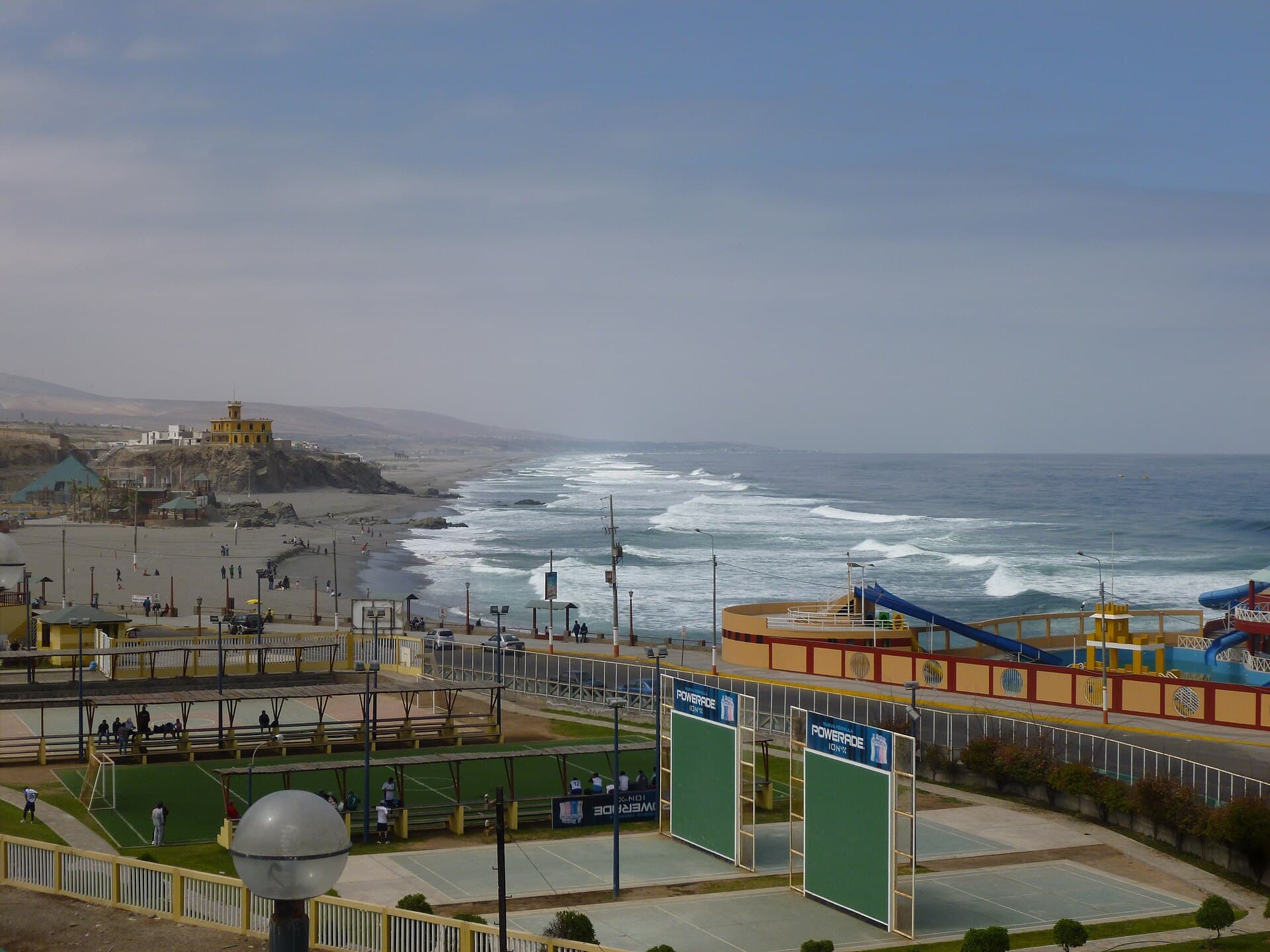 Rojinegro81 / CC BY-SA 4.0, via Wikimedia Commons
Self-guided audio walking tour of Mollendo — GPS route, offline playback, story-driven narration in 32 languages.
“Where the Pacific murmurs forgotten fortunes and the sea air carries a gentle charm.”
Not the postcards. The stories even locals don't know — whispered in your ear, right where they happened.
Mollendo once served as the bustling gateway to southern Peru and Bolivia, a crucial nexus for trade. Today, its original port stands in a state of evocative disuse.
Walk through Mollendo's historic center, and you might notice an unexpected architectural influence, quite distinct from other Peruvian cities.
Even with its reputation as a beach town, the waters off Mollendo can feel surprisingly cool, even in the height of summer. A powerful, unseen force shapes this experience.
Discover every secret of Mollendo
Every address, every reveal in full — in your ear, right where it happened.
You pick your stops. You walk. The voice reveals what the others miss.


Your self-guided audio tour of Mollendo is ready — pick your landmarks, choose your language, and start the moment you arrive.
BuyLume has a built-in augmented-reality guide. Hold your phone up and its camera shows the street ahead of you, with a glowing arrow laid over the real view that always points to your next stop — no map to puzzle over, no wrong turns. Like everything in Lume, it works fully offline.
Mollendo, a coastal city in southern Peru's Arequipa region, offers a refreshing escape with its blend of authentic Peruvian beach culture and glimpses into a storied past. Once a bustling port crucial for trade with southern Peru and Bolivia, Mollendo has transformed into a cherished seaside retreat, particularly for residents of Arequipa seeking the warmth of the Pacific.
Beyond its inviting beaches, Mollendo presents a distinctive architectural character, with 19th-century wooden houses that hint at European influences. The city's relaxed atmosphere, fresh seafood, and lively local culture, punctuated by festivals, make it a compelling stop for travelers exploring Peru's southern coast.
Mollendo's story is deeply intertwined with its strategic location on the Pacific coast. Established in 1872, its site was chosen by American engineer Henry Meiggs, the visionary behind the Arequipa-Mollendo Railroad. This railway was a monumental undertaking, connecting the coast to the interior cities of Arequipa, Cusco, and Puno, and even extending to the mines of Bolivia. For decades, Mollendo thrived as the primary port for southern Peru and Bolivia, playing a crucial role in the export of agricultural products, minerals, and notably, guano.
However, Mollendo's prosperity was not without its trials. The city endured being twice reduced to ashes by fires and suffered significant damage during the War of the Pacific (1879-1884), when Chilean forces invaded, looting homes and destroying vital infrastructure like locomotives and rail tracks. Despite these setbacks, the town rebuilt, with many of its older buildings dating back to the 19th century.
The mid-20th century marked a turning point for Mollendo's port status. After 1941, much of its commercial trade shifted to the more modern and accessible port of Matarani, located just 12 km to the northwest. This led to a gentle decline in its industrial port activity, with the old port now primarily serving local fishermen. Today, Mollendo has embraced a new identity as a beloved seaside resort, its historical significance now a captivating backdrop to its thriving tourism, particularly during the summer months when visitors from Arequipa flock to its shores.
Mollendo's primary appeal lies in its collection of beaches, each offering a distinct experience. You can discover tranquil spots like Arantas, ideal for swimming and hiking amidst striking mountain formations, or the rock-fringed La Huata beach, popular with adventurous climbers. Punta Hornillos, located at kilometer 844 of the Panamericana Sur, is another notable option. Many beaches provide essential services and ample recreation areas.
For sweeping views, wander along the Malecón Ratti, a grand terrace constructed on a cliff offering magnificent sunsets over the Pacific. The Mollendo Tourist Pier also provides resting areas and is a delightful spot for romantic evening walks, enhanced by its night lighting. For family enjoyment, the Playa Uno Tourist Complex features a circuit of swimming pools, sports fields, restaurants, and nightclubs. The Aquatic Park is another popular choice, boasting various pools and 15 types of slides.
Architecturally, the striking Forga Castle, situated on a rock between beaches 2 and 3, is a compelling sight, a testament to early 20th-century design. Be sure to explore the historic downtown area, where 19th-century wooden houses with a distinct European influence add to the city's allure.
Mollendo experiences a desert coastal climate with minimal rainfall year-round. The most opportune time to visit for warm-weather activities and lively beach culture is during the Peruvian summer, from December to March. During these months, temperatures range from 18°C to 26°C (64°F to 79°F), and the town comes alive with Peruvian families on holiday. For fewer crowds and comfortable temperatures, consider the shoulder months of April, October, and November. The low season, from May to September, offers cooler, milder temperatures (15°C to 22°C / 59°F to 72°F) and lower prices, ideal for those seeking a more peaceful visit.
The official currency in Peru is the Peruvian Sol (S/), subdivided into 100 céntimos. While US dollars are accepted in some larger establishments, it's essential to have soles for everyday purchases, especially in markets and for local transport. ATMs are widely available in urban centers, dispensing both soles and US dollars, and most accept foreign cards. You can also exchange currency at banks and exchange houses.
Mollendo is easily accessible by road. If you're coming from Arequipa, direct buses run every four hours, with a journey time of approximately 2 hours and 30 minutes, costing around $5. From Lima, you can take a bus to Arequipa and then transfer to Mollendo, a journey that takes around 17 hours in total. Alternatively, flying to Arequipa's Rodríguez Ballón airport and then taking a bus to Mollendo is a faster option. Private car services are also available for comfortable door-to-door transfers.
Mollendo in Korean, in Chinese or in Hebrew — and 29 more languages, every stop narrated by a native voice. The widest language range of any self-guided audio tour.
Available in: