Huaca del Sol
La estructura de adobe más grande de las Américas alguna vez estuvo aquí, pero hoy no se puede visitar. ¿Qué pasó?
La historia completa se desbloquea en el tour
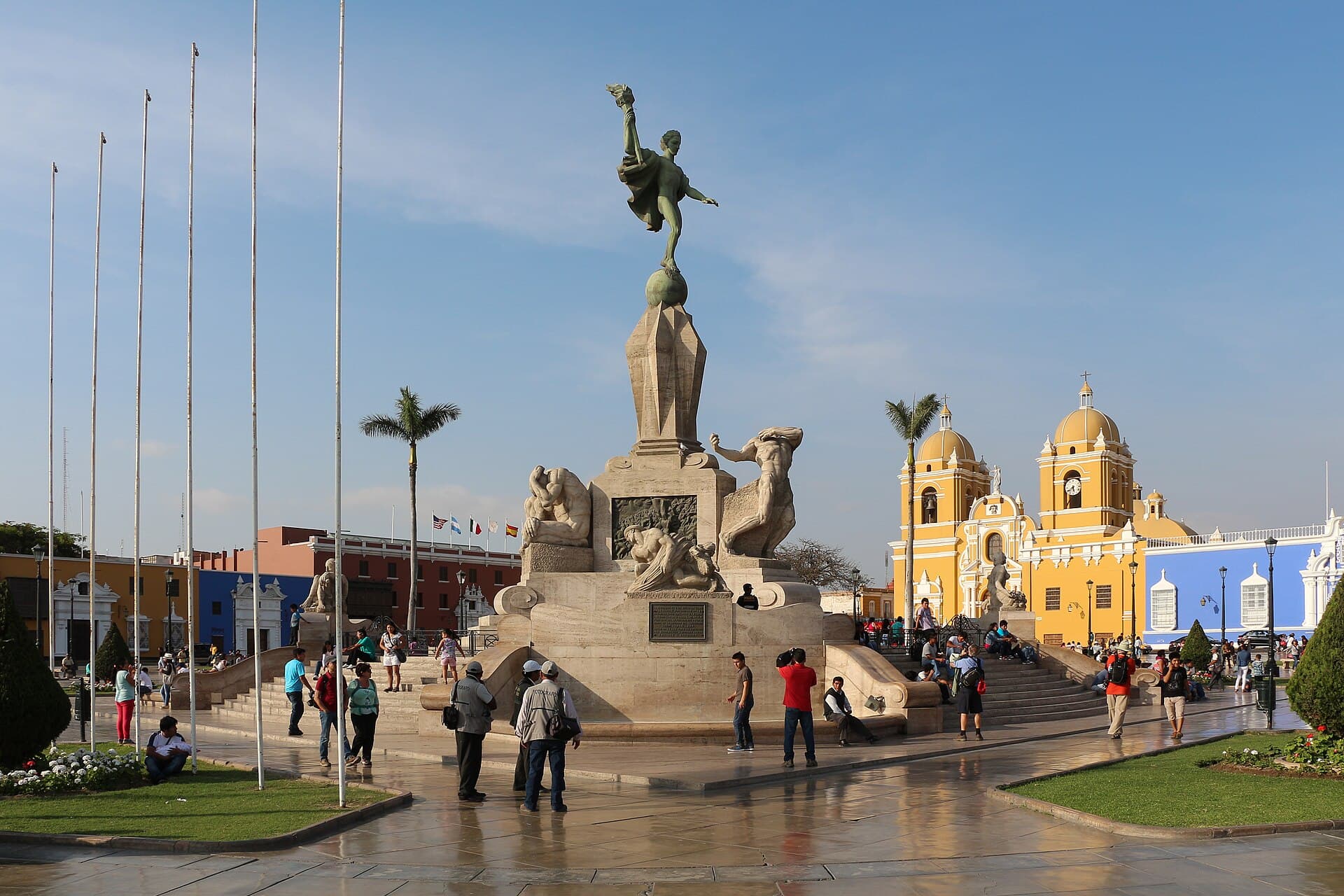 Bernard Gagnon / CC BY-SA 3.0, via Wikimedia Commons
Tour de audio autoguiado de Trujillo — ruta GPS a pie, reproducción offline, narración en 32 idiomas.
“Donde antiguas ciudades de adobe se encuentran con la grandeza colonial y la brisa del Pacífico.”
No las postales. Las historias que ni los locales conocen — al oído, justo donde ocurrieron.
La estructura de adobe más grande de las Américas alguna vez estuvo aquí, pero hoy no se puede visitar. ¿Qué pasó?
Observe de cerca los elaborados balcones de hierro forjado que adornan las mansiones coloniales alrededor de la plaza principal. No eran solo para decoración.
Los pescadores aquí navegan las olas en embarcaciones que parecen más tablas de surf antiguas que botes.
Descubre todos los secretos de Trujillo
Cada dirección, cada revelación al completo — a tu oído, justo donde ocurrió.
Eliges tus paradas. Caminas. La voz te revela lo que los demás ignoran.


Tu tour de audioguía por Trujillo te espera — elige tus lugares, tu idioma y empieza al llegar.
ComprarTrujillo, a menudo llamada la "Ciudad de la Eterna Primavera" por su clima consistentemente agradable, ofrece una cautivadora mezcla de historia antigua y encanto colonial en la costa norte de Perú. Esta dinámica ciudad, la tercera más grande de Perú, abre una puerta a algunos de los sitios arqueológicos precolombinos más impresionantes de las Américas, mientras que su centro histórico bien conservado exhibe un profundo pasado colonial español.
Más allá de las monumentales estructuras de adobe de las civilizaciones Moche y Chimú, las calles de Trujillo están bordeadas de coloridas mansiones, iglesias ornamentadas y animadas plazas, que reflejan siglos de evolución cultural. El cercano pueblo pesquero de Huanchaco ofrece una relajada escapada costera, reconocido por sus tradicionales embarcaciones de totora y sus olas aptas para el surf. Ya sea que te atraigan los misterios de las civilizaciones antiguas, la elegancia de la arquitectura colonial o el ritmo de la vida costera, Trujillo ofrece una experiencia peruana única y auténtica.
Es una ciudad que se enorgullece de su herencia, desde ser la primera ciudad peruana en declarar su independencia de España hasta sus vibrantes tradiciones culturales como la danza Marinera y el caballo de Paso Peruano. Trujillo no es tan visitada como otros destinos peruanos, lo que proporciona una visión más auténtica de la vida local y la convierte en una excelente base para explorar el norte de Perú.
La historia de Trujillo se remonta a milenios, mucho antes de la llegada de los españoles. El fértil Valle de Moche, donde ahora se encuentra la ciudad, fue hogar de culturas precolombinas avanzadas. La civilización Moche floreció aproximadamente entre el 100 y el 800 d.C., dejando atrás monumentales templos de adobe como las Huacas del Sol y de la Luna. Estas estructuras revelan intrincados murales, espacios rituales y arquitectura ceremonial, ofreciendo extraordinarias perspectivas de una sociedad conocida por su hábil metalurgia y expresiva cerámica.
Después de los Moche, surgió la civilización Chimú, estableciendo su capital en Chan Chan, la ciudad de adobe más grande de las Américas. Chan Chan fue una obra maestra de la planificación urbana, con vastas plazas ceremoniales, almacenes y templos adornados con relieves simbólicos de peces, aves y olas, mostrando su avanzada organización social y conexión con su entorno. El Imperio Inca conquistó más tarde a los Chimú alrededor del 1470 d.C., poco antes de la llegada de los españoles.
El conquistador español Diego de Almagro fundó el asentamiento colonial de Trujillo en 1534, nombrándolo en honor al lugar de nacimiento de Francisco Pizarro en España. La ciudad fue estratégicamente planificada con un patrón de cuadrícula alrededor de una plaza central, una característica común de las ciudades coloniales españolas. Trujillo se convirtió rápidamente en un importante centro político y económico en el Virreinato del Perú, mostrando su opulencia a través de iglesias barrocas y mansiones nobles. Sin embargo, la ciudad ha enfrentado numerosos desafíos, incluidos devastadores terremotos en 1619, 1759 y 1970, que llevaron a repetidas reconstrucciones y a una resiliencia arquitectónica única. En 1820, Trujillo hizo historia al convertirse en una de las primeras ciudades de Perú en declarar su independencia del dominio español, un momento crucial en la lucha de la nación por la libertad. Su importante papel llevó a que fuera declarada capital provisional del Perú por Simón Bolívar en 1824 y a ganarse el título de "Ciudad Benemérita y Fiel a la Patria."
Comienza tu exploración en la Plaza de Armas, la animada plaza principal de Trujillo, dominada por el Monumento a la Libertad y rodeada de coloridos edificios coloniales y republicanos. Admira los intrincados balcones de hierro forjado y las fachadas de colores pastel que definen el estilo arquitectónico de la ciudad. Visita la Catedral de Trujillo, una gran estructura amarilla del siglo XVII que muestra influencias barrocas y rococó.
Adéntrate en mansiones coloniales como la Casa de la Emancipación y la Casa Urquiaga para experimentar sus grandes patios y aprender sobre su significado histórico. El Palacio Iturregui, reconocido como uno de los edificios civiles más bellos de Sudamérica, es otro punto culminante arquitectónico con su diseño neoclásico.
Justo fuera de la ciudad, adéntrate en el pasado antiguo de Perú en las Huacas del Sol y de la Luna, monumentales templos de adobe de la civilización Moche, donde vívidos murales representan antiguos rituales. Explora Chan Chan, el extenso sitio declarado Patrimonio de la Humanidad por la UNESCO y la ciudad de adobe más grande de las Américas, construida por los Chimú. No pases por alto la cercana Huaca Arco Iris (Templo del Arco Iris), un templo Chimú con frisos únicos.
Para un cambio de ritmo, dirígete a la Playa de Huanchaco, un popular lugar para surfear donde podrás observar a los pescadores tradicionales navegando las olas en antiguas embarcaciones de totora, los 'caballitos de totora'. El complejo arqueológico El Brujo, más al norte, ofrece información sobre la cultura Moche y la tumba de la Señora de Cao.
Trujillo experimenta un clima desértico templado durante todo el año, lo que le valió el apodo de "Ciudad de la Eterna Primavera". Las temperaturas son generalmente agradables, oscilando entre 18°C y 25°C (64°F a 77°F) con mínimas precipitaciones. La temporada cálida, de enero a abril, ofrece los cielos más despejados y las temperaturas más cálidas, ideal para actividades de playa y exploración al aire libre, aunque puede coincidir con las vacaciones escolares locales y el animado Festival de la Marinera. Los meses más frescos, de junio a septiembre, traen temperaturas ligeramente más bajas y a veces niebla costera (garúa) por las mañanas, que generalmente se disipa al mediodía. Este período es a menudo preferido para explorar sitios arqueológicos y el centro de la ciudad debido a la menor afluencia de gente y las temperaturas agradables. En general, Trujillo es considerado un destino para todo el año, con la primavera y el otoño (abril-mayo y septiembre-noviembre) ofreciendo un buen equilibrio entre clima templado y menos multitudes.
El centro histórico de Trujillo es compacto y fácil de explorar a pie. Para aventurarse a los sitios arqueológicos o la playa de Huanchaco, los taxis están fácilmente disponibles. Es aconsejable utilizar compañías de taxis registradas o aplicaciones de transporte como InDriver o DiDi, especialmente de noche, y negociar las tarifas de antemano. El transporte público a través de combis y microbuses es la opción más económica, pero puede estar abarrotado y propenso a pequeños robos.
Los Soles Peruanos (PEN) son la moneda local, y se prefiere el efectivo en muchos sitios culturales, pequeños restaurantes y para taxis locales. Hay cajeros automáticos disponibles en el Centro Histórico, pero son raros cerca de los sitios arqueológicos. Trujillo generalmente se considera razonablemente segura para los turistas que toman precauciones de sentido común. Esté atento a su entorno, particularmente de noche, y evite caminar solo en áreas desiertas. Mantenga los objetos de valor seguros y evite mostrar signos de riqueza. El índice UV puede ser alto, por lo que se recomienda protección solar durante todo el año.
Trujillo en coreano, en chino o en hebreo — y 29 idiomas más, cada parada narrada por una voz nativa. La mayor variedad de idiomas de cualquier audioguía autoguiada.
Disponible en: