Singe du Grand'Garde (Monkey of the Grand'Garde)
A small, iron monkey graces the facade of the Mons Town Hall, and locals believe it holds a secret to good fortune.
Full story unlocks in the tour
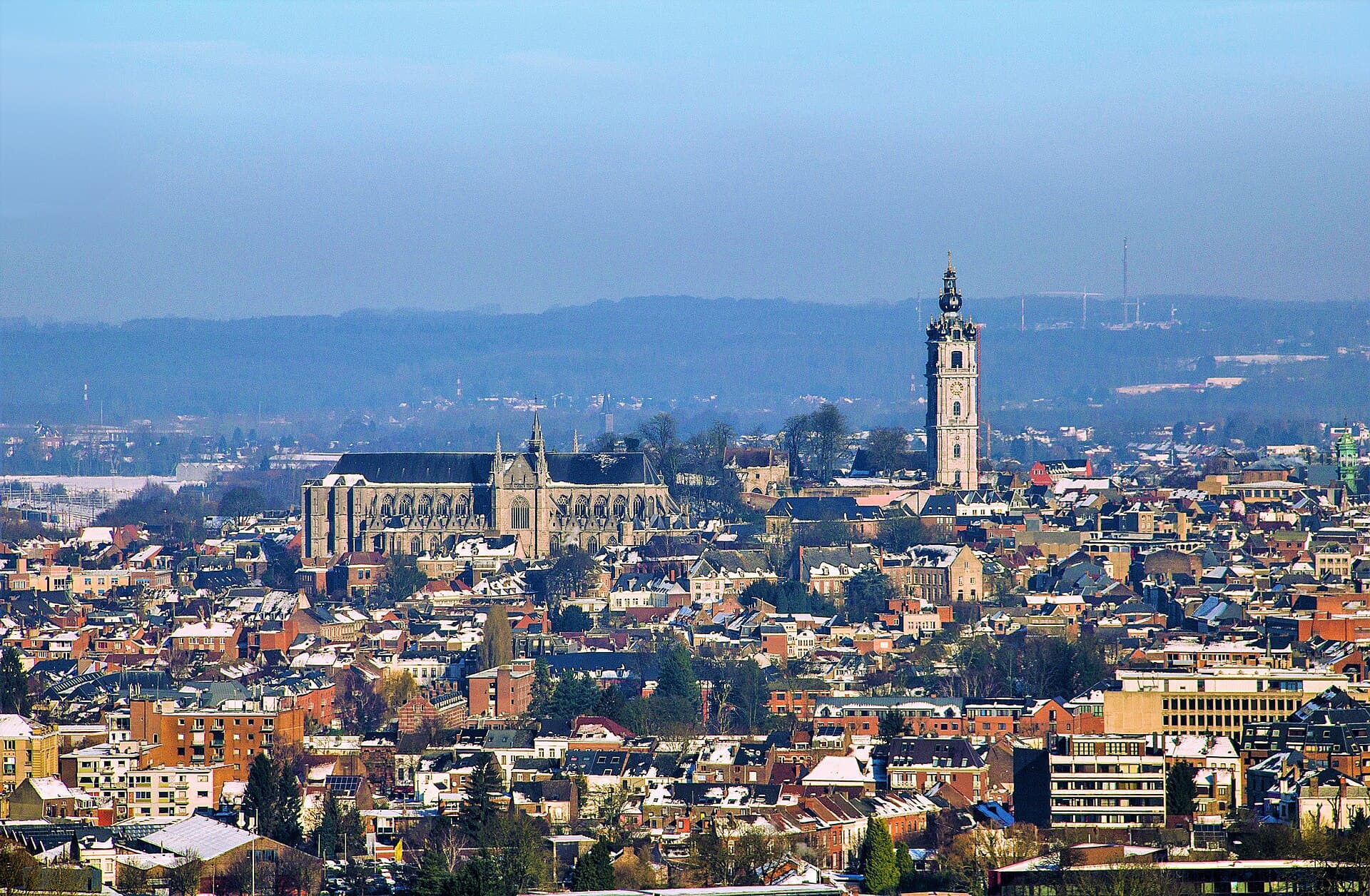 Jean-Pol GRANDMONT / CC BY 3.0, via Wikimedia Commons
Self-guided audio walking tour of Mons — GPS route, offline playback, story-driven narration in 32 languages.
“Where ancient stones echo with the stories of angels and artisans.”
Not the postcards. The stories even locals don't know — whispered in your ear, right where they happened.
A small, iron monkey graces the facade of the Mons Town Hall, and locals believe it holds a secret to good fortune.
King Louis XIV of France once presented the town of Mons with a rather extravagant token of peace.
A quiet cemetery near Mons holds a poignant and distinct honor from World War I.
Discover every secret of Mons
Every address, every reveal in full — in your ear, right where it happened.
You pick your stops. You walk. The voice reveals what the others miss.


Your self-guided audio tour of Mons is ready — pick your landmarks, choose your language, and start the moment you arrive.
BuyLume has a built-in augmented-reality guide. Hold your phone up and its camera shows the street ahead of you, with a glowing arrow laid over the real view that always points to your next stop — no map to puzzle over, no wrong turns. Like everything in Lume, it works fully offline.
Set dramatically on a rocky spur, Mons in the Var department of France offers a peaceful retreat high above the bustling Côte d'Azur. At an elevation exceeding 800 meters, it stands as one of the highest villages in the Var, providing sweeping views that stretch across the Esterel mountains, the Lérins islands, the sea, and on exceptionally clear days, even to Corsica.
This evocative Provençal village, far from the crowds and noise, invites visitors to wander its narrow, winding alleys, admire ancient stone houses, and discover inviting squares with cooling fountains. Mons is a place where history is etched into every stone, from medieval remnants to traces of Roman occupation, offering a serene haven of pure air and enduring beauty.
While often overshadowed by its more celebrated coastal neighbors, Mons possesses a quiet charm, a sense of solitude with a vista that captivates those who seek authenticity and a genuine connection to Provence's past. Its remote location ensures a tranquil experience, making it an ideal destination for those looking to explore the natural and cultural heritage of the region at a more unhurried pace.
The history of Mons extends back to prehistoric times, with evidence of Neolithic habitation found through dolmens at Peygros, la Colle de Monsela Brainée, and St-Marcellin, as well as traces in the grotto de Peygros. The Romans also left their indelible mark, constructing an aqueduct carved through rock, a remarkable feat of engineering still visible at Rochetaillée, which historically transported water to the coastal town of Fréjus.
By the 11th century, Mons was part of the Principality of Callian. It later became a fief of Esclapon and Tourette in the 13th century, before ultimately belonging to the influential Villeneuve family until the French Revolution. The village's strategic position on a rocky spur meant it was fortified, and remnants of its feudal castle and defensive walls can still be observed today, offering a tangible link to its medieval past. The 15th century brought hardship, with Mons enduring the ravages of the Routiers, two epidemics of the Plague, and subsequent famine.
Despite these challenges, Mons persevered. The parish church, dating from the 13th century, underwent expansions in the 15th and 17th centuries, reflecting the village's continued life and development. The solid ancient stone-built houses, some incorporating medieval elements, speak to centuries of continuous habitation and adaptation. In more recent history, Mons has seen a gradual increase in its population since the 1960s, with efforts made to restore and maintain its appealing character, ensuring its beauty endures for future generations.
Begin your exploration at the Place Saint-Sébastien, the village's central square, which offers expansive panoramic views stretching from Cannes and the Lérins islands to the Esterel, and even Corsica on a clear day. An orientation table assists in identifying distant landmarks.
Stroll through the appealing alleys, admiring the well-preserved stone houses, some with medieval architectural details. Seek out the Notre-Dame Church, dating from the 13th to 17th centuries, which houses notable 17th-century Baroque altarpieces and two listed processional crosses. The Chapel of Saint-Sébastien des Pénitents Blancs, a 17th-century chapel, is another historical highlight, with part of it now housing the mayor's office.
For a glimpse into local life and history, visit the Maison Monsoise museum, where you can see period objects and architectural features. Do not miss the intriguing Saracen Gate, a remnant of the village's ancient defenses. Outdoors enthusiasts can explore the surrounding natural beauty, including the Gorges de la Siagne and the Roman aqueduct at Rochetaillée. Hiking, horse riding, and mountain biking are popular activities in the area, with the Grande Randonnée GR49 trail passing directly through Mons.
The ideal time to visit Mons for warm-weather activities extends from mid-June to late September, when temperatures are pleasant and skies are clearest. July typically offers the clearest weather, with minimal rainfall. For a balance of agreeable weather and fewer crowds, consider the shoulder seasons of late spring (May) or early autumn (September-October). During these periods, you will experience mild temperatures and a more tranquil atmosphere. While summer provides a lively ambiance, it can also be the most crowded and expensive.
Mons is a small, quiet village, and while it offers an authentic Provençal experience, it is essential to plan accordingly. There are a few cafés and restaurants in the village where you can enjoy the peaceful pace of life. However, accommodation options directly within Mons are limited, so consider staying in nearby villages like Fayence, Callian, or Seillans, which offer a range of hotels, bed and breakfasts, and vacation rentals within a 10-mile radius.
Access to Mons is primarily by car, via narrow, winding roads such as the D563 from Fayence. Be prepared for careful driving, especially around bends. While Mons itself is walkable, a car is recommended for exploring the surrounding Pays de Fayence region and its natural attractions. There is a tourist information center in Mons that can provide maps and details on local hiking trails and activities.
Mons in Korean, in Chinese or in Hebrew — and 29 more languages, every stop narrated by a native voice. The widest language range of any self-guided audio tour.
Available in: