The Mouse Museum
Imagine a museum dedicated to a single, humble creature. Myshkin has one, and it's not just a collection; it's a global phenomenon.
Full story unlocks in the tour
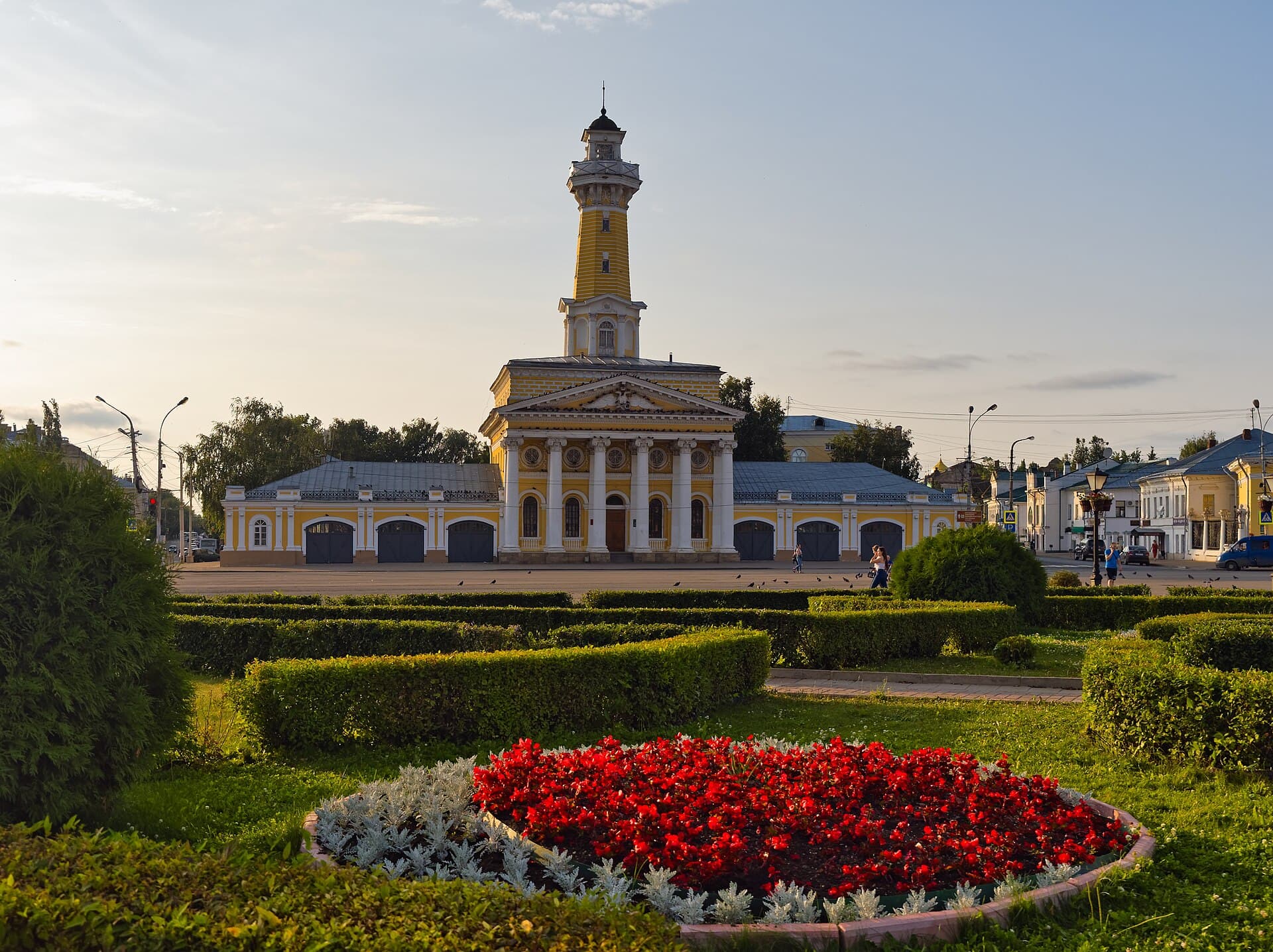 Photo of Kostroma, via Wikimedia Commons
Self-guided audio walking tour of Myshkin — GPS route, offline playback, story-driven narration in 32 languages.
“Where a mouse saved a prince, and whimsy meets the Volga's flow.”
Not the postcards. The stories even locals don't know — whispered in your ear, right where they happened.
Imagine a museum dedicated to a single, humble creature. Myshkin has one, and it's not just a collection; it's a global phenomenon.
The town's emblem tells a curious tale, featuring an unexpected duo at its heart.
One of the world's most recognized vodka brands has surprisingly humble, local origins.
Discover every secret of Myshkin
Every address, every reveal in full — in your ear, right where it happened.
You pick your stops. You walk. The voice reveals what the others miss.


Your self-guided audio tour of Myshkin is ready — pick your landmarks, choose your language, and start the moment you arrive.
BuyMyshkin, a small town on the left bank of the Volga River in Russia's Yaroslavl Oblast, offers a unique window into provincial Russian life. With a population of around 5,700, it's a place where time seems to slow, inviting visitors to wander its quiet, historic streets. The town's name, derived from the Russian word for 'mouse' ('myshka'), hints at the whimsical legend that underpins its identity and fuels its thriving tourism.
Far from the industrial hustle, Myshkin is surrounded by protected pine forests and presents expansive views of the Volga and Yukhot rivers. It has embraced its unusual heritage, transforming into a living folk museum with a surprising array of specialized attractions. From its world-renowned Mouse Museum to its dedication to traditional crafts and local history, Myshkin provides a charming and authentic escape.
The history of Myshkin stretches back millennia, with the first settlements appearing on its present-day site some five thousand years ago. Slavic tribes settled in the area during the 9th century, coexisting peacefully with the Finno-Ugric peoples who had inhabited the territory since the first millennium BC. However, this early growth was tragically interrupted in 1238 when the settlement was decimated by the Mongol ruler Batu Khan.
Myshkin reappeared in historical records in the 16th and 17th centuries, its name forever linked to a captivating urban legend. The tale recounts how a Mstislav prince, resting by the Volga, was awakened by a small field mouse. Initially annoyed, the prince then saw a snake poised to strike, realizing the mouse had saved his life. In gratitude, he ordered a chapel and gatehouse built, which are believed to be the first structures of the future town.
By the 17th century, Myshkin was a village tied to Yaroslavl and the Moscow Chudov Monastery, featuring two churches: St. Nicholas and Boris and Gleb. As the monastery's economy grew, so did the village, and in 1777, Myshkin was granted city status by Catherine the Great, complete with its distinctive coat of arms. The 19th century marked Myshkin's 'golden age,' as it flourished into a significant trading center. Merchants built grand stone and wooden houses, and educational institutions, a printing house, and a library were established, reflecting a period of rapid cultural development.
During Soviet times, Myshkin's city status was demoted to an urban-type settlement, and it faced a period of decline. However, it regained city status in 1991 and has since undergone a remarkable revival, largely thanks to its embrace of tourism and its unique mouse-themed identity. Since the mid-1990s, Myshkin has become a significant tourist destination, attracting a substantial number of visitors, often arriving by river cruise ships on the Volga. The town has successfully preserved its ancient merchant buildings and distinctive way of life, while also developing modern amenities. Myshkin has even won national awards for creating a comfortable urban environment, showcasing its commitment to both its historical roots and its future as a welcoming destination.
Myshkin offers a delightful array of sights, many of them quirky and unique. The Mouse Museum is an absolute point of interest, housing a global collection of mouse-related artifacts. Nearby, the interactive Mouse Palace (Myshkin Chamber) provides a whimsical experience where visitors can meet the Mouse King and Queen.
For a taste of traditional Russian life, explore the Russian Valenki Museum, dedicated to felt boots, and the Flax Museum, both offering insights into local crafts. The Museum of Unique Machines ('Myshkin Samokhod') presents an unexpected collection of vintage vehicles and fascinating old machinery. Do not overlook the Museum of Russian Vodka 'Smirnoff', which delves into the history of the famous brand and its local founder.
Beyond the themed museums, Myshkin presents impressive religious architecture. The Assumption Cathedral, constructed between 1805 and 1820, is a prominent landmark in the city center. The Nikolsky Cathedral, founded in 1766, is another significant historical church. Stroll along the Volga River Embankment for picturesque views, and explore the Upper Boulevard with its beautifully preserved 19th-century merchant mansions. For a glimpse into peasant life, visit the Open-Air Museum of Wooden Architecture, featuring relocated ancient wooden houses, bathhouses, and a smithy.
The best time to visit Myshkin for warm-weather activities is from late June to mid-August, when temperatures are comfortable, averaging between 18°C and 24°C (61°F to 75°F). July is typically the warmest month, with average highs around 22°C (72°F). This period also sees the clearest skies. While June has the highest precipitation, the overall summer months offer pleasant conditions for exploring the town and its outdoor attractions.
Autumn, particularly September to November, can also be a good time to visit, with pleasant but cooler weather and fewer crowds. Winters (December to February) are cold and snowy, with temperatures dropping significantly, but offer a unique, fairytale-like atmosphere.
Myshkin is located approximately 260 kilometers (162 miles) from Moscow and 90 kilometers (56 miles) from Yaroslavl. It can be reached by car or bus from these major cities, with the drive offering scenic views of the Russian countryside. While there isn't a direct train station in Myshkin, you can take a train to nearby Uglich and then arrange for local transport or a taxi. During the summer, river cruises along the Volga are a popular way to arrive. The town itself is compact and best explored on foot, allowing you to fully appreciate its historic charm. Designated parking facilities are available. Myshkin is known for its local dairy products, so be sure to try the famous Myshkin cheese. Souvenir hunting for unique mouse-themed gifts and local crafts is also a popular activity.
Myshkin in Korean, in Chinese or in Hebrew — and 29 more languages, every stop narrated by a native voice. The widest language range of any self-guided audio tour.
Available in: