El lecho del río Volga cerca de Plyos
Bajo la tranquila superficie del Volga, no lejos de Plyos, se esconde un secreto que una vez dictó la existencia misma del pueblo.
La historia completa se desbloquea en el tour
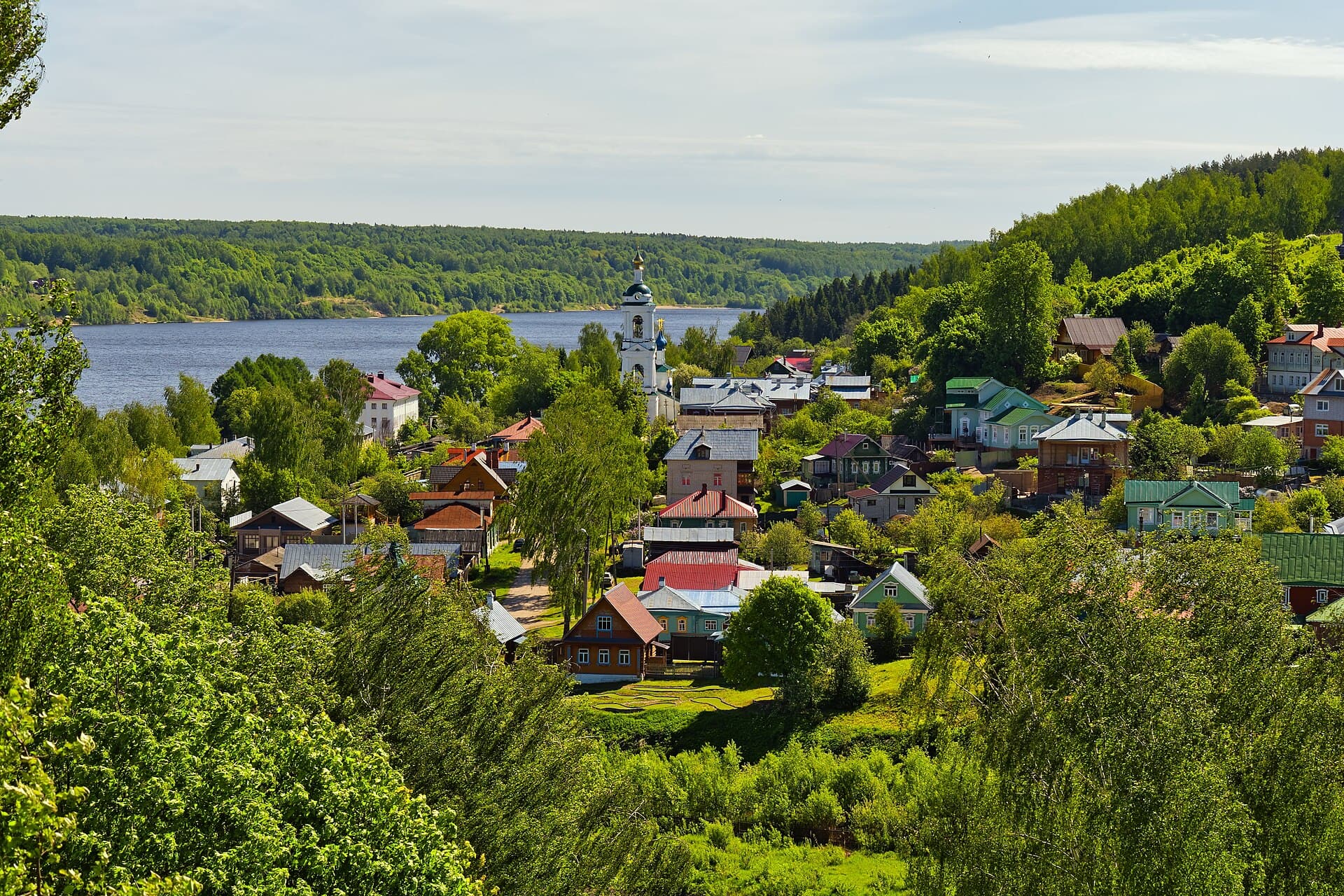 Alexxx1979 / CC BY-SA 4.0, via Wikimedia Commons
Tour de audio autoguiado de Pliós — ruta GPS a pie, reproducción offline, narración en 32 idiomas.
“Donde la suave corriente del Volga transporta ecos de pinceles de artistas y cuentos olvidados.”
No las postales. Las historias que ni los locales conocen — al oído, justo donde ocurrieron.
Bajo la tranquila superficie del Volga, no lejos de Plyos, se esconde un secreto que una vez dictó la existencia misma del pueblo.
La serena belleza de la Colina Levitan, un lugar favorito para los artistas, guarda un secreto sorprendentemente salvaje sobre su flora.
El pintoresco malecón, ahora un centro para paseos tranquilos, una vez sirvió un propósito muy diferente, más escandaloso, para un célebre artista.
Descubre todos los secretos de Pliós
Cada dirección, cada revelación al completo — a tu oído, justo donde ocurrió.
Eliges tus paradas. Caminas. La voz te revela lo que los demás ignoran.


Tu tour de audioguía por Pliós te espera — elige tus lugares, tu idioma y empieza al llegar.
ComprarPlyos, un pequeño pueblo en la orilla alta del río Volga en la región de Ivánovo de Rusia, es un lugar donde el tiempo parece ralentizarse. Conocida como una 'Perla del Volga' y a veces apodada 'Suiza Rusa', ofrece una mezcla única de belleza natural, patrimonio cultural y una atmósfera tranquila. Con una población de menos de 2.000 habitantes, Plyos atrae a miles de visitantes anualmente, lo que la convierte en una de las ciudades pequeñas más visitadas de Rusia.
El atractivo del pueblo reside en sus casas mercantiles del siglo XIX conservadas, pintorescas iglesias ortodoxas y el sereno río Volga, que ha inspirado a generaciones de artistas. Plyos es un verdadero museo al aire libre, donde pasear por las calles históricas se siente como retroceder en el tiempo a una pintura de paisaje clásica rusa.
La historia de Plyos se remonta a más de 850 años, con las primeras menciones apareciendo en la Crónica de Nizhni Nóvgorod en 1141. En ese momento, era una fortaleza de madera y un gran asentamiento. Esta fortaleza temprana fue saqueada y quemada durante la invasión tártaro-mongola en 1238.
Dos siglos después, en 1410, el Gran Príncipe Vasili I ordenó la construcción de una nueva fortaleza. Esta sirvió como una torre de vigilancia crucial en el acceso a Kostromá y un puesto fronterizo para el Gran Ducado de Moscú. Plyos también se convirtió en un punto aduanero, beneficiándose de un laberinto submarino natural en el Volga que dificultaba la navegación, requiriendo la experiencia de los pilotos fluviales locales.
A medida que las fronteras de Rusia se expandieron, el puesto militar se transformó en un bullicioso puerto comercial. Se molía y vendía grano, y se enviaban telas de lino a otras ciudades. Esta era mercantil vio la construcción de numerosas casas elegantes a lo largo del malecón, muchas de las cuales aún se conservan hoy. Sin embargo, la importancia comercial del pueblo disminuyó después de que el ferrocarril que conectaba Ivánovo y Kíneshma pasara de largo a Plyos a finales del siglo XIX.
Este declive, irónicamente, allanó el camino para el renacimiento de Plyos como un pueblo de dachas (casas de verano) y un refugio artístico. Los moscovitas adinerados buscaban un escape pacífico, y en 1888, llegó el renombrado pintor paisajista Isaac Levitan. Pasó tres veranos en Plyos, creando casi 200 lienzos que inmortalizaron los paisajes del pueblo y le dieron fama nacional. Su presencia consolidó la reputación de Plyos como un imán para artistas y una 'Suiza Rusa'.
A lo largo del siglo XX, Plyos mantuvo su estatus de ciudad balneario, convirtiéndose en parte de la ruta turística del 'Anillo de Oro' de Rusia. Hoy en día, sigue atrayendo a quienes buscan tranquilidad, inspiración artística y un vistazo a una época pasada.
Comience su exploración en el Malecón del Volga, un tramo de tres kilómetros bordeado de arquitectura histórica y acogedores restaurantes. Desde aquí, suba a la Colina de la Catedral (Sobornaya Gora), a 55 metros sobre el Volga, para disfrutar de amplias vistas del pueblo y el río. La Catedral de la Asunción, construida en 1699, corona esta colina.
Continúe hasta la Colina Levitan (Montaña Petropavlovskaya), otro mirador que ofrece vistas panorámicas. Aquí encontrará la Iglesia de la Resurrección de madera, que data de finales del siglo XVII, un tema en muchas de las pinturas de Levitan.
Sumérjase en el legado artístico del pueblo en la Casa-Museo Levitan, donde vivió el célebre pintor paisajista. Además, visite el Museo de Pintura Paisajista, el único museo en Rusia dedicado exclusivamente a este género, que presenta obras de artistas prominentes como A. Savrásov, I. Shishkin y V. Polénov.
Pasee por la Calle Sovetskaya (la calle de las galerías) en el malecón, donde abundan las galerías de arte y las fincas mercantiles. No se pierda la Iglesia de la Resurrección en la Plaza del Mercado, construida en 1817.
Para recuerdos únicos y sabores locales, explore el mercado junto al muelle, donde podrá encontrar pescado ahumado del Volga. Busque el Monumento al Gato Mujá, una encantadora escultura local.
Considere un crucero por el río Volga para una perspectiva diferente de Plyos y sus alrededores.
Plyos es atractivo durante todo el año, cada estación ofrece una atmósfera distinta. El verano (junio a agosto) trae temperaturas agradables, ideales para cruceros por el río y actividades al aire libre, aunque puede estar concurrido. El otoño es particularmente espléndido, con un follaje radiante y menos multitudes, lo que lo convierte en un buen momento para paseos tranquilos y visitas a museos. El invierno transforma Plyos en un paraíso nevado, con el Volga congelado, lo que permite experiencias únicas como conducir sobre el hielo. La primavera, aunque fugaz, ofrece su propio encanto a medida que la naturaleza despierta. Los días laborables generalmente ofrecen una experiencia más tranquila con menos turistas.
Plyos se encuentra en el Óblast de Ivánovo, aproximadamente a 370 kilómetros al noreste de Moscú. La forma más fácil de llegar a Plyos desde Moscú es en coche, un viaje de unas 5-6 horas. Alternativamente, puede tomar un tren de alta velocidad (Lastochka) a Ivánovo (aproximadamente 3 horas y 41 minutos) y luego un autobús o taxi a Plyos (1 hora y 20 minutos a 1 hora y 50 minutos).
Una vez en Plyos, el centro histórico se explora fácilmente a pie. El atractivo del pueblo reside en su facilidad para caminar, con muchas calles empedradas y sinuosas. Para distancias más largas o una perspectiva diferente, hay cruceros fluviales disponibles en el Volga.
Las opciones de alojamiento incluyen dachas de estilo mercantil y apartamentos de estilo ruso antiguo, muchos de propiedad privada. Se recomienda reservar con antelación, especialmente durante la temporada alta. Rusia utiliza tráfico por la derecha y la electricidad es de 230V/50Hz. El código de marcación del país es +7.
Pliós en coreano, en chino o en hebreo — y 29 idiomas más, cada parada narrada por una voz nativa. La mayor variedad de idiomas de cualquier audioguía autoguiada.
Disponible en: