The Granary (foot of Robinson Street and Water Street)
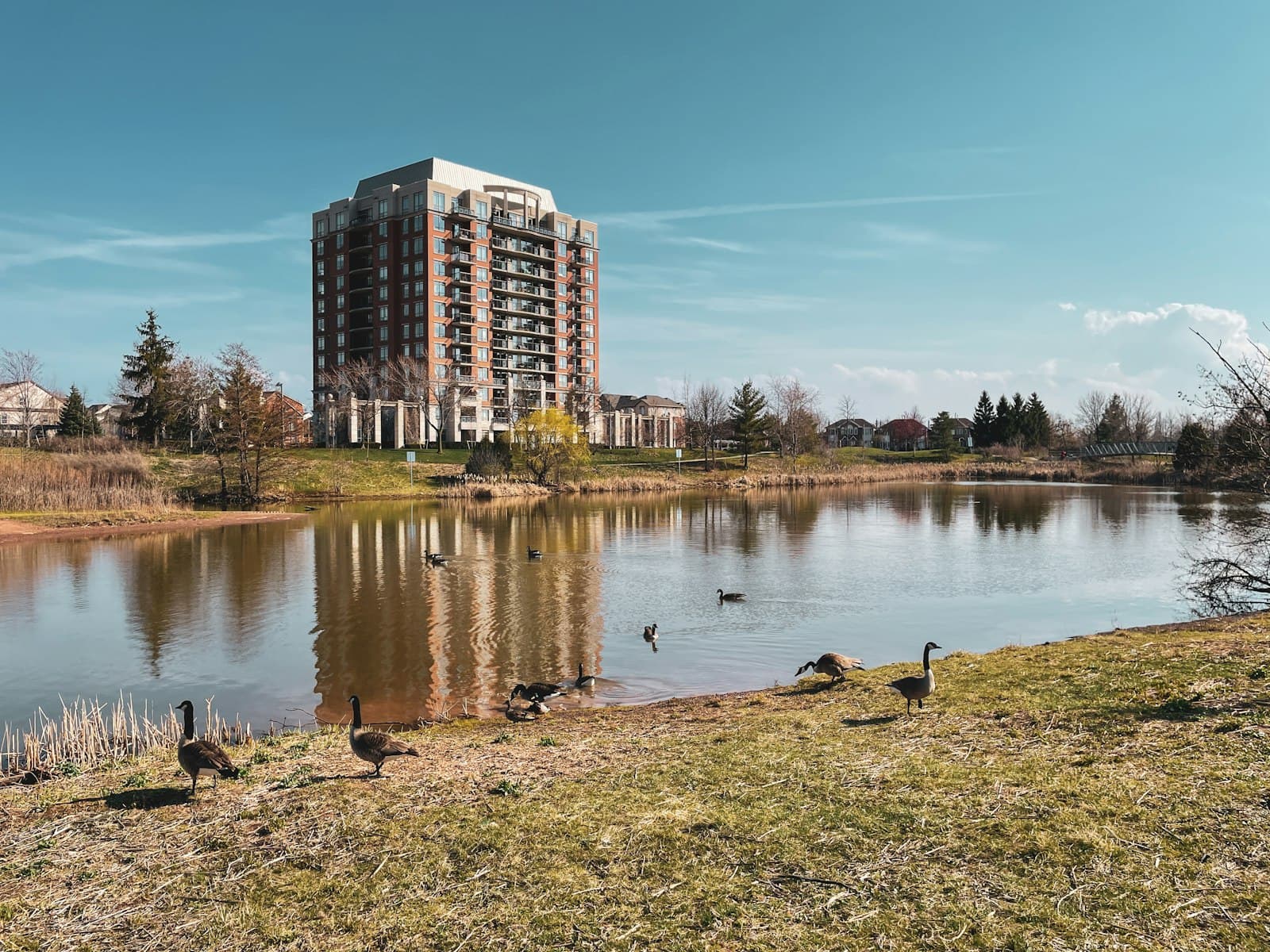
Before it was a condominium, this stone building by the Sixteen Mile Creek was a hub for a crucial 19th-century trade. What was stored within its sturdy walls?
Full story unlocks in the tour
 Canmenwalker / CC BY 4.0, via Wikimedia Commons
Self-guided audio walking tour of Oakville — GPS route, offline playback, story-driven narration in 32 languages.
“Where Lake Ontario carries stories of escape, industry, and quiet ambition.”
Not the postcards. The stories even locals don't know — whispered in your ear, right where they happened.
Before it was a condominium, this stone building by the Sixteen Mile Creek was a hub for a crucial 19th-century trade. What was stored within its sturdy walls?
This address holds the legacy of a man known as 'Canada Jim,' whose daring efforts changed hundreds of lives. What was his secret mission?
This park holds a poignant connection to Oakville's early Black community, a testament to resilience and new beginnings. What historical gathering took place here for years?
Discover every secret of Oakville
Every address, every reveal in full — in your ear, right where it happened.
You pick your stops. You walk. The voice reveals what the others miss.

Your self-guided audio tour of Oakville is ready — pick your landmarks, choose your language, and start the moment you arrive.
BuyLume has a built-in augmented-reality guide. Hold your phone up and its camera shows the street ahead of you, with a glowing arrow laid over the real view that always points to your next stop — no map to puzzle over, no wrong turns. Like everything in Lume, it works fully offline.
Oakville, Ontario, stretches along the northern shores of Lake Ontario, a town situated between the metropolises of Toronto and Hamilton. With a population exceeding 213,000, it stands as Ontario's largest town, offering a compelling blend of natural beauty, historical depth, and modern amenities. Its picturesque harbors, waterfront parks, and a charming downtown core create an inviting atmosphere for both residents and visitors.
Beyond its waterfront and green spaces, Oakville holds a significant place in Canadian history. It was a crucial port of entry and a terminus for the Underground Railroad, providing a gateway to freedom for many African Americans escaping slavery. The town's commitment to preserving its heritage is evident in its well-maintained historic sites and engaging cultural institutions, inviting exploration into the stories that shaped this lakeside community.
Today, Oakville is recognized for its high quality of life, diverse community, and a thriving arts and culture scene. From exploring its extensive parklands and trails to enjoying live performances and art exhibitions, Oakville offers a range of experiences.
The lands that now constitute Oakville have been home to various Indigenous groups for thousands of years, including the Neutral, Huron-Wendat, Haudenosaunee, and Anishinaabeg, particularly the Mississaugas. The area is covered by Treaty 14 and Treaty 22, the Head of the Lake Purchase, which ceded vast tracts of land to the Crown in the early 19th century. European and American settlers began arriving in the early 1800s, with colonial settlement of Trafalgar Township starting around 1806.
Oakville's modern story truly began in 1827 when Colonel William Chisholm, a successful businessman and politician, purchased 960 acres at the mouth of Sixteen Mile Creek. His vision was to establish a thriving port and town, a center for the export of goods and grain. Within a year, Chisholm had planned the town and completed the harbor, which quickly became a significant hub for trade between Hamilton, Toronto, and other cities. In 1834, Oakville was officially declared a Port of Entry into Canada, with Chisholm serving as the customs inspector.
During the 19th century, Oakville played a pivotal role as a terminus for the Underground Railroad. It was a beacon of freedom for many African Americans escaping slavery in the United States. Between 1850 and 1860 alone, an estimated 40,000 African Americans migrated to Canada, with Oakville being a major destination. Notable figures like Captain Robert Wilson secretly transported individuals across Lake Ontario in grain vessels, while James Wesley Hill, an escaped slave himself, became a 'conductor,' leading hundreds to safety and employing them on his strawberry farm.
By 1857, the village prospered enough to be incorporated as a town, and William Chisholm's eldest son, George King Chisholm, was elected as its first mayor. The town's early industries included shipbuilding, manufacturing, and grain storage. However, the 1870s brought economic challenges with a surplus of world wheat and the Grand Trunk Railway bypassing Oakville, leading to a decline in harbor shipments. Farmers adapted by turning to fruit production, with strawberries becoming a principal crop.
The arrival of the automobile in the early 20th century, particularly with the paving of Lakeshore Road in 1915-1916 (the first paved highway in Ontario), and the opening of the Queen Elizabeth Way in 1939, facilitated easier commuting and further growth. In 1951, the Ford Motor Company established an automobile assembly plant in Oakville, becoming the largest private employer in the Halton Region and significantly contributing to the town's expansion. In 1962, Oakville amalgamated with the Township of Trafalgar, becoming the largest town in Canada at the time, incorporating neighboring villages like Bronte, Palermo, and Sheridan. This amalgamation, and subsequent boundary redrawings in 1974, shaped the Oakville we know today, a community that has retained its unique spirit.
Oakville offers a range of attractions, blending its historical roots with modern leisure. Begin your exploration at the Oakville Museum at Erchless Estate, the former home of the town's founding Chisholm family. Here, you can delve into local history through exhibits, explore beautifully restored Victorian interiors, and wander through the gardens overlooking Lake Ontario. Adjacent to the museum is the Custom House, built in 1856, which once served as the official customs office for Oakville's port.
For a dose of nature, Bronte Creek Provincial Park offers extensive trails for hiking, biking, and even cross-country skiing in winter, alongside an outdoor swimming pool for warmer months. The picturesque Bronte Harbour and Oakville Harbour are perfect for relaxing by the waterfront, watching boats, or enjoying a coffee at a local bistro. Downtown Oakville itself is a charming area with restaurants, specialty shops, and boutiques, particularly along Lakeshore Boulevard.
Golf enthusiasts will appreciate Glen Abbey Golf Club, known as the 'Home of the Canadian Open,' which also houses the Canadian Golf Hall of Fame, celebrating the history of golf in Canada. For arts and culture, the Oakville Centre for the Performing Arts hosts a variety of live shows, from symphony to ballet and theater. Do not miss Gairloch Gardens, a serene lakeside park known for its floral displays and sculptures.
The best time to visit Oakville for warm-weather activities is from late June to early September. During these months, summers are comfortable, with average daily temperatures ranging from 19°C to 26°C (66°F to 79°F). July is typically the warmest month, while August offers the clearest skies. Spring (April-May) and autumn (September-October) provide moderate weather, ideal for walks and outdoor exploration, with pleasant temperatures. Winters (December-March) are freezing, snowy, and windy, with average temperatures around -2°C to -3°C (27°F to 28°F).
Oakville is easily accessible, located on the western tip of Lake Ontario, approximately a 30-minute drive southwest of Toronto. Public transportation is available, connecting the town to the wider Greater Toronto Area. Within Oakville, you can explore many attractions on foot, especially in areas like Downtown Oakville and Bronte Village. For longer distances or to visit attractions like Bronte Creek Provincial Park, a car is recommended. The town offers a variety of dining options, from casual cafes to upscale restaurants, particularly in the downtown core and Bronte Village. Accommodation ranges from hotels to guesthouses. It's advisable to book accommodations and any specific tours or activities in advance, especially during peak season. Oakville is a safe and welcoming community, but standard travel precautions should always be observed.
Oakville in Korean, in Chinese or in Hebrew — and 29 more languages, every stop narrated by a native voice. The widest language range of any self-guided audio tour.
Available in: