Hôtel de ville de Port Hope
Cet imposant bâtiment municipal a autrefois revêtu une identité différente, plus sinistre, pour la caméra.
L'histoire complète se débloque dans le tour
 Dillan Payne / CC BY-SA 4.0, via Wikimedia Commons
Visite audio autoguidée de Port Hope — parcours GPS à pied, lecture hors ligne, narration en 32 langues.
“Là où la rivière Ganaraska sculpte le temps et où les écrans d'argent trouvent leur décor.”
Pas les cartes postales. Les histoires que même les habitants ignorent — soufflées à l'oreille, là où elles se sont passées.
Cet imposant bâtiment municipal a autrefois revêtu une identité différente, plus sinistre, pour la caméra.
Le cours d'eau qui serpente à travers la ville est le théâtre d'un spectacle naturel annuel remarquable qui attire d'innombrables observateurs.
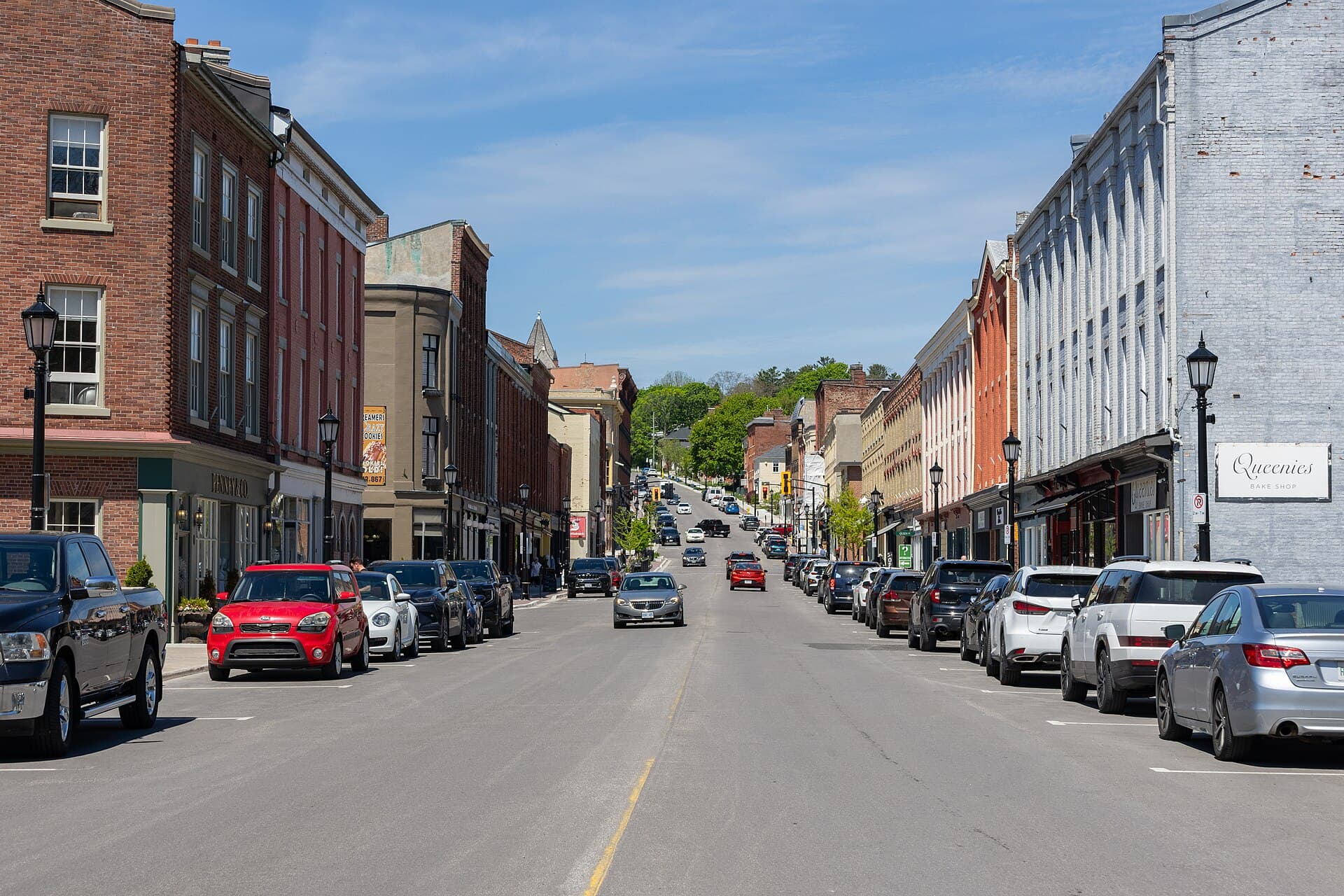
Une promenade le long de l'artère principale de Port Hope pourrait évoquer un étrange sentiment de familiarité, surtout pour les adeptes d'une saga d'horreur particulière.
Découvrez tous les secrets de Port Hope
Chaque adresse, chaque révélation en entier — dans ton oreille, là où elle s'est passée.
Tu choisis tes lieux. Tu marches. La voix te révèle ce que les autres ignorent.


Votre visite audioguidée de Port Hope vous attend — choisissez vos lieux, votre langue, et lancez-vous dès votre arrivée.
AcheterLume intègre un guide en réalité augmentée. Levez votre téléphone : sa caméra montre la rue devant vous, avec une flèche lumineuse posée sur l'image réelle qui pointe toujours vers votre prochain arrêt — aucune carte à déchiffrer, aucun mauvais virage. Comme tout dans Lume, ça fonctionne entièrement hors-ligne.
Port Hope, une municipalité de l'Est de l'Ontario, au Canada, est une charmante ville située sur la rive nord du lac Ontario, à l'embouchure de la rivière Ganaraska. Située à environ 109 km à l'est de Toronto, elle offre une échappée sereine loin de l'agitation urbaine. La ville est réputée pour son paysage urbain du XIXe siècle méticuleusement préservé, avec plus de 270 bâtiments désignés comme patrimoniaux, ce qui lui confère un taux de préservation par habitant plus élevé que toute autre ville ou cité au Canada.
La rivière Ganaraska, souvent appelée la 'Ganny', traverse le cœur de Port Hope, offrant à la fois une grâce visuelle et un point focal pour des phénomènes naturels singuliers. Au-delà de son attrait architectural, Port Hope a acquis une reconnaissance en tant que lieu de tournage privilégié, notamment pour les films 'Ça' de Stephen King, qui ont transformé son centre-ville en la ville fictive de Derry, Maine. Cette convergence de charme historique, de splendeur naturelle et de liens cinématographiques fait de Port Hope une destination distincte.
Avant la colonisation européenne, le territoire entourant Port Hope était habité par le peuple Cayuga au début du XVIIe siècle, et un village Mississauga nommé Cochingomink y existait également. En 1778, un poste de traite des fourrures fut établi, et la colonie devint connue sous le nom de Smith's Creek, d'après un commerçant, Peter Smith. Les premiers colons européens permanents, des Loyalistes de l'Empire-Uni, arrivèrent en 1793, ayant reçu des terres de la Couronne après la Révolution américaine. John Graves Simcoe, alors lieutenant-gouverneur du Haut-Canada, établit le canton de Hope au début des années 1790, nommé d'après le colonel Henry Hope, lieutenant-gouverneur de la province de Québec.
Pendant une brève période entre 1817 et 1819, la région fut même connue sous le nom de Toronto ou « Toronto à Smith's Creek ». Cependant, en 1819, le village et le canton furent unis et officiellement nommés Port Hope. La ville fut incorporée en 1834.
Au XIXe siècle, Port Hope prospéra en tant que centre de commerce et de transport, exportant du bois, du whisky et des céréales vers les États-Unis et l'Europe, propulsée par son port naturel et l'énergie de la rivière Ganaraska pour les moulins. Bien que le développement ait ralenti à la fin du XIXe siècle à mesure que Toronto grandissait et que les ressources en bois diminuaient, cette période de croissance plus lente a involontairement sauvegardé une grande partie de l'architecture du XIXe siècle de Port Hope. Aujourd'hui, le centre-ville de Port Hope est célébré comme le paysage urbain du XIXe siècle le mieux préservé de l'Ontario. La ville compte plus de 270 bâtiments désignés comme patrimoniaux, un témoignage des efforts de préservation actifs de groupes tels que l'Architectural Conservancy of Ontario et le Heritage Port Hope Advisory Committee.
Port Hope possède également une histoire moins connue et complexe liée à l'industrie nucléaire canadienne. Des années 1930 aux années 1980, Eldorado Mining and Refining Limited et ses prédécesseurs ont raffiné du radium et de l'uranium à Port Hope, ce qui a entraîné la présence de déchets radioactifs historiques de faible activité. Ces déchets, principalement des sols, des roches et des matériaux de construction contaminés, font maintenant partie de l'Initiative de la région de Port Hope, le plus grand effort de nettoyage environnemental de l'histoire du Canada. Cette initiative implique le déplacement d'environ 1,2 million de mètres cubes de ces déchets vers un monticule de confinement conçu pour une gestion sûre et à long terme.
Port Hope offre une gamme d'attractions qui entremêlent son passé durable et sa splendeur naturelle. Commencez par une promenade tranquille le long de Walton Street, reconnue comme la rue principale patrimoniale la mieux préservée de l'Ontario, avec ses boutiques et restaurants distinctifs logés dans des bâtiments historiques. Beaucoup de ces structures ont été transformées en la ville fictive de Derry, Maine, pour les films 'Ça' ; vous pouvez même vous lancer dans une visite à pied autoguidée sur le thème de 'Ça'. Le Capitol Theatre, l'un des derniers théâtres 'atmosphériques' du Canada, offre une expérience cinématographique singulière avec sa cour médiévale et son intérieur au ciel étoilé.
Ceux qui apprécient la nature trouveront la rivière Ganaraska fascinante, en particulier pendant les montaisons annuelles de saumons et de truites de la mi-août au début octobre. L'échelle à poissons du barrage de Corbett offre un excellent point de vue pour observer des milliers de poissons sautant en amont. Pour les activités de plein air, explorez les sentiers de la zone de conservation du Millénaire de Ganaraska ou aventurez-vous au nord dans la vaste forêt de Ganaraska pour la randonnée et le VTT. Port Hope comprend également les plages Est et Ouest le long du lac Ontario, parfaites pour le repos ou la marche sur le sentier riverain.
Le temps le plus agréable à Port Hope se situe de juin à septembre, avec des températures diurnes moyennes allant de 22°C à 26°C (71-79°F). Juillet est généralement le mois le plus chaud. Cette période est idéale pour les activités de plein air, les festivals et profiter des plages. Le début de l'automne, en particulier septembre, est également excellent, conservant la chaleur estivale avec moins de jours de pluie et offrant la remarquable montaison du saumon dans la rivière Ganaraska.
Port Hope est facilement accessible, située à environ une heure de route à l'est de Toronto, juste à côté de l'autoroute 401 (sortie 464). Bien que de nombreuses attractions soient accessibles à pied dans le centre-ville de Port Hope, une voiture est pratique pour explorer la municipalité et la campagne environnante. Le stationnement est souvent gratuit le week-end dans le centre-ville. Port Hope Transit propose deux lignes de bus circulaires locales pour se déplacer dans la ville, avec des billets à l'unité disponibles.
Les options d'hébergement comprennent divers gîtes, auberges et hôtels de charme, dont beaucoup sont logés dans des bâtiments patrimoniaux. Compte tenu de sa popularité en tant que destination de week-end, en particulier pendant l'été et la saison de migration du saumon, il est fortement recommandé de réserver son hébergement 1 à 2 mois à l'avance. La ville offre également une sélection de restaurants et de pubs, des terrasses au bord du lac aux repas dans des bâtiments historiques.
Port Hope en coréen, en chinois ou en hébreu — et dans 29 autres langues, chaque étape narrée par une voix native. La plus large gamme de langues de tous les audioguides autoguidés.
Disponible en :