Church of Sant'Erasmo
The final resting place of a Baroque master remained an enigma for centuries. A local church, however, holds a surprising clue to his last days.
Full story unlocks in the tour
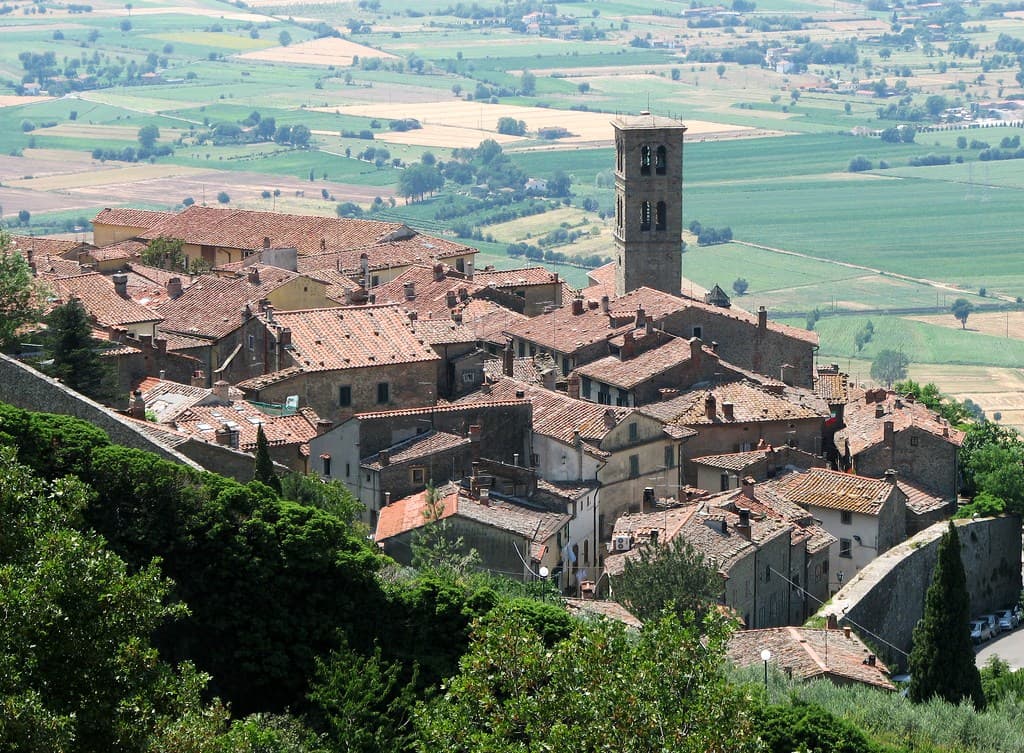 Photo of Cortona, via Wikimedia Commons
Self-guided audio walking tour of Porto Ercole — GPS route, offline playback, story-driven narration in 32 languages.
“Where ancient stones recount sagas of Spanish dominion and the sea’s enduring embrace.”
Not the postcards. The stories even locals don't know — whispered in your ear, right where they happened.
The final resting place of a Baroque master remained an enigma for centuries. A local church, however, holds a surprising clue to his last days.
These grand Spanish fortresses, once crucial for defense, now safeguard a different kind of treasure.
The origin of the town's name, 'Port Hercules,' may reach back further than commonly thought, to a powerful ancient civilization.
Discover every secret of Porto Ercole
Every address, every reveal in full — in your ear, right where it happened.
You pick your stops. You walk. The voice reveals what the others miss.


Your self-guided audio tour of Porto Ercole is ready — pick your landmarks, choose your language, and start the moment you arrive.
BuyLume has a built-in augmented-reality guide. Hold your phone up and its camera shows the street ahead of you, with a glowing arrow laid over the real view that always points to your next stop — no map to puzzle over, no wrong turns. Like everything in Lume, it works fully offline.
Porto Ercole, a scenic seaside village on the eastern side of the Monte Argentario Promontory in Tuscany, stands where Spanish military history converges with the clear waters of the Maremma coast. Recognized as one of the 'Borghi più belli d'Italia' (Italy's most beautiful villages), it provides a refined yet authentic Italian retreat.
The village is defined by its three Spanish fortresses—Forte Filippo, Forte Stella, and La Rocca—which command its skyline and offer expansive views of the Tuscan Archipelago. Beyond its historical fortifications, Porto Ercole is remembered for its connection to the Baroque painter Caravaggio, believed to be his final resting place. It also serves as a prime destination for luxury yachting and Mediterranean sailing, drawing visitors with its lively summer social scene and tranquil coastal splendor.
The story of Porto Ercole reaches back to ancient times, with evidence of Etruscan settlements. Many scholars believe the village was named 'Hercules' by the Etruscans, a theory supported by the discovery of an Etruscan necropolis in the area. Later, in Roman times, the region was associated with influential families like the Enobarbus.
The town's medieval form began to emerge in 1296 under Margherita Aldobrandeschi, who commissioned the construction of the Torre di Terra, the oldest heart of the town. In the 15th century, the Republic of Siena fortified the village, erecting the Gothic gate and the recognizable clock tower, Porta Pisana, which still marks the entrance to the old town.
However, Porto Ercole's most defining historical period commenced in the mid-1500s when it was ceded to Spain after their assistance in defeating Siena. Under Spanish rule in the 16th century, Porto Ercole became a strategic military center, forming part of the 'Stato dei Presidi' (Garrison State). This era left behind the grand defensive forts—Forte Filippo, Forte Stella, and La Rocca—that continue to shape the landscape today. These formidable bastions were essential in safeguarding the Tuscan coast from pirate incursions and Ottoman raids.
Perhaps Porto Ercole's most celebrated historical connection is to the painter Michelangelo Merisi, known as Caravaggio. In July 1610, Caravaggio, who had been evading a murder charge in Rome for four years, died unexpectedly in Porto Ercole while seeking a papal pardon. He was likely afflicted with malaria and collapsed, with some accounts suggesting he died on the Tombolo di Feniglia beach. For centuries, his burial site remained unknown. However, in 2010, on the 400th anniversary of his death, scientific research strongly suggested his remains were identified in a common grave in the local Church of Sant'Erasmo. This dramatic narrative is now an integral part of the village's cultural identity, with a commemorative plaque and a dedicated museum.
Begin your exploration at the Spanish Fortresses, the defining landmarks of Porto Ercole. Forte Stella, with its distinctive hexagonal star shape, offers some of the most expansive views of the Tuscan Archipelago. While Forte Filippo and La Rocca are privately owned, their commanding presence from a distance remains striking.
Walk through the medieval village, accessed via the 16th-century Porta Pisana, a Gothic gate crowned with a clock tower. Meander through its intricate network of narrow alleys and stairways, discovering glimpses of the sea at every turn. The historic center, though modest in size, is meticulously maintained, featuring artisan shops, art galleries, and vendors of local products. The port area serves as the social core, bustling with fishermen in the morning and visitors strolling along the waterfront in the evening.
Follow Caravaggio's last days by visiting the commemorative plaque and dedicated museum in the historic village center. For those who appreciate nature, the Corsini Botanical Garden is a recommended stop. Do not miss the chance to explore the lovely beaches nearby, such as Le Viste, la Spiaggia Lunga, and l'Acqua Dolce. For a distinct perspective, consider chartering a boat to uncover secluded coves and nearby islands like Giglio and Giannutri.
The ideal time to visit Porto Ercole is from June through August, when the weather is warm and bright, perfect for enjoying the coast and marine activities. For fewer crowds and a more tranquil atmosphere, the shoulder months of May, early June, and September provide pleasantly warm temperatures and attractive scenery. While the village is nearly deserted in winter, it retains its allure for those seeking quietude.
Porto Ercole is approximately 1 hour and 50 minutes by car from Rome Fiumicino Airport. A car is highly recommended for exploring Monte Argentario and the surrounding Maremma region, as local buses can be erratic and taxis are scarce. Parking in Porto Ercole during the summer can be challenging; consider arriving before 9:00 AM or utilizing paid car parks outside the center.
For lodging, options range from charming hotels to luxurious resorts. The Argentario Golf & Wellness Resort, just 10 minutes from Porto Ercole, stands as a premier choice for those seeking a blend of wellness, sport, and environmentally conscious luxury. The port area offers a variety of eateries, bars, and boutiques. For beach access, sandy options like Feniglia and Giannella are a short drive away, while rocky beaches like Isolotto Beach Club near Le Viste are also popular.
Porto Ercole in Korean, in Chinese or in Hebrew — and 29 more languages, every stop narrated by a native voice. The widest language range of any self-guided audio tour.
Available in: