Among the lively murals and lively streets of the Mission District, a gold-painted fire hydrant may catch your eye. Its unusual color tells a significant story.
Spicypepper999 / CC0, via Wikimedia CommonsSan Francisco
Self-guided audio walking tour of San Francisco — GPS route, offline playback, story-driven narration in 32 languages.
“San Francisco: A city of fog, fortunes, and defiant dreams.”
San Francisco, as no one tells it.
Not the postcards. The stories even locals don't know — whispered in your ear, right where they happened.
The distinctive International Orange of the Golden Gate Bridge is instantly recognizable, yet this was not the color originally envisioned for the structure.
The federal prison on Alcatraz was known for its severe conditions and the near impossibility of escape. However, inmates were afforded an unexpected amenity.
Discover every secret of San Francisco
Every address, every reveal in full — in your ear, right where it happened.
You pick your stops. You walk. The voice reveals what the others miss.


How long do you have in San Francisco?
Your self-guided audio tour of San Francisco is ready — pick your landmarks, choose your language, and start the moment you arrive.
BuyThe story of San Francisco
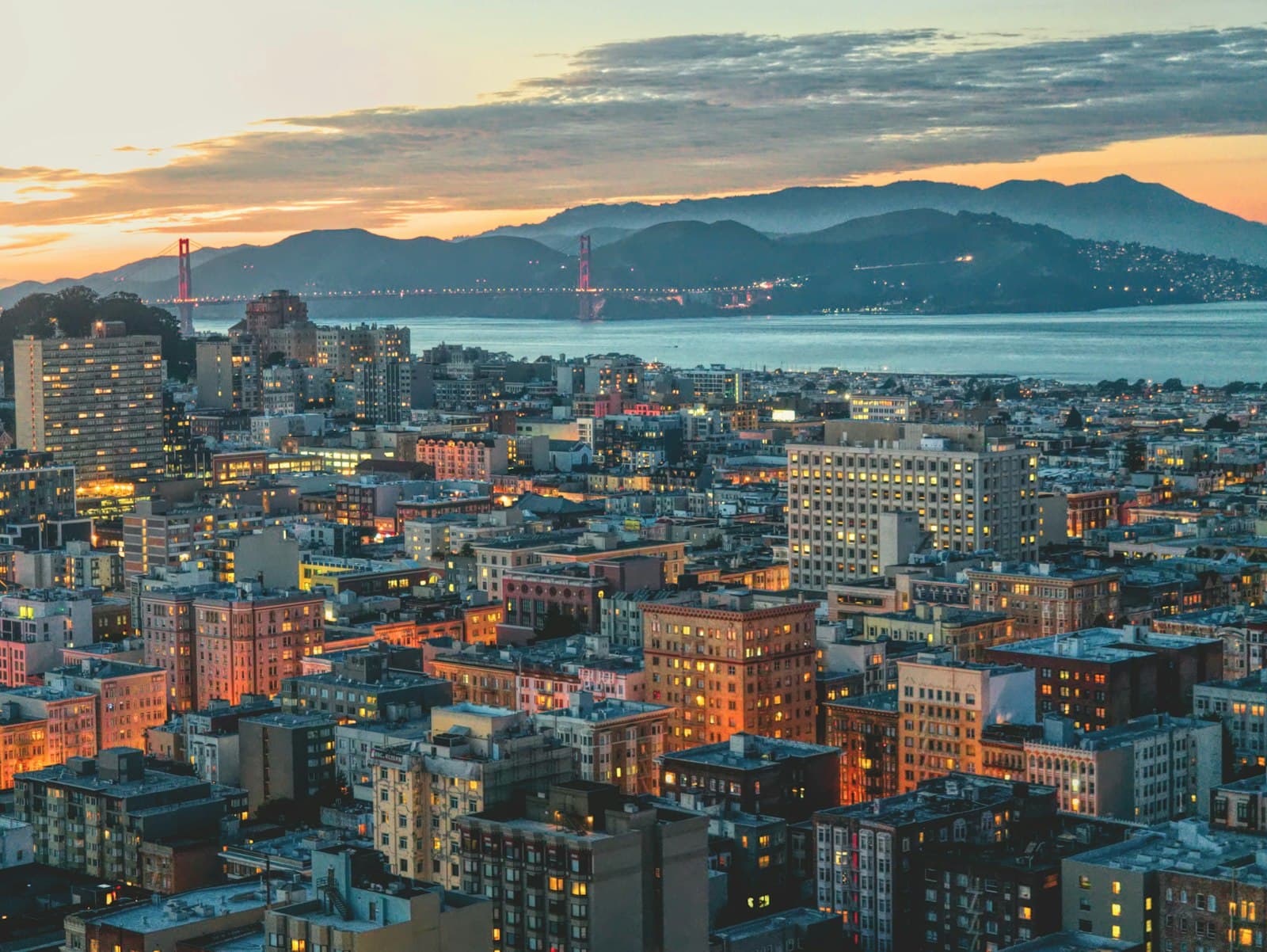
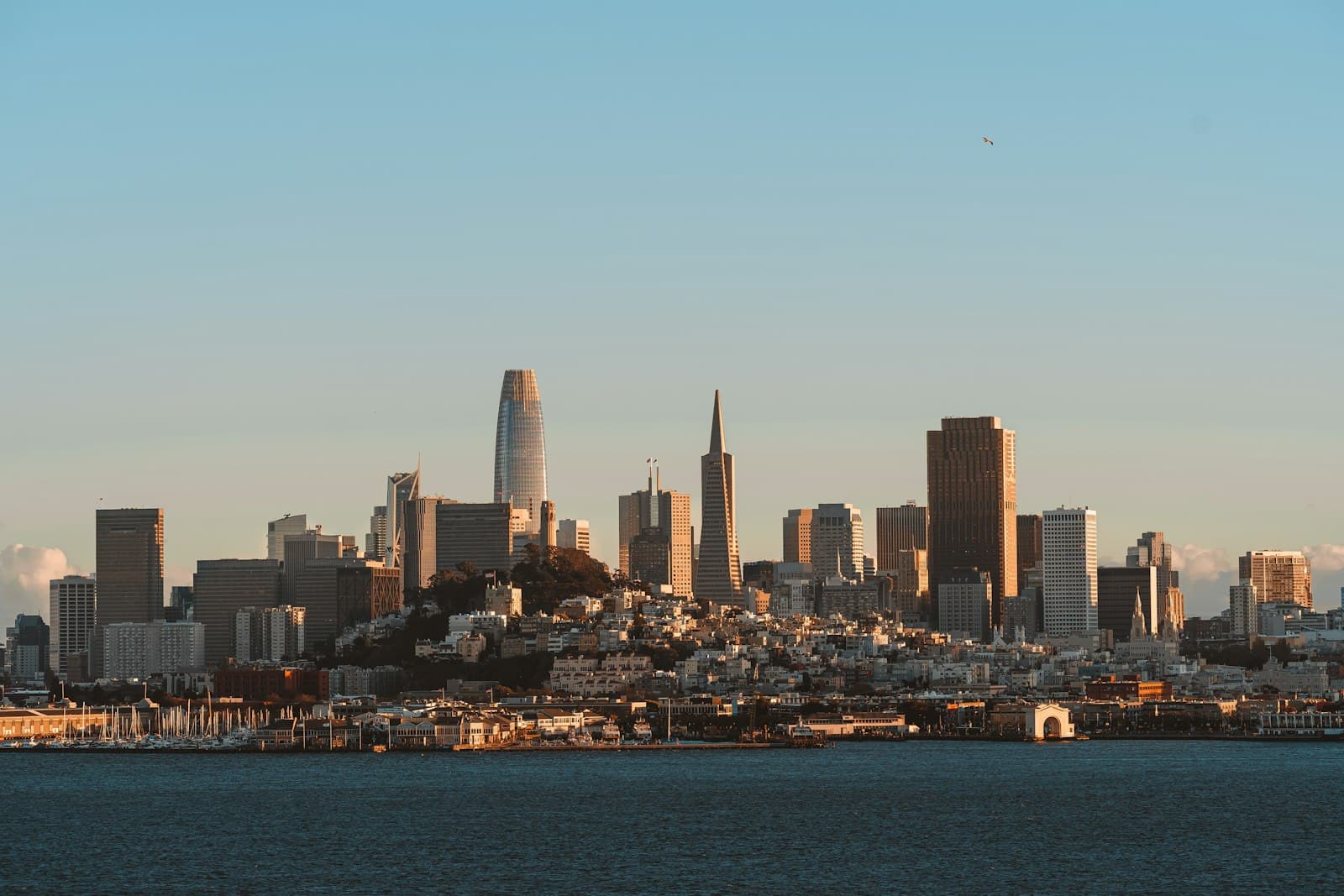
San Francisco, a city sculpted into hills at the edge of the Pacific, presents a captivating fusion of natural splendor and human ingenuity. From the expansive views of the Golden Gate Bridge to the historic clatter of its cable cars, this city has long captured the imagination. It is a place where innovation flourishes alongside a fiercely independent spirit, where diverse neighborhoods each narrate their own distinct story, and where the fog, affectionately known as Karl, often drapes the landscape in a dramatic, misty veil.
This is a city that has reimagined itself repeatedly, rising from the ashes of earthquakes and embracing cultural shifts that have resonated globally. Whether you are drawn to its culinary scene, its architectural wonders, or its bohemian spirit, San Francisco promises an experience both grand and intimately personal.
From Yerba Buena to Gold Rush Boom
Before its current name, the area was known as Yerba Buena, christened by Spanish settlers in 1776 after a wild mint growing in the region. The settlement remained modest until 1847, when it was officially renamed San Francisco. The California Gold Rush, ignited by the discovery of gold in 1848, swiftly transformed the quiet village into a bustling metropolis. Thousands arrived by sea, filling the port with abandoned ships, many of which were later repurposed for buildings.
Earthquakes, Fires, and Resilience
San Francisco's rapid growth was punctuated by devastating natural disasters. The most significant was the 1906 earthquake, which, with a magnitude of 7.9, destroyed over 80 percent of the city and ignited widespread fires that burned for four days. Despite the immense destruction and loss of life, the city quickly embarked on a massive rebuilding effort. The resilience of San Franciscans is a recurring theme in its history, with redwood trees even playing a role in salvaging parts of the city from the 1906 fire due to their low resin content and porous grain.
Icons of Innovation and Culture
The city is also the birthplace of several enduring innovations. In 1873, Levi Strauss invented denim jeans in San Francisco to meet the demand for durable workwear during the Gold Rush. That same year, Andrew Smith Hallidie introduced the world's first successful cable car system, a revolutionary solution for navigating the city's steep hills. These moving National Historical Monuments continue to be a symbol of San Francisco. In 1945, the United Nations Charter was drafted and ratified in San Francisco, marking a significant moment in global diplomacy. The city also became a focal point for cultural movements, including the Beat Generation and the 1960s counterculture movement, which saw the "Summer of Love" in the Haight-Ashbury neighborhood.
Begin your exploration with a ride on a San Francisco cable car, the world's last manually operated system, offering a distinct perspective on the city's topography. Three lines remain: Powell/Hyde, Powell/Mason, and California Street. Traverse the Golden Gate Bridge, an engineering marvel that spans 1.7 miles across the Golden Gate Strait, connecting the San Francisco Peninsula to Marin County. Visit Alcatraz Island, once a formidable federal prison, now a national park accessible by ferry, providing insight into its storied past. Explore the lively streets of Chinatown, the oldest in North America, established in 1848. Golden Gate Park, larger than New York's Central Park, offers expansive green spaces, gardens, and museums. Do not miss the winding Lombard Street, often called the 'crookedest street in the world,' though Vermont Street actually holds that distinction. Other notable attractions include Fisherman's Wharf, Pier 39 with its sea lions, the historic Ferry Building Marketplace, and the colorful Victorian homes known as the Painted Ladies.
San Francisco experiences a moderate maritime climate with mild winters and summers, making it a year-round destination. The warmest months are typically September and October, with average highs around 70-73°F (21-23°C), and less mist. The cool season extends from December to February, with average highs below 59°F (15°C) and lows around 46°F (8°C). Rainfall is highest from December to March, with July being the driest month. For warm-weather activities, late June to early October is ideal. To avoid larger crowds while still enjoying pleasant temperatures and minimal rain, consider visiting in the fall (September to November) or spring (March to May).
San Francisco's public transportation system is extensive, including BART regional trains, Muni buses, cable cars, and Muni Metro light rail. A single adult ride on Muni buses and trains costs $3 (cash) or $2.85 (Clipper card/MuniMobile app), with transfers valid for 120 minutes. Cable car fares are separate, costing $9 per ride. Youth (18 and under) and seniors (65+) often ride Muni buses and streetcars for free or at a reduced rate, but not cable cars. Contactless credit and debit cards can also be used to tap and pay on Bay Area transit that accepts Clipper cards. Tipping in San Francisco is generally higher than in many other US cities due to the elevated cost of living. Expect to tip 20-25% at sit-down restaurants, with 20% being a common starting point. Many restaurants also add a service charge (4-22%), which may or may not be a gratuity, so always check your bill. For bars, $2 per beer or $2-3 per craft cocktail is customary, or 20-25% of the tab.
- What is the best way to get around San Francisco?
- San Francisco offers a comprehensive public transportation system, including Muni buses, streetcars, and the iconic cable cars. The BART system connects the city to the airports and East Bay. Many areas are also very walkable.
- Is San Francisco always foggy?
- While San Francisco is known for its fog, particularly in summer mornings and evenings, it is not a constant presence. Locals even affectionately refer to the fog as 'Karl.' The clearest skies are often seen in August, and the warmest days typically occur in September and October.
- What is the Golden Gate Bridge's actual color?
- The Golden Gate Bridge is painted 'International Orange.' This specific shade was selected by the consulting architect, Irving Morrow, to complement the surrounding landscape and enhance visibility in foggy conditions, rather than the U.S. Navy's initial proposal for black and yellow stripes.
- Are fortune cookies really Chinese?
- Despite their association with Chinese cuisine, fortune cookies were actually invented in San Francisco by Japanese immigrant Makoto Hagiwara at the Golden Gate Park's Japanese Tea Garden in the late 1890s or early 1900s. Chinese immigrants later took over their production.
- What is the tipping etiquette in San Francisco?
- Tipping in San Francisco generally ranges from 20-25% at sit-down restaurants. Many establishments also add a service charge, so always review your bill to determine if a gratuity is already included. For bars, $2-3 per drink or 20-25% of the tab is common.
- Can you visit Alcatraz Island?
- Yes, Alcatraz Island is a popular destination and a national park. Ferries depart regularly from Pier 33, providing self-guided audio tours of the former prison.
San Francisco in your own language — all 32· 32
San Francisco in Korean, in Chinese or in Hebrew — and 29 more languages, every stop narrated by a native voice. The widest language range of any self-guided audio tour.
Available in:
- English
- FrenchFrançais
- SpanishEspañol
- GermanDeutsch
- ItalianItaliano
- PortuguesePortuguês
- DutchNederlands
- PolishPolski
- SwedishSvenska
- DanishDansk
- NorwegianNorsk
- FinnishSuomi
- RussianРусский
- UkrainianУкраїнська
- TurkishTürkçe
- CzechČeština
- HungarianMagyar
- RomanianRomână
- BulgarianБългарски
- GreekΕλληνικά
- Japanese日本語
- Korean한국어
- Chinese中文
- Arabicالعربية
- Hebrewעברית
- Hindiहिन्दी
- Thaiไทย
- VietnameseTiếng Việt
- IndonesianBahasa Indonesia
- MalayBahasa Melayu
- CatalanCatalà
- BasqueEuskara