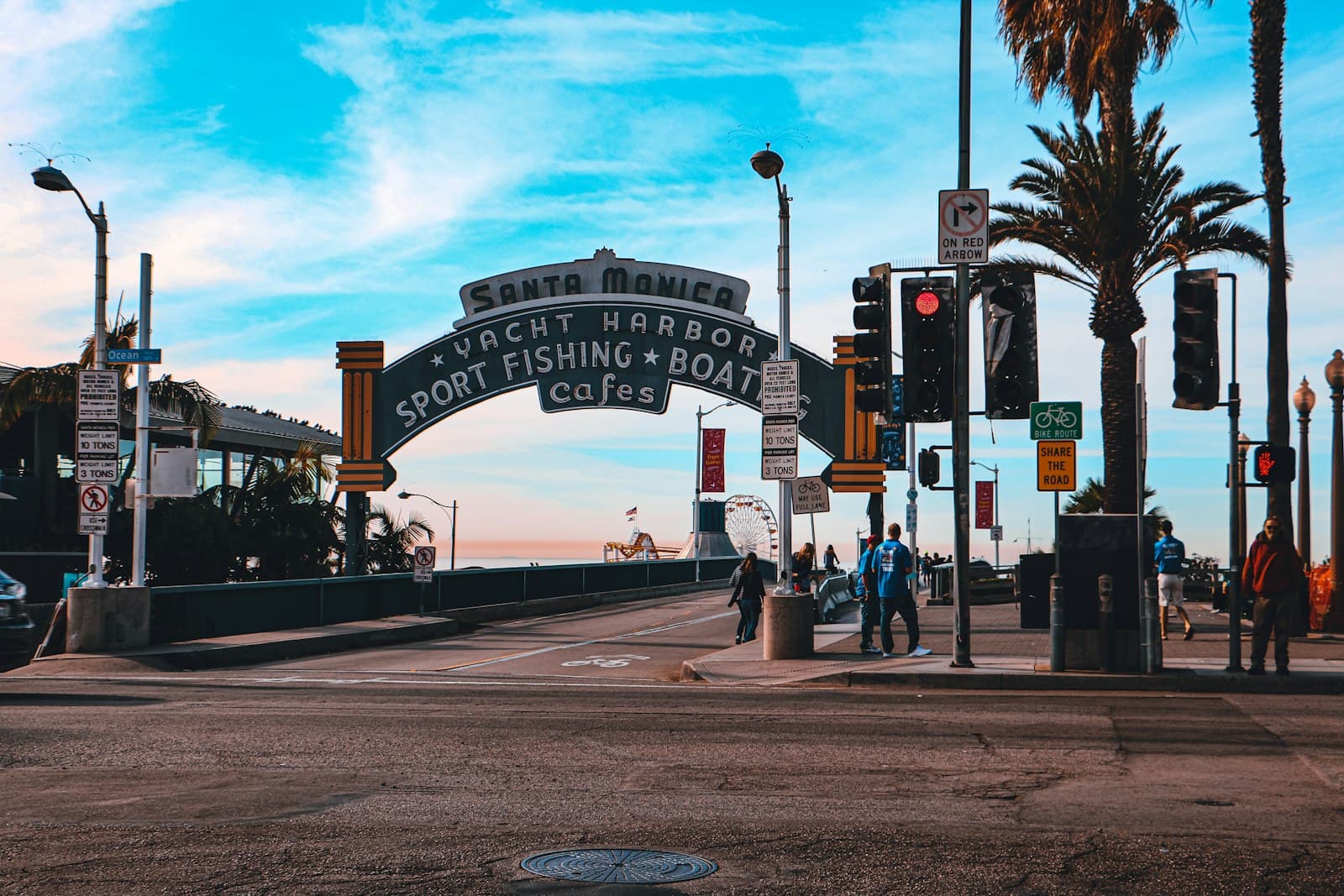
Carrossel do Píer de Santa Monica
Sob a fachada caprichosa do carrossel, uma história secreta gira, conectando-o a lendas de Hollywood e a um resgate surpreendente.
História completa desbloqueada no tour
 Photo: Oxana Melis / Unsplash
Tour de áudio autoguiado por Santa Monica — rota GPS a pé, reprodução offline, narração envolvente em 32 idiomas.
“Onde o Pacífico encontra o charme icônico e histórias inesperadas.”
Não os postais. As histórias que nem os locais conhecem — sussurradas ao seu ouvido, exatamente onde aconteceram.
Sob a fachada caprichosa do carrossel, uma história secreta gira, conectando-o a lendas de Hollywood e a um resgate surpreendente.
Este parque no topo da falésia oferece vistas deslumbrantes do oceano, mas seu propósito inicial estava longe de ser pitoresco, e sua própria existência é um testemunho de um planejamento urbano inteligente.
O píer é agora um símbolo de diversão e lazer, mas sua construção original tinha um propósito muito menos glamoroso e bastante essencial.
Descubra cada segredo de Santa Monica
Cada endereço, cada revelação na íntegra — no seu ouvido, exatamente onde aconteceu.
Você escolhe as suas paragens. Você caminha. A voz revela o que os outros perdem.


O seu tour áudio autoguiado de Santa Monica está pronto — escolha os seus pontos de interesse, selecione o seu idioma e comece no momento em que chegar.
ComprarA Lume inclui um guia de realidade aumentada. Levante o telemóvel: a câmara mostra a rua à sua frente, com uma seta luminosa sobreposta à imagem real que aponta sempre para a sua próxima paragem — sem mapa para decifrar, sem voltas erradas. Como tudo na Lume, funciona totalmente offline.
Santa Monica, uma cidade na Costa Sul da Califórnia, oferece uma mistura atraente de encanto à beira-mar e sofisticação urbana. Com uma média de 310 dias de sol anualmente, é um destino turístico popular conhecido por seu clima, praias e hospitalidade. A cidade equilibra sua cultura de praia descontraída com uma economia próspera, abrigando sedes de grandes empresas como Hulu e Snap Inc.
Além do icônico píer e das extensas praias, Santa Monica oferece uma experiência caminhável, uma raridade no centro de Los Angeles, focado em carros. Seus bairros, do agitado Centro ao artístico Mid-City, convidam à exploração a pé ou de bicicleta. O compromisso da cidade com a sustentabilidade é evidente em sua meta de alcançar a neutralidade de carbono em toda a comunidade até 2050, impulsionada por energia 100% renovável desde 2019.
A área de Santa Monica tem uma história que remonta a milhares de anos, originalmente habitada pelo povo Tongva, com a vila de Comicranga localizada aqui. O próprio nome 'Santa Monica' tem duas histórias de origem, uma atribuindo-o ao dia da festa de Santa Mônica em 4 de maio, e outra a exploradores espanhóis em 1769 que compararam as fontes que encontraram às lágrimas que Santa Mônica derramou por seu filho, Agostinho.
Sob o domínio mexicano em 1822, a terra passou para propriedade privada, com o Rancho San Vicente y Santa Mónica concedido à família Sepúlveda. Após a inclusão da Califórnia nos Estados Unidos em 1848, a cidade de Santa Monica foi oficialmente fundada em 10 de julho de 1875, pelo Senador John P. Jones e pelo Coronel Robert S. Baker, que a visionaram como um porto industrial próspero. Embora suas ambições portuárias não tenham se concretizado, a beleza natural da área rapidamente a direcionou para se tornar um renomado resort de praia.
O final do século XIX e o início do século XX viram um desenvolvimento significativo, incluindo o estabelecimento do Palisades Park em 1892 e a construção do Píer de Santa Monica, que abriu em 1909. Os bondes elétricos conectaram Santa Monica a Los Angeles a partir de 1896, impulsionando o crescimento e tornando as praias acessíveis a uma população mais ampla. A cidade também se tornou um breve centro para as primeiras produções cinematográficas antes que as empresas se mudassem para Hollywood.
A Grande Depressão impactou profundamente Santa Monica, mas os anos pós-guerra viram um boom populacional. O Píer de Santa Monica, inicialmente construído para descarte de esgoto, evoluiu para um grande destino de diversões. Apesar dos desafios, incluindo uma quase demolição nos anos 1970 e tempestades severas em 1983, esforços comunitários garantiram sua preservação e restauração. Hoje, Santa Monica é reconhecida como o berço do vôlei de praia para dois jogadores, com suas quadras perto do píer permanecendo campos de treinamento ativos.
Comece sua exploração no icônico Píer de Santa Monica, um centro vibrante com o Pacific Park, apresentando a primeira roda-gigante movida a energia solar do mundo, e o histórico carrossel Looff Hippodrome. O acesso ao píer é gratuito, com ingressos para as atrações e o Aquário Heal the Bay disponíveis para compra. Ao lado do píer, a Praia Estadual de Santa Monica oferece extensas faixas de areia para relaxamento e atividades, incluindo a histórica Original Muscle Beach.
Para vistas panorâmicas do oceano, passeie pelo Palisades Park, um parque linear de 2,5 km no topo das falésias. Aqui, você encontrará caminhos para caminhada, arte pública e um jardim de rosas. A Third Street Promenade, uma área de compras e restaurantes exclusiva para pedestres, oferece uma experiência urbana vibrante com artistas de rua e um Mercado de Agricultores semanal. Entusiastas de arte podem visitar o Bergamot Station Arts Center, lar de mais de 30 galerias de arte. Para uma perspectiva única, considere pedalar ao longo do The Strand, um caminho costeiro que conecta Santa Monica a outras comunidades de praia.
Santa Monica desfruta de um clima mediterrâneo ameno durante todo o ano, tornando-a um destino desejável em qualquer estação. Os meses mais quentes são tipicamente de julho a setembro, com máximas médias em torno de 24°C (76°F), ideais para atividades de praia, embora se espere multidões maiores e preços mais altos. Para temperaturas mais amenas e menos multidões, considere visitar em abril, maio ou outubro. Embora o nevoeiro matinal, conhecido como 'May Gray' ou 'June Gloom', seja comum no final da primavera e início do verão, ele geralmente se dissipa ao meio-dia. Os meses mais frios e acessíveis são de novembro a março, com maior chance de chuva, mas também melhores ofertas de hotéis.
Santa Monica é altamente caminhável, e suas opções de transporte público tornam a navegação pela cidade simples. O Big Blue Bus oferece serviço local extenso, e a Linha E do Metro (Expo Line) conecta o Centro de Santa Monica ao Centro de Los Angeles, eliminando preocupações com tráfego e estacionamento. Para usar o transporte, você precisará de um TAP Card, disponível na Loja de Trânsito do Big Blue Bus ou online.
Para quem dirige, várias estruturas de estacionamento público estão disponíveis no Centro de Santa Monica ao longo das Ruas 2 e 4, frequentemente oferecendo os primeiros 90 minutos grátis. Lotes de estacionamento na praia também estão disponíveis, com tarifas diárias variadas. Estacionamento na rua com parquímetro está disponível em toda a cidade, mas lembre-se que, ao contrário de algumas outras cidades, Santa Monica não oferece estacionamento gratuito com parquímetro aos domingos. Bicicletas e patinetes elétricos também estão disponíveis através de programas de mobilidade compartilhada.
Santa Monica — coreano, chinês, hebraico e mais 29 idiomas, cada parada narrada por uma voz nativa. A maior variedade de idiomas entre os passeios de áudio autoguiados.
Disponível em: