Rocca di Federico II
The imposing tower dominating San Miniato's skyline holds a dark secret within its stones, one that even Dante immortalized.
Full story unlocks in the tour
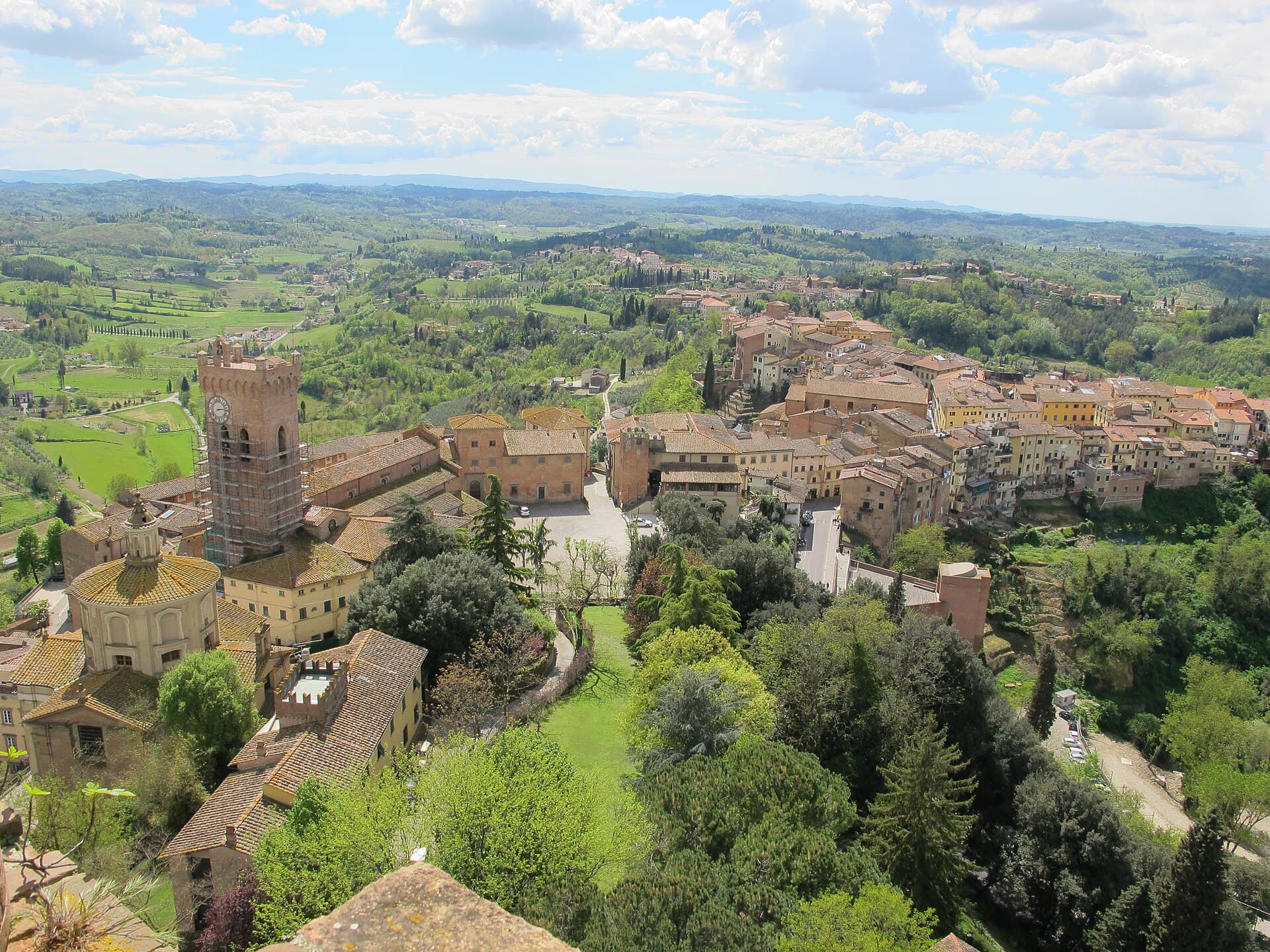 sailko / cc by-sa 3.0, via Wikimedia Commons
Self-guided audio walking tour of San Miniato — GPS route, offline playback, story-driven narration in 32 languages.
“Where emperors trod, truffles grow, and secrets linger in the Tuscan air.”
Not the postcards. The stories even locals don't know — whispered in your ear, right where they happened.
The imposing tower dominating San Miniato's skyline holds a dark secret within its stones, one that even Dante immortalized.
Look up at the facade of the Duomo, and you'll discover a celestial map unlike any other.
San Miniato's historical name hints at a powerful, centuries-long Germanic influence.
Discover every secret of San Miniato
Every address, every reveal in full — in your ear, right where it happened.
You pick your stops. You walk. The voice reveals what the others miss.


Your self-guided audio tour of San Miniato is ready — pick your landmarks, choose your language, and start the moment you arrive.
BuyLume has a built-in augmented-reality guide. Hold your phone up and its camera shows the street ahead of you, with a glowing arrow laid over the real view that always points to your next stop — no map to puzzle over, no wrong turns. Like everything in Lume, it works fully offline.
Rising from three hills in the heart of Tuscany, San Miniato is a captivating medieval town that offers a refreshing antidote to the region's more crowded destinations. Equidistant from the art cities of Florence and Pisa, this ancient settlement surveys a magnificent countryside, with views stretching as far as Volterra and the Apuan Alps on a clear day. Its historic center, a delightful labyrinth of winding ways, sinuous facades, handsome mansions, and medieval churches, invites unhurried exploration.
San Miniato's strategic position, at the crossroads of important historical routes and overlooking the Arno Valley, has shaped its complex past. Today, it's celebrated not only for its well-preserved medieval character but also as the undisputed capital of Tuscany's prized white truffle. This town, a designated "Città Slow," or slow town, offers a genuine taste of Tuscan life, where history, gastronomy, and a tranquil pace intertwine.
## From Etruscan Roots to Imperial Stronghold San Miniato's origins stretch back to Etruscan and Roman times, with archaeological evidence suggesting settlement since at least the Paleolithic era. The modern town began to take shape in the 8th century with the construction of a chapel dedicated to the martyr Miniato by the Lombards. Its strategic location, at the intersection of major roads and on the Via Francigena pilgrimage route, quickly elevated its importance.
## Imperial Power and Florentine Control By the 10th century, under Otto I, San Miniato became a significant center of imperial administration. Most early medieval emperors were German, leading to the town being known as "San Miniato al Tedesco" (San Miniato of the Germans) until the 13th century. Frederick II, Holy Roman Emperor, further fortified the town in the 13th century, expanding its walls and building the iconic Rocca and its tower, which served as a tax collection base and a prison. San Miniato was also the birthplace of Matilda of Tuscany, a powerful warrior-queen of the 12th century.
## Guelph-Ghibelline Conflicts and Napoleonic Connections The town was frequently embroiled in the conflicts between the Guelph and Ghibelline factions in the 13th and 14th centuries. Initially Ghibelline, it allied with Florence and became a Guelph city by 1291. By 1347, San Miniato fell under Florentine control, a dominion that largely continued despite brief rebellions. Centuries later, in 1799, a short-lived Jacobin republic was proclaimed during the Napoleonic conquest. Napoleon Bonaparte himself had family ties to San Miniato and visited the town in 1778 and 1796.
## World War II and Modern Revival During World War II, San Miniato suffered significant damage. The Tower of Frederick II, for instance, was destroyed by retreating German forces in 1944 to prevent its use by the Allies, though it was faithfully reconstructed in 1958. The town's Duomo also witnessed a tragic event in July 1944, when an American artillery shell killed 55 civilians sheltering inside. Today, San Miniato has revitalized, embracing its heritage while becoming a renowned center for white truffles and a beacon of the "slow food" movement.
Begin your exploration at the Rocca di Federico II, the reconstructed 13th-century tower that stands as the town's most recognizable symbol and offers sweeping panoramic views of the Arno Valley. Adjacent to it, the Cathedral of Santa Maria Assunta and San Genesio (the Duomo) captivates with its Romanesque origins, Gothic and Renaissance remodels, and a unique facade adorned with ceramic discs arranged like constellations. Don't miss the Diocesan Museum of Sacred Art next to the cathedral, one of Italy's oldest, housing over 50 works from the 13th to 19th centuries.
Stroll through Piazza del Seminario, notable for the elegant, frescoed facade of the Episcopal Seminary that traces the medieval town walls. The Palazzo Comunale (Municipal Palace), a 14th-century building, still serves as San Miniato's Town Hall. Discover the Convent of San Francesco, believed to have been founded by Saint Francis of Assisi himself, with its Romanesque facade and Gothic chapels. For those interested in the Bonaparte family's local ties, the Palazzo Bonaparte (now Palazzo Formichini) is worth a glance. And for a taste of local life, explore the various markets and enjoy the town's renowned truffle-themed cuisine.
The best times to visit San Miniato for general outdoor activities are from mid-May to mid-July and again from mid-August to early October, with a peak in early September, when temperatures are pleasant. For warm-weather activities like relaxing by a pool, late June to late August is ideal. However, if you're a truffle enthusiast, November is the prime time to visit for the renowned National White Truffle Exhibition, which takes place over the last three weekends of the month, filling the town with the aroma of Tuber Magnatum Pico.
San Miniato is easily accessible, situated halfway between Florence and Pisa. The San Miniato-Fucecchio train station is on the Florence-Pisa line, with trains from Florence's Santa Maria Novella station taking about 45 minutes. From the station in San Miniato Basso, local bus service (line #320) can take you up to the historic hilltop town. While San Miniato Basso is more sprawling and a car can be helpful, the quaint hilltop historic center is compact and best explored on foot, though be prepared for uneven pavements and steps. The Tourist Information Office is located in Piazza del Popolo. Many restaurants in San Miniato offer truffle-themed menus, especially during the truffle season.
San Miniato in Korean, in Chinese or in Hebrew — and 29 more languages, every stop narrated by a native voice. The widest language range of any self-guided audio tour.
Available in: