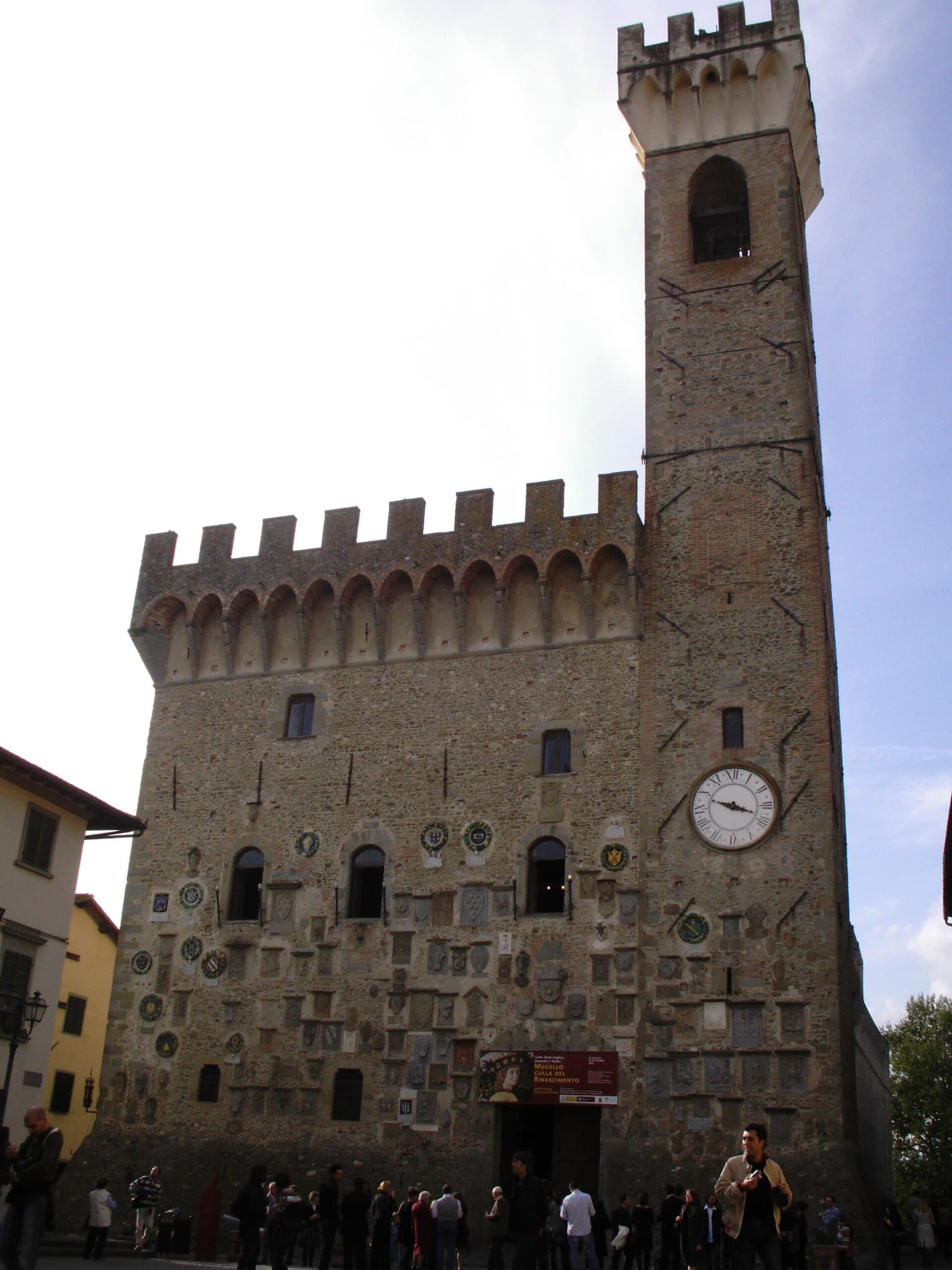
ScarperiaMatteo Tani / public domain, via Wikimedia Commons
IT

Scarperia

Self-guided audio walking tour of Scarperia — GPS route, offline playback, story-driven narration in 32 languages.

Where medieval might met artisan mastery, and every blade tells a story.

The secrets of Scarperia

Scarperia, as no one tells it.

Not the postcards. The stories even locals don't know — whispered in your ear, right where they happened.

3 secrets below. Many more wait inside the tour.
Palazzo dei Vicari Clock Tower

The towering clock on Scarperia's Palazzo dei Vicari isn't just for telling time; it holds a secret connection to one of Florence's most celebrated Renaissance minds.

Full story unlocks in the tour
Scarperia's Coat of Arms

Look closely at Scarperia's civic emblem, and you'll notice a striking similarity to Florence's, but with a subtle inversion that speaks volumes about its historical allegiance.

Full story unlocks in the tour
The 'Knives of Love'

Beyond their practical use, Scarperia's knives once played a romantic role, serving as a unique token of devotion between betrothed couples.

Full story unlocks in the tour
The full tour

Discover every secret of Scarperia

Every address, every reveal in full — in your ear, right where it happened.

Get the key to Scarperia

You pick your stops. You walk. The voice reveals what the others miss.

Scarperia
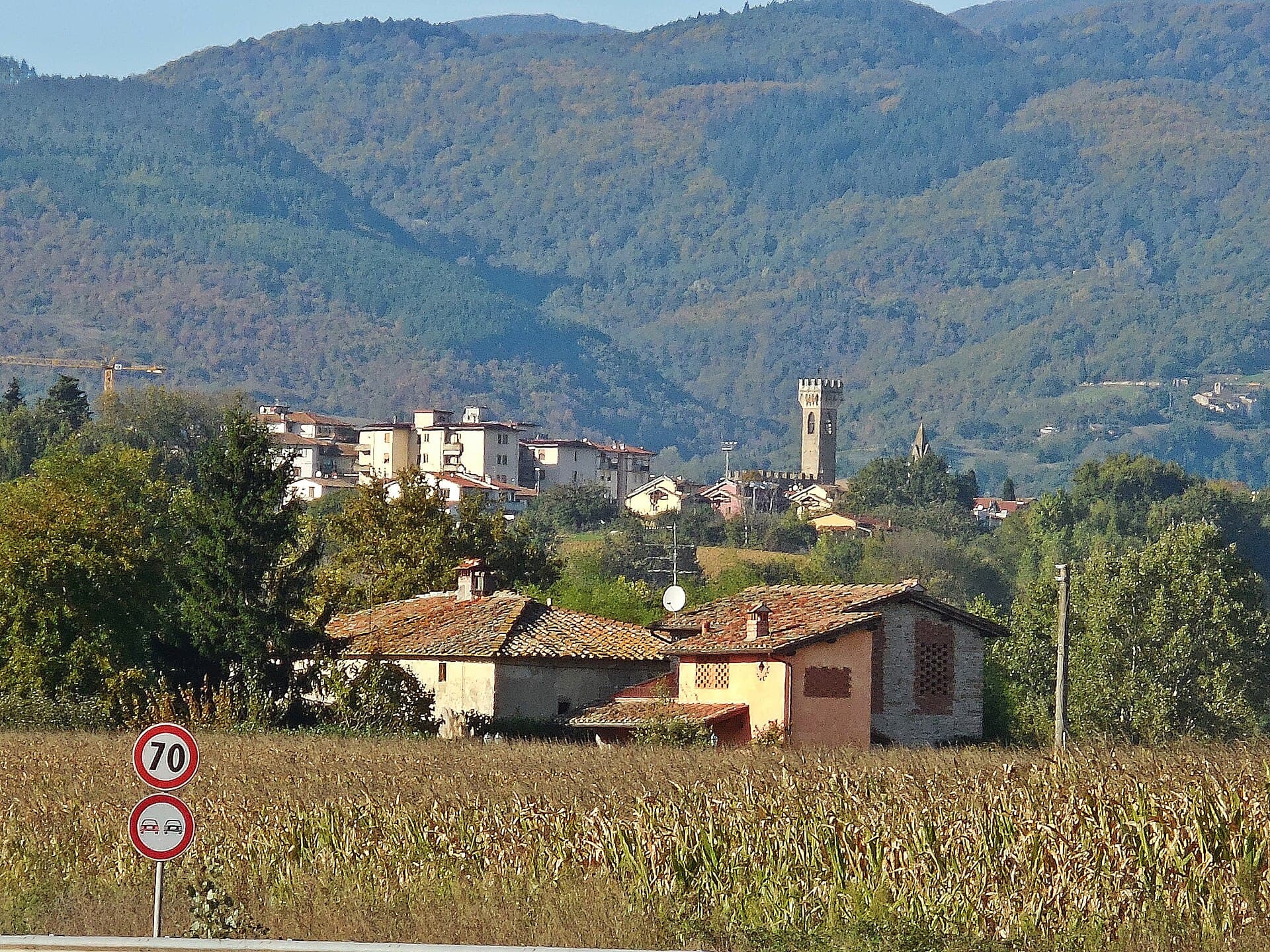
Zebra48bo / cc by-sa 4.0, via Wikimedia Commons
Choose your time

How long do you have in Scarperia?

Your self-guided audio tour of Scarperia is ready — pick your landmarks, choose your language, and start the moment you arrive.

Buy
About Scarperia

The story of Scarperia

Scarperia, a medieval village in the heart of Tuscany's Mugello region, offers a captivating journey through time. Established by the Florentine Republic in 1306 as 'Castel San Barnaba,' it served as a strategic outpost controlling the vital road between Florence and Bologna. Today, its well-preserved streets, impressive Palazzo dei Vicari, and centuries-old artisan traditions invite exploration of a unique blend of history, culture, and craftsmanship.

Known as the 'City of Knives,' Scarperia has been celebrated for its high-quality blade production since the 15th century. Local workshops continue this meticulous craft, a legacy documented in the Museum of Cutting Tools. Beyond its historical core, Scarperia is a gateway to the scenic Mugello Valley, a landscape of gentle hills and authentic Tuscan flavors, and surprisingly, a center for international motorsport at the Mugello Circuit.

Whether drawn to medieval architecture, the intricate art of knife-making, or the thrill of a MotoGP race, Scarperia provides a rich and varied experience, offering a glimpse into the authentic heart of Tuscany, just a short distance north of Florence.

History

## From Florentine Outpost to Artisan Hub Scarperia's story begins on September 7, 1306, when the Florentine Republic established it as 'Castel San Barnaba.' This 'terra nuova,' or new town, was strategically positioned at the base of the Apennines to guard Florence's northern borders and control traffic along the crucial trade route to Bologna. Its orthogonal street plan, still visible today, is characteristic of 14th-century Florentine urban design.

By 1415, Scarperia's importance grew, becoming the seat of a Vicariate, an administrative center delegated by Florence. The Palazzo dei Vicari, originally a fortress, was transformed into the Vicar's residence, adorned with the coats of arms of the Florentine officials who governed the area. These vicars, however, served surprisingly short six-month terms, a deliberate strategy by Florence to maintain control.

A pivotal moment arrived in 1351 when Scarperia successfully resisted Milanese troops for 55 days, solidifying its bond with Florence. As a mark of gratitude, the town was granted permission to adopt Florence's coat of arms, albeit with inverted colors – a red lily on a white field – a symbol of its intertwined identity with the Tuscan capital.

Scarperia's most enduring legacy, however, is its centuries-old tradition of knife-making. Documented since the 15th century, this craft flourished despite the lack of local raw materials like iron and coal. Artisans cleverly sourced these from passing merchants due to Scarperia's strategic location. In 1538, the town's cutlers formed a guild to protect their trade secrets and ensure the high quality of their 'ferri taglienti,' or cutting tools. While a new road bypassing Scarperia in the 18th century led to a decline in trade, the specialized production of quality knives helped the town regain its economic footing.

Today, Scarperia continues to honor its past through events like the annual Diotto festival, a historical reenactment of its founding, and the ongoing work of its skilled cutlers. It also embraces modernity as home to the Mugello International Circuit, showcasing a dynamic evolution from its medieval origins.

What to see

The heart of Scarperia is the Piazza dei Vicari, dominated by the imposing Palazzo dei Vicari. This 14th-century fortress-like building, resembling a smaller Palazzo Vecchio, served as the residence for Florentine governors. Its façade is a striking array of sandstone and glazed terracotta coats of arms, each representing a past Vicar. Inside, admire frescoes from the Ghirlandaio school and a bell tower clock whose original mechanism is attributed to Filippo Brunelleschi. The Palazzo also houses the Museum of Cutting Tools, showcasing Scarperia's celebrated knife-making history, including an ancient workshop.

Adjacent to the Palazzo is the Provost of Saints Jacopo and Filippo, a church founded in 1326, which contains notable works such as a wooden Crucifix by Sansovino and a marble tondo by Benedetto da Maiano.

Beyond the central square, explore the remnants of the 14th-century town walls and medieval tower, testaments to Scarperia's defensive past. For those interested in the wider Mugello region, the Medici Villa of Trebbio, a UNESCO World Heritage site, is a short distance away. This 15th-century villa, commissioned by Cosimo de' Medici, offers sweeping views and a glimpse into Medici history.

When to visit

The most pleasant times to visit Scarperia are during spring (April to June) and autumn (September to October). The weather is agreeable, and tourist crowds are generally smaller. September is particularly lively, hosting the annual Diotto festival on the 8th, which celebrates the town's founding with historical reenactments and medieval games. Early July to mid-August is ideal for warm-weather activities, with clear skies and average highs around 84°F (29°C).

Practical

Scarperia is approximately 30 kilometers north of Florence. By car, take the A1 highway, exit at Barberino, and follow signs for Scarperia. From Florence, you can also take a train from Santa Maria Novella Station to Borgo San Lorenzo or San Piero a Sieve, then connect by bus (SITA line 303). A half-day visit is sufficient to explore the main attractions, but an overnight stay allows for a deeper experience of local events or the surrounding Mugello Valley. Many knife workshops still operate in the historic center, offering opportunities to observe artisans and purchase authentic Scarperia blades.

Good to know
What is Scarperia best known for?
Scarperia is primarily known for its centuries-old tradition of artisanal knife-making and its well-preserved medieval architecture, particularly the Palazzo dei Vicari.
Is Scarperia easily accessible from Florence?
Yes, Scarperia is about 30 kilometers north of Florence and can be reached by car, or by a combination of train and bus.
What is the Palazzo dei Vicari?
The Palazzo dei Vicari is Scarperia's most iconic monument, a 14th-century building that served as the residence and administrative center for Florentine governors. It houses a museum and historical archives.
Are there any annual festivals in Scarperia?
Yes, the most famous event is the Diotto, held on September 8th, which celebrates the town's founding with historical reenactments, parades, and traditional games.
Can I buy handmade knives in Scarperia?
Absolutely. Scarperia is famous for its cutlery, and you can visit numerous artisan workshops in the historic center to see craftsmen at work and purchase authentic handmade knives.
What is the Mugello Circuit?
The Mugello Circuit is a world-class racetrack located near Scarperia, famous for hosting international motor racing competitions, including the MotoGP.
On the map
Scarperia
€9.90
No booking · activate anytime · 12h to walk it
Load on Wi-Fi, then walk offline — no roaming abroad
Get the key to Scarperia