Rue piétonne Huochetou
Vous vous attendez peut-être à un quartier commerçant typique et animé, mais cette rue abrite un résident remarquable et immobile.
L'histoire complète se débloque dans le tour
 E2568 / CC0, via Wikimedia Commons
Visite audio autoguidée de Shijiazhuang — parcours GPS à pied, lecture hors ligne, narration en 32 langues.
“Shijiazhuang : Là où les récits anciens rencontrent le rythme de la Chine moderne.”
Pas les cartes postales. Les histoires que même les habitants ignorent — soufflées à l'oreille, là où elles se sont passées.
Vous vous attendez peut-être à un quartier commerçant typique et animé, mais cette rue abrite un résident remarquable et immobile.
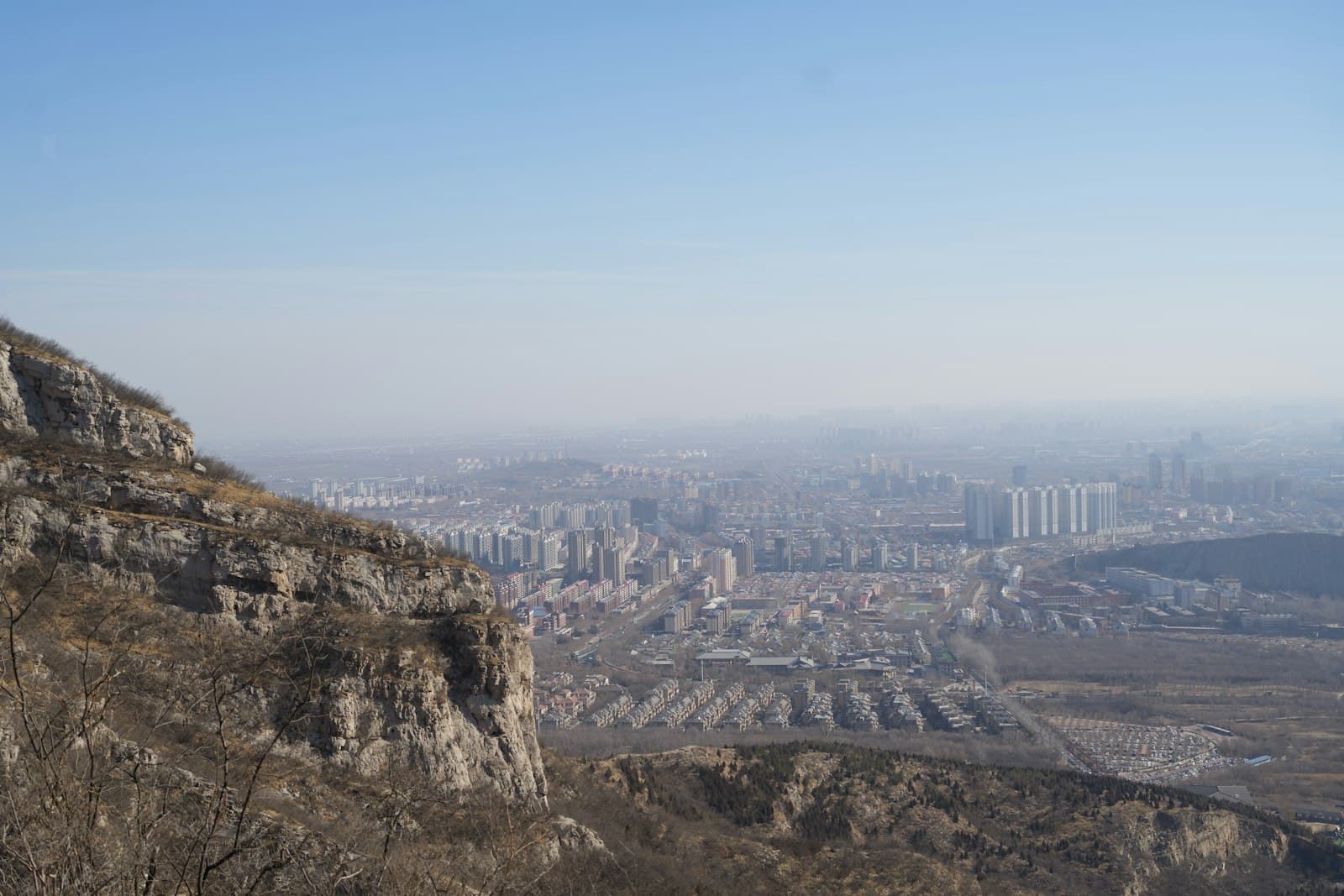
Cette montagne pittoresque est réputée pour ses temples et ses paysages saisissants, mais elle a également joué un rôle important dans un film acclamé mondialement.
Le nom 'Shijiazhuang' se traduit assez directement, révélant des débuts modestes qui contrastent avec son statut actuel de grand centre urbain.
Découvrez tous les secrets de Shijiazhuang
Chaque adresse, chaque révélation en entier — dans ton oreille, là où elle s'est passée.
Tu choisis tes lieux. Tu marches. La voix te révèle ce que les autres ignorent.
Votre visite audioguidée de Shijiazhuang vous attend — choisissez vos lieux, votre langue, et lancez-vous dès votre arrivée.
AcheterLume intègre un guide en réalité augmentée. Levez votre téléphone : sa caméra montre la rue devant vous, avec une flèche lumineuse posée sur l'image réelle qui pointe toujours vers votre prochain arrêt — aucune carte à déchiffrer, aucun mauvais virage. Comme tout dans Lume, ça fonctionne entièrement hors-ligne.
Shijiazhuang, la capitale de la province du Hebei, est une ville qui surprend fréquemment les visiteurs par sa fusion distinctive de vigueur industrielle et de profondeur historique. Bien qu'elle puisse initialement se présenter comme une métropole contemporaine de structures imposantes et de rues animées, ses environs abritent des merveilles antiques et une splendeur naturelle qui invitent à une exploration plus approfondie. Située à environ 280 kilomètres au sud-ouest de Pékin, Shijiazhuang fonctionne comme un nœud économique et de transport crucial dans le nord de la Chine.
Souvent appelée 'la ville forgée par les trains', l'expansion rapide de Shijiazhuang au XXe siècle a été inextricablement liée à l'évolution de son réseau ferroviaire, la transformant d'une modeste colonie en une jonction vitale. Aujourd'hui, avec une population de plus de 11 millions d'habitants dans sa préfecture, elle sert de centre dynamique pour des industries telles que les produits pharmaceutiques, les textiles et les technologies de l'information. Au-delà de son cœur urbain, la ville offre un accès à des temples anciens, des sites révolutionnaires et les contours dramatiques des montagnes Taihang, ce qui en fait une destination attrayante pour ceux qui recherchent une nouvelle perspective sur la Chine.
Le territoire aujourd'hui connu sous le nom de Shijiazhuang trouve ses origines dans les époques pré-Han, où il était connu sous le nom de ville de Shiyi. Il a fonctionné comme chef-lieu de comté tout au long des dynasties Han et Sui. Cependant, après la dynastie Tang, son importance a diminué, devenant un simple bourg local, éclipsé par la ville florissante de Zhengding, à quelques kilomètres au nord.
La profonde transformation de Shijiazhuang a commencé au début du XXe siècle. En 1905, le chemin de fer Pékin-Wuhan (Hankou) s'est étendu à la région, stimulant le commerce et encourageant les agriculteurs locaux à cultiver des cultures commerciales. Deux ans plus tard seulement, en 1907, la construction d'une deuxième ligne ferroviaire, la ligne Shitai reliant Shijiazhuang à Taiyuan, a encore renforcé son rôle de plaque tournante essentielle des transports. Cette convergence de chemins de fer a rapidement élevé le modeste village au rang de centre de communication d'importance nationale, reliant Pékin et Tianjin au Shanxi et, finalement, au Shaanxi.
En 1925, la colonie a officiellement obtenu le statut de ville sous le nom de Shimen, rebaptisée plus tard Shijiazhuang en 1947. Son expansion s'est poursuivie rapidement après la création de la République populaire de Chine en 1949, sa population ayant plus que quadruplé en trois décennies en raison de l'industrialisation. Shijiazhuang est devenue un centre important pour l'industrie textile dans les années 1950, suivie par le développement des industries chimiques et d'une base d'ingénierie dans les années 1960. Un moment charnière de son histoire moderne s'est produit en 1968, lorsque Shijiazhuang est devenue la capitale provinciale du Hebei, une décision qui a encore accéléré son développement et cimenté sa position de centre administratif et économique majeur.
Aujourd'hui, Shijiazhuang continue d'évoluer, avec d'importants développements d'infrastructures au cours des dernières décennies, notamment de nouvelles gares ferroviaires, un aéroport et un système de métro, contribuant tous à son identité de ville industrielle contemporaine au passé fascinant.
Bien que Shijiazhuang soit une ville contemporaine, elle présente une variété d'attractions à la fois dans son étendue urbaine et dans les régions environnantes. Le Musée provincial du Hebei constitue un point d'intérêt majeur, exposant de remarquables découvertes archéologiques de la région, y compris des costumes funéraires en jade des tombes des Han occidentaux. L'entrée est gratuite, nécessitant un passeport pour l'accès.
Juste au nord de la ville, l'ancienne ville de Zhengding offre une richesse de sites historiques. On peut y explorer le Temple Longxing, également connu sous le nom de Temple Dafo, un immense complexe établi sous la dynastie Sui. Il abrite l'une des quatre plus grandes statues de Bouddha du nord de la Chine, une sculpture en bronze de 22 mètres de haut d'une Déesse de la Miséricorde aux quarante-deux bras, et des fresques bien conservées de la dynastie Ming. Zhengding propose également d'autres temples et pagodes à une distance de marche confortable.
Pour ceux qui sont attirés par les paysages naturels, le mont Cangyan se trouve à environ 70 km de Shijiazhuang. Cette zone pittoresque, connue pour sa culture religieuse et sa grandeur naturelle, présente de magnifiques pavillons et monastères, y compris un palais ingénieux construit entre deux rochers abrupts au-dessus d'une gorge. Une autre merveille architecturale notable est le pont de Zhaozhou, également connu sous le nom de pont Anji, construit entre 605 et 616 après J.-C. sous la dynastie Sui. C'est un pont en arc inhabituel, fait de pierre, mesurant 50,82 mètres de long et 10 mètres de large.
L'histoire révolutionnaire peut être explorée au village de Xibaipo, qui a servi de base opérationnelle au Comité central du Parti communiste chinois pendant les étapes décisives de la guerre civile chinoise. Le village, situé dans le comté de Pingshan, abrite désormais une salle commémorative et un jardin de monuments.
Les périodes les plus favorables pour visiter Shijiazhuang sont le printemps (mi-avril à mi-mai) et l'automne (mi-septembre à mi-octobre). Pendant ces périodes, le temps est modéré et agréable, avec des températures confortables, des fleurs épanouies au printemps et un magnifique feuillage d'automne. Ces saisons évitent également la chaleur et l'humidité intenses de l'été et les hivers froids et secs. Juillet est le mois le plus chaud, avec une température maximale moyenne de 25°C (77°F), tandis que janvier est le plus froid, avec une température minimale moyenne de -16°C (3°F). Shijiazhuang connaît un climat continental de mousson avec quatre saisons distinctes.
L'aéroport international de Shijiazhuang Zhengding (SJW) propose des liaisons vers d'autres villes chinoises et des services internationaux. Un taxi jusqu'au centre-ville coûte environ 138 ¥, et un bus 20 ¥. Shijiazhuang est également une intersection ferroviaire majeure, avec des services fréquents depuis d'autres villes chinoises. Un train à grande vitesse depuis Pékin prend environ 80 minutes et coûte environ 129 ¥. La ville exploite un système de métro avec les lignes 1, 2 et 3 actuellement en service, et un vaste réseau routier.
Le mandarin est majoritairement parlé, avec le mandarin Jilu comme dialecte local. Des services de traduction ou des applications linguistiques peuvent aider à la communication. Il est conseillé d'emporter plusieurs couches de vêtements en raison des fluctuations importantes de température. Des vêtements légers et respirants sont recommandés pour les étés chauds et humides, tandis que des vêtements chauds et des doudounes sont essentiels pour les hivers froids. De la crème solaire, des chapeaux et des lunettes de soleil sont suggérés pour l'été en raison d'un rayonnement ultraviolet potentiellement intense. Consultez toujours les prévisions météorologiques actuelles avant votre voyage.
Shijiazhuang en coréen, en chinois ou en hébreu — et dans 29 autres langues, chaque étape narrée par une voix native. La plus large gamme de langues de tous les audioguides autoguidés.
Disponible en :