Chemin de fer White Pass & Yukon Route
La construction de ce « chemin de fer panoramique du monde » fut un exploit d'ingénierie pendant la ruée vers l'or du Klondike.
L'histoire complète se débloque dans le tour
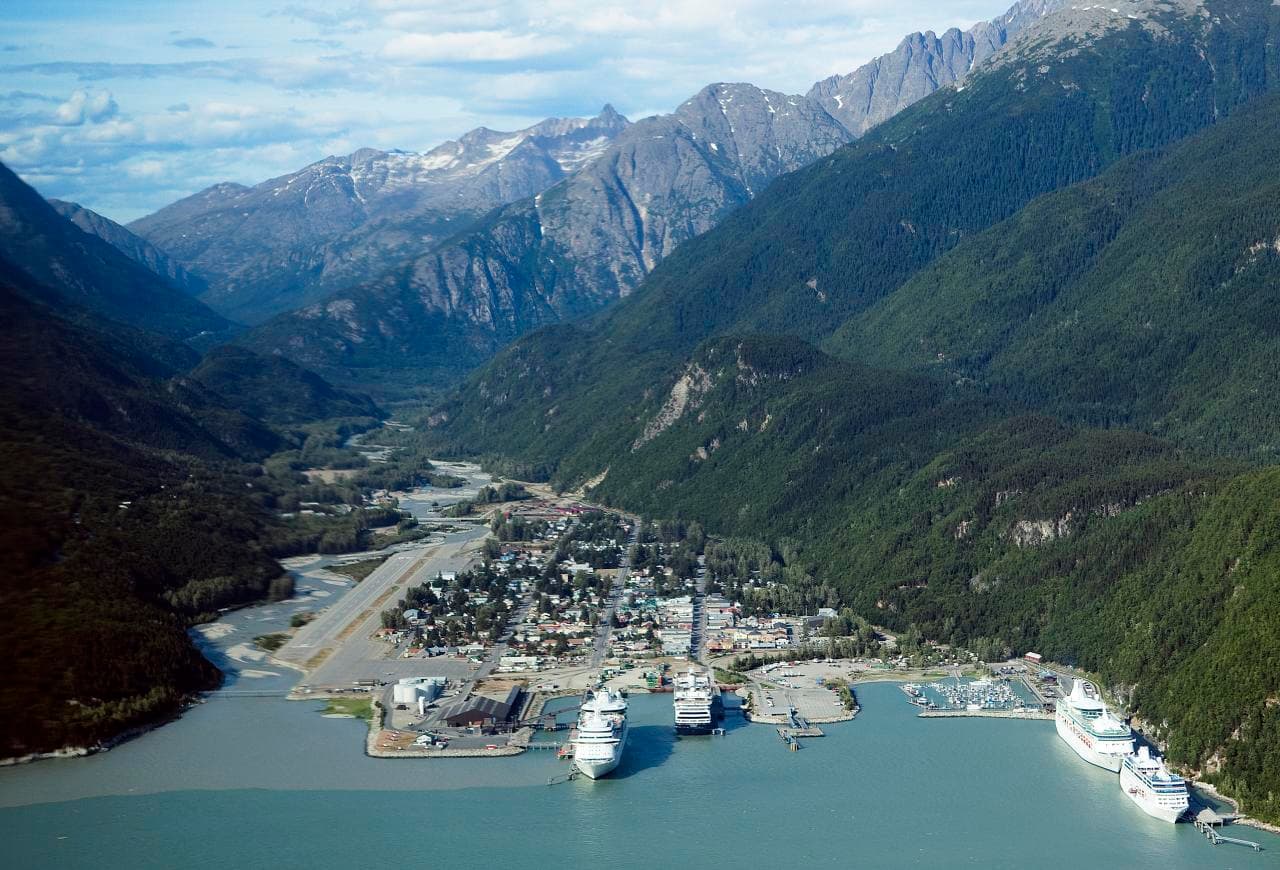 Christopher Michel from San Francisco, USA / CC BY 2.0, via Wikimedia Commons
Visite audio autoguidée de Skagway — parcours GPS à pied, lecture hors ligne, narration en 32 langues.
“Là où l'esprit de la ruée vers l'or du Klondike résonne à travers les promenades en bois et les cols de montagne.”
Pas les cartes postales. Les histoires que même les habitants ignorent — soufflées à l'oreille, là où elles se sont passées.
La construction de ce « chemin de fer panoramique du monde » fut un exploit d'ingénierie pendant la ruée vers l'or du Klondike.
Ce saloon historique fonctionnait comme un florissant bordel pendant la ruée vers l'or, avec un système unique pour signaler la disponibilité.
Un braquage de banque à Skagway pendant la ruée vers l'or a pris une tournure inattendue, menant à un dénouement surprenant pour la ville.
Découvrez tous les secrets de Skagway
Chaque adresse, chaque révélation en entier — dans ton oreille, là où elle s'est passée.
Tu choisis tes lieux. Tu marches. La voix te révèle ce que les autres ignorent.

Votre visite audioguidée de Skagway vous attend — choisissez vos lieux, votre langue, et lancez-vous dès votre arrivée.
AcheterLume intègre un guide en réalité augmentée. Levez votre téléphone : sa caméra montre la rue devant vous, avec une flèche lumineuse posée sur l'image réelle qui pointe toujours vers votre prochain arrêt — aucune carte à déchiffrer, aucun mauvais virage. Comme tout dans Lume, ça fonctionne entièrement hors-ligne.
Skagway, une petite ville portuaire à l'extrémité nord du Passage Intérieur de l'Alaska, offre un voyage dans le temps vers l'époque dramatique de la ruée vers l'or du Klondike. Malgré sa population actuelle d'environ 900 habitants à l'année, elle a autrefois dépassé les 10 000 habitants pendant la fièvre de l'or de la fin des années 1890, devenant la plus grande ville d'Alaska. Aujourd'hui, Skagway attire près d'un million de visiteurs chaque année, séduits par son histoire fascinante, son architecture préservée et les paysages naturels qui l'entourent.
L'atmosphère de la ville donne l'impression d'entrer dans un musée vivant, avec ses promenades en bois restaurées et ses bâtiments historiques. Skagway sert de porte d'entrée vers le Yukon et les champs aurifères du Klondike, et son attrait unique et son accessibilité en font une étape populaire pour les navires de croisière et les voyageurs indépendants.
## Du territoire Tlingit à la métropole de la ruée vers l'or L'histoire de Skagway commence avec le peuple Tlingit, qui habitait à l'origine la région, la nommant skagua, signifiant « lieu où souffle le vent du nord ». Pendant plus de 10 000 ans, le peuple Chilkoot Tlingit a vécu dans cette région. Dans les années 1880, après des découvertes d'or plus au sud, des pionniers ont établi un poste de traite à Dyea, à proximité.
Le capitaine William Moore, ancien capitaine de bateau à vapeur, a anticipé une ruée vers l'or dans le Yukon et a réclamé une concession dans la vallée de la rivière Skagway en 1887, construisant un quai et un poste de traite. Sa prévoyance s'est avérée exacte lorsque de l'or a été découvert dans le Territoire du Yukon canadien le long de la rivière Klondike en 1897. Cela a déclenché la ruée vers l'or du Klondike, et des milliers de prospecteurs, connus sous le nom de « stampeders », ont afflué dans la ville rapidement construite, alors appelée Mooresville.
En juin 1898, la population de Skagway a grimpé entre 8 800 et 10 000 habitants, en faisant la plus grande ville d'Alaska. Elle a été incorporée en tant que ville en 1900, devenant la première ville de première classe incorporée en Alaska. L'emplacement stratégique de Skagway en tant que port en eau profonde sans glace et terminus du White Pass à travers les Boundary Ranges a consolidé son importance. La ville était réputée pendant cette période, un membre de la Police Montée du Nord-Ouest la décrivant comme « à peine mieux qu'un enfer sur terre », pleine de bagarres, de prostituées et de l'influence de l'escroc « Soapy » Smith.
## Le chemin de fer et au-delà La construction du chemin de fer à voie étroite White Pass & Yukon Route, débutant en 1898, a été essentielle à la survie de Skagway. Cette merveille d'ingénierie a relié Skagway à Whitehorse, Territoire du Yukon, en 1900, assurant le rôle de Skagway en tant que principale porte de transport vers l'intérieur du nord du Canada. L'achèvement du chemin de fer a entraîné le déclin rapide de Dyea, ville voisine, qui avait été le point de départ du sentier Chilkoot, les prospecteurs préférant la voie ferrée plus accessible.
Après le déclin de la ruée vers l'or vers 1899, la population de Skagway a diminué de manière significative. La ville est restée en sommeil pendant près d'un demi-siècle jusqu'à la Seconde Guerre mondiale, lorsque le chemin de fer White Pass & Yukon a été réactivé pour acheminer des matériaux pour la construction de l'autoroute de l'Alaska, redonnant vie à Skagway. Aujourd'hui, le centre-ville de Skagway fait partie du Parc Historique National de la Ruée vers l'Or du Klondike, préservant sa gloire de ville champignon et permettant aux visiteurs de s'immerger dans son passé.
Une visite à Skagway offre une connexion tangible avec l'ère de la ruée vers l'or du Klondike. Le chemin de fer White Pass & Yukon Route est un point fort, offrant un voyage à travers montagnes, glaciers et tunnels dans des wagons d'époque. L'aller-retour de 2,5 à 3 heures jusqu'au sommet du White Pass présente des sites comme les chutes Bridal Veil et Dead Horse Gulch, avec une narration détaillant l'histoire du chemin de fer. Pour une immersion plus profonde, le Bennett Scenic Journey nécessite un passeport et vous emmène à Bennett, en Colombie-Britannique, un lieu de camping historique pour les prospecteurs.
Promenez-vous le long des promenades en bois du centre-ville de Skagway pour explorer les bâtiments historiques préservés qui abritent désormais des boutiques et des restaurants. Le Red Onion Saloon, ancien bordel, fonctionne désormais comme un musée et un bar, proposant des visites guidées et un aperçu du passé plus coloré de la ville. Le Parc Historique National de la Ruée vers l'Or du Klondike entretient nombre de ces structures historiques, offrant un contexte à l'histoire de boom et de déclin de la ville.
Pour les aventuriers, le sentier Chilkoot, un parcours de randonnée de 53 kilomètres, vous permet de retracer le voyage ardu des prospecteurs vers les champs aurifères. Des permis sont requis, et il faut généralement 3 à 5 jours pour le compléter. Des tours en hélicoptère offrent des vues panoramiques sur les sommets des montagnes de l'Alaska, les glaciers du champ de glace de Juneau et les ravins vertigineux.
La meilleure période pour visiter Skagway est pendant la haute saison, de juin à août, lorsque le temps est doux et agréable, et que toutes les activités touristiques sont en plein essor. Les températures diurnes pendant ces mois peuvent atteindre environ 18-20°C. Mai et septembre sont considérés comme des saisons intermédiaires, offrant un bon temps avec moins de foules et des prix légèrement inférieurs. Bien que la pluie soit fréquente tout au long de l'année, juillet est souvent le mois le plus chaud. Pour ceux qui recherchent la solitude ou une chance de voir les aurores boréales, la basse saison d'octobre à avril, bien que froide et imprévisible, peut être une période magique.
Skagway est une ville très agréable à parcourir à pied, avec de nombreuses attractions facilement accessibles depuis les quais des navires de croisière. Des chaussures confortables sont recommandées pour explorer le centre-ville et ses promenades en bois. Même en été, les températures peuvent être fraîches et la pluie est courante, il est donc conseillé d'emporter des couches respirantes et une veste imperméable. Un répulsif anti-insectes et de la crème solaire sont également utiles. Si vous prévoyez de longues randonnées, un spray anti-ours est recommandé.
De nombreuses excursions, comme le chemin de fer White Pass & Yukon Route, peuvent être réservées à l'avance, surtout si vous êtes sur un horaire de croisière. Le site web du Skagway Convention and Visitors Bureau et les guides touristiques locaux sont d'excellentes ressources pour planifier votre séjour, offrant des cartes et des informations sur l'hébergement, la restauration et les visites. Skagway est à l'heure normale de l'Alaska (GMT -9) et observe l'heure d'été de l'Alaska (GMT -8) de mars à novembre.
Skagway en coréen, en chinois ou en hébreu — et dans 29 autres langues, chaque étape narrée par une voix native. La plus large gamme de langues de tous les audioguides autoguidés.
Disponible en :