Benjamin's Restaurant & Inn
Esta histórica posada fue en su día una parada vital para los carruajes tirados por caballos.
La historia completa se desbloquea en el tour
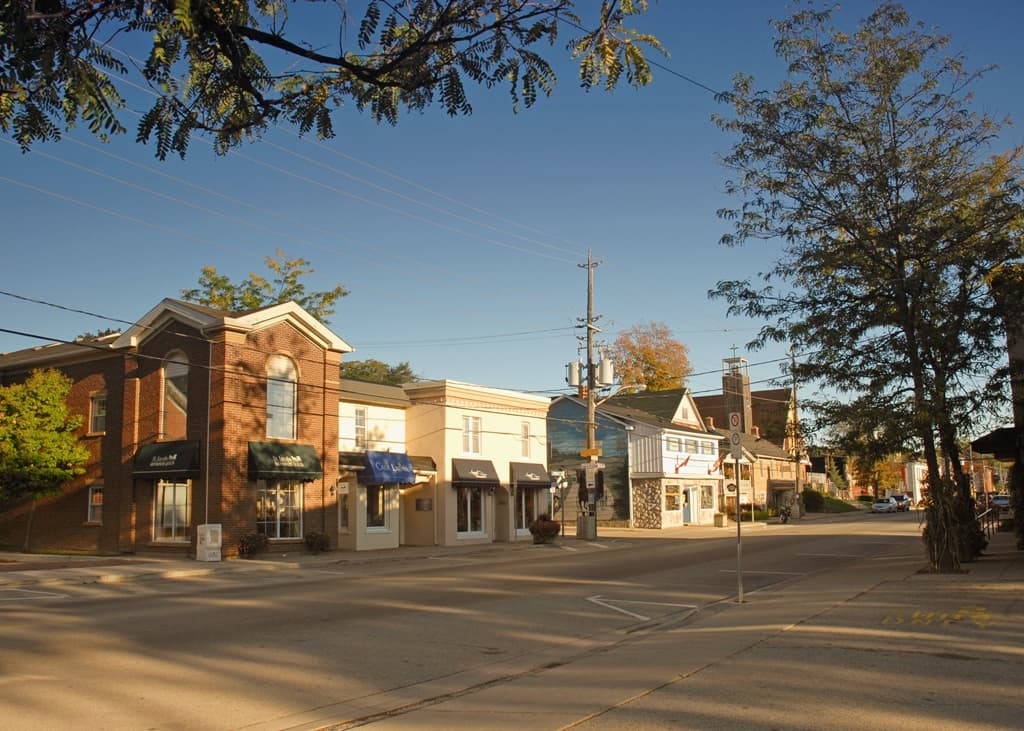 Saskia2586 / CC BY-SA 3.0, via Wikimedia Commons
Tour de audio autoguiado de St. Jacobs — ruta GPS a pie, reproducción offline, narración en 32 idiomas.
“Donde los carruajes tirados por caballos comparten camino con la vida moderna y la tradición perdura.”
No las postales. Las historias que ni los locales conocen — al oído, justo donde ocurrieron.
Esta histórica posada fue en su día una parada vital para los carruajes tirados por caballos.
Durante las renovaciones, se desenterró un peculiar amuleto de la buena suerte de las paredes de este edificio georgiano de 1857.
Los prominentes silos de St. Jacobs pertenecieron en su día a un molino que alcanzó reconocimiento internacional.
Descubre todos los secretos de St. Jacobs
Cada dirección, cada revelación al completo — a tu oído, justo donde ocurrió.
Eliges tus paradas. Caminas. La voz te revela lo que los demás ignoran.


Tu tour de audioguía por St. Jacobs te espera — elige tus lugares, tu idioma y empieza al llegar.
ComprarLume incluye una guía de realidad aumentada. Levanta el móvil y su cámara muestra la calle que tienes delante, con una flecha luminosa sobre la imagen real que siempre apunta a tu próxima parada — sin mapas que descifrar, sin giros equivocados. Como todo en Lume, funciona completamente sin conexión.
St. Jacobs, una comunidad no incorporada dentro del municipio de Woolwich en Ontario, Canadá, ofrece una mezcla distintiva de carácter histórico y encanto contemporáneo. Situada al norte de la ciudad de Waterloo, es un destino frecuentado por visitantes que buscan vislumbrar una forma de vida única. La zona es particularmente reconocida por su perdurable herencia menonita, con menonitas de la Antigua Orden a menudo vistos transitando por las carreteras locales en sus tradicionales carruajes tirados por caballos.
Este pueblo, a veces conocido coloquialmente como "Jakobstettel" (Aldea de Jacob), presenta un escape tranquilo del bullicio urbano. Su calle principal, King Street, está bordeada de edificios venerables que ahora albergan boutiques, tiendas de artesanía y galerías de arte, creando un escenario pintoresco para el descubrimiento. Más allá del corazón del pueblo, el Distrito del Mercado de St. Jacobs atrae a casi un millón de visitantes anualmente al mercado de agricultores más grande de Canadá, abierto todo el año.
St. Jacobs entrelaza con gracia su pasado con el presente, ofreciendo experiencias variadas, desde interactuar con artesanos locales hasta explorar senderos verdes a lo largo del río Conestogo. Ya sea que su interés radique en productos frescos, artesanías distintivas o en comprender la cultura menonita, St. Jacobs ofrece un viaje memorable a una comunidad que valora la tradición mientras extiende una cálida bienvenida a los visitantes.
La tierra que se convertiría en St. Jacobs fue colonizada por primera vez alrededor de 1830, principalmente por colonos germánicos y, más tarde, por una importante afluencia de menonitas de Pensilvania a principios de la década de 1850. Estos menonitas, a menudo denominados "Pennsylvania Dutch" (un nombre erróneo para "Deutsch" o alemán), establecieron un estilo de vida conservador, llegando a ser conocidos como menonitas de la Antigua Orden. El pueblo fue originalmente llamado Jakobstettel, que significa "Aldea de Jacob", en honor a Jacob C. Snider, un descendiente suizo-alemán que fue fundamental en el desarrollo temprano del pueblo. Snider construyó una presa en el río Conestogo en 1851, que impulsó aserraderos y molinos de lana, formando el corazón económico de la floreciente comunidad.
El nombre fue cambiado oficialmente a St. Jacobs en 1852, con el "St." añadido por eufonía y la pluralización honrando tanto a Jacob C. Snider como a su hijo, Jacob C. Snider Jr. La primera oficina de correos abrió el mismo año. Para 1855, la población alcanzó los 400 habitantes, apoyada por industrias como un molino harinero, una curtiduría y varios talleres artesanales. Sin embargo, la apertura de una sucursal ferroviaria en la cercana Elmira en 1891 provocó un declive en la industria local, ya que los trabajadores buscaron salarios más altos en centros urbanos más grandes. En consecuencia, St. Jacobs experimentó poco crecimiento demográfico hasta la década de 1950.
Una parte importante de la historia más reciente de St. Jacobs involucra el Mercado de Agricultores de St. Jacobs. Establecido en abril de 1975 por ocho agricultores, comenzó como una colección de tiendas de campaña al aire libre. Un edificio de madera de dos pisos, construido en 1986 con vigas de abeto Douglas, se convirtió en su estructura principal. Aunque este edificio original fue destruido por un incendio en 2013, fue reconstruido y reabierto en 2015, continuando su legado como el mercado de agricultores más grande de Canadá, abierto todo el año. La empresa Home Hardware, una marca reconocida a nivel nacional, también tiene sus raíces en St. Jacobs, evolucionando de una tienda de hojalatería en la década de 1880 y fundada oficialmente en 1963.
Comience su exploración en el pueblo de St. Jacobs, donde King Street ofrece una colección de tiendas singulares, centros de arte y galerías que exhiben el trabajo de artesanos locales. Podrá encontrar cerámica, ropa de diseño, joyas y escobas hechas a mano en Hamel Brooms, el último fabricante de escobas de maíz de Canadá. Los Silos del Pueblo, un punto de referencia prominente, albergan Conestoga River Pottery, que ofrece una amplia selección de cerámica local y hecha en Ontario.
A solo 3 km del pueblo, el Mercado de Agricultores de St. Jacobs es un destino que no debe perderse. Como el mercado de agricultores más grande de Canadá, abierto todo el año, cuenta con cientos de vendedores que ofrecen productos frescos, productos horneados, artesanías y cocina internacional. Junto al mercado, descubrirá Market Road Antiques y el centro comercial St. Jacobs Outlet Mall.
Para una comprensión más profunda del patrimonio de la región, visite The Mennonite Story, un centro de interpretación ubicado en una casa de troncos de 1839, que ofrece información sobre la historia, la fe y la cultura menonita a través de exposiciones y una película. Aquellos que disfrutan del aire libre pueden deleitarse con el Health Valley Trail, un sendero de 2,4 km a lo largo del río Conestogo, apto para caminar, andar en bicicleta e incluso esquí de fondo en invierno. También puede dar un paseo en el Waterloo Central Railway, un tren histórico que ofrece viajes pintorescos entre Waterloo, el Mercado de Agricultores, el Pueblo y Elmira.
St. Jacobs es un destino para todo el año, cada estación presenta un carácter diferente. El verano (junio a agosto) es particularmente favorecido, con temperaturas agradables que oscilan entre 16 y 28 °C (61 y 83 °F), y la sección al aire libre del Mercado de Agricultores en pleno apogeo con una abundancia de productos frescos como fresas, cerezas y maíz dulce. El otoño trae un vívido follaje otoñal y eventos especiales como el Festival anual de la Hoja de Arce en la cercana Elmira. Visitar en noviembre o diciembre transforma el pueblo en un destino festivo de vacaciones con mercados navideños, luces y eventos especiales. Los días de semana son generalmente más tranquilos, mientras que los fines de semana y los días de mercado (jueves y sábados, más los martes en verano) tienen más actividad.
St. Jacobs se encuentra aproximadamente a una hora y media en coche al oeste de Toronto y a 90 minutos de Londres, accesible a través de la Highway 401 hasta la Highway 8 North, y luego la Highway 85 North. Conducir es la forma más conveniente de llegar al pueblo, y hay amplio estacionamiento disponible. Si bien el transporte público desde Toronto implica múltiples cambios, un tren GO a Waterloo seguido de un tren local en el Waterloo Central Railway o un autobús a St. Jacobs es una opción. El pueblo en sí es compacto y transitable, y muchas atracciones se pueden explorar fácilmente a pie o en bicicleta. Muchas tiendas y el Mercado de Agricultores aceptan pagos con tarjeta, pero siempre es aconsejable llevar algo de efectivo para vendedores más pequeños o puestos de carretera, especialmente si se aventura en las zonas rurales donde los menonitas de la Antigua Orden venden sus productos.
St. Jacobs en coreano, en chino o en hebreo — y 29 idiomas más, cada parada narrada por una voz nativa. La mayor variedad de idiomas de cualquier audioguía autoguiada.
Disponible en: