Le Nom de la Ville
Le nom même de Suvereto révèle un lien profond avec son environnement naturel, un détail souvent négligé par les visiteurs occasionnels.
L'histoire complète se débloque dans le tour
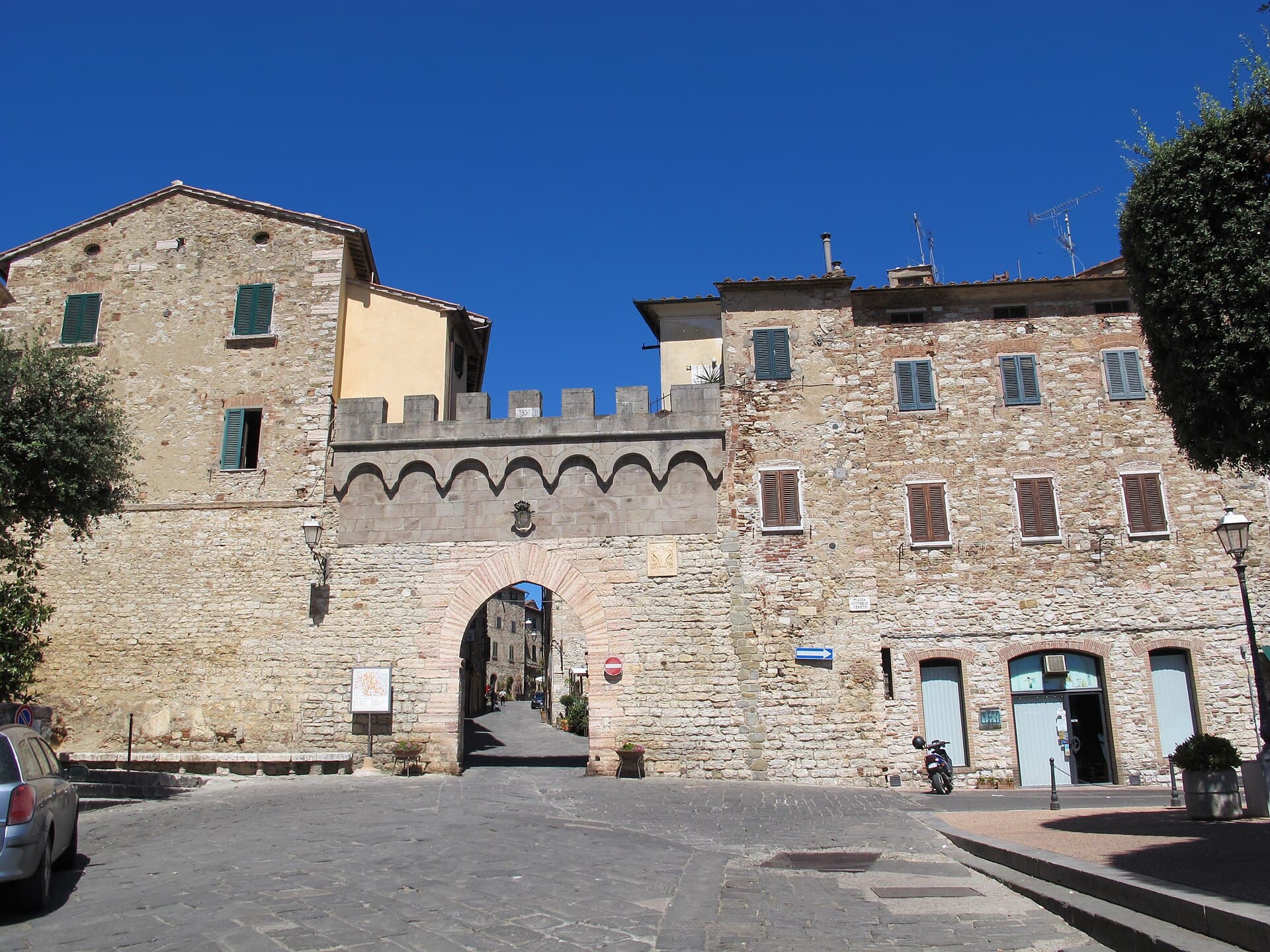 sailko / cc by-sa 3.0, via Wikimedia Commons
Visite audio autoguidée de Suvereto — parcours GPS à pied, lecture hors ligne, narration en 32 langues.
“Là où les chênes-lièges frémissent et les pierres médiévales montent la garde.”
Pas les cartes postales. Les histoires que même les habitants ignorent — soufflées à l'oreille, là où elles se sont passées.
Le nom même de Suvereto révèle un lien profond avec son environnement naturel, un détail souvent négligé par les visiteurs occasionnels.
La formidable Rocca Aldobrandesca, située au-dessus de la ville, recèle un secret sur sa construction qui témoigne des tactiques défensives médiévales.
Le Palazzo Comunale, hôtel de ville de Suvereto vieux de 800 ans, est plus qu'un simple bâtiment administratif ; sa tour de l'horloge porte un message symbolique de liberté.
Découvrez tous les secrets de Suvereto
Chaque adresse, chaque révélation en entier — dans ton oreille, là où elle s'est passée.
Tu choisis tes lieux. Tu marches. La voix te révèle ce que les autres ignorent.

Votre visite audioguidée de Suvereto vous attend — choisissez vos lieux, votre langue, et lancez-vous dès votre arrivée.
AcheterLume intègre un guide en réalité augmentée. Levez votre téléphone : sa caméra montre la rue devant vous, avec une flèche lumineuse posée sur l'image réelle qui pointe toujours vers votre prochain arrêt — aucune carte à déchiffrer, aucun mauvais virage. Comme tout dans Lume, ça fonctionne entièrement hors-ligne.
Suvereto, officiellement reconnu comme l'un des plus beaux villages d'Italie, est une ville médiévale captivante située dans le Val di Cornia en Toscane. Elle s'élève sur une colline à quelques kilomètres de la Côte Étrusque, offrant un mélange harmonieux d'histoire ancienne, de culture profonde et de paysages naturels saisissants. Son centre historique bien préservé, avec ses rues pavées usées, ses arches anciennes et ses places intimes, évoque un sentiment d'intemporalité, invitant les visiteurs à ralentir et à s'immerger dans une expérience toscane authentique.
Entouré de vignobles, d'oliveraies et de forêts de chênes-lièges, Suvereto est une destination profondément liée à ses racines agricoles, en particulier à sa production de vin et d'huile d'olive acclamée. L'emplacement stratégique de la ville sur une colline offre des vues imprenables sur le Val di Cornia, s'étendant jusqu'à la côte toscane par temps clair. Loin des centres touristiques animés, Suvereto conserve une atmosphère paisible et intime, ce qui en fait une évasion idéale pour ceux qui recherchent le charme toscan authentique et un lien avec les traditions locales.
## Des Racines Anciennes à la Forteresse Médiévale Les origines de Suvereto remontent à avant l'an 1000, avec des habitants primitifs antérieurs à l'Empire romain, suggérant des établissements étrusques dans la région. Le nom même de la ville, dérivé du latin 'suber' pour liège, témoigne des denses forêts de chênes-lièges qui recouvraient autrefois les collines environnantes. Au XIe siècle, un ensemble de cabanes en bois sur ces collines en pente a évolué pour devenir la commune de Suvereto.
Pendant la période médiévale, Suvereto est devenu une importante forteresse septentrionale sous le contrôle de la puissante famille Aldobrandeschi. Ils ont établi leur suprématie en construisant une tour quadrangulaire, le précurseur de la Rocca Aldobrandesca, qui dominait la ville en pleine croissance. Le XIIIe siècle a vu la modification stratégique de cette tour, abaissée et reconstruite en un talus pour améliorer ses capacités défensives. L'impressionnante Rocca Aldobrandesca, avec ses anciens murs de pierre et ses tours, reste un puissant symbole du passé militaire de Suvereto et offre des vues imprenables sur le Val di Cornia.
Le XIIIe siècle a également marqué la construction d'autres structures civiques importantes, y compris le Palazzo Comunale, l'hôtel de ville, qui remonte au début des années 1200. Sa tour de l'horloge attenante était un puissant symbole de l'autonomie durement acquise de la ville face aux Aldobrandeschi. L'église romane de San Giusto, avec son musée d'art sacré attenant, témoigne également de l'histoire durable de la ville. Les murs médiévaux de Suvereto, encerclant la ville en forme pentagonale avec huit tours défensives, sont remarquablement bien conservés, contribuant à l'atmosphère historique évocatrice de la ville. La ville a maintenu son tissu urbain médiéval, avec des rues étroites et une architecture en pierre reflétant son organisation du XVe siècle, offrant un aperçu rare d'un village toscan intact.
Commencez votre exploration à la Rocca Aldobrandesca, la forteresse médiévale qui couronne la colline au-dessus de Suvereto. Ses anciens murs et tours offrent des vues panoramiques sur le village, la campagne environnante et la mer Tyrrhénienne lointaine. Promenez-vous dans le centre historique, un labyrinthe de rues pavées usées, d'arches anciennes et de places intimes, où chaque coin raconte une histoire. Ne manquez pas le Palazzo Comunale, l'hôtel de ville du XIIIe siècle, avec sa loggia d'angle distinctive et sa tour crénelée.
Visitez l'Église de San Giusto, une église romane datant du XIIe siècle, et explorez son Musée d'Art Sacré adjacent. Pour une expérience unique et charmante, entrez dans le Museo Artistico della Bambola (Musée Artistique de la Poupée), qui abrite une fascinante collection de poupées de diverses périodes historiques. Faites une promenade jusqu'au Couvent de San Francesco, un cloître du XIIIe siècle maintenant utilisé pour des concerts et des événements, offrant un répit paisible. Au-delà des murs de la ville, la campagne environnante invite à l'exploration, avec de nombreux vignobles et oliveraies offrant des opportunités de dégustation. Le Parc Naturel de Montioni voisin propose des sentiers de randonnée et une chance d'observer la faune locale.
Les meilleures périodes pour visiter Suvereto sont le printemps et le début de l'automne. Ces saisons offrent des températures douces, des couleurs de campagne vives et moins de foules. Les soirées d'été sont également particulièrement atmosphériques, avec un temps agréable et divers festivals. Alors que juillet est le mois le plus sec, août est le plus chaud, avec des maximales moyennes d'environ 28 °C (83 °F). Pour ceux qui s'intéressent aux festivals locaux, décembre est spécial pour le festival historique du sanglier, et juillet accueille souvent une fête de mariage médiévale.
Suvereto est situé dans la province de Livourne, au cœur du Val di Cornia. Bien qu'il soit à environ 70 kilomètres au sud de Livourne et à 90 kilomètres de Sienne, la voiture est généralement le moyen le plus simple d'atteindre la ville. La gare la plus proche est à Campiglia Marittima, à environ 10 kilomètres, avec des liaisons en bus et en taxi disponibles vers Suvereto. Une visite d'une demi-journée est généralement suffisante pour explorer le village historique et prendre un repas, bien que les amateurs de vin puissent prolonger leur séjour à une journée complète pour des visites de vignobles. Des chaussures de marche confortables sont recommandées pour naviguer dans les charmantes, mais inégales, rues pavées de la ville. Il est conseillé de réserver les visites de caves à l'avance, surtout pendant la haute saison.
Suvereto en coréen, en chinois ou en hébreu — et dans 29 autres langues, chaque étape narrée par une voix native. La plus large gamme de langues de tous les audioguides autoguidés.
Disponible en :