Torre Matilde
Viareggio's oldest structure has a surprising past beyond its defensive origins.
Full story unlocks in the tour
 Arne Müseler / CC BY-SA 3.0 de, via Wikimedia Commons
Self-guided audio walking tour of Viareggio — GPS route, offline playback, story-driven narration in 32 languages.
“Where Art Nouveau dreams meet the Tyrrhenian Sea.”
Not the postcards. The stories even locals don't know — whispered in your ear, right where they happened.
Viareggio's oldest structure has a surprising past beyond its defensive origins.
The world-famous Viareggio Carnival didn't start as a joyful celebration.
This iconic Art Nouveau cafe on the promenade holds a personal connection to a legendary composer.
Discover every secret of Viareggio
Every address, every reveal in full — in your ear, right where it happened.
You pick your stops. You walk. The voice reveals what the others miss.


Your self-guided audio tour of Viareggio is ready — pick your landmarks, choose your language, and start the moment you arrive.
BuyLume has a built-in augmented-reality guide. Hold your phone up and its camera shows the street ahead of you, with a glowing arrow laid over the real view that always points to your next stop — no map to puzzle over, no wrong turns. Like everything in Lume, it works fully offline.
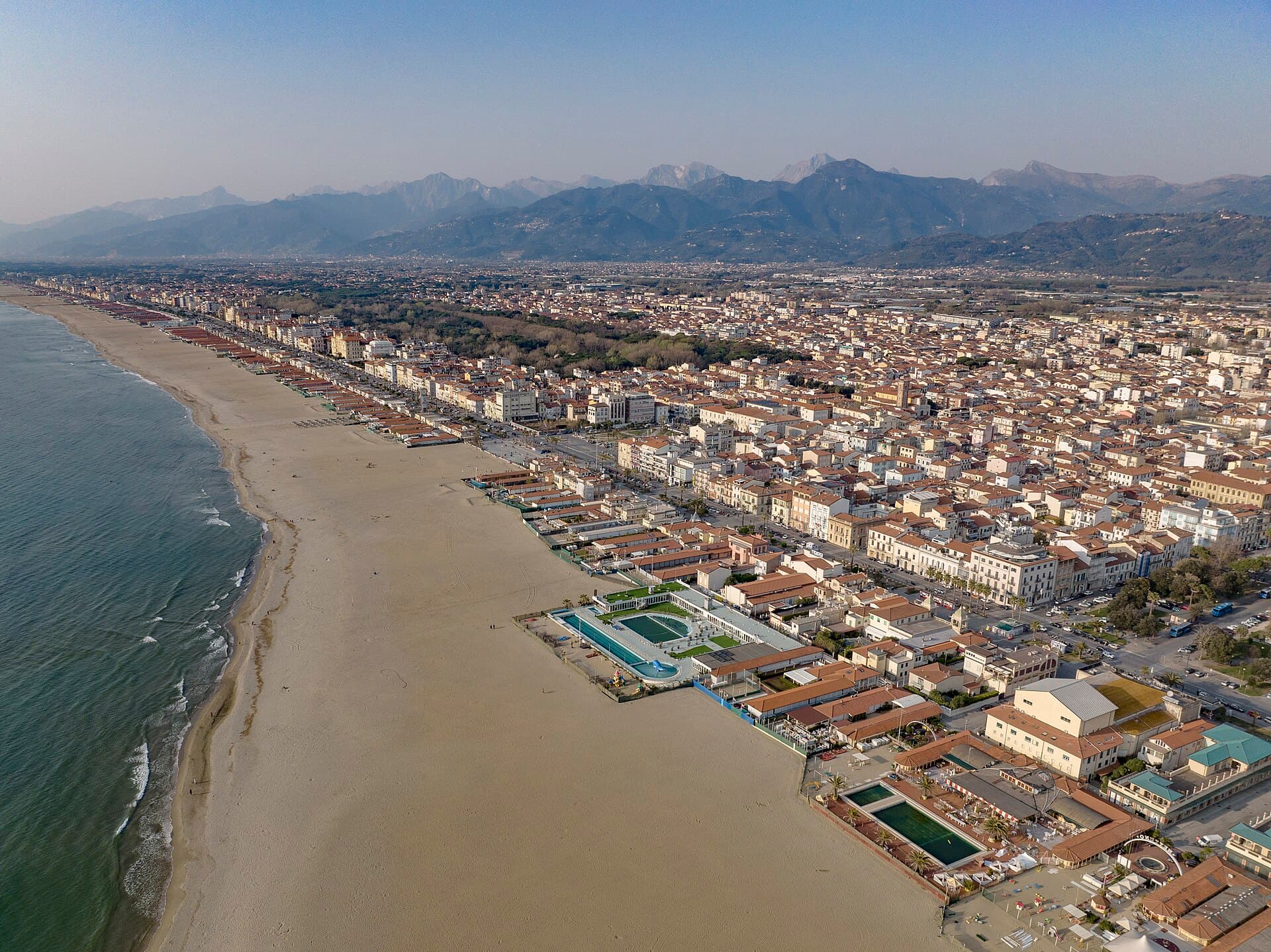
Viareggio, a coastal city in northern Tuscany, offers a captivating blend of sun-drenched beaches, exquisite Art Nouveau architecture, and a lively cultural scene. As the second-largest city in the province of Lucca, it serves as the main hub of the Versilia Riviera, providing a refreshing seaside escape with a distinctly Italian flair.
Viareggio's allure lies in its long stretches of golden sand, its iconic promenade, and the fascinating juxtaposition of elegant Liberty-style villas against the backdrop of the Ligurian Sea. Beyond its reputation as a popular summer resort, Viareggio maintains a confident cultural identity, most notably through its world-renowned Carnival.
Whether you are drawn to leisurely strolls along the waterfront, exploring historic architecture, or immersing yourself in festive traditions, Viareggio presents a multifaceted Tuscan experience that extends far beyond the typical beach holiday.
Viareggio's origins trace back to the 12th century, with the first historical mention in 1169 when a wooden tower was built to guard the coast. In 1172, a more substantial military structure, the Turris de Via Regia, was erected, taking its name from the road connecting it to Lucca. This early period saw the area embroiled in conflicts between Lucca and Pisa, as both sought control over the strategic coastal region.
The city's foundation is officially dated to 1172, when the people of Lucca and Genoa, allied against Pisa, built the Torre Matilde. This oldest fortification in Viareggio initially served as a bulwark against pirate incursions. The original quarter of the city developed around this tower, along the Burlamacca canal, which was crucial for fishermen and small boats.
Viareggio's transformation from a simple port to a city was gradual. In 1819, the Duchess Maria Luisa di Borbone commissioned the first dock, and the town was elevated to city status the following year. Its potential as a tourist destination quickly became apparent in 1822 when Napoleon Bonaparte's sister, Paolina Borghese, chose Viareggio for her holiday. This marked the beginning of Viareggio's rise as a fashionable resort, leading to the opening of its first bathing establishment in 1828.
By the 19th century, Viareggio had become a favored destination for aristocrats and intellectuals, including renowned composer Giacomo Puccini, who lived in the area for 30 years and composed several operas there. The arrival of rail service further increased its accessibility, prompting the construction of hotels, villas, and seaside promenades. The late 19th and early 20th centuries saw Viareggio embrace the Art Nouveau movement, known in Italy as Stile Liberty. This architectural style, characterized by sinuous lines, floral motifs, and elegant details, became a defining feature of the city's villas and seafront buildings.
A significant event in Viareggio's history was the great fire of 1917, which severely damaged much of the seafront. However, the city rebuilt with renewed vigor, replacing many destroyed wooden structures with the more durable and elegant Art Nouveau and Art Deco buildings that contribute to its distinctive character today.
Another cornerstone of Viareggio's identity is its Carnival, which began in 1873 as a parade of decorated carriages. Over time, it evolved into a spectacular event featuring gigantic papier-mâché floats, first introduced in 1925, and became one of Italy's most important cultural festivals, famous for its satirical commentary on politics and entertainment. Since 2001, the floats have been crafted in the Cittadella del Carnevale, a dedicated complex with workshops and museums.
Viareggio's allure extends from its sandy shores to its elegant boulevards. Begin your exploration with a leisurely stroll along the Passeggiata di Viareggio, the city's iconic seafront promenade. This avenue is a showcase of exquisite Art Nouveau (Liberty style) and Art Deco architecture, with notable examples like the Gran Caffè Margherita and various historic villas and bathing establishments.
Just a short walk from the promenade, you will find the Pineta di Ponente, a large urban pine forest offering a refreshing escape with walking and cycling paths, playgrounds, and even a swan pond. For a deeper dive into the city's history, visit the Torre Matilde, Viareggio's oldest fortification, a 16th-century watchtower that once guarded against pirates.
No visit to Viareggio is complete without acknowledging its most famous event: the Carnival. Even outside of the February/March festivities, the Cittadella del Carnevale provides a fascinating insight into the tradition, housing workshops where the colossal papier-mâché floats are created, along with a museum dedicated to the Carnival's history. For opera enthusiasts, a short drive to Torre del Lago Puccini allows you to visit the villa where Giacomo Puccini lived and composed.
Viareggio enjoys a Mediterranean climate, making it an appealing destination for much of the year. The best time for warm-weather activities and enjoying the beaches is from May through September, with July and August being the hottest months. For fewer crowds and potentially better value, consider visiting during the quieter months of April to June and September to October, when the weather remains pleasant.
If the world-famous Viareggio Carnival is your primary interest, plan your trip for early February to March, when the city comes alive with parades and festive energy. While winters are mild, December to February offer cooler temperatures and a more relaxed atmosphere for exploring the city's cultural side.
Viareggio is easily accessible and navigable. The nearest airport is Pisa International Airport (Galileo Galilei), approximately 20 kilometers south, with convenient train connections to Viareggio. Viareggio's train station is centrally located and well-connected to major Italian cities like Florence and Lucca.
Once in Viareggio, the city is best explored on foot or by bicycle, especially along the promenade. Local buses provide public transport, and tickets should be purchased before boarding. If driving, be aware of ZTL (Limited Traffic Zones) in parts of the city center; parking can be challenging, though options like Largo Risorgimento exist.
Many shops and restaurants observe an afternoon break, so plan your activities accordingly. For a taste of local cuisine, be sure to try focaccia con cecina from a local bakery. While Viareggio can be expensive, especially during peak season, research and flexibility can help you find options to suit various budgets.
Viareggio in Korean, in Chinese or in Hebrew — and 29 more languages, every stop narrated by a native voice. The widest language range of any self-guided audio tour.
Available in: