Puits de Shenhai
Imaginez forer un puits de plus de 1 000 mètres de profondeur avec seulement des outils manuels et de l'ingéniosité au 19e siècle.
L'histoire complète se débloque dans le tour
 WhisperToMe / CC0, via Wikimedia Commons
Visite audio autoguidée de Zigong — parcours GPS à pied, lecture hors ligne, narration en 32 langues.
“Là où les puits de sel ancestraux rencontrent les géants du Jurassique et où une ville s'illumine de mille lanternes.”
Pas les cartes postales. Les histoires que même les habitants ignorent — soufflées à l'oreille, là où elles se sont passées.
Imaginez forer un puits de plus de 1 000 mètres de profondeur avec seulement des outils manuels et de l'ingéniosité au 19e siècle.
Et si un musée était construit directement sur un site de fouilles de dinosaures massif, vous permettant de voir les fossiles exactement là où ils ont été trouvés ?
Bien que de nombreuses villes chinoises organisent des festivals de lanternes, il y a un endroit considéré comme l'origine incontestée et le maître de cette forme d'art lumineuse.
Découvrez tous les secrets de Zigong
Chaque adresse, chaque révélation en entier — dans ton oreille, là où elle s'est passée.
Tu choisis tes lieux. Tu marches. La voix te révèle ce que les autres ignorent.


Votre visite audioguidée de Zigong vous attend — choisissez vos lieux, votre langue, et lancez-vous dès votre arrivée.
AcheterLume intègre un guide en réalité augmentée. Levez votre téléphone : sa caméra montre la rue devant vous, avec une flèche lumineuse posée sur l'image réelle qui pointe toujours vers votre prochain arrêt — aucune carte à déchiffrer, aucun mauvais virage. Comme tout dans Lume, ça fonctionne entièrement hors-ligne.
Zigong, une ville de la province du Sichuan en Chine, offre un mélange unique d'industrie ancienne, de merveilles préhistoriques et de traditions culturelles lumineuses. Connue sous le nom de "Capitale du Sel", son histoire est profondément liée à l'extraction du sel de puits, une pratique remontant à plus de deux millénaires. Ce passé industriel a façonné non seulement son économie, mais aussi sa culture et sa cuisine locales distinctives.
Au-delà de son héritage salin, Zigong est célébrée comme la "Patrie des Dinosaures", grâce aux extraordinaires découvertes de fossiles dans la formation de Dashanpu. La ville se transforme également chaque année en "Ville des Lanternes du Royaume du Sud" lors de son Festival des Lanternes de renommée internationale, un spectacle de lumière et d'art.
Située dans le relief vallonné du bassin de la rivière Fuxi, Zigong offre un aperçu authentique d'une partie moins explorée de la Chine, où l'ingéniosité historique, l'importance paléontologique et les éblouissantes manifestations culturelles convergent.
L'histoire de Zigong est avant tout celle du sel. Pendant plus de 2 000 ans, la ville a été un centre de production de sel, utilisant des techniques de forage profond avancées et révolutionnaires pour l'époque. L'exploitation de la saumure a commencé dès la dynastie des Han de l'Est (25-220 de notre ère), et sous les dynasties Tang (618-907) et Song (960-1279), le sel de Zigong approvisionnait une grande partie du Sichuan. La richesse et l'influence de la ville ont considérablement augmenté, les marchands de sel devenant parmi les personnes les plus riches de la Chine ancienne.
Un exploit remarquable dans cette industrie a eu lieu en 1835 avec le forage du puits de Shenhai, qui a atteint une profondeur étonnante de plus de 1 000 mètres en utilisant uniquement des outils manuels. Cette méthode pionnière de forage par percussion était si innovante qu'elle a ensuite influencé les premières techniques de forage pétrolier en Occident. Le nom même de la ville, "Zigong", est un amalgame moderne formé en 1939 à partir des noms de deux districts historiques producteurs de sel : Ziliujing et Gongjing.
Parallèlement à son héritage salin, Zigong revêt une immense importance paléontologique. Dans les années 1970 et 1980, de vastes quantités de fossiles de dinosaures ont été découvertes dans la formation de Dashanpu, juste au nord-est de la ville. Ces découvertes, y compris de nombreux squelettes complets et de nouvelles espèces comme Dashanpusaurus, Omeisaurus et Huayangosaurus, ont cimenté la réputation de Zigong comme un haut lieu mondial de la recherche sur les dinosaures du Jurassique.
La tapisserie culturelle de la ville est encore enrichie par sa tradition de lanternes, qui remonte à plus d'un millénaire, aux dynasties Tang et Song. Ce qui a commencé comme des expositions de lampes du Nouvel An a évolué en des activités culturelles populaires élaborées pendant les dynasties Ming et Qing. Le Festival des Lanternes de Zigong moderne, officiellement désigné comme patrimoine culturel immatériel national, a acquis une renommée internationale, les artisans de Zigong étant désormais responsables d'une part significative de l'artisanat des lanternes dans le monde.
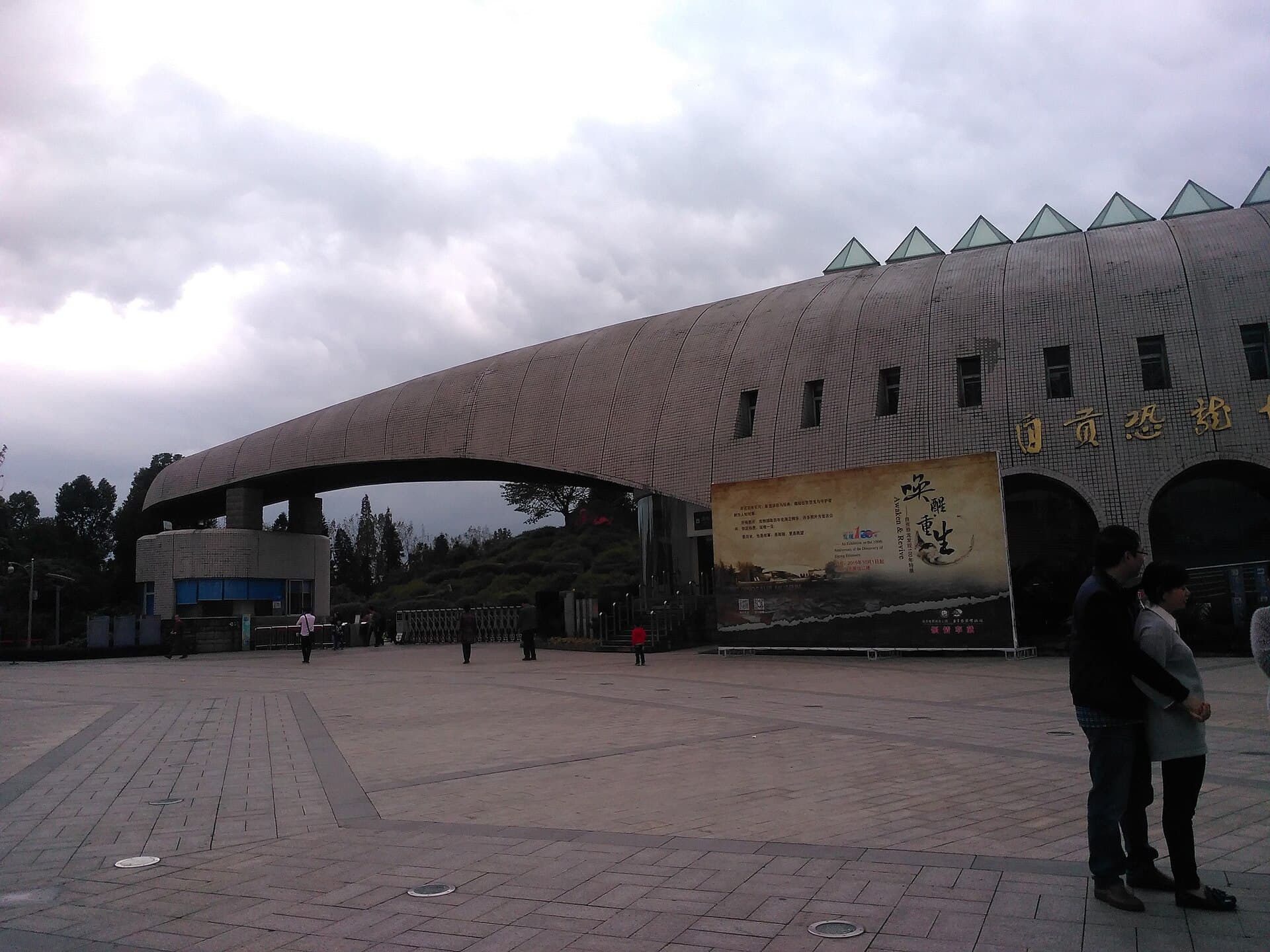
Commencez votre exploration au Musée des Dinosaures de Zigong, un site paléontologique d'importance mondiale construit directement sur une zone de fouilles active. Ici, vous pouvez observer des fossiles de dinosaures encore dans le sol et admirer des squelettes montés d'espèces comme Omeisaurus et Huayangosaurus.
Ensuite, plongez dans le passé industriel de la ville au Musée d'Histoire du Sel de Zigong, abrité dans l'exquis Xiqin Guildhall, une merveille architecturale de la dynastie Qing. Le musée présente l'évolution des techniques d'extraction du sel et l'impact du commerce du sel. À proximité, le Puits de Shenhai offre un lien tangible avec cette histoire, vous permettant de voir le premier puits du monde foré à la main à plus de 1 000 mètres de profondeur.
Si votre visite coïncide avec la période de fin janvier à mai, découvrez le Festival des Lanternes de Zigong au Parc des Lanternes (Caideng Gongyuan). Le parc se transforme en un éblouissant spectacle de lanternes complexes et illuminées, témoignage du savoir-faire renommé de Zigong. Pour un aperçu de la vie locale et de l'architecture traditionnelle, explorez la Vieille Ville de Xianshi, un port historique de transport du sel avec une histoire de 1 400 ans, présentant des résidences traditionnelles et des temples anciens.
Au-delà de cela, envisagez une Visite Nocturne de la Rivière Fuxi pour une perspective différente du paysage illuminé de la ville.
Les périodes les plus agréables pour visiter Zigong sont le printemps (mars à mai) et le début de l'automne (septembre à octobre). Pendant ces saisons intermédiaires, le temps est agréablement doux, et vous pouvez éviter la chaleur et l'humidité intenses de l'été, ainsi que le brouillard fréquent et la pluie fine de l'hiver.
Si votre intérêt principal est le spectaculaire Festival des Lanternes de Zigong, planifiez votre voyage entre fin janvier et mai, les expositions les plus éclatantes coïncidant généralement avec la période du Nouvel An lunaire. Préparez-vous à des foules plus importantes et réservez votre hébergement à l'avance pendant cette période.
Zigong n'a pas son propre aéroport civil majeur, la plupart des voyageurs internationaux atterrissent donc à l'aéroport international de Chengdu Shuangliu (CTU). De Chengdu, Zigong est facilement accessible en train à grande vitesse, avec des trajets de moins de 90 minutes depuis la gare de Chengdu Est. Alternativement, les bus interurbains depuis Chengdu prennent environ 2-3 heures.
À l'intérieur de Zigong, le système de transport repose sur un réseau de lignes de bus et de taxis. Les services de covoiturage comme DiDi (accessibles via Alipay ou WeChat) sont l'option la plus pratique pour les touristes, car la navigation en anglais dans les transports en commun est limitée. Les paiements sans espèces via Alipay ou WeChat Pay sont dominants, il est donc conseillé de lier une carte internationale à ces applications au préalable. Une eSIM fiable est également recommandée pour une connectivité constante et pour contourner les restrictions internet de la Chine.
Peu d'anglais est parlé à Zigong, il peut donc être utile d'avoir des applications de traduction ou des phrases chinoises préparées. Respectez les règles de photographie dans les musées ; la photographie au flash est souvent interdite dans les salles de fossiles.
Zigong en coréen, en chinois ou en hébreu — et dans 29 autres langues, chaque étape narrée par une voix native. La plus large gamme de langues de tous les audioguides autoguidés.
Disponible en :