L'architecture d'Alpbach
L'apparence harmonieuse et traditionnelle d'Alpbach n'est pas un hasard, mais le résultat d'une décision délibérée et plutôt stricte.
L'histoire complète se débloque dans le tour
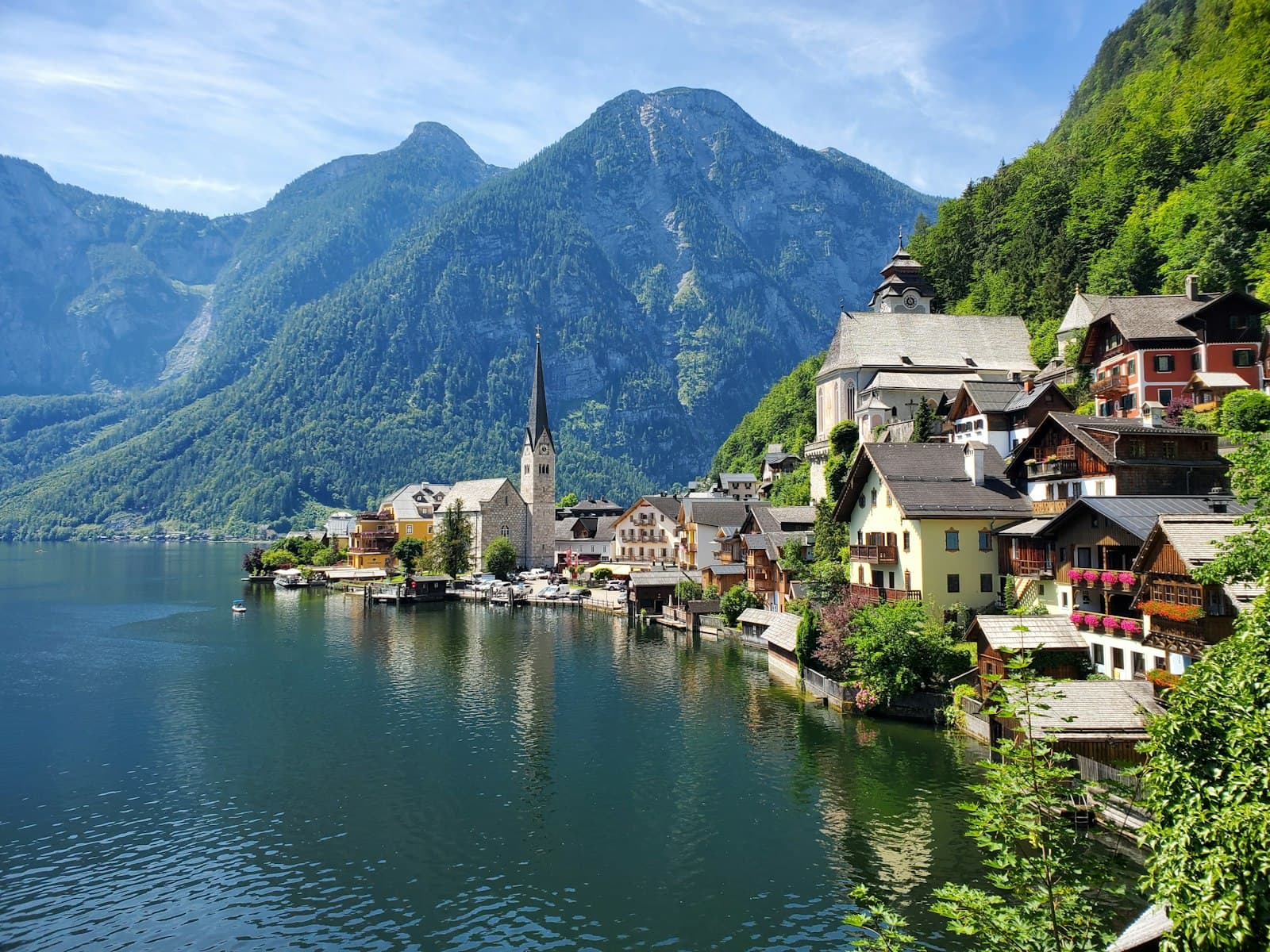 Photo: Hasmik Ghazaryan Olson / Unsplash
Visite audio autoguidée de Alpbach — parcours GPS à pied, lecture hors ligne, narration en 32 langues.
“Là où la tradition façonne chaque poutre et chaque pensée.”
Pas les cartes postales. Les histoires que même les habitants ignorent — soufflées à l'oreille, là où elles se sont passées.
L'apparence harmonieuse et traditionnelle d'Alpbach n'est pas un hasard, mais le résultat d'une décision délibérée et plutôt stricte.
Au-delà de son attrait visuel, Alpbach se distingue par ses éléments naturels que vous ne remarquerez peut-être pas immédiatement.
Ce village de montagne apparemment tranquille se transforme chaque année en un centre mondial d'échange intellectuel, attirant des esprits du monde entier.
Découvrez tous les secrets de Alpbach
Chaque adresse, chaque révélation en entier — dans ton oreille, là où elle s'est passée.
Tu choisis tes lieux. Tu marches. La voix te révèle ce que les autres ignorent.


Votre visite audioguidée de Alpbach vous attend — choisissez vos lieux, votre langue, et lancez-vous dès votre arrivée.
AcheterLume intègre un guide en réalité augmentée. Levez votre téléphone : sa caméra montre la rue devant vous, avec une flèche lumineuse posée sur l'image réelle qui pointe toujours vers votre prochain arrêt — aucune carte à déchiffrer, aucun mauvais virage. Comme tout dans Lume, ça fonctionne entièrement hors-ligne.
Alpbach, un village de l'État autrichien du Tyrol, est reconnu pour son architecture en bois traditionnelle cohérente et ses floraisons abondantes, ce qui lui a valu les titres de 'Plus beau village d'Autriche' en 1983 et de 'Plus beau village fleuri d'Europe' en 1993. Situé au cœur des Alpes de Kitzbühel, le village conserve une idylle montagnarde tyrolienne authentique, caractérisée par ses façades à colombages, ses toits uniformes et ses balcons fleuris. Cette apparence distinctive n'est pas accidentelle ; des réglementations de construction strictes, mises en œuvre en 1953, exigent que toutes les nouvelles constructions adhèrent au style traditionnel, avec un revêtement en bois à partir du premier étage.
Au-delà de son attrait visuel, Alpbach est célébré pour son environnement naturel propre. Il a été certifié en 1975 comme ayant l'air le plus pur d'Autriche et est reconnu comme la première 'Ville de Cristal' du pays en raison de la qualité exceptionnelle de son eau de source de montagne. Le village est également un centre intellectuel important, accueillant le Forum Européen Alpbach annuel depuis 1945, un congrès international qui réunit des leaders de divers domaines, ce qui a valu à Alpbach le surnom de 'village des penseurs'. Ce mélange de tradition préservée, de beauté naturelle et d'énergie intellectuelle fait d'Alpbach une destination unique.
La première mention écrite d'Alpbach remonte à 1150, bien que l'établissement humain dans la région ait commencé vers l'an 1000. Des preuves, telles qu'une hache en bronze trouvée à Steinberger Joch, suggèrent que des routes traversant la région étaient utilisées dès la période de Hallstatt (1600-1250 av. J.-C.). Le christianisme est arrivé aux 7e et 8e siècles, introduit par des moines irlandais et écossais, c'est pourquoi le saint patron de l'église paroissiale est Saint Oswald, un ancien roi de Northumbrie.
Le 15e siècle a marqué une période d'expansion économique pour Alpbach avec la découverte et l'exploitation de minerai de cuivre et d'argent, principalement autour du mont Gratlspitze. La famille Fugger d'Augsbourg, une famille marchande éminente, a repris les opérations minières à Alpbach, avec leur administration et le tribunal minier situés à ce qui est aujourd'hui l'Hôtel Böglerhof. Les activités minières ont cessé au milieu du 19e siècle en raison de rendements insuffisants.
L'isolement relatif d'Alpbach, avec une route le reliant à la vallée de l'Inn construite seulement en 1926, a permis à sa culture de construction et de vie unique de s'épanouir et à ses traditions d'être préservées. Le tourisme a commencé à se développer au début du 20e siècle, le village accueillant 110 visiteurs en 1938. Aujourd'hui, le tourisme est une source de revenus principale pour les quelque 2 500 habitants d'Alpbach, mais le village compte toujours 105 fermes en activité, le même nombre qu'il y a un siècle.
Un moment charnière de l'histoire moderne d'Alpbach fut la fondation du Forum Européen Alpbach en août 1945. Organisé par Otto Molden et Simon Moser, ce fut la première semaine universitaire internationale en Europe après la Seconde Guerre mondiale, conçue comme un centre intellectuel et culturel pour l'intégration européenne. Ce forum annuel a transformé Alpbach en un lieu de rencontre international pour les leaders de la science, de la politique, des affaires et de la culture, lui valant le surnom de 'village des penseurs'.
Pour préserver le patrimoine architectural du village, le maire Alfons Moser (1945-1979) a initié une loi d'urbanisme locale en 1953, exigeant que tous les nouveaux bâtiments adhèrent au style traditionnel d'Alpbach. Cet engagement envers la tradition, combiné à son importance culturelle et à son environnement propre, a valu à Alpbach de nombreuses distinctions, dont 'Le plus beau village d'Autriche' en 1983 et 'Le plus beau village fleuri d'Europe' en 1993.
Alpbach offre un éventail de sites et d'activités qui allient beauté naturelle et découvertes culturelles. Le centre du village d'Alpbach est en soi une attraction majeure, avec ses chalets en bois uniformes, ses balcons fleuris et son église paroissiale centrale, dédiée à Saint Oswald. Le Centre de Congrès d'Alpbach est un exemple frappant d'architecture moderne harmonieusement intégrée au paysage alpin, avec une spirale de verre distinctive construite à flanc de montagne. Il vaut le détour même si aucune conférence n'y a lieu, pour son design et ses vues.
Pour ceux qui s'intéressent à l'histoire locale et à la vie traditionnelle, le Musée des fermes tyroliennes à Kramsach, à quelques minutes en voiture d'Alpbach, est un musée en plein air présentant 14 fermes reconstruites et de nombreuses dépendances, dont certaines datent du Moyen Âge. Le téléphérique du Wiedersbergerhorn donne accès à des sentiers de haute montagne et à des points de vue étendus. En été, le sommet offre de vastes vues sur le Zillertal et un point de départ pour des randonnées. Le coaster alpin Alpbachtaler Lauser Sauser est une activité amusante pour tous les âges, serpentant le long de la montagne avec des vues panoramiques. De plus, l'exploration de merveilles naturelles comme les gorges de Kundl ou les gorges de Tiefenbach offre des promenades pittoresques le long des rivières et à travers des gouffres spectaculaires.
Alpbach est une destination ouverte toute l'année, avec des attraits saisonniers distincts. Pour la randonnée, le VTT et les prairies fleuries, les mois d'été, en particulier juillet, août et septembre, offrent le temps le plus agréable et ensoleillé. Pendant cette haute saison, les quatre télécabines et les refuges de montagne sont généralement en service. L'hiver transforme Alpbach en station de ski, avec des pistes bien entretenues et des possibilités de ski de fond, de luge et de raquettes. Les mois de printemps et d'automne offrent une expérience plus calme avec un temps doux et sec, idéal pour les randonnées de début ou de fin de saison et les festivals locaux.
Alpbach se trouve au Tyrol, en Autriche, à environ 30 minutes d'Innsbruck. Les aéroports les plus proches sont Innsbruck (50 km), Munich (150 km) et Salzbourg (150 km). Bien qu'une voiture offre une flexibilité pour explorer la région, le village d'Alpbach est lui-même praticable à pied. Les transports en commun, y compris les bus régionaux, relient les villages de l'Alpbachtal et sont souvent gratuits pour les clients munis d'une carte Alpbachtal, généralement délivrée par les hébergements à l'arrivée. Cette carte offre également des réductions sur les musées et les activités. La monnaie locale est l'euro (EUR). Les citoyens britanniques n'ont pas besoin de visa pour l'Autriche mais doivent posséder un passeport valide. Une assurance voyage et médicale complète est recommandée.
Alpbach en coréen, en chinois ou en hébreu — et dans 29 autres langues, chaque étape narrée par une voix native. La plus large gamme de langues de tous les audioguides autoguidés.
Disponible en :