Mine d'argent de Schwaz
Un taureau légendaire, une servante et un éclat d'argent ont changé le cours de l'histoire européenne.
L'histoire complète se débloque dans le tour
 Wolfgang H. Wögerer, Wien / CC BY 3.0, via Wikimedia Commons
Visite audio autoguidée de Schwaz — parcours GPS à pied, lecture hors ligne, narration en 32 langues.
“Là où l'argent coulait jadis, les histoires brillent désormais.”
Pas les cartes postales. Les histoires que même les habitants ignorent — soufflées à l'oreille, là où elles se sont passées.
Un taureau légendaire, une servante et un éclat d'argent ont changé le cours de l'histoire européenne.
L'opulente résidence de la famille la plus riche d'Europe a désormais une fonction inattendue.
Lors d'un incendie dévastateur qui consuma une grande partie de Schwaz, un soldat ennemi devint un sauveur inattendu pour un monument important.
Découvrez tous les secrets de Schwaz
Chaque adresse, chaque révélation en entier — dans ton oreille, là où elle s'est passée.
Tu choisis tes lieux. Tu marches. La voix te révèle ce que les autres ignorent.


Votre visite audioguidée de Schwaz vous attend — choisissez vos lieux, votre langue, et lancez-vous dès votre arrivée.
AcheterLume intègre un guide en réalité augmentée. Levez votre téléphone : sa caméra montre la rue devant vous, avec une flèche lumineuse posée sur l'image réelle qui pointe toujours vers votre prochain arrêt — aucune carte à déchiffrer, aucun mauvais virage. Comme tout dans Lume, ça fonctionne entièrement hors-ligne.
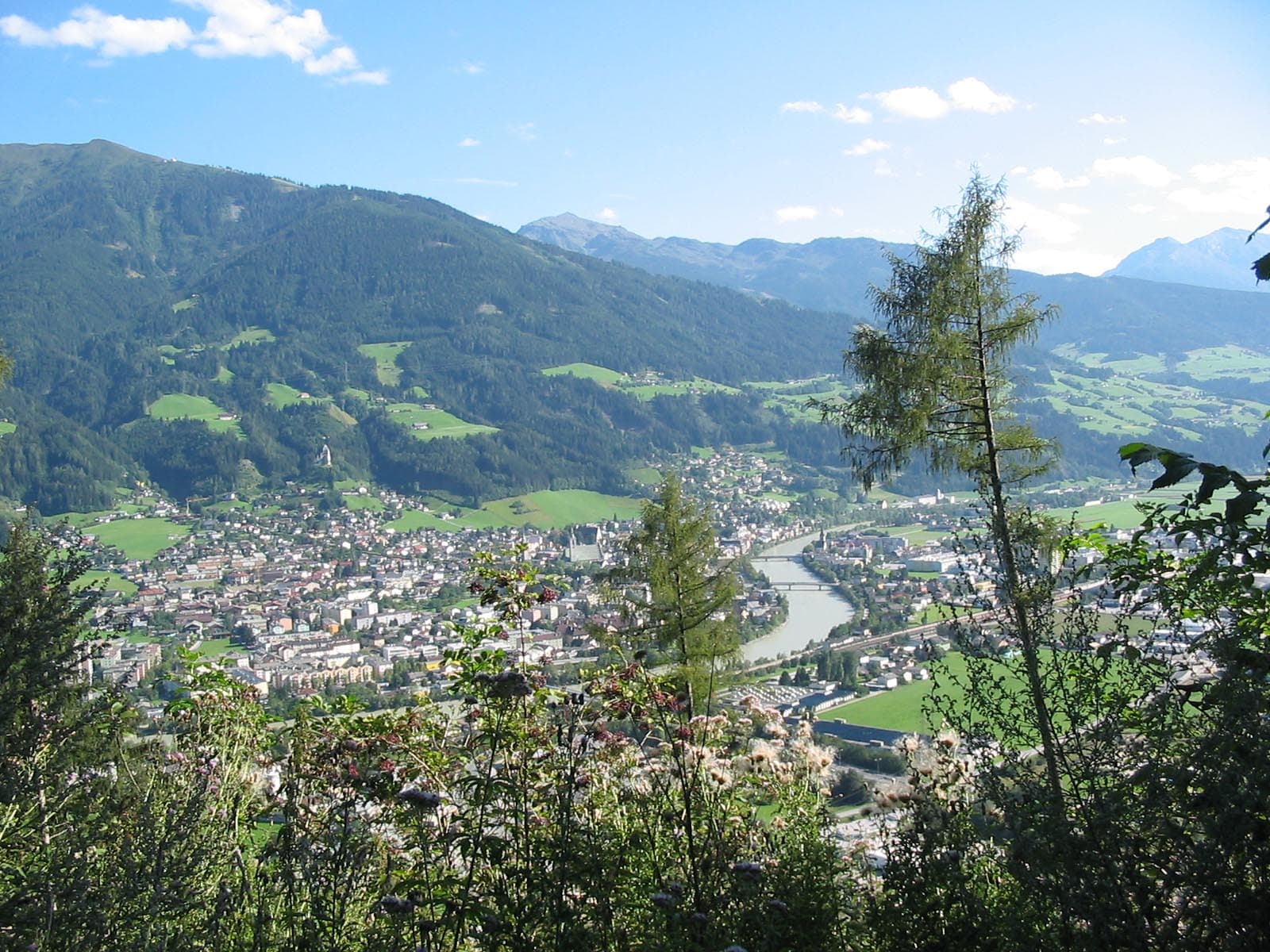
Schwaz, une ville historique de la région autrichienne du Tyrol, est souvent surnommée la « Ville d'argent » en raison de son passé extraordinaire en tant que centre minier d'argent majeur. Aux XVe et XVIe siècles, Schwaz était l'une des métropoles minières les plus importantes au monde, ses gisements d'argent et de cuivre apportant une richesse immense à la région et influençant la politique européenne. Aujourd'hui, la ville, située à 550 mètres d'altitude dans la basse vallée de l'Inn, conserve une grande partie de son caractère médiéval, invitant les visiteurs à explorer sa riche histoire et les paysages alpins environnants.
Au-delà de son importance historique, Schwaz offre un large éventail d'attractions, de l'exploration d'anciens tunnels miniers à l'admiration de l'architecture gothique et à la jouissance de la beauté naturelle des montagnes du Karwendel et des Alpes de Tux. Avec une population d'environ 13 000 à 14 000 habitants, Schwaz est un chef-lieu de district et est idéalement située à environ 30 kilomètres d'Innsbruck, ce qui en fait une destination accessible pour ceux qui recherchent un mélange d'immersion culturelle et d'aventure en plein air.
Schwaz apparaît pour la première fois dans les registres historiques entre 930 et 931. Cependant, des preuves suggèrent que le minerai de cuivre était exploité dans la région dès l'âge du bronze. La véritable ascension de la ville a commencé au XVe siècle avec la découverte d'importants gisements d'argent. Au XVIe siècle, Schwaz était devenue une puissance de production d'argent, avec environ 15 000 mineurs et fondeurs travaillant dans les mines. À son apogée vers 1500, Schwaz était la plus grande métropole minière mondiale, produisant environ 85 % de l'argent mondial en 1523. Cette immense richesse a transformé le Tyrol en l'une des régions les plus riches d'Europe et a attiré de puissantes familles de commerçants comme les Fugger d'Augsbourg, qui ont massivement investi dans les opérations minières et ont même temporairement déménagé le siège de leur entreprise à Schwaz.
La prospérité économique de l'ère de l'argent a laissé un impact culturel durable, évident dans de nombreux bâtiments et sites de la vieille ville. Au cours de cette période, avec une population d'environ 20 000 habitants en 1510, Schwaz était la deuxième plus grande ville de l'Empire autrichien, après Vienne. Cependant, la découverte de riches gisements d'argent dans les Amériques au milieu du XVIe siècle, associée à des conditions minières de plus en plus difficiles, a entraîné un déclin de l'industrie minière de Schwaz. Les Fugger se sont retirés de l'exploitation minière de Schwaz en 1657. L'extraction d'argent a continué à plus petite échelle jusqu'en 1957, toutes les activités minières cessant en 1999 en raison d'un éboulement.
Schwaz a connu d'autres difficultés pendant la lutte pour la liberté tyrolienne vers 1809, lorsqu'environ un tiers de la ville fut détruit par un incendie. Malgré ces revers, la ville s'est lentement rétablie. Schwaz a officiellement reçu ses droits de cité en 1898 de l'empereur François-Joseph Ier d'Autriche. Aujourd'hui, Schwaz embrasse son héritage, avec des efforts continus pour mettre en valeur ses traces historiques d'argent, y compris la populaire mine-musée d'argent, qui attire environ 100 000 visiteurs par an.
Commencez votre exploration à la Mine d'argent de Schwaz (Silberbergwerk Schwaz), où un train emmène les visiteurs à 800 mètres de profondeur dans la montagne pour découvrir le monde des mineurs médiévaux et voir une roue hydraulique du XVIe siècle. En surface, flânez dans la vieille ville de Schwaz, caractérisée par son architecture médiévale et ses maisons colorées.
L'église paroissiale de Maria Himmelfahrt est un monument important, reconnue comme la plus grande église-halle gothique du Tyrol et la seule église à quatre nefs d'Europe. Son toit est à lui seul couvert de plus de 14 000 plaques de cuivre. À proximité, le monastère franciscain, fondé en 1507 par l'empereur Maximilien Ier, présente des fresques gothiques représentant des scènes de la Passion du Christ dans son cloître.
Pour des vues imprenables sur Schwaz et la vallée de l'Inn, visitez le château de Freundsberg (Burg Freundsberg), une fortification du XIIe siècle dont le donjon abrite désormais un musée dédié à l'histoire de la ville et à l'industrie minière de l'argent. La Fuggerhaus, un imposant bâtiment avec un toit en forme de douve distinctif, offre un aperçu de la richesse de la famille Fugger. De plus, le musée Haus der Völker présente la diversité culturelle avec des artefacts du monde entier, et le planétarium de Schwaz offre des aperçus de l'astronomie.
La meilleure période pour visiter Schwaz pour un temps agréable et des activités de plein air comme la randonnée est pendant les mois d'été, de juin à août, lorsque les températures moyennes se situent entre 18°C et 20°C. Cependant, cette période connaît également une affluence plus importante. Pour un équilibre entre beau temps et moins de touristes, envisagez la fin du printemps (fin avril à mai) ou le début de l'automne (mi-septembre à octobre). Ces saisons intermédiaires offrent des températures confortables pour explorer la ville et les Alpes environnantes. Si les sports d'hiver sont votre objectif, de décembre à mi-mars est idéal pour le ski et le snowboard sur les sommets alpins voisins.
Schwaz est accessible en train, la ligne Unterinntalbahn traversant la ville. La gare de Schwaz se trouve sur la rive est de la rivière Inn. Depuis Innsbruck, le trajet en train dure environ 18 minutes. Si vous voyagez en voiture, l'autoroute Inntal (A12) offre une connexion directe, avec la sortie 49 desservant Schwaz.
À Schwaz, des options de transports en commun sont disponibles, et de nombreuses attractions centrales sont accessibles à pied. Pour explorer la région plus vaste, la location de vélos électriques est une option, et la région autour de Schwaz offre le plus grand réseau de marche nordique du Tyrol. La mine d'argent de Schwaz propose des visites guidées quotidiennes, avec des réservations recommandées pour les groupes. Gardez à l'esprit que la mine maintient une température constante de 12°C (53,6°F) toute l'année, il est donc conseillé de porter des vêtements chauds et des gants pour votre visite souterraine.
Schwaz en coréen, en chinois ou en hébreu — et dans 29 autres langues, chaque étape narrée par une voix native. La plus large gamme de langues de tous les audioguides autoguidés.
Disponible en :