Noaflhaus Carnival and Local History Museum
Beyond the lively masks and costumes, a deeper story of Telfs' most famous tradition awaits.
Full story unlocks in the tour
 Alletto / CC BY-SA 3.0, via Wikimedia Commons
Self-guided audio walking tour of Telfs — GPS route, offline playback, story-driven narration in 32 languages.
“Where ancient rituals dance with alpine grandeur.”
Not the postcards. The stories even locals don't know — whispered in your ear, right where they happened.
Beyond the lively masks and costumes, a deeper story of Telfs' most famous tradition awaits.
A quiet path near Telfs leads to a small church with a surprisingly dark past and an even older secret beneath its foundations.
There's a local belief about a famous artist and a self-portrait, tied to a serene lake near Telfs.
Discover every secret of Telfs
Every address, every reveal in full — in your ear, right where it happened.
You pick your stops. You walk. The voice reveals what the others miss.


Your self-guided audio tour of Telfs is ready — pick your landmarks, choose your language, and start the moment you arrive.
BuyLume has a built-in augmented-reality guide. Hold your phone up and its camera shows the street ahead of you, with a glowing arrow laid over the real view that always points to your next stop — no map to puzzle over, no wrong turns. Like everything in Lume, it works fully offline.
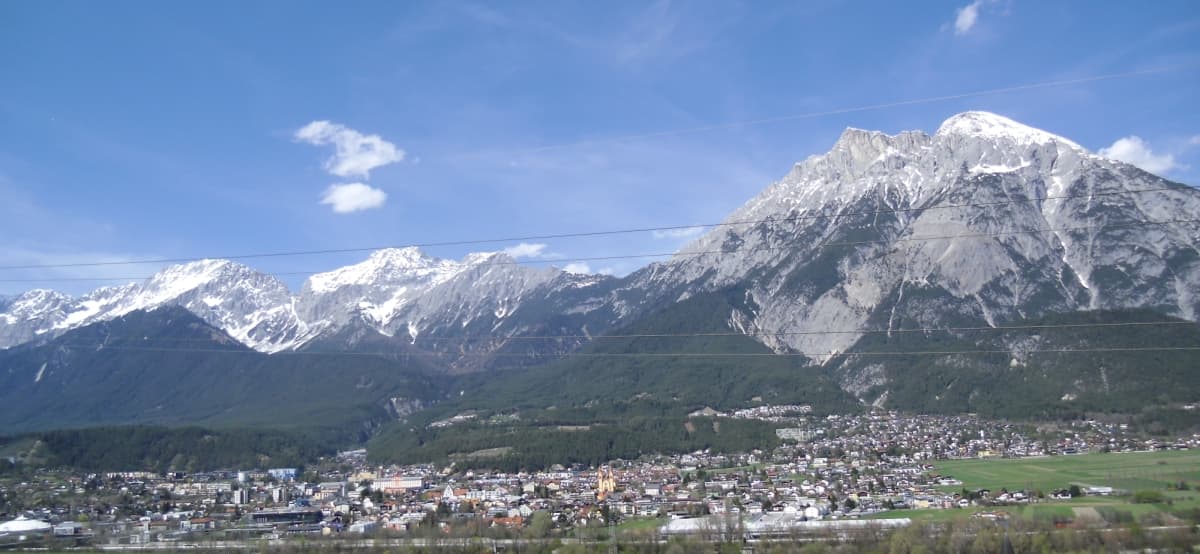
Telfs, a market town in the Austrian state of Tyrol, sits in the Inn Valley at the base of the Hohe Munde mountain, a peak of the Mieming Range. As the third-largest municipality in Tyrol, after Innsbruck and Kufstein, Telfs is a place where deep-rooted traditions intertwine with modern life. Its convenient location, just a 30-minute drive from Innsbruck, makes it easily accessible, offering a blend of alpine charm and contemporary amenities.
Once a significant center for the textile industry, Telfs has evolved into a welcoming destination for both active adventurers and those seeking cultural immersion. The town is surrounded by a formidable mountain landscape, providing ample opportunities for hiking, biking, and winter sports. Beyond its natural beauty, Telfs is particularly renowned for its customs, most notably the 'Schleicherlaufen' carnival, a UNESCO intangible cultural heritage event that draws visitors from afar.
From exploring ancient churches built on Roman foundations to discovering the stories behind its unique festivals, Telfs invites you to step into a world where history is not just preserved but actively celebrated. Whether you're drawn to its athletic pursuits or its cultural depth, Telfs offers a distinctive Tyrolean experience.
The history of Telfs stretches back to the Bronze Age, with archaeological finds indicating early human presence in the region. Its strategic location in the Inn Valley, at the foot of the Hohe Munde, made it a significant trading site throughout the Middle Ages. This position also meant Telfs served as a crucial 'gateway' to the Mieminger Plateau and the Fernpass, a route appreciated by salt transporters.
By the 16th century, Telfs was already a recognizable settlement, with historical sources mentioning its 'Schleicherlaufen' carnival as early as 1571. This enduring tradition, with its masked figures and elaborate processions, highlights the deep cultural roots of the community, which defied attempts by authorities and the church to suppress it over centuries.
The 19th and early 20th centuries saw Telfs transform into a prominent center for the textile industry. The remnants of former manufacturing facilities still dot the townscape, serving as a reminder of this industrial past. This period also led to a significant influx of immigrants, particularly from countries like Turkey and the former Yugoslavia, who played a vital role in the economic and cultural development of the area.
In 1908, Telfs officially received its market town status, solidifying its importance within Tyrol. Today, while the textile industry has receded, Telfs maintains its economic vitality through manufacturing, energy production, and a growing service sector. The town has experienced considerable growth in recent years, with new settlements expanding into areas that were once forested at the base of the Hohe Munde.
Despite its modernization, Telfs remains deeply connected to its traditions. The 'Schleicherlaufen' continues to be a central part of its identity, recognized by UNESCO as intangible cultural heritage. The town also hosts the 'Tiroler Volksschauspiele' (Tyrolean Folk Theatre Festival), which transforms various locations into stages for theatrical performances during the summer. These events, along with the daily chime of the Peace Bell in Mösern, underscore Telfs' commitment to preserving its unique heritage while embracing the present.
Begin your exploration of Telfs with a visit to the Noaflhaus Carnival and Local History Museum. This museum provides a fascinating insight into the town's most famous tradition, the 'Schleicherlaufen' carnival, with its impressive collection of masks and historical artifacts.
Next, take a cultural walk through Telfs, which can lead you to the impressive Parish Church of St. Peter and Paul, a monumental neo-Romanesque structure. Don't miss the Franciscan Monastery and its accompanying Church of the Holy Spirit, which features paintings by artist Maurizio Bonato.
For a glimpse into ancient history and a quieter, contemplative experience, follow the path to St. Moritzen Church. This site, with its old plague cemetery and nearby Rhaetian sacrificial site, offers a profound connection to Telfs' distant past. You can also explore the Old Church of St. Veit, with its Gothic core and Baroque alterations.
Beyond the town center, a short trip will take you to Möserer See, an idyllic mountain lake perfect for swimming, sunbathing, or a leisurely stroll. While there, listen for the daily chime of the Peace Bell in Mösern, a symbol of tranquility in the Alps.
For outdoor enthusiasts, Telfs offers the Klammsteig Telfs gorge walk and the Bergstation climbing and bouldering center. The area is also crisscrossed with numerous hiking and cycling trails, including sections of the Inn Cycle Path.
Telfs offers distinct experiences throughout the year. Summer (June to September) is ideal for hiking, biking, and enjoying the outdoor pools and lakes, with pleasant temperatures and lush landscapes. The Tiroler Volksschauspiele theatre festival also takes place during the summer months.
Winter (December to March) transforms Telfs into a snowy wonderland, perfect for skiing, snowboarding, and winter hiking. The most unique time to visit, however, is during the 'Schleicherlaufen' carnival, which occurs every five years, with the next scheduled for February 2025. This is a truly spectacular and immersive cultural event. Spring and autumn offer milder weather, fewer crowds, and beautiful scenery for walks and cultural exploration.
Telfs is conveniently located and easily accessible. It's approximately 30 minutes from Innsbruck by car, and direct train services connect Telfs-Pfaffenhofen to Innsbruck Hauptbahnhof in as little as 17 minutes, with around 72 trains running daily. The nearest major airport is Innsbruck Airport (INN), about 26 km away.
Within Telfs, you'll find a range of amenities, including shopping centers like Inntalcenter and Telfspark, as well as various specialty shops. Accommodation options vary from guesthouses to luxury hotels. The local Tourist Information Telfs, located at Untermarktstraße 1, is a valuable resource for maps, event schedules, and local advice. Public transport within the market town is efficient and can help you navigate to various points of interest.
Telfs in Korean, in Chinese or in Hebrew — and 29 more languages, every stop narrated by a native voice. The widest language range of any self-guided audio tour.
Available in: