The Fasnacht Museum
Imst's celebrated Schemenlaufen carnival is a vivid display of masks and motion. Yet, a peculiar rule dictates who may participate. What is it?
Full story unlocks in the tour
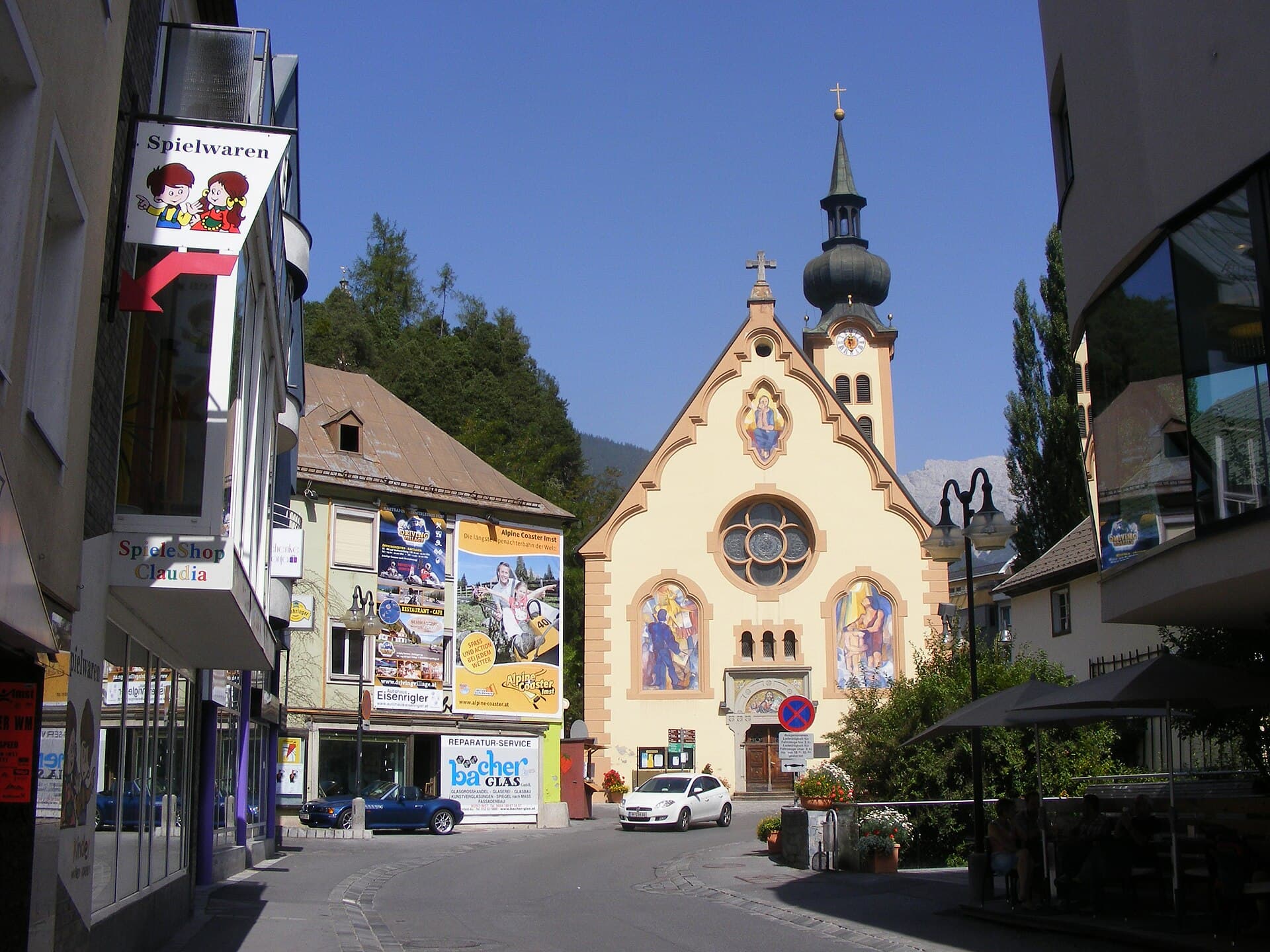 Les Ailes du Desir / CC BY-SA 3.0, via Wikimedia Commons
Self-guided audio walking tour of Imst — GPS route, offline playback, story-driven narration in 32 languages.
“Alpine air carries the echoes of ancient traditions, where adventure unfolds around every bend.”
Not the postcards. The stories even locals don't know — whispered in your ear, right where they happened.
Imst's celebrated Schemenlaufen carnival is a vivid display of masks and motion. Yet, a peculiar rule dictates who may participate. What is it?
A natural chasm cuts deeply into Imst's core, offering more than a scenic walk. What ancient truth does its very presence suggest?
Before tourism and alpine sports, Imst was known for an unusual and unexpectedly profitable trade. What winged companions brought prosperity to the town centuries ago?
Discover every secret of Imst
Every address, every reveal in full — in your ear, right where it happened.
You pick your stops. You walk. The voice reveals what the others miss.


Your self-guided audio tour of Imst is ready — pick your landmarks, choose your language, and start the moment you arrive.
BuyLume has a built-in augmented-reality guide. Hold your phone up and its camera shows the street ahead of you, with a glowing arrow laid over the real view that always points to your next stop — no map to puzzle over, no wrong turns. Like everything in Lume, it works fully offline.
Imst, a compelling town in the heart of the Tyrolean Alps, offers a compelling blend of natural grandeur, exhilarating outdoor pursuits, and deeply rooted cultural customs. Situated on the River Inn, approximately 60 km west of Innsbruck, Imst serves as a passage to some of Austria's most striking landscapes. It is a place where the dramatic Rosengarten Gorge carves its way directly into the town center, presenting a unique natural spectacle.
Beyond its evocative setting, Imst is known for its lively Fasnacht (Carnival) celebrations, particularly the UNESCO-recognized Schemenlaufen, a centuries-old procession of masked dancers that unfolds every four years. This tradition, alongside a rich past reaching back to the Bronze Age, gives Imst a distinctive character that differentiates it from more overtly tourist-focused alpine destinations. Visitors will discover a welcoming atmosphere, authentic Tyrolean hospitality, and a genuine connection to the region's past and present.
Whether you seek adrenaline-fueled adventures, such as riding the world's longest alpine coaster, or desire to explore serene hiking trails, Imst provides a diverse range of experiences. It is a destination that invites you to immerse yourself in both its untamed natural surroundings and its lively cultural heritage.
## From Bronze Age Settlements to Roman Hub Imst's origins extend to the Bronze Age, with evidence of continuous settlement since pre-Roman times. Its strategic location in the Inn Valley made it a significant settlement along the Via Claudia Augusta, an important Roman trade route, making it the most vital stop between Füssen and Merano. The town was first officially mentioned in documents in 763 as "In Opido Humiste," further solidifying its ancient foundations.
## Medieval Market Rights and Mining Prosperity In 1282, Imst was granted market rights, a crucial step in its development. From the 15th to the 17th centuries, it became a significant mining center, even serving as the seat of a mining court that oversaw a wide region. This period of mining prosperity contributed significantly to the town's expansion and influence. However, despite its importance, Imst was long prevented from achieving full town status due to the opposition of the powerful local lords of Starkenberg, who resisted its direct subordination to the territorial prince.
## The Rise and Fall of Textile and Bird Trades The 17th and 18th centuries saw Imst flourish as a center for bird breeding and trade, with trained birds being sold across Europe. The town also developed into a textile hub after being granted the privilege to establish a canvas and cotton factory. However, this period of industrial growth was dramatically interrupted by a devastating fire in 1822, which destroyed most of the town.
## The Enduring Legacy of Fasnacht Perhaps the most enduring aspect of Imst's cultural heritage is its Fasnacht (Carnival) tradition, particularly the Schemenlaufen procession. Documented as far back as 1597, this lively event has been celebrated with unbroken enthusiasm. In 2012, the Imst Schemenlaufen was recognized by UNESCO as an intangible world cultural heritage. This deep-rooted tradition, with its elaborate masks and ritualized dances, continues to be a defining feature of Imst's identity, bringing the community together every four years.
Imst offers a variety of attractions for visitors, blending natural wonders with cultural insights. A memorable experience is a ride on the Imst Alpine Coaster, the world's longest of its kind, stretching 3.5 kilometers down the Hoch-Imst mountain. This exhilarating ride provides expansive views of the Tyrolean Alps.
For a unique natural encounter, explore the Rosengarten Gorge, a striking natural creation that leads directly into the town center. The 1.5-kilometer path features bridges and viewing platforms, offering diverse perspectives of the gorge's distinctive landscape.
Delve into local culture at the Fasnacht Museum, situated in a historic building near the town center. Here, you can learn about Imst's celebrated Fasnacht (Carnival) events, with an extensive collection of costumes, masks, and photographs.
For those interested in history and architecture, take a quiet walk through the town to admire buildings like the Rathaus (town hall), a 16th-century structure with a Renaissance façade, and Haus Schöneck, an 18th-century mansion. The Imster Bergbahnen cable cars offer access to higher altitudes for hiking and enjoying the mountain scenery, with special experiences like the "Genussgondel" (gourmet gondola) for breakfast with a view.
Imst welcomes visitors throughout the year, with distinct charms in different seasons. For outdoor adventures like hiking, mountain biking, rafting, and the Alpine Coaster, the best time to visit is from May to October. The summer months (July-August) are peak season, so booking accommodations in advance is advisable. For winter sports enthusiasts, the colder months offer skiing, tobogganing, and winter hiking.
The celebrated Schemenlaufen carnival takes place every four years in February, just before Lent. The next major event is scheduled for February 13, 2028, and is a truly unique cultural experience. If you plan to attend the Fasnacht, be sure to book well in advance, as the town experiences a significant influx of visitors.
Imst is easily accessible by car, train, or bus. It is located along the A12 Inntal Autobahn, approximately 45 minutes from Innsbruck by car. The Imst-Pitztal railway station offers hourly regional train connections from Innsbruck and Landeck, and long-distance connections to Vienna and Zurich every two hours. Regular bus services connect the train station to the town center and surrounding villages.
The local currency is the Euro (€). German is the predominant language. The Imst Tourismus information office, located at Johannesplatz 4, is open Monday to Friday from 9:00 AM to 5:00 PM and can assist with inquiries and ticket purchases. Free parking is often available in Hoch-Imst. Accommodation options range from hotels like Hotel Hirschen and Gasthof Neuner to various vacation rentals. Booking in advance is recommended, especially during peak season or Fasnacht years.
Imst in Korean, in Chinese or in Hebrew — and 29 more languages, every stop narrated by a native voice. The widest language range of any self-guided audio tour.
Available in: