The Xianheng River
Anchang's main waterway isn't just for scenic boat rides; it once played a crucial role in local commerce beyond transportation.
Full story unlocks in the tour
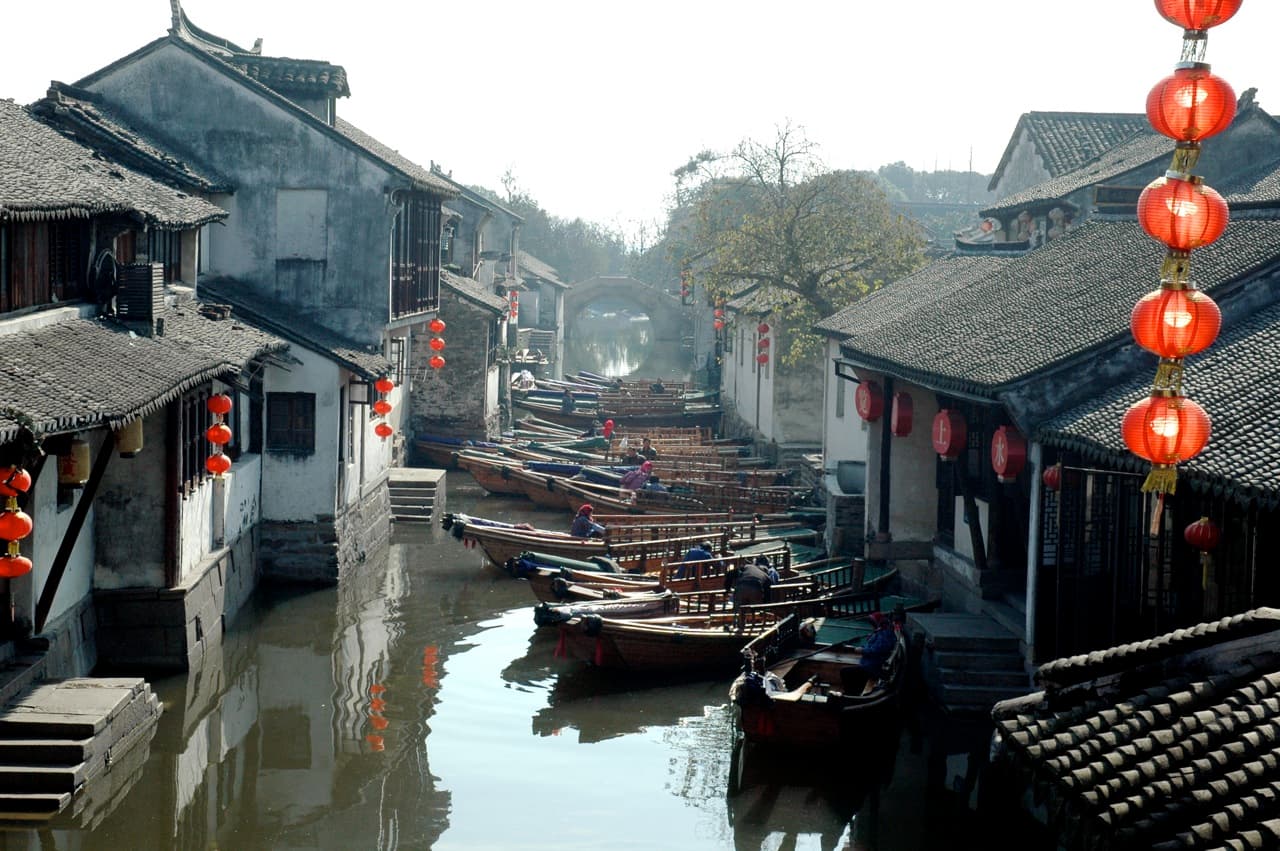 Photo of Zhouzhuang, via Wikimedia Commons
Self-guided audio walking tour of Anchang — GPS route, offline playback, story-driven narration in 32 languages.
“Where canals carry old stories and cured meats scent the winter air.”
Not the postcards. The stories even locals don't know — whispered in your ear, right where they happened.
Anchang's main waterway isn't just for scenic boat rides; it once played a crucial role in local commerce beyond transportation.
Beyond the traditional storefronts, the very paving stones of Anchang's main thoroughfare hold a secret about the town's historical significance.
The romantic image of a bride arriving by boat in Anchang isn't merely a picturesque custom.
Discover every secret of Anchang
Every address, every reveal in full — in your ear, right where it happened.
You pick your stops. You walk. The voice reveals what the others miss.


Your self-guided audio tour of Anchang is ready — pick your landmarks, choose your language, and start the moment you arrive.
BuyLume has a built-in augmented-reality guide. Hold your phone up and its camera shows the street ahead of you, with a glowing arrow laid over the real view that always points to your next stop — no map to puzzle over, no wrong turns. Like everything in Lume, it works fully offline.
Anchang Ancient Town, situated in Shaoxing, Zhejiang Province, offers a window into a preserved Ming-Qing era water town experience. Established over a thousand years ago during the Northern Song Dynasty, it flourished as a center for textile and rice trade. Unlike some more commercialized destinations, Anchang maintains a strong sense of everyday life, with traditional houses, workshops, and local customs still very much alive along its canals.
The town is characterized by its "one river, two streets, three bridges" layout, featuring the 2km-long Xianheng River, a stone-paved main street, and 17 old stone bridges. Visitors can wander through narrow lanes, observe traditional crafts, and experience the slow pace of canal life. Anchang is particularly known for its "Three Treasures": sausages, soy sauce, and Huangjiu (rice wine), which are deeply woven into the local culture and economy.
Anchang's origins trace back to 1012 AD, when it was established as a market town during the Northern Song Dynasty. Its strategic location along the Xianheng River allowed it to flourish as a hub for textile and rice trade. During the Ming Dynasty (1368–1644), Anchang evolved into a significant regional commercial center, attracting merchants who constructed grand residences and bridges that still stand today.
The town experienced a period of decline in the late Qing Dynasty but saw a revival in the 1980s as its cultural significance was recognized. Efforts to preserve its heritage led to key restorations, such as the Ruili Hall, a 16th-century merchant's mansion, in 1997. The establishment of the China Sausage Museum in 2006 further highlighted one of Anchang's most distinctive traditions. Today, Anchang is a national AAAA-rated scenic area, celebrated for its living heritage of sausage-making, Huangjiu brewing, and traditional weddings.
Anchang's historical continuity is also evident in its architecture. The town retains 1.5km of original stone-paved streets and over 200 traditional dwellings with black-tile roofs and white-washed walls, reflecting Ming-Qing era styles. Over 300 families continue traditional crafts like soy sauce brewing and bamboo weaving, ensuring that Anchang's past remains a lively part of its present. The town's enduring customs and well-preserved structures offer a tangible link to centuries of Chinese history.
Wander the 1.5km of stone-paved streets, where traditional shops and teahouses line the banks of the Xianheng River. Take a black-awning boat ride, a quintessential experience that offers unique perspectives of the old bridges and riverside homes. The town contains 17 old stone bridges, each with its own character and story, such as Fuyi Bridge, Xianguang Bridge, and Ruili Bridge.
Visit the China Sausage Museum to delve into the thousand-year history of Anchang's signature air-dried sausages, often with live demonstrations. Explore Ruili Hall, a 16th-century merchant's mansion known for its carved wooden beams and a private theater. The City God Temple, rebuilt in 1725, hosts festivals during the Lunar New Year. Do not miss Stinky Tofu Street for a taste of Shaoxing's pungent fermented tofu. You can also observe traditional crafts like bamboo weaving and soy sauce brewing in action.
The optimal seasons to visit Anchang Ancient Town are November to December, which is the prime sausage-making season, or March to May, when blossoms are in bloom. January is particularly lively due to the annual Layue Festival, featuring traditional craft activities, folk operas, and water wedding ceremonies. To avoid crowds, consider arriving before 10 AM; weekends typically see 70% more visitors. Mornings and nights are generally more enjoyable, with softer light for photography and a quieter atmosphere.
Entry to Anchang Ancient Town itself is free. However, some specific attractions, such as Ruili Hall and the China Sausage Museum, require tickets. A combo ticket for these sites, which often includes a river cruise, is typically available. Cash is recommended for street food vendors, as some may not accept mobile payments. For transportation, high-speed rail to Shaoxing North Station is an option, followed by a taxi or local bus. Within the town, walking is the primary way to explore, but black-awning boat rides are also available. It's advisable to book accommodation in advance, especially during holidays, as guesthouses can sell out or raise prices. Drones require town approval.
Anchang in Korean, in Chinese or in Hebrew — and 29 more languages, every stop narrated by a native voice. The widest language range of any self-guided audio tour.
Available in: