Thérèse Neveu Santon Art Center
Aubagne is celebrated for its santons, but one artisan transformed their creation.
Full story unlocks in the tour
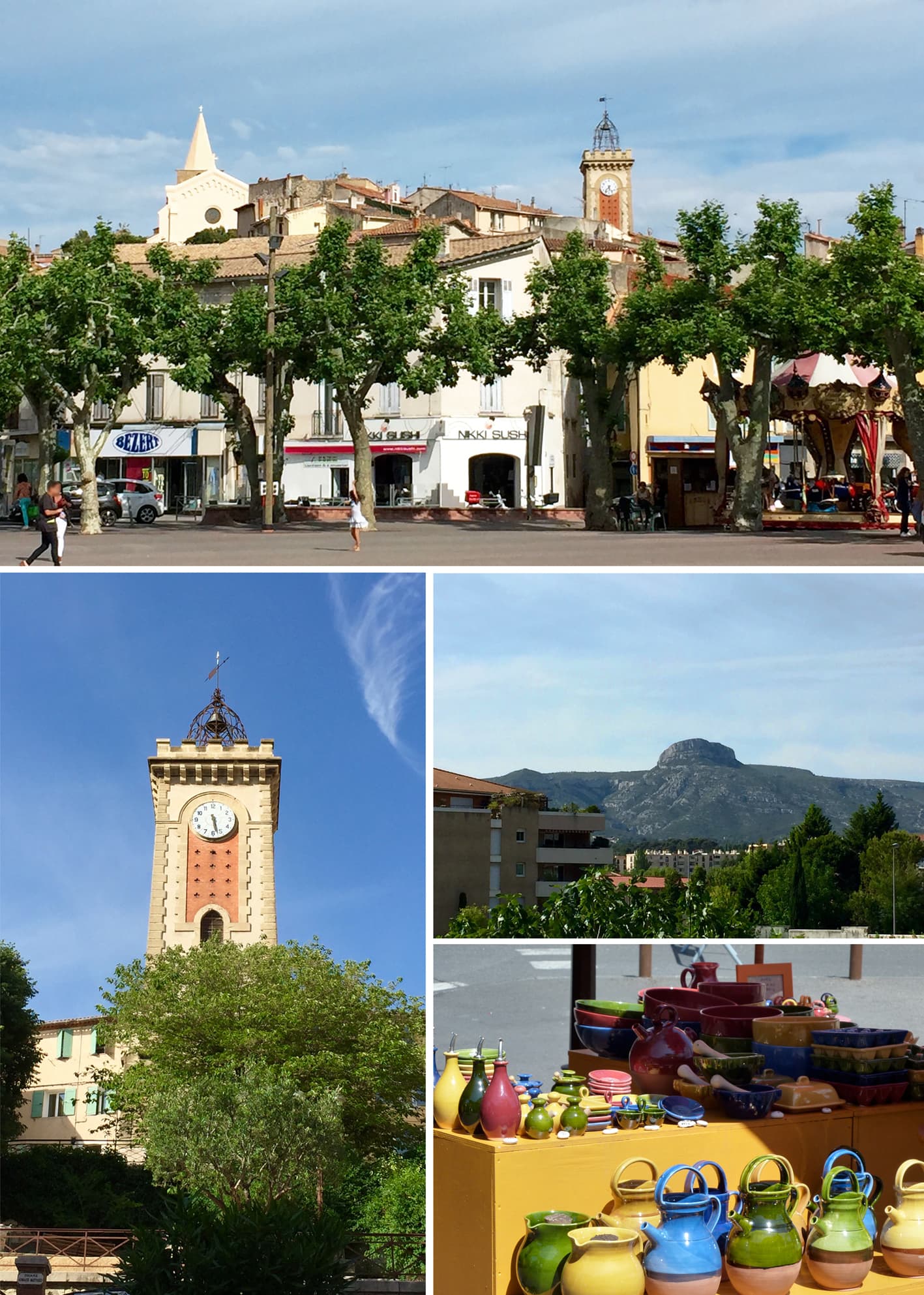 Ludo33 / CC BY-SA 4.0, via Wikimedia Commons
Self-guided audio walking tour of Aubagne — GPS route, offline playback, story-driven narration in 32 languages.
“Where the Provençal hills echo with tales of clay, cinema, and courage.”
Not the postcards. The stories even locals don't know — whispered in your ear, right where they happened.
Aubagne is celebrated for its santons, but one artisan transformed their creation.
The acclaimed filmmaker Marcel Pagnol once held a grand vision for the hills around Aubagne.
The French Foreign Legion's headquarters in Aubagne offers a unique aspect concerning public entry.
Discover every secret of Aubagne
Every address, every reveal in full — in your ear, right where it happened.
You pick your stops. You walk. The voice reveals what the others miss.

Your self-guided audio tour of Aubagne is ready — pick your landmarks, choose your language, and start the moment you arrive.
BuyLume has a built-in augmented-reality guide. Hold your phone up and its camera shows the street ahead of you, with a glowing arrow laid over the real view that always points to your next stop — no map to puzzle over, no wrong turns. Like everything in Lume, it works fully offline.
Aubagne, situated in the Huveaune Valley and embraced by the Garlaban, Sainte-Baume, and Douard mountain ranges, embodies the authentic spirit of Provence. Just 16 kilometers (10 miles) east of Marseille, this captivating town offers a scenic setting that has long inspired artists and writers. Its lively squares and markets reflect the genuine character of the region, making it a delightful pause for travelers seeking a blend of cultural heritage and natural splendor.
Known as the birthplace of celebrated writer and filmmaker Marcel Pagnol, Aubagne's identity is deeply intertwined with his works, which vividly portrayed the Provençal landscapes and its people. Beyond its literary connections, Aubagne is globally recognized for its pottery and ceramics industry, particularly its traditional Provençal clay figurines known as santons. The town's abundant clay soil has supported this craft since ancient times, with numerous workshops continuing this ancestral expertise today.
Aubagne balances its rugged natural surroundings with a lively cultural life rooted in Provençal traditions. Visitors can transition from walking in the footsteps of literary legends to admiring delicate craftsmanship in artisan workshops. The local green spaces serve as gateways to the famous hills, while museums celebrate everything from military history to the art of clay.
The history of Aubagne extends back to the 11th century, first appearing in records as Albanea. Initially, the village was established on higher ground, a strategic choice for protection against warfare, plunder, and epidemics. The town gradually expanded around its fortifications, with ramparts constructed in the 14th century following the civil conflicts that impacted Provence. The Gachiou gate still stands as a testament to this turbulent period.
Over centuries, Aubagne's population began a significant shift, referred to by historians as le déperchement, moving from the confined, fortified upper town to settle on the plain below. This expansion saw the town evolve while retaining its Provençal character. The area's rich clay deposits fostered a flourishing pottery and ceramics industry, a tradition that dates back to the 18th century and continues to this day, specializing in Provençal santons. Aubagne officially became part of the Kingdom of France in 1481, along with the County of Provence, marking a new phase in its political development.
The 19th century brought further transformation with the opening of a railway connection to Marseille in 1858, solidifying Aubagne's role as an important transport and industrial center. The town also gained renown as the birthplace of Marcel Pagnol in 1895, whose literary and cinematic works would immortalize the surrounding hills and Provençal life. In a more contemporary development, Aubagne became the worldwide headquarters of the French Foreign Legion in 1962. The city was also a pioneer in urban mobility, becoming the first agglomeration in France to introduce completely free public transport in 2009, a service later extended to its tramway.
Begin your exploration in Aubagne's historic center, where narrow, winding streets reveal old houses with colorful facades, medieval gateways, and shaded squares. Notable squares include Rue Torte, Rue Rastègue, Place Joseph Rau, and Place de Guin. Architectural highlights include the Hôtel de Bausset, the Hôtel des Royalistes, and an 18th-century bread oven. The 11th-century Saint-Sauveur church, with its prominent triangular bell tower of the Observance, stands as an emblematic religious landmark.
No visit to Aubagne is complete without delving into the world of Marcel Pagnol. Explore his birthplace, now a museum, which faithfully recreates his childhood environment with period furniture and family memorabilia. Nearby, the Petit Monde de Marcel Pagnol, situated in the former workshop of santon maker Thérèse Neveu, features over 200 santons depicting scenes from Pagnol's literary and cinematic works. For those interested in military history, the French Foreign Legion Museum, located at the Legion's headquarters, offers a comprehensive collection of artifacts, uniforms, and decorations, with free admission.
Aubagne is the capital of Provençal santons, and you can visit numerous potters' and ceramists' workshops throughout the town to see artisans at work and purchase unique local creations. The Thérèse Neveu Santon Art Center provides insight into the history and making of these beloved figurines. For nature enthusiasts, the Garlaban massif, immortalized in Pagnol's stories, offers extensive walking and cycling trails through garrigue, pine trees, and mineral landscapes, providing sweeping panoramas. The Domaine de la Font de Mai, a Provençal farmscape and nature reserve, serves as a gateway to these hills.
Aubagne enjoys a Mediterranean climate with warm, dry summers and mild winters, making it an appealing destination almost year-round. The ideal period for a visit is from May to October to fully appreciate the surrounding garrigue landscapes. June is particularly pleasant for walking before the intense summer warmth, while September offers golden light and mild temperatures, perfect for exploring craft markets and local traditions. For beach and warm-weather activities, early July to late August is recommended, with average daily highs around 29–30°C. Winters are mild, with temperatures rarely dropping below 3°C, allowing for comfortable sightseeing.
Aubagne is conveniently located and easily accessible. It is approximately 15 minutes by train from Marseille Saint-Charles station. By car, access is via the A50 from Marseille or Toulon, and the A52 from Aix-en-Provence. The city's public transport, including buses and a tram line, has been free for both residents and visitors since 2009, making it exceptionally easy to navigate the city. If driving, Aubagne has various parking options, including underground car parks and street parking with red zones (2.5-hour limit) and orange zones (5-hour limit).
Given the sunny Mediterranean climate, light and breathable clothing is essential for summer visits, along with a hat, sunglasses, and high-SPF sunscreen. Winters are mild, but layering and a waterproof jacket are advisable. Comfortable walking shoes are a necessity, whether you plan to stroll through the city center or walk the surrounding trails. Many artisan workshops are open year-round, offering opportunities to observe traditional craftsmanship.
Aubagne in Korean, in Chinese or in Hebrew — and 29 more languages, every stop narrated by a native voice. The widest language range of any self-guided audio tour.
Available in: