Basílica Nuestra Señora del Agua Santa
Os murais vívidos na basílica principal de Baños contam mais do que apenas histórias bíblicas.
História completa desbloqueada no tour
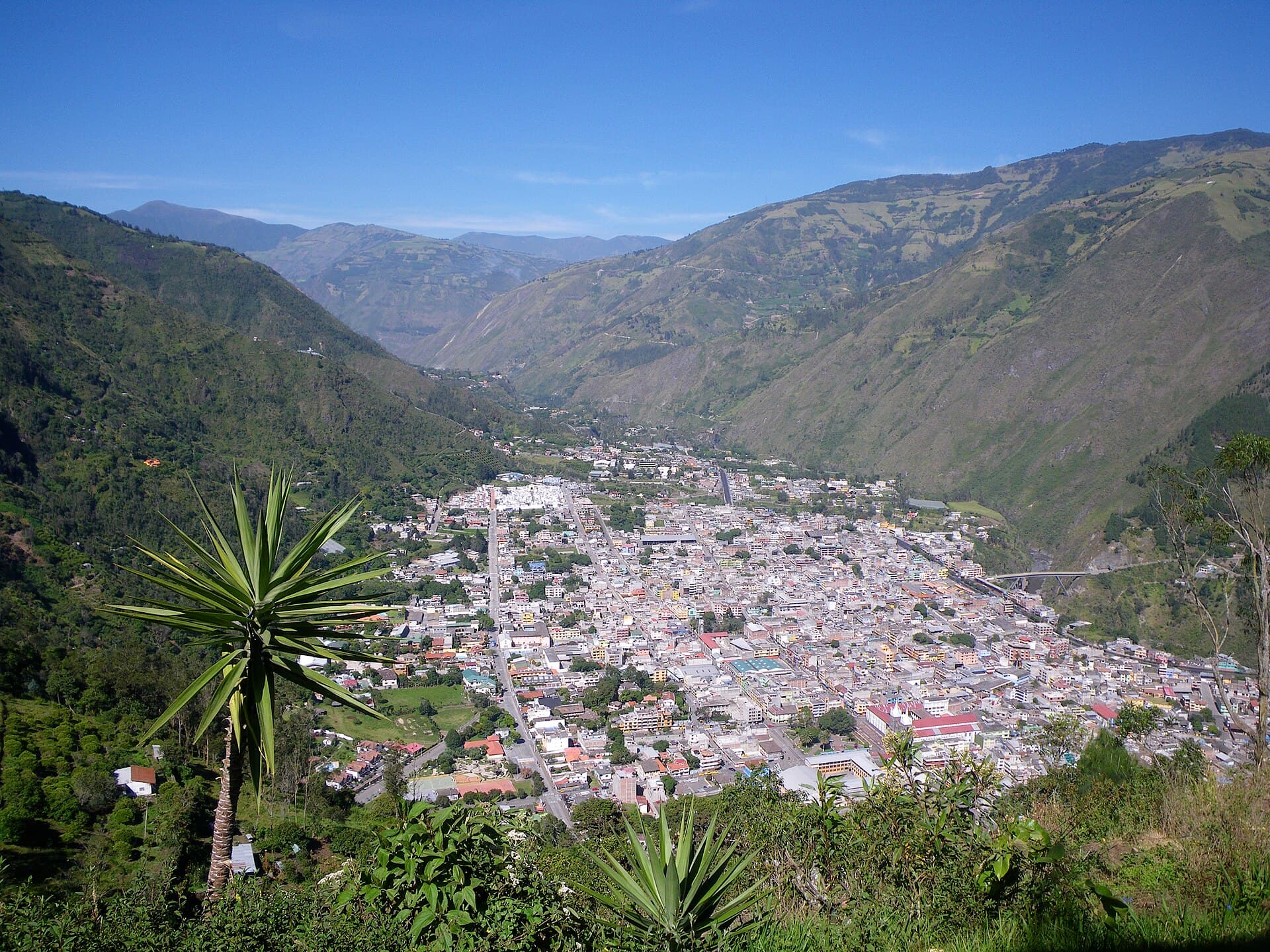 Eddyl / CC BY-SA 3.0, via Wikimedia Commons
Tour de áudio autoguiado por Baños — rota GPS a pé, reprodução offline, narração envolvente em 32 idiomas.
“Onde os Andes encontram a Amazônia, e a aventura flui de fontes vulcânicas.”
Não os postais. As histórias que nem os locais conhecem — sussurradas ao seu ouvido, exatamente onde aconteceram.
Os murais vívidos na basílica principal de Baños contam mais do que apenas histórias bíblicas.
Os banhos termais mais antigos de Baños têm uma cor marrom distinta que pode surpreender os visitantes de primeira viagem.
Ao passar pelas lojas de doces em Baños, você frequentemente verá pessoas esticando ritmicamente uma substância branca e espessa em um poste de madeira.
Descubra cada segredo de Baños
Cada endereço, cada revelação na íntegra — no seu ouvido, exatamente onde aconteceu.
Você escolhe as suas paragens. Você caminha. A voz revela o que os outros perdem.


O seu tour áudio autoguiado de Baños está pronto — escolha os seus pontos de interesse, selecione o seu idioma e comece no momento em que chegar.
ComprarA Lume inclui um guia de realidade aumentada. Levante o telemóvel: a câmara mostra a rua à sua frente, com uma seta luminosa sobreposta à imagem real que aponta sempre para a sua próxima paragem — sem mapa para decifrar, sem voltas erradas. Como tudo na Lume, funciona totalmente offline.
Baños de Agua Santa, frequentemente chamada apenas de Baños, é uma cidade vibrante na província oriental de Tungurahua, no Equador. É conhecida como a 'Porta de Entrada para a Amazônia', marcando a transição das montanhas andinas para a bacia amazônica. Essa posição geográfica singular, a uma altitude de aproximadamente 1.820 metros (5.971 pés) ao pé do vulcão ativo Tungurahua, cria uma paisagem variada de florestas nubladas, selvas subtropicais e uma rica biodiversidade. O nome completo da cidade, 'Banhos de Água Santa', refere-se às suas numerosas fontes termais, aquecidas pela atividade geotérmica do vulcão, que se acredita possuírem propriedades curativas.
Baños oferece uma mistura distinta de atividades emocionantes e oportunidades de descanso. É um destino onde você pode passar uma manhã fazendo canyoning em uma cachoeira e, em seguida, relaxar em fontes termais vulcânicas ricas em minerais à tarde, tudo com o pano de fundo de um vulcão potencialmente ativo. A cidade se tornou um centro de turismo de aventura, atraindo visitantes de todo o mundo em busca de emoções ao ar livre e uma conexão mais profunda com o tecido natural e cultural do Equador.
A história de Baños de Agua Santa está profundamente entrelaçada com as poderosas forças da natureza e a fé duradoura. Embora não haja registro claro de um único fundador, a área era historicamente habitada por pequenos grupos de indígenas, mestiços e espanhóis que negociavam entre as terras baixas orientais e as montanhas. Esses primeiros habitantes foram atraídos pelas fontes termais, acreditando em suas propriedades curativas e de renovação espiritual.
O nome completo da cidade, Baños de Agua Santa, ou 'Banhos de Água Santa', refere-se diretamente a essas fontes termais, que são alimentadas pelo vulcão ativo Tungurahua. O vulcão, cujo nome Tungurahua significa 'garganta de fogo' em quíchua, desempenhou um papel significativo na formação da comunidade, tanto literal quanto culturalmente. Crenças indígenas frequentemente associavam o vulcão, 'Mama Tungurahua', a fornecer fontes termais e frias.
Com a chegada de padres dominicanos espanhóis em meados do século XVI, iniciou-se um processo de fusão dessas crenças pagãs com tradições católicas, atribuindo gradualmente os aspectos benevolentes do vulcão à Virgem Maria. Isso levou Baños a se tornar um importante centro religioso católico. Uma estátua da Virgem, conhecida como Virgen de Agua Santa, foi colocada na catedral principal da cidade, e a Basílica de Nuestra Señora del Rosario de Agua Santa tornou-se um popular local de peregrinação. A construção da basílica começou em 1904 e foi concluída em 1944. Seu interior é adornado com decorações barrocas e murais retratando milagres atribuídos à Virgem.
A história moderna viu Baños repetidamente testada pelo vulcão Tungurahua. De 1999 a 2016, o vulcão experimentou erupções contínuas. Em outubro de 1999, toda a cidade, com mais de 17.000 residentes, foi evacuada por várias semanas devido à atividade vulcânica. Apesar dos desafios, a comunidade demonstrou resiliência notável, com os habitantes reentrando à força na cidade em janeiro de 2000 para iniciar a reconstrução. Esse período de atividade vulcânica, embora disruptivo, também contribuiu para a identidade de Baños como uma capital de aventura, com o vulcão servindo como um cenário dramático para suas muitas atividades ao ar livre.
Baños oferece uma gama diversificada de atrações, de maravilhas naturais a marcos culturais. A Basílica Nuestra Señora del Agua Santa é um ponto de interesse central, notável por sua arquitetura semi-gótica feita de pedra vulcânica e seus murais interiores retratando milagres locais. Ao lado da basílica, o Museu Fray Enrique Mideros abriga artefatos religiosos e exposições históricas.
Para os entusiastas de atividades ao ar livre, a Ruta de las Cascadas (Rota das Cachoeiras) é uma experiência memorável, com mais de 60 cachoeiras, incluindo o poderoso Pailón del Diablo (Caldeirão do Diabo). Esta rota pode ser explorada de bicicleta de montanha ou de um ônibus ao ar livre conhecido como chiva. A Casa del Árbol, com seu famoso 'Balanço no Fim do Mundo', oferece vistas panorâmicas do vulcão Tungurahua e dos vales circundantes. O nome da cidade, os banhos termais, especialmente as Termas de la Virgen Antigua, oferecem uma oportunidade única de mergulhar em águas aquecidas vulcanicamente e ricas em minerais.
Esportes de aventura são abundantes, incluindo rafting no Rio Pastaza, canyoning em cachoeiras, tirolesa e bungee jumping de pontes. Para uma perspectiva diferente, vários miradores (mirantes) como Bellavista oferecem vistas amplas da cidade e do vulcão Tungurahua.
Baños desfruta de um clima agradável e subtropical de planalto durante todo o ano, com temperaturas médias geralmente variando de 15°C a 25°C (59°F a 77°F). Embora a chuva possa ocorrer durante todo o ano, as chuvas são frequentemente curtas e contribuem para a paisagem exuberante e verde. Os meses mais secos, oferecendo condições ideais para atividades ao ar livre, são geralmente de junho a setembro e de dezembro a fevereiro. Esses períodos são considerados a melhor época para visitar, com menos chuva e mais dias de sol. Os meses intermediários, como maio e setembro, podem oferecer uma experiência mais tranquila com menos multidões, mesmo que haja um pouco mais de garoa.
Baños é bem conectada a grandes cidades equatorianas como Quito e Cuenca por ônibus, que é uma opção de viagem econômica e sustentável. A estação de ônibus em Baños está localizada centralmente, muitas vezes a uma curta distância da maioria das acomodações. Táxis também estão prontamente disponíveis para curtas distâncias. A própria cidade é compacta e fácil de andar, tornando fácil explorá-la a pé. Ao visitar os banhos termais, lembre-se de que toucas de natação são frequentemente exigidas e podem ser compradas ou alugadas no local por uma pequena taxa. Para atividades de aventura, considere adquirir um seguro de viagem que cubra esportes radicais. Baños é conhecida por sua comida acessível, incluindo opções vegetarianas, e é aconselhável pedir jugos sin azúcar (sucos sem açúcar) se você preferir menos doçura.
Baños — coreano, chinês, hebraico e mais 29 idiomas, cada parada narrada por uma voz nativa. A maior variedade de idiomas entre os passeios de áudio autoguiados.
Disponível em: