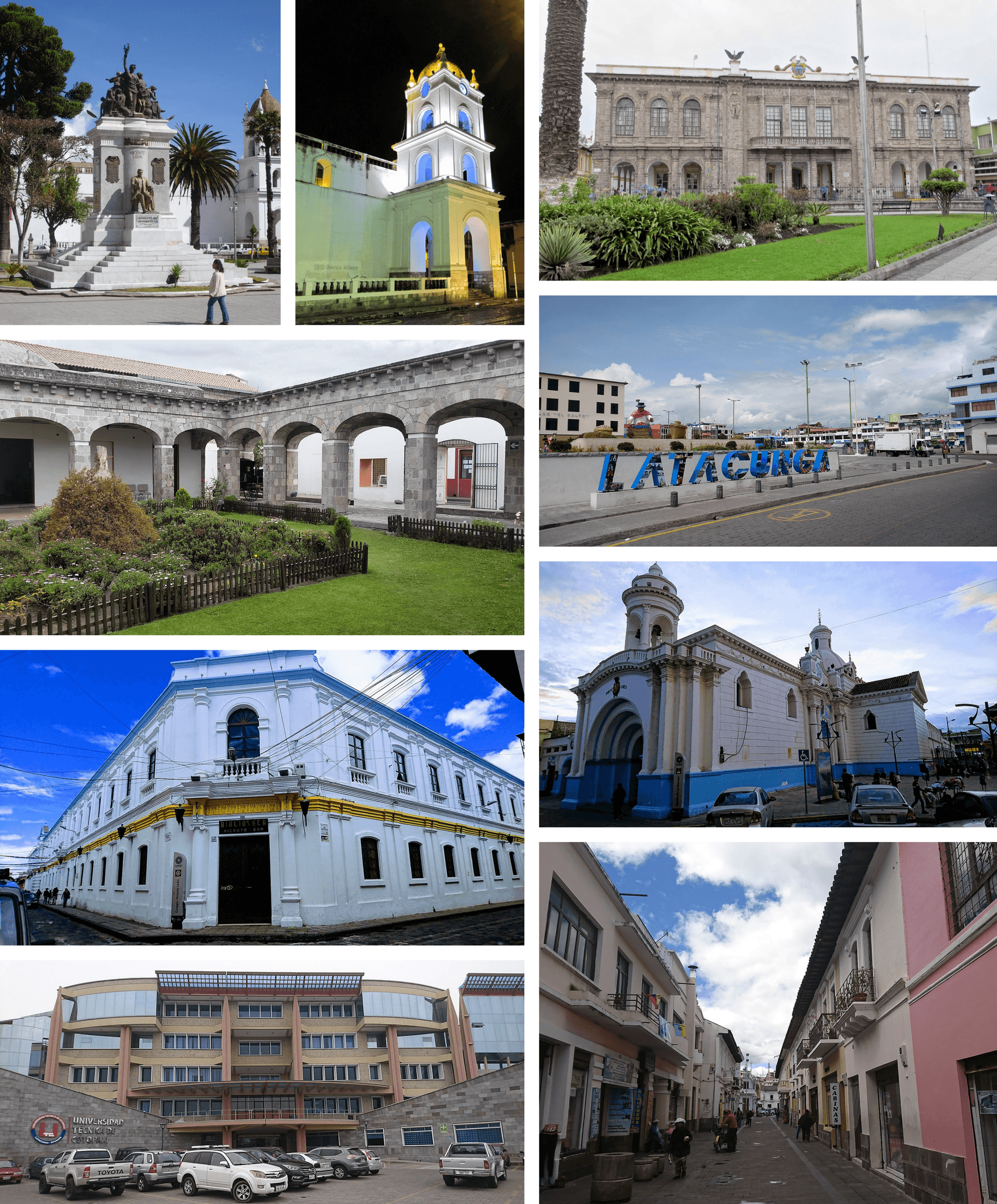
Latacunga, EcuadorDavid C. S. / CC BY-SA 4.0, via Wikimedia Commons
EC

Latacunga

Self-guided audio walking tour of Latacunga — GPS route, offline playback, story-driven narration in 32 languages.

Where volcanic stone tells tales and enduring traditions dance.

The secrets of Latacunga

Latacunga, as no one tells it.

Not the postcards. The stories even locals don't know — whispered in your ear, right where they happened.

3 secrets below. Many more wait inside the tour.
Mama Negra Festival

This lively festival, celebrated twice a year, features a central character known as Mama Negra. Yet, the person portraying her is not who you might expect.

Full story unlocks in the tour
Latacunga's Architecture

The city has been repeatedly devastated by eruptions from the nearby Cotopaxi volcano. Still, its buildings stand firm, thanks to a unique local material.

Full story unlocks in the tour
Chugchucaras

Latacunga has a signature dish so substantial, it's practically a meal for an entire family.

Full story unlocks in the tour
The full tour

Discover every secret of Latacunga

Every address, every reveal in full — in your ear, right where it happened.

Get the key to Latacunga

You pick your stops. You walk. The voice reveals what the others miss.

Choose your time

How long do you have in Latacunga?

Your self-guided audio tour of Latacunga is ready — pick your landmarks, choose your language, and start the moment you arrive.

Buy
About Latacunga

The story of Latacunga

Latacunga, the capital of Ecuador's Cotopaxi Province, is a city etched into the Andean landscape at an elevation of approximately 2,800 meters (9,186 feet) above sea level. Situated about 89 kilometers (55 miles) south of Quito, it serves as a crucial hub in the central Sierra region. The city's identity is deeply intertwined with the majestic Cotopaxi Volcano, one of the world's highest active volcanoes, which looms large over the urban sprawl.

While many travelers use Latacunga as a strategic base for exploring the surrounding natural wonders like Cotopaxi National Park and the Quilotoa Loop, the city itself offers a captivating glimpse into Ecuadorian life. Its historic center, with its colonial-style buildings and bustling streets, invites exploration, revealing a blend of indigenous and Spanish influences that have shaped its character over centuries.

History

From Panzaleo Roots to Colonial Resilience

Latacunga's history stretches back to the pre-Columbian era, initially inhabited by the Panzaleo culture before becoming an administrative center within the Inca Empire. Spanish conquistadors established a settlement here in 1534, officially founding the city as San Vicente Mártir de Latacunga. By 1584, it was formally designated as the Corregimiento of Latacunga, solidifying its administrative importance in the region.

However, Latacunga's narrative is also one of remarkable resilience in the face of natural adversity. Its proximity to the active Cotopaxi volcano has meant repeated destruction by eruptions and earthquakes throughout its history. Major seismic events in 1698, 1742, 1768, and 1877 devastated the city, forcing its inhabitants to rebuild time and again. In fact, the city was completely destroyed in 1797, only to be subsequently reconstructed.

During the colonial period, Latacunga flourished as an economic center, known for its textile manufactories (obrajes) and gunpowder production. The city's unique architectural style emerged from this constant cycle of destruction and rebuilding, with local grey volcanic rock, or "piedra pómez," becoming the primary construction material. This gave the historic center a distinctive, austere, and monumental appearance that sets it apart from other colonial cities in Ecuador. Latacunga also played a significant role in Ecuador's independence movements, with patriots rising against colonial authorities on November 11, 1820, to proclaim political independence from Spain. In 1982, the city's historic center was recognized as a Cultural Heritage of the Nation, acknowledging its unique architecture and enduring legacy.

What to see

Begin your exploration in the city's historic center, characterized by its colonial-era buildings constructed from volcanic stone. The main plaza, Parque Vicente León, offers pleasant gardens and topiary sculptures. On its south side stands the city's main cathedral, notable for the tile mosaics adorning its spires and domes. Other photogenic churches within walking distance include Iglesia Católica La Merced and Iglesia De Santo Domingo.

For a deeper dive into local history and culture, visit the Casa de los Marqueses de Miraflores, a colonial mansion converted into a museum showcasing archaeological finds and religious art. The museum also features a display explaining the city's famous Mama Negra festival. Another cultural stop is Los Molinos de Monserrat, which houses an art gallery and theater, often hosting music, dance, or theatrical performances.

Latacunga is also a market town, with open-air markets held on Tuesdays and Saturdays at Plaza Chile and Plaza El Salto. Here, you can find a variety of local goods, including fruits, vegetables, housewares, clothing, and handicrafts. For expansive views of the city, surrounding countryside, and snow-capped peaks on a clear day, make your way to the Mirador de la Virgen del Calvario, a lookout point at the east end of town.

When to visit

The best time to visit Latacunga for warm-weather activities and general outdoor tourism is from late April to early January, with a peak in the third week of September. The dry season, spanning June to September, is considered optimal for clear skies and outdoor adventures like hiking in Cotopaxi National Park. This period also coincides with the September Mama Negra festival. While the rainy season from October to May brings lush landscapes, precipitation is frequent, often as fine drizzle or light rain, particularly from October to May. Temperatures remain relatively stable year-round, resembling a cool autumn, with daytime highs rarely exceeding 15°C (59°F).

Practical

Latacunga is situated at a high altitude of approximately 2,800 meters (9,186 feet), so it's advisable to take it easy on your first day to acclimatize, especially if arriving directly from sea-level destinations. The local currency is the U.S. dollar; it's helpful to carry small bills as credit card acceptance can be limited outside of larger establishments. Spanish is the primary language, so a basic understanding or a translation app will be beneficial.

Regarding safety, Latacunga generally has a lower crime rate compared to larger Ecuadorian cities, but it's always wise to be mindful of your belongings, particularly in crowded areas and on public transportation. Avoid walking alone at night in less populated areas. When using taxis, it's recommended to order them by phone or through a hotel rather than hailing them on the street. Buses are a common and affordable way to get around the city and to nearby destinations.

Good to know
What is Latacunga most famous for?
Latacunga is most known for its proximity to the active Cotopaxi Volcano and as a gateway to natural attractions like Cotopaxi National Park and the Quilotoa Lagoon. It is also renowned for the lively Mama Negra festival.
What is the Mama Negra festival?
The Mama Negra is a traditional festival held twice a year in Latacunga, celebrating a blend of indigenous, Spanish, and African influences. One celebration in September honors the Virgen de la Merced, who is believed to have stopped a Cotopaxi eruption in 1742. The second, in November, commemorates Latacunga's independence.
What local dishes should I try in Latacunga?
A delightful dish to try is *chugchucaras*, a hearty meal featuring deep-fried pork, crispy pork rinds, fried potatoes, toasted corn, popcorn, and fried plantains, often served with a spicy *ají* sauce. Other local specialties include *hornado* (roasted pig) and *llapingachos* (potato pancakes).
Is Latacunga safe for tourists?
Latacunga is generally considered safe, particularly for solo female travelers, with a relatively low crime rate compared to other tourist regions in Ecuador. However, it's always advisable to practice general travel precautions, such as being aware of your surroundings, especially at night, and securing your valuables.
How do I get to Latacunga?
Latacunga is easily accessible via the Pan-American Highway. From Quito, you can take a bus from the Quitumbe terminal, with the journey lasting less than two hours. The city also has an international airport used by the Air Force and for commercial flights.
What is the climate like in Latacunga?
Latacunga has a cool, temperate mountain climate, with stable, spring-like temperatures throughout the year, typically ranging from 10-11°C (50-52°F) on average. While rain occurs often, especially from October to May, it's usually in the form of fine drizzle or light showers rather than heavy downpours.
On the map
Latacunga
€9.90
No booking · activate anytime · 12h to walk it
Load on Wi-Fi, then walk offline — no roaming abroad
Get the key to Latacunga