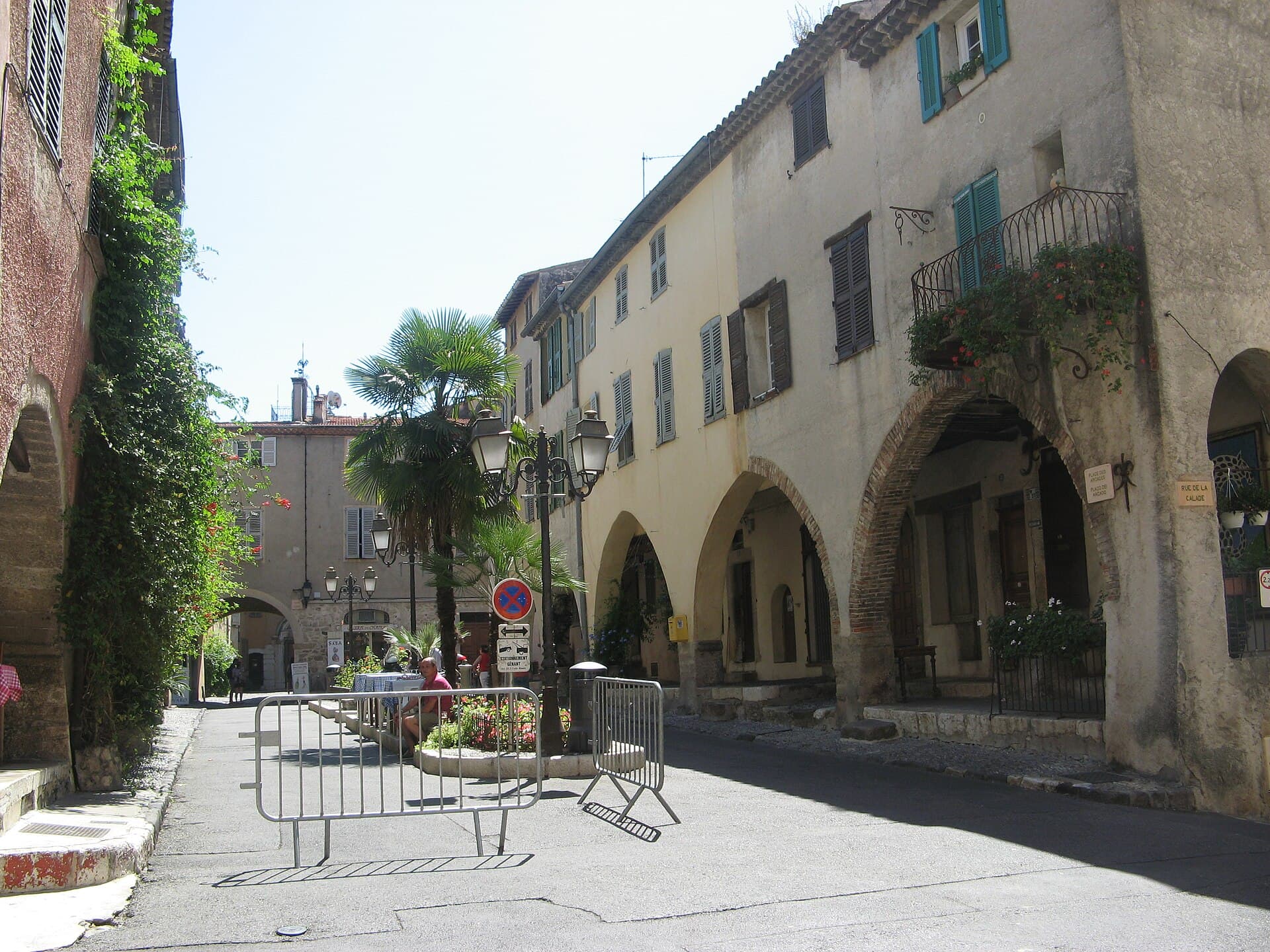
Place des Arcades
Esta acogedora plaza guarda un recuerdo de una época de agitación, un recordatorio de que incluso los lugares más serenos han enfrentado dificultades.
La historia completa se desbloquea en el tour
 Lorenzo Piccardo / cc by-sa 3.0, via Wikimedia Commons
Tour de audio autoguiado de Biot — ruta GPS a pie, reproducción offline, narración en 32 idiomas.
“Donde las piedras antiguas se encuentran con el arte moderno, y el vidrio susurra historias.”
No las postales. Las historias que ni los locales conocen — al oído, justo donde ocurrieron.
Esta acogedora plaza guarda un recuerdo de una época de agitación, un recordatorio de que incluso los lugares más serenos han enfrentado dificultades.
El célebre 'vidrio burbuja' de Biot, ahora un sello distintivo del pueblo, surgió en realidad de una ingeniosa transformación de lo que antes se consideraba una imperfección.
El llamativo mosaico en el exterior del museo cuenta una historia no solo del arte de Léger, sino de una gran visión que casi se materializa en otro lugar.
Descubre todos los secretos de Biot
Cada dirección, cada revelación al completo — a tu oído, justo donde ocurrió.
Eliges tus paradas. Caminas. La voz te revela lo que los demás ignoran.


Tu tour de audioguía por Biot te espera — elige tus lugares, tu idioma y empieza al llegar.
ComprarLume incluye una guía de realidad aumentada. Levanta el móvil y su cámara muestra la calle que tienes delante, con una flecha luminosa sobre la imagen real que siempre apunta a tu próxima parada — sin mapas que descifrar, sin giros equivocados. Como todo en Lume, funciona completamente sin conexión.
Biot, un pueblo medieval fortificado en el sur de Francia, ofrece una mezcla única de historia antigua, vibrantes tradiciones artísticas y esplendor natural. Situado en una suave ladera entre Antibes y Valbonne, a poca distancia en coche de la costa mediterránea, proporciona un escape tranquilo de la bulliciosa Riviera, sin dejar de ser fácilmente accesible.
Conocido mundialmente por su distintivo 'vidrio burbuja' y por ser el hogar del Museo Nacional Fernand Léger, Biot invita a los visitantes a pasear por sus callejones ocres, descubrir talleres de artesanos y explorar un pasado moldeado por romanos, Caballeros Templarios y un espíritu local resiliente. La escala íntima del pueblo fomenta un ritmo más lento, permitiendo descubrimientos inesperados en cada esquina, desde arcadas sombreadas hasta destellos del Cap d'Antibes.
Más allá de su renombre artístico, Biot está enmarcado por un paisaje que incluye el río Brague, que forma un corredor verde ideal para paseos sombreados, y ofrece un microclima que lo hace agradable de visitar durante gran parte del año. Es un lugar donde la historia no solo se conserva, sino que se vive activamente, donde la artesanía es un hilo conductor continuo y donde la luz y los colores de la Costa Azul han inspirado a generaciones.
La historia de Biot se remonta a más de 2.000 años, con evidencia de habitación humana desde tiempos prehistóricos. La región fue inicialmente controlada por tribus celto-ligures antes de que los romanos los derrotaran en el 154 a.C. y establecieran un asentamiento, ocupando el sitio durante cinco siglos. Se han descubierto restos arqueológicos de este período romano, incluidos fragmentos de una granja de aceite de oliva y vino del siglo III d.C., en los alrededores del pueblo.
Durante la Edad Media, Biot adquirió una importancia significativa. En 1209, el Conde de Provenza donó el territorio a los Caballeros Templarios, quienes establecieron una encomienda en el antiguo castillo hacia 1233. Esto convirtió a Biot en un punto estratégico en la ruta hacia Tierra Santa. La influencia de los Templarios se expandió a través de donaciones de tierras y viñedos, e incluso las mujeres desempeñaron un papel notable dentro de su red, actuando como garantes y gestionando patrimonios. Sin embargo, la era pacífica terminó con la Peste Negra y la Guerra de Sucesión de la Reina Juana I de Nápoles en el siglo XIV, que diezmó la población y llevó al abandono del pueblo, convirtiéndose en refugio de bandidos.
La recuperación de Biot comenzó en 1470 cuando el Rey Renato de Nápoles animó a unas cincuenta familias del Valle de Oneglia en Italia a repoblar el pueblo, ofreciéndoles tierras y privilegios. Esta revitalización condujo a la prosperidad, con la agricultura y la alfarería convirtiéndose en el centro de la economía local. En el siglo XVI, Biot era conocido por sus grandes jarres de terracota —vasijas robustas, de color miel, similares a ánforas, utilizadas para almacenar y transportar aceite de oliva y otros productos. El pueblo se convirtió en un importante centro mediterráneo de producción de cerámica, con unas cuarenta alfarerías operando a mediados del siglo XVII, exportando su inmensa producción por todo el Mediterráneo y a las Américas.
La industria de la alfarería decayó en el siglo XIX, pero el espíritu artesanal de Biot encontró una nueva expresión en el siglo XX. En 1956, Éloi Monod estableció La Verrerie de Biot, siendo pionero en la distintiva técnica del 'vidrio burbuja' que transformó un 'defecto' de fabricación en un estilo artístico distintivo. Esta innovación consolidó la reputación de Biot como centro de la fabricación de vidrio contemporáneo, lo que le valió la etiqueta 'Ville et Métiers d'Art' para la fabricación de vidrio en 1997. Casi al mismo tiempo, el pueblo también atrajo a artistas modernos como Fernand Léger, quien se mudó a Biot en 1955. Su viuda y colaboradora estableció más tarde el Museo Nacional Fernand Léger, que abrió sus puertas en 1960, solidificando aún más la identidad artística de Biot.
Comience su exploración en el corazón histórico de Biot, comenzando en la Place des Arcades, una plaza central enmarcada por arcos de los siglos XIV y XV. Desde aquí, pasee por las calles empedradas, admirando las intrincadas puertas, bóvedas y piedras talladas que hablan de siglos de historia. La Iglesia de Sainte-Marie-Madeleine, modesta por fuera, revela detalles pintados y un notable retablo de Louis Bréa en su interior.
Ninguna visita a Biot está completa sin experimentar su reconocida fabricación de vidrio. Diríjase a La Verrerie de Biot, donde podrá observar a los artesanos soplar el célebre 'vidrio burbuja' y aprender sobre esta técnica única. El Écomusée du Verre ofrece una visión de la historia y los secretos del soplado de vidrio.
Para los entusiastas del arte moderno, el Museo Nacional Fernand Léger es un destino fascinante. Ubicado en la ladera inferior de Biot, su edificio modernista está adornado con un monumental mosaico exterior del propio Léger. En su interior, el museo alberga la colección más grande de obras de Léger, que traza su evolución artística a través de pinturas, murales, cerámicas y películas.
Otros puntos de interés incluyen el Museo de Historia Local y Cerámica de Biot, que exhibe la larga tradición alfarera del pueblo, incluidas las clásicas jarres de Biot. Para una escapada natural, el río Brague ofrece un sendero sombreado que sigue el curso del agua hacia Valbonne, perfecto para un paseo tranquilo.
Biot goza de un clima mediterráneo, lo que lo convierte en un destino agradable durante gran parte del año. El clima más agradable suele darse de mayo a octubre, con temperaturas confortables que oscilan entre los 20°C y los 27°C. Durante estos meses, puede esperar un buen equilibrio entre días soleados y lluviosos. Julio y agosto son los más cálidos, con máximas promedio de alrededor de 27°C, y son ideales para actividades de clima cálido, aunque también son los meses más secos.
La primavera y el otoño ofrecen condiciones más suaves, lo que los hace excelentes para explorar el pueblo y hacer senderismo por los senderos circundantes. Aunque los inviernos son frescos, con máximas diurnas promedio de alrededor de 10°C, las heladas severas son raras, lo que permite paseos cómodos. Mayo puede tener más días de lluvia, pero la precipitación rara vez es prolongada.
Biot es fácilmente accesible desde la autopista A8 (salida Antibes) si viaja en coche. Hay aparcamiento disponible en los estacionamientos designados alrededor de la base del casco antiguo, seguido de una corta caminata cuesta arriba hasta el pueblo. Para quienes utilizan el transporte público, la línea de tren TER conecta Niza, Antibes y Cannes, con una parada en la estación de Biot a lo largo del corredor costero. Desde la estación, los autobuses locales o los taxis pueden llevarlo hasta el pueblo, ya que la caminata es larga y cuesta arriba.
Al explorar el pueblo, se recomiendan zapatos cómodos con buen agarre debido a las calles de piedra, que pueden ser lisas e irregulares. Muchas galerías y pequeñas tiendas pueden cerrar para el almuerzo y ciertos días de la semana fuera de temporada alta, por lo que es aconsejable confirmar los horarios de apertura si tiene lugares específicos que desea visitar. Biot puede ser caluroso en julio y agosto, así que lleve agua y busque sombra.
La Oficina de Turismo de Biot, ubicada en 46 Rue Saint Sébastien, proporciona mapas e información para ayudarle a que su visita sea memorable. El mercado local se celebra todos los martes y sábados por la mañana en la Rue Saint-Sébastien.
Biot en coreano, en chino o en hebreo — y 29 idiomas más, cada parada narrada por una voz nativa. La mayor variedad de idiomas de cualquier audioguía autoguiada.
Disponible en: