Fort de Brégançon
Cette forteresse insulaire discrète recèle un secret, la reliant directement à la plus haute fonction de l'État français.
L'histoire complète se débloque dans le tour
 Richard Gertis / CC BY-SA 2.5, via Wikimedia Commons
Visite audio autoguidée de Bormes-les-Mimosas — parcours GPS à pied, lecture hors ligne, narration en 32 langues.
“Où le soleil méditerranéen réchauffe les collines poudrées de mimosa.”
Pas les cartes postales. Les histoires que même les habitants ignorent — soufflées à l'oreille, là où elles se sont passées.
Cette forteresse insulaire discrète recèle un secret, la reliant directement à la plus haute fonction de l'État français.
Il existe une rue à Bormes-les-Mimosas au nom plutôt coloré, et littéral.
Le 'Mimosas' dans Bormes-les-Mimosas n'a pas toujours fait partie de sa désignation officielle.
Découvrez tous les secrets de Bormes-les-Mimosas
Chaque adresse, chaque révélation en entier — dans ton oreille, là où elle s'est passée.
Tu choisis tes lieux. Tu marches. La voix te révèle ce que les autres ignorent.
Lume intègre un guide en réalité augmentée. Levez votre téléphone : sa caméra montre la rue devant vous, avec une flèche lumineuse posée sur l'image réelle qui pointe toujours vers votre prochain arrêt — aucune carte à déchiffrer, aucun mauvais virage. Comme tout dans Lume, ça fonctionne entièrement hors-ligne.
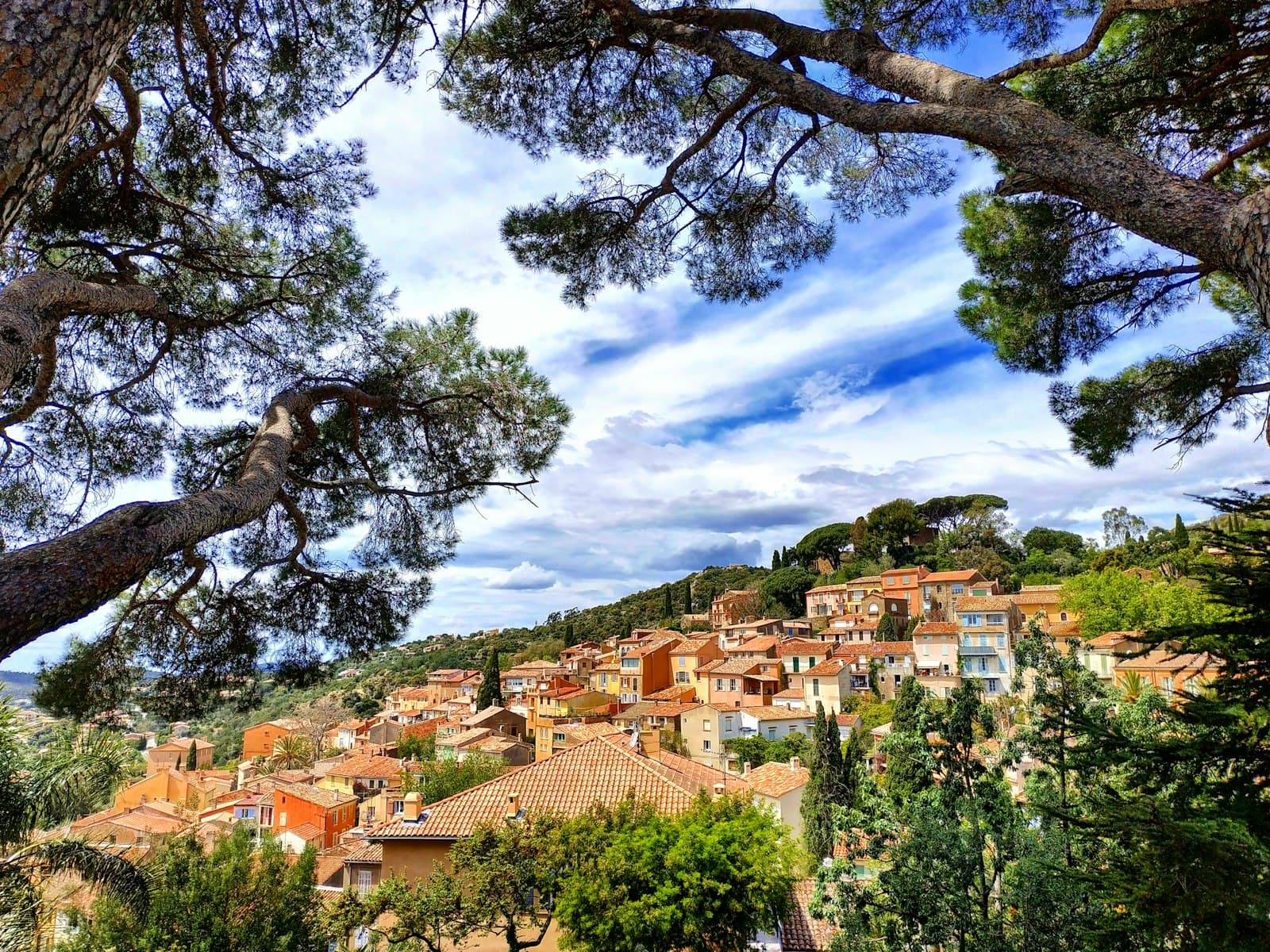
Bormes-les-Mimosas, un village médiéval du département du Var en Provence-Alpes-Côte d'Azur, offre un mélange de charme intemporel et de splendeur naturelle. Situé à 200 mètres au-dessus de la côte, il offre des vues imprenables sur la mer Méditerranée, les Îles d'Hyères (Îles d'Or) et le massif des Maures. Connu comme un 'village fleuri', Bormes-les-Mimosas présente plus de 700 variétés de plantes tout au long de l'année, avec un accent particulier sur ses mimosas éponymes, qui fleurissent dans un spectacle doré spectaculaire de fin janvier à début mars.
Le vieux centre du village est un labyrinthe de ruelles pavées, de passages voûtés et de maisons aux volets pastel, invitant à une exploration tranquille. Au-delà du village historique, Bormes-les-Mimosas s'étend jusqu'à la côte, offrant l'accès à des plages et criques accueillantes. Il offre un aperçu de la beauté provençale et de l'attrait du bord de mer sans les foules souvent présentes dans d'autres destinations de la Côte d'Azur.
L'histoire de Bormes-les-Mimosas remonte à l'Antiquité. Les habitants celtes-ligures originels, les Bormani, s'y sont installés vers 400 av. J.-C. Pendant l'occupation grecque, le port voisin de Brégançon servait de plaque tournante du commerce méditerranéen, exportant du plomb et du granite locaux. La plaine de Bormes fonctionnait probablement comme un centre commercial à cette période.
Alors que la région faisait face à des siècles d'insécurité, notamment du Xe au XVe siècle, les habitants se sont déplacés de la côte vers l'intérieur des terres pour chercher refuge sur les hauteurs. Cela a conduit au développement du village médiéval autour d'un château fortifié. Les plus anciens vestiges du château datent du XIIe siècle, et le village lui-même était défendu par des remparts, dont certains sont encore visibles aujourd'hui. Le Château des Seigneurs de Fos, construit entre le XIIIe et le XIVe siècle, témoigne de cette époque.
Bien que le nom du village ait été enregistré pour la première fois sous le nom de 'Borma' en 1056, l'ajout de 'les-Mimosas' est venu beaucoup plus tard, en 1968. Ce changement officiel était une démarche stratégique pour mettre en valeur les abondantes floraisons de mimosa du village et stimuler le tourisme. Le climat doux de la région permet une diversité florale remarquable, Bormes-les-Mimosas étant désormais reconnu pour ses plus de 700 espèces végétales et 90 variétés de mimosa. Ce patrimoine floral lui a valu le prestigieux label '4 fleurs' et le titre de 'plus beau village fleuri de France'.
Un autre développement significatif en 1968 fut la désignation du Fort de Brégançon, une forteresse historique sur un îlot rocheux près de Bormes, comme résidence d'été officielle du Président de la République française. Cette connexion a apporté une dimension moderne unique à la longue histoire du village.
Commencez votre exploration dans le Vieux Village, un charmant labyrinthe de ruelles escarpées, d'escaliers et de passages voûtés. Flânez dans les rues étroites, admirant les maisons aux couleurs pastel et les abondantes floraisons qui font la renommée du village.
Recherchez le Château des Seigneurs de Fos, un château du XIIIe siècle offrant des vues imprenables sur le paysage environnant, y compris la mer Méditerranée et les Îles d'Or. Visitez l'Église Saint-Trophyme, une église du XVIIIe siècle à l'architecture d'inspiration romane, remarquable pour son cadran solaire et son autel en étain. La Chapelle Saint-François de Paule, érigée en 1560, commémore Saint-François pour son rôle dans la sauvegarde de la ville de la peste. Pour des vues encore plus élevées, montez à la Chapelle Notre-Dame de Constance, située à 324 mètres d'altitude.
Au-delà du village, le Parc Gonzalez est un jardin botanique s'étendant sur plus de 3 000 mètres carrés, présentant près de 500 espèces de plantes australiennes, dont une importante collection de mimosas. Le littoral de Bormes-les-Mimosas offre plusieurs belles plages de sable et criques, telles que la Plage de Cabasson, la Plage de l'Estagnol et la Plage de Pellegrin, connues pour leurs eaux claires. Une excursion en bateau vers les Îles d'Or voisines est également une activité populaire.
La période la plus enchantée pour visiter Bormes-les-Mimosas est de fin janvier à début mars, pendant la saison de floraison du mimosa, lorsque les collines sont inondées de jaune vif et que l'air est rempli d'un doux parfum. La Fête du Mimosa, généralement organisée en février, présente des défilés et des expositions florales. Le printemps (avril et mai) offre un affichage remarquable de glycines, de bougainvilliers et d'autres plantes méditerranéennes. Pour les activités de plage et le temps chaud, de fin juin à fin août est idéal, avec des températures maximales moyennes en août atteignant 28°C. L'automne offre des températures agréables et moins de foules.
Bormes-les-Mimosas est situé dans le département du Var, entre Toulon et Saint-Tropez. Bien qu'accessible en transports en commun, une voiture offre la plus grande flexibilité pour explorer la région. Le village est à environ 40 minutes de route de Toulon, 90 minutes de Marseille et 2 heures de Nice via l'A57 et les routes côtières. La gare principale la plus proche est Hyères, à environ 25 minutes en taxi ou en bus. L'aéroport de Toulon-Hyères (TLN) est le plus proche, les aéroports de Nice et Marseille offrant un accès international plus large.
Le vieux village est en grande partie piétonnier, avec un parking gratuit disponible sur la Place Saint-François. L'Office de Tourisme, situé au cœur du vieux village, fournit des cartes et des informations. Des visites guidées axées sur l'histoire ou les aspects botaniques sont disponibles à différentes périodes de l'année.
Bormes-les-Mimosas en coréen, en chinois ou en hébreu — et dans 29 autres langues, chaque étape narrée par une voix native. La plus large gamme de langues de tous les audioguides autoguidés.
Disponible en :