La Torre del Reloj
Observa la base de la torre del reloj cuadrangular de Callian para ver una inusual talla.
La historia completa se desbloquea en el tour
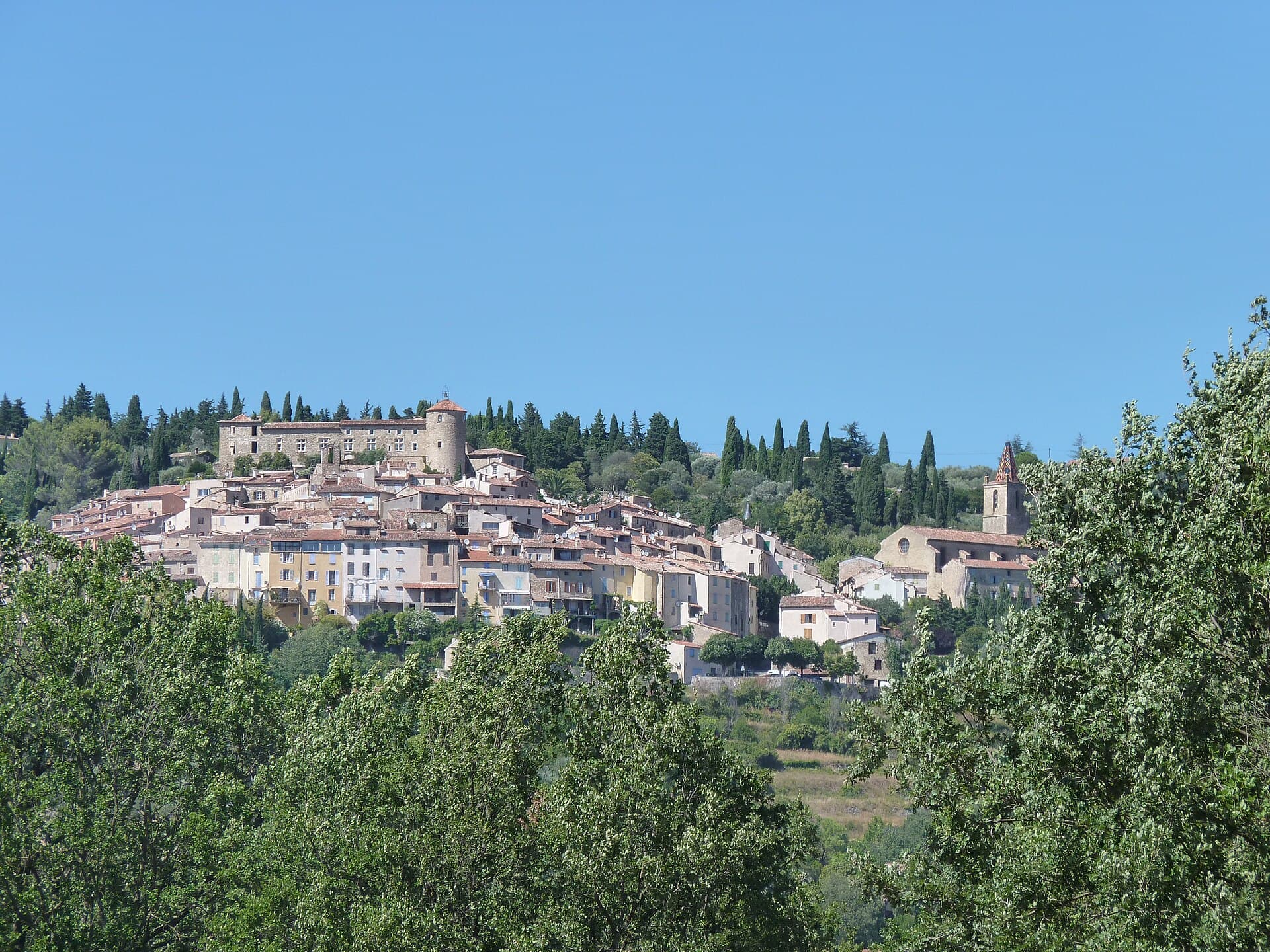 soussigné, Michel Moumdjian / CC BY-SA 4.0, via Wikimedia Commons
Tour de audio autoguiado de Callian — ruta GPS a pie, reproducción offline, narración en 32 idiomas.
“Donde las piedras ancestrales se encuentran con ecos artísticos en el corazón de la Provenza.”
No las postales. Las historias que ni los locales conocen — al oído, justo donde ocurrieron.
Observa la base de la torre del reloj cuadrangular de Callian para ver una inusual talla.
Entre las tranquilas tumbas del cementerio municipal de Callian yacen los restos de varias figuras inesperadas.
Callian contiene dos castillos, y el segundo, Château Goerg, posee un legado artístico único.
Descubre todos los secretos de Callian
Cada dirección, cada revelación al completo — a tu oído, justo donde ocurrió.
Eliges tus paradas. Caminas. La voz te revela lo que los demás ignoran.


Tu tour de audioguía por Callian te espera — elige tus lugares, tu idioma y empieza al llegar.
ComprarLume incluye una guía de realidad aumentada. Levanta el móvil y su cámara muestra la calle que tienes delante, con una flecha luminosa sobre la imagen real que siempre apunta a tu próxima parada — sin mapas que descifrar, sin giros equivocados. Como todo en Lume, funciona completamente sin conexión.
Callian, un cautivador pueblo medieval en el departamento de Var, en el sureste de Francia, ofrece una auténtica experiencia provenzal lejos de la bulliciosa costa. A una altitud de 325 metros, sus calles serpenteantes ascienden en espiral alrededor de un histórico castillo feudal, brindando amplias vistas de las colinas circundantes, las montañas de Tanneron y Esterel, e incluso atisbos del brillante mar. El pueblo se caracteriza por sus casas antiguas y pintorescas y sus numerosas escaleras llenas de flores, invitando a los visitantes a pasear y descubrir su carácter genuino.
Parte del 'Pays de Fayence', una colección de nueve pueblos en la cima de colinas, Callian es conocido por su tranquilidad y su clima vigorizante. La zona abunda en belleza natural, con extensos bosques de pinos y robles centenarios, ofreciendo amplias oportunidades para paseos y actividades al aire libre. Callian sirve como una base ideal para aquellos que buscan un ritmo de vida relajado, rodeados de terrazas montañosas y los sonidos del agua de arroyos y gargantas.
El pueblo ha atraído durante mucho tiempo a artistas y escritores, seducidos por su ambiente inspirador. Figuras notables como Christian Dior, Fernand y Nadia Léger, y el autor Anthony Burgess han encontrado una conexión con Callian, dejando su huella en su tejido cultural.
La historia de Callian se remonta a la antigüedad, con evidencia de ocupación por celtas ligures y posteriormente romanos. Rastros romanos, como un cipus (un pequeño pilar o marcador) exhibido en el ayuntamiento y restos del acueducto romano que suministraba agua a Fréjus desde Mons, confirman su pasado antiguo. La Chapelle Notre-Dame-des-Roses, el monumento religioso más antiguo de Callian, es un sitio arqueológico que data de la época galorromana, con una campana que aún se conserva de los siglos X u XI.
En la Edad Media, Callian había evolucionado hasta convertirse en una importante ciudad comercial, sus tierras se extendían hacia la costa hasta Mandelieu La Napoule. El siglo XV marcó el surgimiento de las comunidades aldeanas, con poblaciones reuniéndose alrededor de fortalezas y castillos para la defensa, dando origen a los pueblos que coronan las laderas de la región. El castillo feudal de Callian, una característica central del pueblo, fue construido sobre un pico rocoso con torres de esquina que datan de los siglos XII y XIII. Más tarde fue renovado en estilo renacentista y ha sido propiedad de destacadas familias de Grasse, Villeneuve, Lyle Taulanne y Raphelis-Brovès. Hoy en día, partes del castillo se utilizan como oficinas para el Ayuntamiento, aunque su perímetro exterior y las vistas circundantes siguen siendo accesibles.
La vida religiosa de Callian se refleja en sus diversas capillas e iglesias. La Chapelle des Pénitents, una capilla románica del siglo XII, sirvió como iglesia parroquial hasta 1685. Con el crecimiento del pueblo, fue reemplazada por la iglesia más grande de Notre-Dame-de-l'Assomption, construida entre 1675 y 1685. Esta iglesia es notable por su campanario cuadrangular adornado con tejas vidriadas de colores brillantes. Las antiguas vidrieras del interior de la iglesia fueron restauradas en los talleres de Fernand Léger en Biot.
El clima estimulante y el entorno de calidad de Callian han atraído a muchos artistas a lo largo de los años. El pueblo fue el hogar de Edouard Goerg, un pintor expresionista francés, y también ha sido un refugio favorito para figuras como Christian Dior y la familia Léger, contribuyendo a su legado artístico.
Comienza tu exploración en el corazón del pueblo, donde las estrechas calles serpentean alrededor del Castillo Feudal. Aunque ahora se utiliza en parte como Ayuntamiento, sus torres de los siglos XII y XIII y su patio aún son visibles, ofreciendo vistas imponentes del paisaje circundante. No te pierdas la Iglesia de Notre-Dame-de-l'Assomption, construida en el siglo XVII, con su distintivo campanario coronado por coloridas tejas vidriadas. En el interior, observa la ornamentación barroca y la estatua dorada de San Donato del siglo XVI.
Descubre la Chapelle des Pénitents, una capilla románica del siglo XII que ahora alberga exposiciones y eventos culturales. Justo debajo del pueblo principal, puedes encontrar un lavadero público renovado, una rareza que aún se utiliza. Busca la Place Honoré Bourguignon, una agradable plaza con una refrescante cascada y una explanada con amplias vistas. Para un toque de encanto local, encuentra la talla del 'Cerdo de la Suerte' en la torre del reloj.
Más allá del centro del pueblo, visita el Château Goerg, un castillo del siglo XIX que alberga la Oficina de Turismo de Callian y una exposición dedicada al pintor Edouard Goerg. La Chapelle Notre-Dame-des-Roses, un sitio arqueológico que data de la época galorromana, es el monumento religioso más antiguo de Callian. Para los amantes de la naturaleza, el extenso Bosque de Défens detrás del pueblo ofrece numerosos senderos para caminar y hacer senderismo entre pinos y robles centenarios.
La época más agradable para visitar Callian es durante la primavera y principios del otoño, generalmente de mayo a octubre. Durante estos meses, el clima es cómodo para explorar las calles del pueblo, las rutas de senderismo y las atracciones naturales. Mayo, junio, julio, agosto, septiembre y octubre ofrecen temperaturas promedio que oscilan entre 19°C y 27°C (66°F y 81°F). Julio es generalmente el mes más soleado, con alrededor de 347 horas de sol. Los veranos son cálidos y en su mayoría despejados, ideales para actividades al aire libre, con máximas diarias promedio en julio alrededor de 29°C (84°F). Los inviernos son largos, fríos y parcialmente nublados, siendo enero el mes más frío, con un promedio de 1°C (34°F).
Callian se encuentra en el departamento de Var de la región de Provenza-Alpes-Costa Azul, aproximadamente a 25 kilómetros de Grasse y 36 kilómetros de Draguignan. También está a unos 25 minutos de Cannes y a 45 minutos del Aeropuerto Internacional de Niza. Al explorar el pueblo, se recomiendan zapatos cómodos para navegar por las calles y escaleras sinuosas, a veces empinadas. La calle principal de Callian está cerrada al tráfico por las noches durante el verano, creando un ambiente agradable para cenar y pasear.
Para información turística, la Oficina de Turismo de Callian está situada en el Château Goerg. Allí pueden proporcionar detalles sobre eventos, visitas guiadas y atracciones locales. Puedes contactarlos en el +33 (0)4 94 76 01 02 o visitar su sitio web a través de la Oficina de Turismo de Pays de Fayence. Mientras estés en Callian, considera probar la cocina provenzal local en restaurantes como 'Les Maronniers' o 'Le Bellevue'.
Callian en coreano, en chino o en hebreo — y 29 idiomas más, cada parada narrada por una voz nativa. La mayor variedad de idiomas de cualquier audioguía autoguiada.
Disponible en: