Tianning Temple
This grand Buddhist temple holds a secret in its towering pagoda that goes beyond its impressive height.
Full story unlocks in the tour
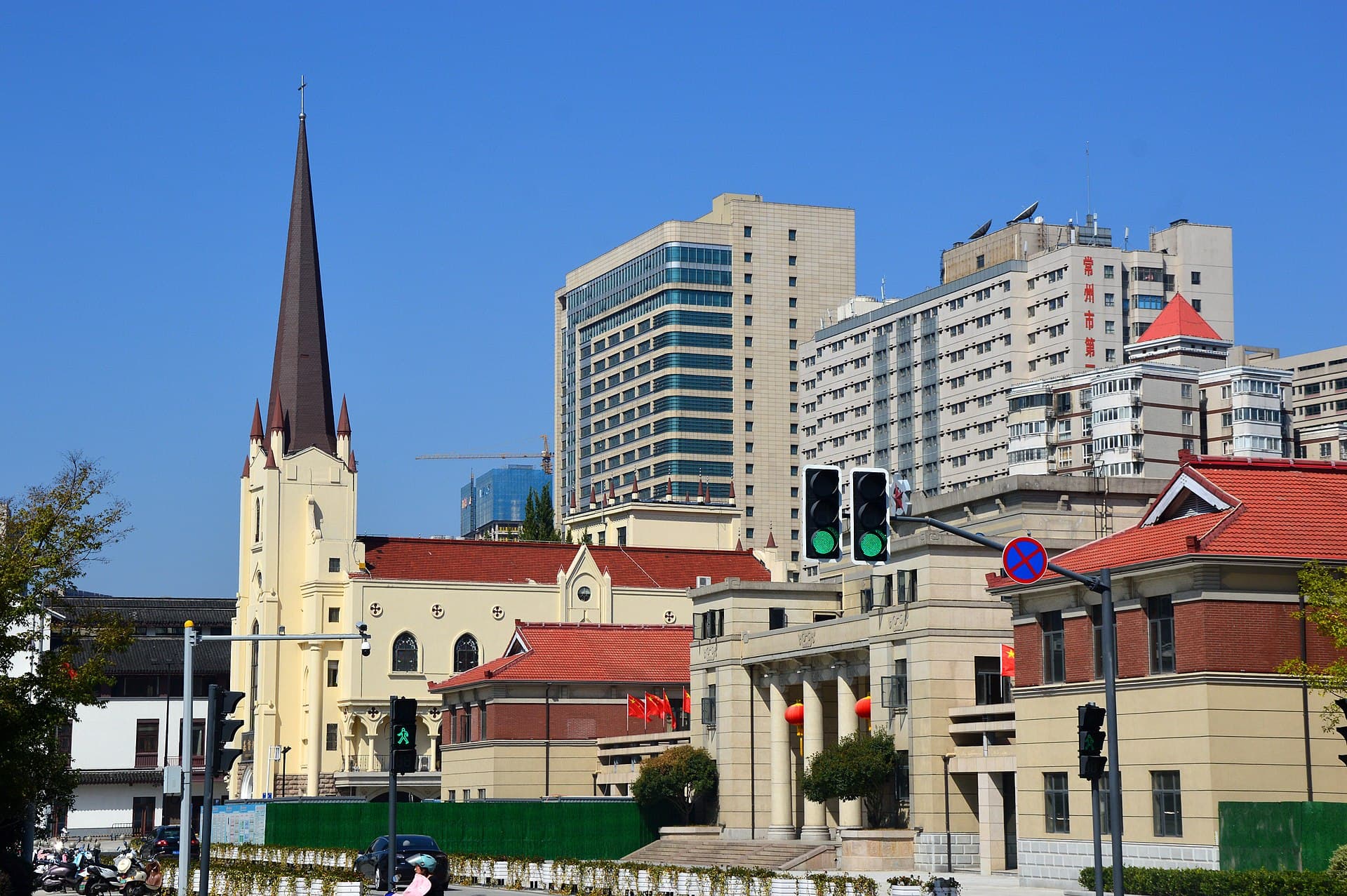 Aangkianghai / CC BY-SA 4.0, via Wikimedia Commons
Self-guided audio walking tour of Changzhou — GPS route, offline playback, story-driven narration in 32 languages.
“Where ancient canals meet dinosaur roars and bamboo whispers.”
Not the postcards. The stories even locals don't know — whispered in your ear, right where they happened.
This grand Buddhist temple holds a secret in its towering pagoda that goes beyond its impressive height.
This historic lane is more than just old buildings; it's a testament to Changzhou's intellectual legacy.
These ancient ruins reveal a unique architectural marvel unlike any other in the world.
Discover every secret of Changzhou
Every address, every reveal in full — in your ear, right where it happened.
You pick your stops. You walk. The voice reveals what the others miss.


Your self-guided audio tour of Changzhou is ready — pick your landmarks, choose your language, and start the moment you arrive.
BuyLume has a built-in augmented-reality guide. Hold your phone up and its camera shows the street ahead of you, with a glowing arrow laid over the real view that always points to your next stop — no map to puzzle over, no wrong turns. Like everything in Lume, it works fully offline.
Changzhou, often called the "Dragon City," is a lively metropolis in Jiangsu Province, China, where deep historical roots intertwine with modern innovation. Situated in the fertile Yangtze River Delta, it serves as a significant industrial and cultural center, conveniently positioned between Shanghai and Nanjing. The city's story stretches back over 2,500 years, offering a compelling blend of traditional Chinese culture and contemporary urban life.
Travelers to Changzhou can explore a diverse array of attractions, from ancient temples and tranquil parks to exhilarating theme parks. The city is celebrated for its cultural sites, scenic landscapes, and distinctive local cuisine. With a well-developed transportation network, navigating Changzhou's various districts and sights is both easy and enjoyable, promising a memorable experience for every visitor.
The history of Changzhou spans over 2,500 years, with human activity in the region traceable to the Neolithic Majiabang culture over 6,000 years ago. During the Spring and Autumn Period, in 547 BC, the land was granted as a fiefdom and named Yanling. Later, during the Han Dynasty (202 BC), Piling County was established. The city received its current name, Changzhou, in 589 AD during the Sui Dynasty, when the prefecture of the same name was formed.
Changzhou's strategic location in the Yangtze Delta and the construction of the Grand Canal played pivotal roles in its development. The Grand Canal, completed in 609 AD, transformed Changzhou into a bustling port and a vital trade hub, connecting the north and south of China for the transport of goods like rice, textiles, and tea. For many centuries, Changzhou maintained its status as an important administrative center, contributing to its stability and growth.
During the Ming (1368–1644) and Qing (1644–1912) dynasties, Changzhou's historical core preserved the character of classical Chinese architecture, characterized by wooden frame structures, curved tiled roofs, internal courtyards, and intricate carvings. The city became known for its high-quality cotton fabrics and the unique craft of intricately painted combs, a tradition spanning over 1,500 years. In the 1920s, Changzhou's cotton industry saw a new wave of development, attracting mills and becoming a significant textile center. Today, Changzhou continues to blend its profound historical heritage with modern industrial innovation, particularly in high-tech, electronic, and new energy sectors.
Changzhou offers a variety of attractions that cater to diverse interests. For a journey back in time, explore the Yancheng Ruins, an ancient city site dating back almost 3,000 years, notable for its unique triple-walled and moated layout. Delve into the city's spiritual side at Tianning Temple, a grand Buddhist monastery with a history spanning over 1,300 years, home to the impressive Tianning Pagoda, considered the tallest steel-structure Buddhist pagoda in the world. Adjacent to Tianning Temple is Hongmei Park, a traditional Chinese garden featuring pavilions and pagodas like the Wenbi Pagoda.
Experience Changzhou's literary heritage by strolling through Qingguo Lane, a historic residential street that was once home to numerous scholars and artists. For a more contemporary experience, the China Dinosaur Park offers a blend of amusement rides, exhibitions, and a dinosaur museum, making it a popular choice for families. Another natural escape is Tianmu Lake, a scenic resort area known for its clear waters, surrounding mountains, and the Nanshan Bamboo Sea.
The most pleasant times to visit Changzhou are during spring (March to May) and autumn (September to November). These seasons offer mild weather, making it comfortable for outdoor activities and exploration. Spring brings blooming flowers and temperatures ranging from 12°C to 25°C. Autumn also provides mild conditions with changing leaf colors. Summers (June to August) are hot and humid, with temperatures often exceeding 30°C and higher rainfall. Winters (December to February) are chilly, with temperatures around 0°C.
Changzhou is well-connected and easily reached. The city's primary airport, Changzhou Benniu Airport (CZX), offers flights to major Chinese cities. For those preferring rail, Changzhou's railway station is a key hub on the high-speed rail network, providing quick connections to cities like Shanghai, Nanjing, and Hangzhou. Within the city, public transportation is efficient and affordable, featuring an extensive bus network with fares starting at 1 CNY, and a metro system with two operational lines. Taxis and ride-hailing apps are also readily available. Cash is widely accepted, but electronic payments via WeChat Pay and Alipay are very popular. Tourists typically spend 2 to 3 days exploring Changzhou's main attractions.
Changzhou in Korean, in Chinese or in Hebrew — and 29 more languages, every stop narrated by a native voice. The widest language range of any self-guided audio tour.
Available in: