Coaraze, the village name
The very name of this sun-drenched village holds a curious, even fiendish, secret.
Full story unlocks in the tour
 MOSSOT / CC BY-SA 3.0, via Wikimedia Commons
Self-guided audio walking tour of Coaraze — GPS route, offline playback, story-driven narration in 32 languages.
“Where artistry meets the passage of time, beneath an unceasing sun.”
Not the postcards. The stories even locals don't know — whispered in your ear, right where they happened.
The very name of this sun-drenched village holds a curious, even fiendish, secret.
A brief walk from Coaraze leads to a village in ruins, bound by a somber Christmas Eve legend.
Coaraze's designation as the 'Village du Soleil' stems not just from abundant light, but also from its role as a canvas for renowned artists.
Discover every secret of Coaraze
Every address, every reveal in full — in your ear, right where it happened.
You pick your stops. You walk. The voice reveals what the others miss.


Your self-guided audio tour of Coaraze is ready — pick your landmarks, choose your language, and start the moment you arrive.
BuyLume has a built-in augmented-reality guide. Hold your phone up and its camera shows the street ahead of you, with a glowing arrow laid over the real view that always points to your next stop — no map to puzzle over, no wrong turns. Like everything in Lume, it works fully offline.
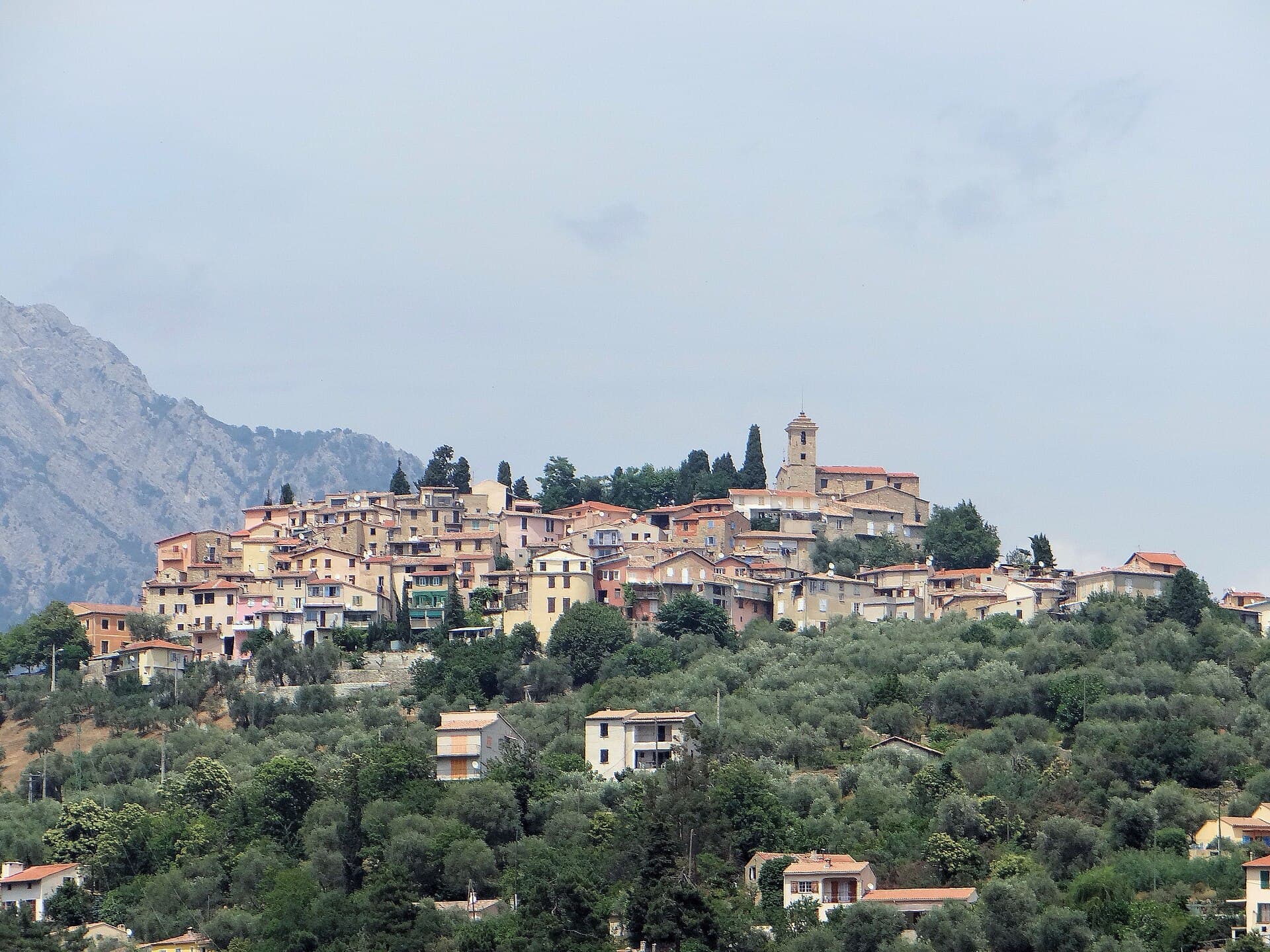
Coaraze, formally recognized among 'The Most Beautiful Villages of France,' is a medieval settlement in the Alpes-Maritimes department of Provence, southeastern France. It rests at an elevation of approximately 650 meters (2,130 feet), surveying the Paillon valley, about 30 kilometers (18.6 miles) from Nice. The village is frequently called the 'Village du Soleil' (Village of the Sun) due to its exceptional exposure to light and generous sunshine.
The village's architecture features colorful homes arranged in concentric rings around the central church, a signature of Provencal hilltop communities. Its slender, stone-paved lanes, arched passageways, and shaded plazas beckon exploration. From various vantage points within Coaraze, visitors can absorb sweeping views of the Mediterranean hills, woodlands of holm oak and olive trees, and the distant Alps.
Coaraze has long drawn artists, writers, and those seeking genuine character, captivated by its singular light and allure. This artistic heritage is particularly evident in the village's array of sundials, crafted by celebrated artists and displayed across its facades.
The story of Coaraze reaches back to antiquity, with evidence of Ligurian and Roman presence in the area. However, the village truly began to thrive in the Middle Ages. The origin of its name is debated, with some theories linking it to the Latin caput rasum ('shaven head'), referring to the bare summit above the village, while others connect it to corvus, the raven, a symbolic bird of the surrounding ridges. Another local account attributes the name to 'Coa Rasa' or 'cut tail,' arising from a narrative of villagers capturing the Devil.
Like many fortified villages in the region, Coaraze experienced the conflicts and rivalries between Provence, Savoy, and the County of Nice during the feudal era. The homes were deliberately grouped around the Saint-Jean-Baptiste church, forming a defensive barrier. The 16th and 17th centuries brought incursions and plagues to the region, yet Coaraze persevered, sustained by terraced cultivation of olives, vines, and cereals, alongside livestock.
The 19th century marked a period of transformation for Coaraze with the construction of roads, which eased trade with Nice and helped to alleviate the village's isolation. Despite these advancements, Coaraze has largely preserved its medieval character and authenticity. Water did not arrive in the village until 1875; before then, residents walked over 45 minutes to gather it. The first proper road to Coaraze was completed in 1876, shortening the journey from Nice by stagecoach to four hours.
In the 20th century, Coaraze began to attract a new kind of visitor: artists. Writers, poets, and visual artists were drawn to its exceptional light. In the 1960s, the village embraced this artistic connection by inviting contemporary artists, including Jean Cocteau, Ponce de Léon, and Gilbert Valentin, to create sundials upon its walls. This initiative transformed Coaraze into an open-air gallery and cemented its reputation as the 'Village du Soleil.'
Coaraze offers a passage through time within its well-preserved medieval core. Wander through the slender, stone-paved lanes and arched passages, admiring the stone homes, some painted in soft shades of blue, pink, or yellow.
Key sights include:
The ideal period to visit Coaraze for warm-weather pursuits extends from late June to mid-September. During these months, the weather is generally warm with clear skies. July and August are particularly sun-filled, with August being the warmest month, averaging a high of 80°F (27°C) and a low of 63°F (17°C). While July and August represent peak tourist season for the French Riviera, Coaraze's slightly more secluded location helps to manage visitor numbers. Spring (March to May) and autumn (September to November) also offer agreeable weather, though spring can bring brief rain showers and autumn introduces cooler temperatures and changing foliage.
Coaraze is located approximately 30 kilometers (18.6 miles) north of Nice. To reach the village by car from Nice, take the M2204B, which transitions into the D2204B, and then turn onto the D15 at La Pointe de Contes. The drive from Nice takes about 40 minutes. While the initial segment of the drive from Nice can be industrial, the road from Contes to Coaraze traces a scenic river valley. Bus services are also available to the village.
For visitor information, contact the local tourist office or the town hall. The Maison du Patrimoine (Heritage House) functions as a tourist office and is open Monday, Tuesday, Thursday, and Friday from 8:30 AM to 4:30 PM. The address is 6 Place du Portal, 06390 Coaraze, and the phone number is +33 (0)4 93 79 34 80.
Coaraze in Korean, in Chinese or in Hebrew — and 29 more languages, every stop narrated by a native voice. The widest language range of any self-guided audio tour.
Available in: