Notre-Dame-du-Réal Cathedral
Observe the cathedral's entrance closely, and you will discover a pair of stone lions, each accompanied by a curious figure.
Full story unlocks in the tour
 Sébastien HOSY / CC BY-SA 3.0, via Wikimedia Commons
Self-guided audio walking tour of Embrun — GPS route, offline playback, story-driven narration in 32 languages.
“Where Alpine sun warms ancient stone and turquoise waters gleam.”
Not the postcards. The stories even locals don't know — whispered in your ear, right where they happened.
Observe the cathedral's entrance closely, and you will discover a pair of stone lions, each accompanied by a curious figure.
This formidable medieval tower has served many purposes across the centuries, yet one of its later roles proved quite unexpected for a former archbishop's keep.
The town's historic core is adorned with numerous fountains, and their flowing water arrives with a refreshing assurance.
Discover every secret of Embrun
Every address, every reveal in full — in your ear, right where it happened.
You pick your stops. You walk. The voice reveals what the others miss.


Your self-guided audio tour of Embrun is ready — pick your landmarks, choose your language, and start the moment you arrive.
BuyLume has a built-in augmented-reality guide. Hold your phone up and its camera shows the street ahead of you, with a glowing arrow laid over the real view that always points to your next stop — no map to puzzle over, no wrong turns. Like everything in Lume, it works fully offline.
Embrun, affectionately known as 'the Nice of the Alps,' is a town in the Hautes-Alpes department of southeastern France. It is celebrated for its gentle, sun-drenched climate and a singular blend of historical allure and natural splendor. The town rests upon a cliff-top plateau, gazing out over the Durance River just before its confluence with the expansive Lac de Serre-Ponçon. From this vantage, Embrun affords sweeping views of the surrounding mountains, including the Morgon and Écrins massifs. Its elevation of 871 meters provides a crisp Alpine atmosphere, while over 300 days of sunshine each year infuse it with a Mediterranean warmth.
Embrun's charm extends beyond its climate and scenery. The town's ancient heart is a maze of narrow, venerable streets, inviting squares, and age-old structures. Stone fountains, many crafted in a distinctive Embrun style with a spherical stone top featuring four carved faces, are sprinkled throughout, offering cool, drinkable mountain water. This ancient Roman and medieval settlement serves as a gateway to outdoor pursuits, with the nearby Lac de Serre-Ponçon inviting water sports and the surrounding mountains beckoning exploration.
Embrun's origins trace back to a Gaulish settlement, known as Eburodunum, a name likely derived from Celtic words signifying 'water' and 'elevation.' In the 1st century BC, it evolved into a significant Roman town and military outpost, strategically positioned along the Via Domitia, a crucial Roman road connecting Gaul to Italy. By the 4th century, a bishopric was established in Embrun by Saint Marcellin, later elevated to an archbishopric in 804. This transformation solidified Embrun's status as an influential episcopal city, even regarded as the capital of the Maritime Alps during the Middle Ages, with its archbishops wielding considerable temporal power as Princes of the Holy Roman Empire.
Throughout its existence, Embrun endured numerous invasions, prompting the prelates to erect the town's initial fortifications. In the 14th century, the Dauphins, sovereigns of the independent principality of Dauphiné, maintained a fortified palace in Embrun. This structure was later converted into a citadel after the principality's annexation to the Kingdom of France in 1349. The town suffered profound devastation during the Wars of Italy and the Wars of Religion, including being sacked by Huguenots in 1585 and laid waste by the Duke of Savoy's troops in 1692. Following these conflicts, the citadel was dismantled by order of Henri IV in 1599, though the urban wall was preserved and restored.
By the 17th century, Embrun possessed a double urban wall fortified with nine bastions and a ravelin, yet these defenses proved insufficient against the Duke of Savoy's assaults in 1692. Vauban, the celebrated military engineer, subsequently visited Embrun and proposed enhancements to its defenses. The French Revolution marked the end of the archbishopric's authority, transforming Embrun into a simpler capital. The 19th century witnessed economic expansion with the arrival of the railway, and the construction of the Serre-Ponçon dam in the 1960s further stimulated tourism, cementing Embrun's standing as a thriving destination.
Embrun's historic core, resting on its rocky foundation, offers a passage through centuries of time. The Notre-Dame-du-Réal Cathedral, constructed between 1170 and 1225, stands as a significant religious monument in the French Alps, displaying a fusion of Romanesque and Gothic styles with Lombard influences. Its notable features include an intricately adorned porch with columns supported by stone lions, a 15th-century rose window, and a grand organ installed in 1464, a gift from Louis XI. The cathedral also safeguards a remarkable treasury within the Sainte-Anne chapel, containing nearly 500 liturgical art objects.
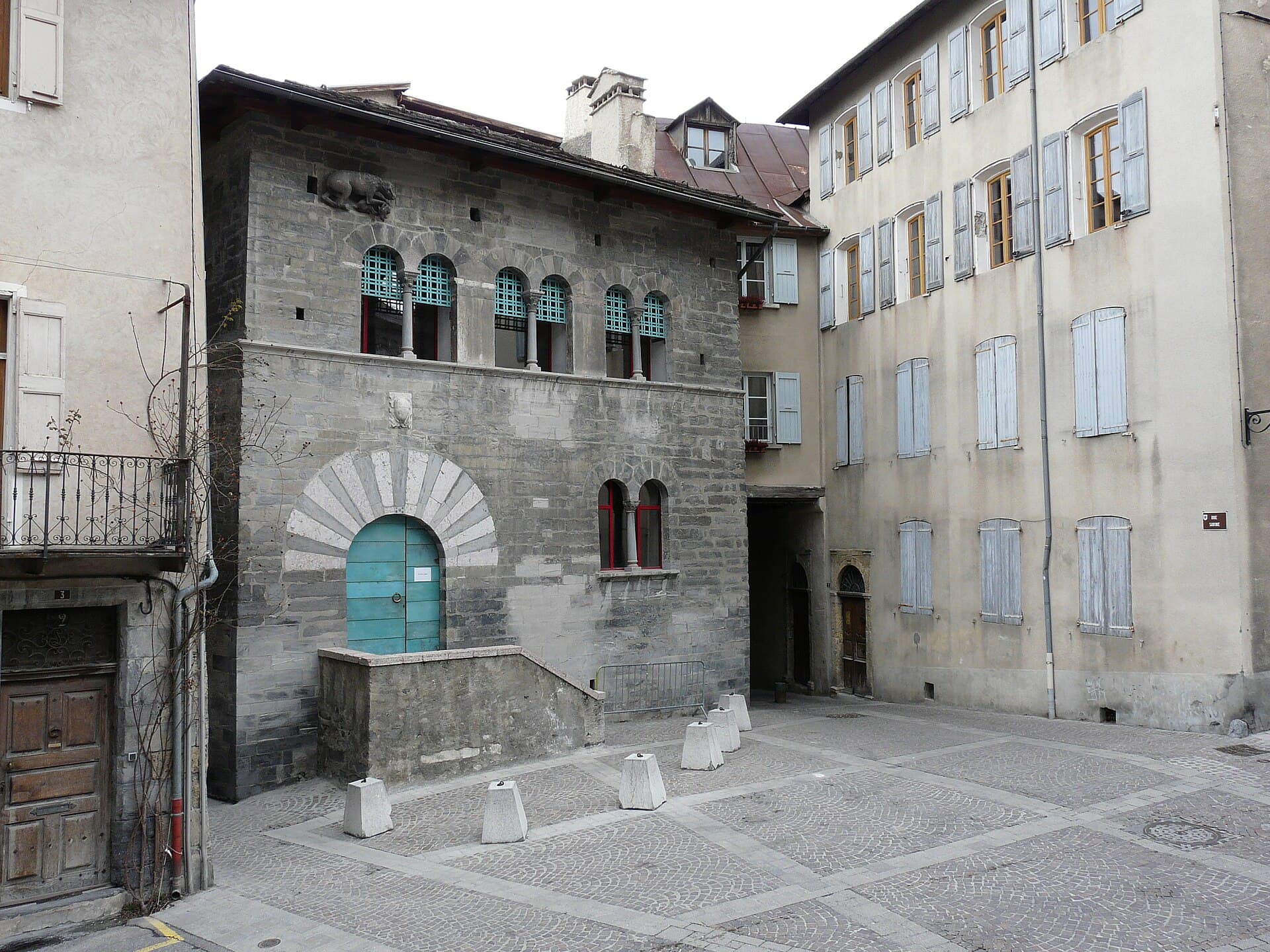
Adjacent to the cathedral stands the Tour Brune, a 12th-century square keep that once served as the archbishops' stronghold. This impressive tower, crowned with battlements, provides a glimpse into the town's medieval past. The Maison des Chanonges, or Embrunais Heritage House, is another 13th-century architectural treasure, showcasing Romanesque facades and now functioning as a cultural space. Do not overlook the Archbishop's Garden, a serene public promenade that affords sweeping views of the Durance River and surrounding mountains.
Beyond the town's historical structures, Embrun is known for its many sundials (cadrans solaires) gracing various facades, with examples dating back to the 18th century. The Embrun lake, a cultivated aquatic area, permits supervised swimming in summer and a variety of water sports. For expansive vistas of Lac de Serre-Ponçon, consider a hike to Morgon Peak or a visit to Lac de Saint-Apollinaire.
Embrun enjoys a mild and sunny climate, making it an inviting destination for much of the year. The most agreeable weather for outdoor activities typically spans from June to September, with comfortable daytime temperatures. July and August are especially favorable for warm-weather pursuits, though they may also experience some rainfall. The town's markets convene on Wednesday and Saturday mornings year-round, offering local produce and crafts. Summer also brings a fuller schedule of cultural events, including a Medieval Festival in August and the Embrunman triathlon.
Embrun is accessible by road via the N94 from Gap or the A51 to Sisteron, then the D942. The Embrun SNCF train station lies on the Briançon–Marseille line, with direct trains from Paris and Marseille. Local buses also serve the town and its environs. Parking is generally free throughout Embrun, with the exception of the shaded parking lot by Embrun lake during summer. Public parking is available near the historic center, often a brief walk from accommodations. Free shuttle services operate year-round within the town and to nearby ski resorts in winter.
The Tourist Office, located in the Cordeliers Convent, provides brochures, practical information, and free Wi-Fi. English, Spanish, French, and Italian are spoken here. Many restaurants offer traditional Hautes-Alpes cuisine, featuring local specialties such as tourtons and ravioles du Champsaur.
Embrun in Korean, in Chinese or in Hebrew — and 29 more languages, every stop narrated by a native voice. The widest language range of any self-guided audio tour.
Available in: