Mount Hosmer
Each summer evening, a shadowy figure materializes on the rock face of Mount Hosmer, a spectral echo of a broken promise and a fabricated curse.
Full story unlocks in the tour
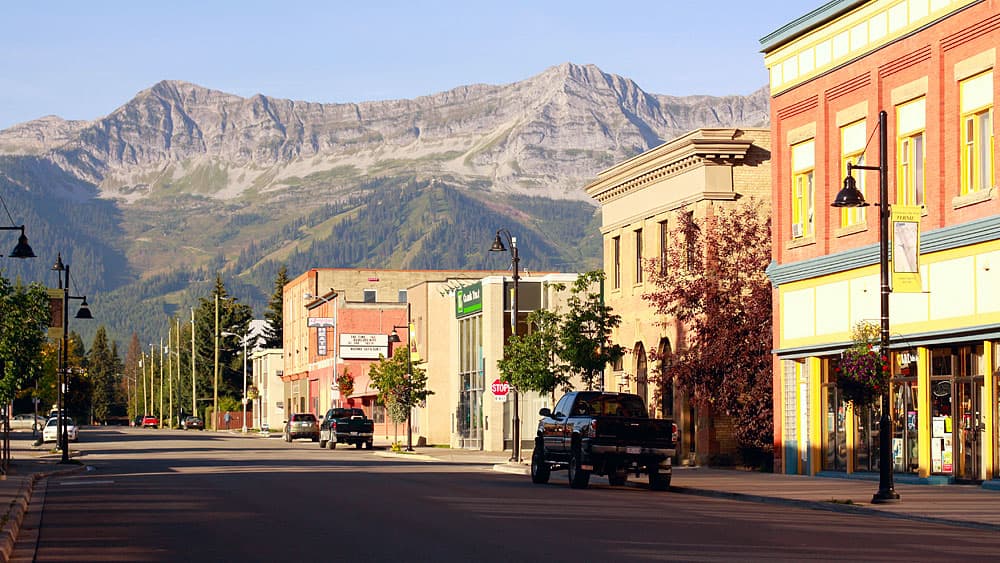 waferboard / CC BY 2.0, via Wikimedia Commons
Self-guided audio walking tour of Fernie — GPS route, offline playback, story-driven narration in 32 languages.
“Where the Rockies cradle adventure and enduring spirit.”
Not the postcards. The stories even locals don't know — whispered in your ear, right where they happened.
Each summer evening, a shadowy figure materializes on the rock face of Mount Hosmer, a spectral echo of a broken promise and a fabricated curse.
Fernie's City Hall stands as a monument to the town's resilience, having miraculously endured a devastating fire that consumed nearly everything else.
Fernie is celebrated for its abundant powder snow, yet locals attribute this generous snowfall to a mythical figure rather than mere weather patterns.
Discover every secret of Fernie
Every address, every reveal in full — in your ear, right where it happened.
You pick your stops. You walk. The voice reveals what the others miss.


Your self-guided audio tour of Fernie is ready — pick your landmarks, choose your language, and start the moment you arrive.
BuyLume has a built-in augmented-reality guide. Hold your phone up and its camera shows the street ahead of you, with a glowing arrow laid over the real view that always points to your next stop — no map to puzzle over, no wrong turns. Like everything in Lume, it works fully offline.
Fernie, British Columbia, is a mountain community embraced by the Canadian Rockies, offering a blend of historic character and year-round outdoor pursuits. Positioned in the Elk Valley along Highway 3, it holds the distinction of being the sole city in Canada entirely encircled by the Rocky Mountains. With a population exceeding 6,320, Fernie maintains an authentic mountain town atmosphere, drawing visitors with its historic downtown, lively local culture, and varied terrain.
Initially a coal mining settlement, Fernie has broadened its economic foundation to include a thriving tourism and recreation sector. The Elk River, which flows through the town, and the towering Lizard Range provide a dramatic backdrop for activities ranging from world-renowned fly-fishing in summer to exceptional skiing and snowboarding in winter. Fernie's temperate mountain climate ensures four distinct seasons, each presenting singular opportunities for exploration and connection with the natural world.
Fernie's beginnings are deeply rooted in the late 19th-century coal industry. The town bears the name of William Fernie, who, alongside Colonel James Baker, pioneered the development of coal mines in the Elk Valley. After years of dedicated effort, the Crows Nest Pass Coal Company was established in 1897, and the arrival of the Canadian Pacific Railway in 1898 catalyzed rapid expansion, transforming Fernie into a flourishing coal mining center. The town swiftly became an administrative and commercial hub, attracting people from across Canada, Europe, and the United States.
However, Fernie's early existence was marked by adversity. In 1902, the Coal Creek Mine suffered a devastating explosion that claimed the lives of 128 miners, making it one of Canada's most tragic mining disasters. The town also endured two catastrophic fires. In April 1904, a fire consumed the downtown commercial district, and just four years later, on August 1, 1908, a second firestorm reduced the entire town to ash in under 90 minutes, with only the mine office (now City Hall) surviving. This prompted a significant rebuilding endeavor, resulting in the enduring brick and stone architecture that defines Fernie's historic core today.
Throughout the 20th century, Fernie experienced cycles of prosperity and decline tied to global coal prices. The Great Depression presented considerable challenges, but the industry saw a revival in the 1960s with demand from Japanese steel makers. In the 1990s, Fernie began to redefine itself as a destination for travelers, capitalizing on its remarkable mountain setting. While mining and lumber remain important, the tourism sector, with attractions like Fernie Alpine Resort, has grown increasingly vital to the city's economy.
Begin your exploration in Historic Downtown Fernie, where century-old brick buildings line Victoria Avenue. Here, you will discover independent shops, art galleries, cafes, and restaurants. The Fernie Museum provides a deeper immersion into the town's mining past and its resilient character. A Heritage Walking Route guides you to 16 historic buildings, including the Fernie Heritage Library and City Hall.
For those who love the outdoors, Fernie Alpine Resort is a primary draw. In winter, it offers over 140 marked runs across five alpine bowls, celebrated for deep, dry powder. Cat skiing and snowboarding at Island Lake Lodge and Fernie Wilderness Adventures provide access to remote backcountry terrain. During warmer months, the resort transforms into a mountain biking park with an extensive network of trails. Hiking is also popular, with trails like the family-friendly Fairy Creek Falls accessible from the Fernie Visitor Information Centre, or the more challenging Heiko's Trail and Spineback Trail near Island Lake Lodge. The Elk River is well-regarded for fly-fishing, whitewater rafting, and gentle floats. For a singular natural spectacle, observe the 'Ghostrider' shadow on Mount Hosmer on a summer evening.
Fernie offers distinct experiences across its four seasons. For skiing and snowboarding, the optimal time to visit is from December through March, with January and February typically providing the most consistent snow. The average winter temperature hovers around -5°C (23°F). Summer, from late June through September, is perfect for warm-weather pursuits like hiking, mountain biking, fly-fishing, and river activities, with comfortable temperatures. The transitional seasons of spring and early autumn offer a balance of pleasant weather, fewer visitors, and better value. May brings forth blossoming flowers, while October showcases brilliant autumn foliage.
Fernie is situated in southeastern British Columbia. It is approximately a 3-hour drive from Calgary International Airport (YYC) in Alberta and a 2-hour drive from Glacier International Airport (FCA) in Kalispell, Montana. Cranbrook/Canadian Rockies International Airport (YXC) is also an option, about 1.5 hours away. There is no public transit system within Fernie, so a car is strongly recommended for navigating the area. During winter months, winter tires are mandatory on rental vehicles.
The Fernie Visitor Information Centre, located at 102 Highway 3, provides maps, guidebooks, and knowledgeable staff to assist with your visit. Most accommodations offer Wi-Fi. For those traveling with RVs, sani-dump services are available at the Fernie RV Resort for a fee.
Fernie in Korean, in Chinese or in Hebrew — and 29 more languages, every stop narrated by a native voice. The widest language range of any self-guided audio tour.
Available in: