Gap Cathedral
The striking polychrome facade of Gap's cathedral tells a subtle story of its origins, far older than its 19th-century construction suggests.
Full story unlocks in the tour
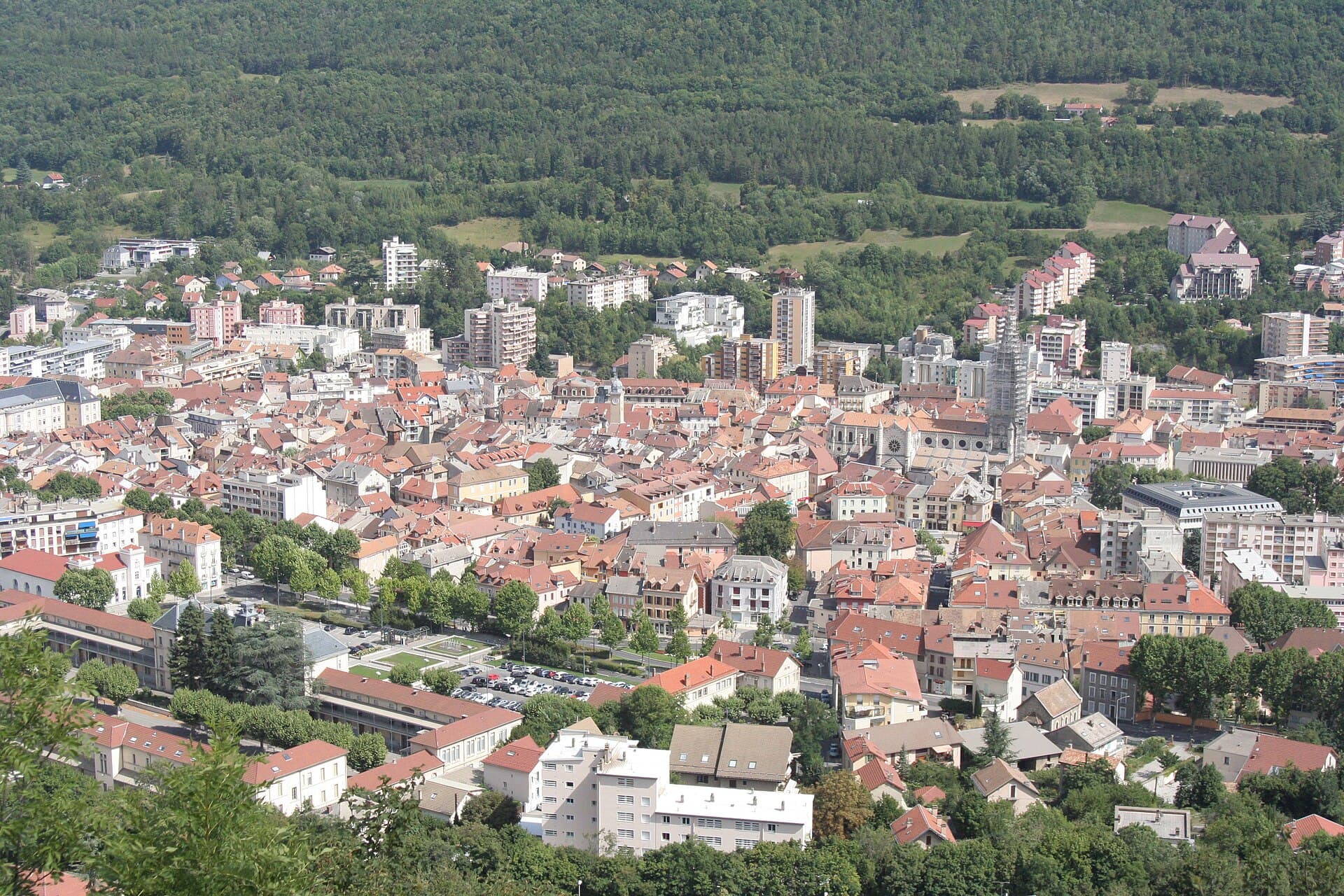 Le corrigateur / CC BY-SA 4.0, via Wikimedia Commons
Self-guided audio walking tour of Gap — GPS route, offline playback, story-driven narration in 32 languages.
“Gap: Where Alpine Vigor Meets Provençal Charm.”
Not the postcards. The stories even locals don't know — whispered in your ear, right where they happened.
The striking polychrome facade of Gap's cathedral tells a subtle story of its origins, far older than its 19th-century construction suggests.
Walk the oldest street in Gap, and you're treading on more than just paving stones.
Navigating Gap is remarkably easy, and it comes with an unexpected benefit.
Discover every secret of Gap
Every address, every reveal in full — in your ear, right where it happened.
You pick your stops. You walk. The voice reveals what the others miss.


Your self-guided audio tour of Gap is ready — pick your landmarks, choose your language, and start the moment you arrive.
BuyLume has a built-in augmented-reality guide. Hold your phone up and its camera shows the street ahead of you, with a glowing arrow laid over the real view that always points to your next stop — no map to puzzle over, no wrong turns. Like everything in Lume, it works fully offline.
Gap, the prefecture of the Hautes-Alpes department, offers a compelling blend of alpine energy and southern French allure. Situated at an altitude of 735 meters, it holds the distinction of being the highest departmental capital in France. Surrounded by the grand peaks of the French Alps and bordering the Écrins National Park, Gap provides a gateway to a diverse natural environment, from towering mountains to calm lakes.
Beyond its dramatic scenery, Gap is a city with a lively pulse, characterized by its bustling squares, colorful buildings, and a strong local culture. It serves as a significant administrative and commercial center for the Hautes-Alpes, offering a range of shops, restaurants, and cafés. The city's commitment to outdoor activities is evident; in 2013, it was recognized as the sportiest city in France. Whether you seek mountain adventures or a relaxed Provençal atmosphere, Gap presents an authentic experience, often shared more with locals than with other tourists.
Gap also plays a role in significant national events, having hosted stages of the Tour de France and the Monte Carlo Rally. Its strategic location on the historic Route Napoléon further adds to its intrigue, connecting Grenoble to the Mediterranean.
## From Roman Outpost to Alpine Capital Gap's origins trace back to the Celto-Ligurian tribes, but its formal establishment as a town came with the Romans. Around 14 BC, the Roman emperor Augustus founded Vapincum, a defensive station along the Roman Domitienne Way, which linked Turin to the Rhône Valley. This strategic position between Provence and Dauphiné ensured its importance as a trading center and a stopover point.
Throughout the Middle Ages, the Bishop of Gap held sovereign rights over the city, a power that persisted until the Revolutionary reforms of 1801, despite Gap being annexed by the French crown in 1512. The city faced periods of destruction, notably in 1575 when the cathedral, episcopal palace, and parts of the city were destroyed, and again in 1692 during the wars of the League of Augsburg, when it was ravaged by troops. Following this, King Louis XIV contributed funds for its partial rebuilding.
The 18th and 19th centuries saw Gap's role as a road crossroads expand, further solidified by the arrival of the railway in 1875. This development, while leading to some rural exodus, also strengthened Gap's appeal. In March 1815, Napoleon Bonaparte himself passed through Gap on his journey from Elba, a route now famously known as the Route Napoléon. In 1790, during the French Revolution, Gap became the prefecture of the newly formed Hautes-Alpes department, a title it holds to this day, making it France's highest prefecture.
Today, while ancient and medieval remains are rare due to its turbulent past and subsequent redesigns, the city's urban layout still reflects elements of its long history. Gap was recognized as the 'Alpine Town of the Year' in 2002, acknowledging its commitment to sustainable development in the Alpine Arc.
Begin your exploration in Gap's historic center, where the layout largely echoes its medieval past. Wander through pedestrian streets and squares like Place Jean Marcellin, known for its lively atmosphere and pastel-colored buildings. Here, you'll find the 18th-century Town Hall with its wrought-iron balconies.
The Cathédrale Notre-Dame-et-Saint-Arnoux, a national monument, is a prominent landmark. This Neo-Gothic structure, built between 1866 and 1904, features a polychrome facade made from various white, grey, and pink stones, and a 70-meter high bell tower. Inside, discover modern stained-glass windows from the 1970s and the white and black marble mausoleum of the Duke of Lesdiguières, a significant figure from the 16th century.
For a deeper dive into the region's heritage, visit the Musée Muséum Départemental des Hautes-Alpes. This museum, opened in 1910, houses extensive collections spanning archaeology, fine arts, local history, ethnography, and natural history. Just a few kilometers from the city center, the Domaine de Charance offers 220 hectares of gardens, a lake, and serves as home to the National Alpine Botanical Conservatory and the Écrins National Park Visitor Centre. The terraced garden at the château provides expansive views. For outdoor enthusiasts, the Gap-Bayard site, 7 km north, offers an 18-hole golf course and cross-country ski trails.
Gap experiences distinct seasons, with warm summers and cold winters. The best time for warm-weather activities is generally from late June to late August, when temperatures are mild and the skies are clearest. July is typically the sunniest month. Shoulder seasons, specifically spring and early autumn, offer a good balance of pleasant weather, fewer crowds, and better value. While summer is ideal for outdoor pursuits, even then, evenings can be cool, so layering is advisable. Winter brings reliable snow and a quieter atmosphere, appealing to those who enjoy cooler weather and solitude.
Gap's city center is compact and best explored on foot. A notable feature is its entirely free public transport system, L'Agglo en bus, which connects the city center to outlying districts and even neighboring communes. Buses generally operate from 6:30 AM to 7:30 PM, Monday to Saturday, with reduced service on Sundays and public holidays. Current route maps are available at the Tourist Office or online.
For travel beyond the city, electric bikes are popular given the mountainous terrain, with rental points available. Renting a car is recommended for exploring more remote mountain trails or lakes not covered by the bus network. Taxis are available but must be ordered in advance by phone, as street hails are rare.
Gap is accessible by train, with connections from major cities like Paris, Lyon, and Marseille. The closest TGV stations include Valence and Aix-en-Provence, with onward connections by regional train (TER) or bus. The nearest airports are Marseille (MRS), Lyon (LYS), and Grenoble (GNB), all requiring onward travel by bus or train.
Gap in Korean, in Chinese or in Hebrew — and 29 more languages, every stop narrated by a native voice. The widest language range of any self-guided audio tour.
Available in: