La Villa de los Papiros
Imagina una biblioteca tan vasta y antigua que sus rollos fueron carbonizados, no incinerados, por el calor volcánico.
La historia completa se desbloquea en el tour
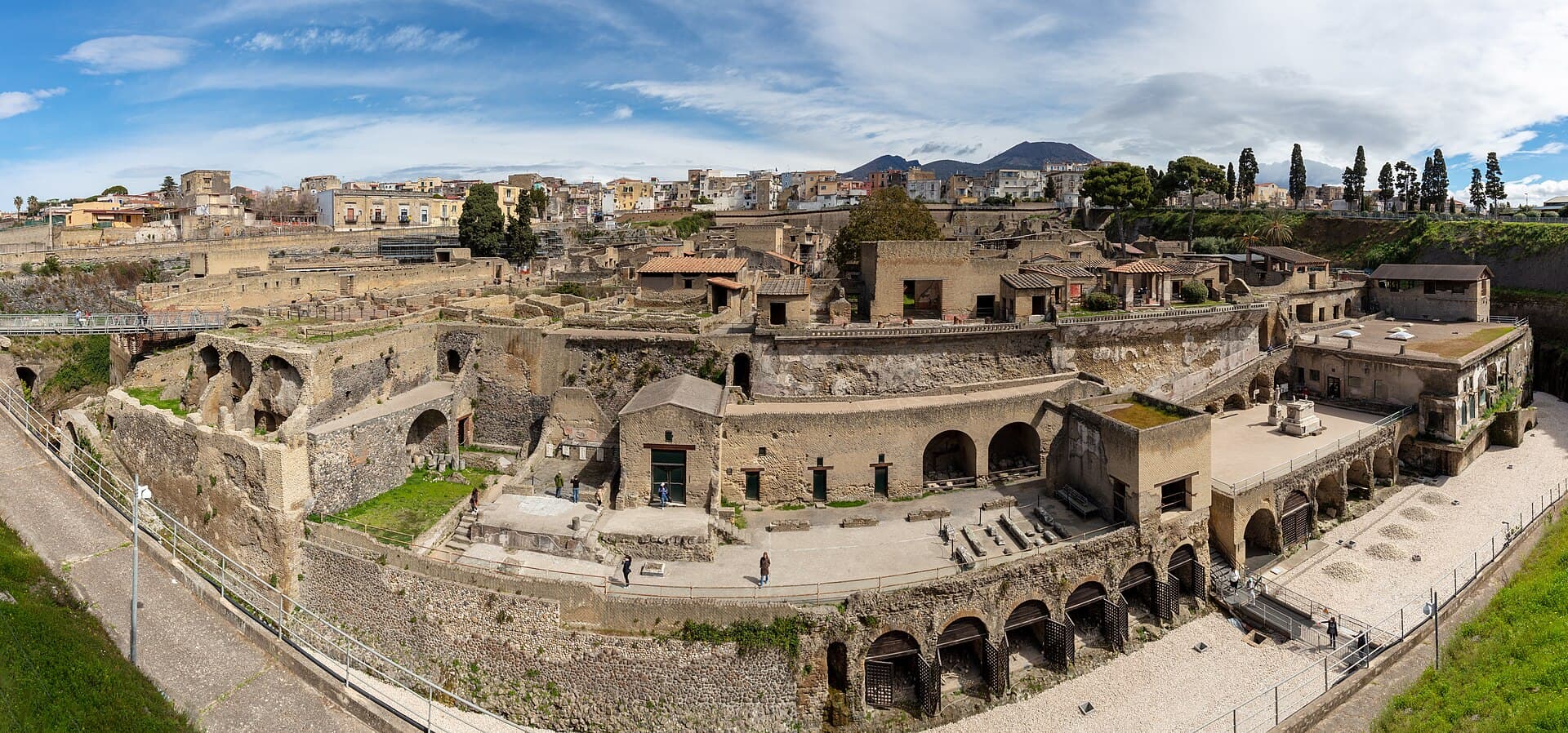 Diego Delso / CC BY-SA 4.0, via Wikimedia Commons
Tour de audio autoguiado de Herculano — ruta GPS a pie, reproducción offline, narración en 32 idiomas.
“Herculano: Una ciudad congelada en un solo y aterrador aliento.”
No las postales. Las historias que ni los locales conocen — al oído, justo donde ocurrieron.
Imagina una biblioteca tan vasta y antigua que sus rollos fueron carbonizados, no incinerados, por el calor volcánico.
Los arqueólogos descubrieron cientos de esqueletos apiñados, pero sus muertes no fueron por asfixia como se creyó en un principio.
Entre las víctimas en la antigua playa, se encontró una barca carbonizada, ofreciendo un testimonio silencioso de un intento desesperado de escape.
Descubre todos los secretos de Herculano
Cada dirección, cada revelación al completo — a tu oído, justo donde ocurrió.
Eliges tus paradas. Caminas. La voz te revela lo que los demás ignoran.


Lume incluye una guía de realidad aumentada. Levanta el móvil y su cámara muestra la calle que tienes delante, con una flecha luminosa sobre la imagen real que siempre apunta a tu próxima parada — sin mapas que descifrar, sin giros equivocados. Como todo en Lume, funciona completamente sin conexión.
Herculano, o Ercolano como se la conoce hoy, se asienta en la base occidental del Monte Vesubio, aproximadamente a 8 kilómetros al sureste de Nápoles. Aunque a menudo eclipsada por su vecina más grande, Pompeya, Herculano ofrece una visión única, íntima y notablemente conservada de la vida romana antigua. Sepultada por la catastrófica erupción del Vesubio en el 79 d.C., Herculano fue engullida no por ceniza y piedra pómez, sino por un flujo piroclástico denso y rápido, una mezcla de gas caliente, ceniza y roca volcánica. Este material endurecido, de hasta 20 metros de profundidad, carbonizó y selló la ciudad, preservando materiales orgánicos como madera, alimentos e incluso rollos de papiro, que en gran parte se descompusieron en Pompeya.
Con una población de alrededor de 4.000 a 5.000 habitantes, Herculano era un refugio costero más próspero para la élite romana, un hecho que se refleja en sus lujosas casas y el uso suntuoso de mármol de colores. El sitio arqueológico, Patrimonio de la Humanidad por la UNESCO desde 1997, es más pequeño y compacto que Pompeya, lo que facilita su exploración en menos tiempo. Esto permite una experiencia más enfocada y menos concurrida, particularmente atractiva para aquellos interesados en la vida diaria, el arte y la arquitectura de sus antiguos habitantes.
## Los Orígenes y la Prosperidad de Herculano La tradición antigua vincula a Herculano con el héroe griego Heracles, sugiriendo orígenes griegos para la ciudad. La evidencia histórica indica que a finales del siglo VI a.C., los habitantes de habla osca estaban bajo influencia griega, y en el siglo IV a.C., la ciudad estaba dominada por los samnitas. Herculano se convirtió en un municipium romano en el 89 a.C. después de ser derrotada por Tito Didio durante la Guerra Social. Se desarrolló como una próspera ciudad balneario, favorecida por romanos y campanos adinerados por su excelente clima y ubicación costera. La ciudad estaba diseñada con un patrón de calles en cuadrícula bien organizado y presentaba una mezcla de edificios residenciales, comerciales y públicos, incluyendo lujosas casas de dos y tres pisos, una rareza en la antigua Roma.
## La Advertencia y la Catástrofe del 79 d.C. Herculano fue significativamente dañada por un terremoto en el 62 d.C., y las reparaciones de sus edificios públicos y privados aún estaban en curso cuando el Monte Vesubio entró en erupción el 24-25 de agosto del 79 d.C. Alrededor de la 1:00 PM del 24 de agosto, el Vesubio explotó, enviando una columna masiva de gas, roca pulverizada y ceniza a 20 millas de altura. Mientras Pompeya fue inicialmente sepultada bajo la caída de ceniza y piedra pómez, Herculano experimentó un destino diferente, más inmediato y, en última instancia, más conservador.
## Una Ciudad Congelada en el Tiempo En las primeras horas del 25 de agosto, una serie de flujos piroclásticos, nubes sobrecalentadas de gas y escombros volcánicos, rugieron por las laderas del Vesubio a velocidades de hasta 100 millas por hora. La primera oleada golpeó Herculano alrededor de la 1:00 AM, con temperaturas que superaban los 500°C. Este calor intenso carbonizó instantáneamente los materiales orgánicos y vaporizó a los habitantes, congelándolos en sus posturas finales. Los flujos posteriores sepultaron la ciudad bajo una capa densa y compacta de material volcánico de hasta 20 metros de profundidad, que luego se endureció en una piedra similar a la toba. Este proceso de enterramiento único, a diferencia del enterramiento por ceniza de Pompeya, preservó una extraordinaria variedad de objetos de madera, muebles, textiles, alimentos e incluso la única biblioteca intacta de la antigüedad, los Papiros de Herculano.
## Redescubrimiento y Arqueología Moderna Herculano permaneció oculta durante más de 1600 años hasta su redescubrimiento accidental en 1709 por un pocero que encontró el antiguo teatro. Las primeras excavaciones en el siglo XVIII, particularmente por el Príncipe d'Elbeuf, marcaron el comienzo de la arqueología moderna. Las excavaciones han continuado esporádicamente, con un cambio de enfoque hacia la preservación de las partes ya desenterradas de la ciudad en lugar de exponer más. Hoy en día, gran parte de la antigua ciudad permanece enterrada bajo la moderna ciudad de Ercolano.
Herculano ofrece una experiencia concentrada y bien conservada de la vida romana. Comience en el Antiquarium y Pabellón de la Barca, cerca de la entrada, para ver una selección de artefactos desenterrados durante las excavaciones del siglo XX y la barca carbonizada encontrada en la antigua costa. Esta barca, que se cree que fue una embarcación militar, proporciona una conmovedora conexión con los últimos momentos de quienes buscaron escapar. Adyacente a esto, las casas de botes (fornici) son donde se descubrieron los restos esqueléticos de cientos de víctimas, congelados en su último intento de huir.
Camine por el Decumanus Maximus y los Cardines, las calles principales, para apreciar el trazado en cuadrícula de la ciudad. Explore la notablemente conservada Casa del Bicentenario, llamada así por su descubrimiento 200 años después del inicio de las excavaciones, y la Casa de Neptuno y Anfitrite, conocida por su intrincado mosaico. Muchas casas conservan sus elementos de madera originales, como marcos de puertas, escaleras e incluso muebles, debido a la preservación única. Las Termas del Foro ofrecen una visión de la vida pública romana, con secciones separadas para hombres y mujeres, completas con vestuarios, baños fríos, templados y calientes. El Salón de los Augustales es otro edificio público significativo. Aunque la Villa de los Papiros no es directamente accesible, su importancia como fuente de los papiros de Herculano es inmensa, y su historia es integral para comprender el sitio. Permita de 2 a 3 horas para una visita completa.
La mejor época para visitar Herculano es durante las temporadas intermedias de abril-junio y septiembre-octubre, cuando el clima es agradable y las multitudes son más manejables. Visitar un día laborable, especialmente justo después de la apertura a las 8:30 AM, asegura una experiencia más tranquila y fotos más claras antes de que lleguen los grupos de turistas. El sitio está abierto todos los días, excepto el 1 de enero y el 25 de diciembre. Del 16 de marzo al 14 de octubre, el horario es de 8:30 AM a 7:30 PM (última admisión a las 6:00 PM), y del 15 de octubre al 15 de marzo, el horario es de 8:30 AM a 5:00 PM (última admisión a las 3:30 PM). La entrada es gratuita el primer domingo de cada mes, pero espere un aumento significativo de visitantes locales.
Herculano es fácilmente accesible desde Nápoles. La forma más común es tomar el tren Circumvesuviana desde la estación de Nápoles Garibaldi hasta Ercolano Scavi, un viaje de unos 15-20 minutos. Desde la estación de Ercolano Scavi, hay una caminata cuesta abajo de unos 10 minutos hasta el sitio arqueológico. Las entradas para Herculano cuestan 16 € para la entrada estándar, con tarifas reducidas para ciudadanos de la UE de 18 a 25 años. Se recomienda reservar las entradas con antelación, especialmente durante la temporada alta o si desea una visita guiada. Las visitas guiadas son muy recomendables para apreciar plenamente la historia y los detalles del sitio.
Para visitantes con discapacidades, Herculano ofrece una accesibilidad significativamente mejor que Pompeya. Hay rutas accesibles para sillas de ruedas, incluyendo los cardines y el decumanus inferior, y una rampa de acceso en Cardo III. Los visitantes con discapacidades certificadas y un acompañante tienen entrada gratuita. También hay visitas guiadas y transporte accesibles para sillas de ruedas. Los baños accesibles están disponibles en la entrada, el centro de visitantes y la taquilla.
Herculano en coreano, en chino o en hebreo — y 29 idiomas más, cada parada narrada por una voz nativa. La mayor variedad de idiomas de cualquier audioguía autoguiada.
Disponible en: