Qianshanyang Archaeological Site
Huzhou safeguards a secret regarding silk's very origins, a truth that reweaves the fabric of ancient history.
Full story unlocks in the tour
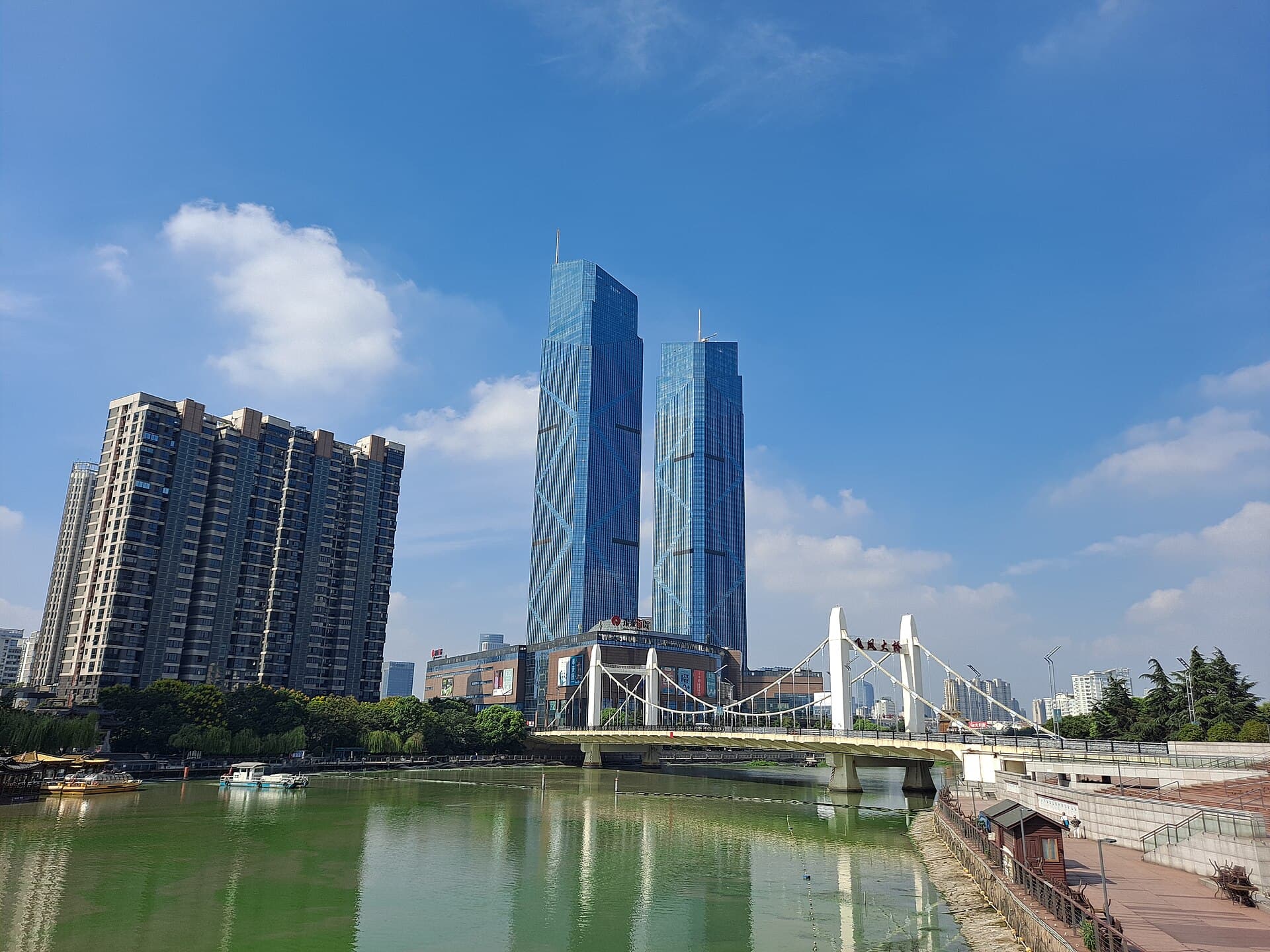 钉钉 / CC BY-SA 4.0, via Wikimedia Commons
Self-guided audio walking tour of Huzhou — GPS route, offline playback, story-driven narration in 32 languages.
“Where ancient silk threads intertwine with contemporary design.”
Not the postcards. The stories even locals don't know — whispered in your ear, right where they happened.
Huzhou safeguards a secret regarding silk's very origins, a truth that reweaves the fabric of ancient history.
This quiet bamboo mountain once served as an unexpected summer retreat for a global elite.
The seemingly straightforward Chinese writing brush possesses an intricate complexity; Huzhou's brushes were once imperial treasures.
Discover every secret of Huzhou
Every address, every reveal in full — in your ear, right where it happened.
You pick your stops. You walk. The voice reveals what the others miss.


Your self-guided audio tour of Huzhou is ready — pick your landmarks, choose your language, and start the moment you arrive.
BuyLume has a built-in augmented-reality guide. Hold your phone up and its camera shows the street ahead of you, with a glowing arrow laid over the real view that always points to your next stop — no map to puzzle over, no wrong turns. Like everything in Lume, it works fully offline.
Huzhou, a city in northern Zhejiang province, presents a compelling fusion of ancient legacy and tranquil natural splendor. Situated where the Dongtiao and Xitiao rivers meet the expansive Lake Tai, Huzhou has long been a crucial nexus for commerce and culture within the Yangtze River Delta. Historically known as the "Lake Prefecture" due to its proximity to Lake Tai, the city offers a calm rhythm of life, a gentle counterpoint to the nearby bustling metropolises.
Those who journey to Huzhou will uncover a destination celebrated for its profound ties to silk production, its exquisite calligraphy brushes, and its scenic vistas. From the venerable water town of Nanxun, with its distinctive blend of Chinese and Western architecture, to the refreshing bamboo groves of Moganshan, Huzhou unfolds a varied array of experiences. It is a place where one can explore ancient waterways, admire contemporary architectural statements like the Sheraton Huzhou Hot Spring Resort, and immerse oneself in centuries of artistic tradition.
Huzhou's narrative extends back over 2,300 years, with its administrative foundations established as Wucheng County during the Qin Dynasty in 221 BCE. The city officially received its current designation, Huzhou, meaning "Lake Prefecture," in 602 CE during the Sui Dynasty, a tribute to its strategic location on Lake Tai's southern shore. Its advantageous position, further enhanced by the Grand Canal's passage, transformed Huzhou into a pivotal transport and trade center, facilitating the exchange of goods between China's northern and southern provinces.
By the 11th century, Huzhou had grown into a primary commercial hub in the Yangtze River Delta, second only to Hangzhou and Suzhou. The region's fertile lands earned it the appellation "Land of Fish and Rice," and it gained widespread recognition as "The House of Silk" due to its superior silk production. Evidence of sericulture in Huzhou dates back over 4,700 years, with archaeological findings at Qianshanyang confirming its status as one of the earliest centers of silk culture. Huzhou silk even garnered international acclaim, securing a gold medal at the inaugural World Expo in London in 1851.
The city's cultural contributions extend beyond silk. For over two millennia, Huzhou has been lauded for its refined calligraphy brushes, known as "Hubi." These brushes, supplied to the Imperial Court, were considered among the finest in the Empire. Eminent figures like the Yuan Dynasty calligrapher and painter Zhao Mengfu, a Huzhou native, further cemented the city's reputation as a cultural locus. During the Ming and Qing dynasties, Huzhou prospered as a flourishing administrative center, though it also endured periods of unrest, including control by Taiping rebel forces in the 1860s. In contemporary times, Huzhou was reestablished as a city in 1979 and elevated to a prefecture-level city in 1983, continuing its legacy as an important commercial and cultural center.
Huzhou presents a varied collection of attractions, melding historical allure with natural splendor. A journey to Nanxun Ancient Town is essential, where traditional Chinese architecture gracefully meets subtle Western influences. Here, one can stroll along quiet canals, traverse stone bridges, and explore historic residential lanes and elegant gardens like the Little Lotus Manor. For a refreshing escape, journey to Moganshan National Scenic Area, a mountain resort recognized for its cool climate and extensive bamboo forests. It offers an ideal setting for hiking and relishing tranquil natural surroundings.
In the city center, the Huzhou Writing Brush Museum provides a deep exploration into the artistry and history of the celebrated 'Hubi' brushes, displaying intricate works and the meticulous craft behind them. Adjoining it, Lianhuazhuang Park offers a serene environment where locals practice Tai Chi. Do not overlook the striking Sheraton Huzhou Hot Spring Resort, often referred to as the "Moon Hotel," an architectural marvel that radiates over Lake Tai at night. For a glimpse into Huzhou's ancient silk heritage, the Qianshanyang Relic Site stands as a significant archaeological location.
The most agreeable periods to visit Huzhou are during spring (March to May) and autumn (September to November). These seasons provide mild and comfortable weather, perfectly suited for exploring the city's outdoor attractions and natural scenery. Spring brings forth blooming flowers and chances to engage with the city's tea culture, while autumn offers lively foliage and an optimal climate for hiking. Summers (June to August) can be hot and humid, with concentrated rainfall in June. Winters (December to February) are generally cold and dry.
Huzhou is well-connected within the Yangtze River Delta region. While the city does not possess its own airport, it is accessible via major aviation hubs in nearby cities such as Sunan Shuofang International Airport (WUX) in Wuxi, approximately a 2-hour 10-minute taxi ride away. High-speed trains offer convenient travel to Hangzhou (within half an hour) and Shanghai (about two hours). Buses and taxis are readily available for navigating the city, and renting a bicycle is a favored method to explore scenic areas. Most international travelers will require a visa to visit China; it is advisable to confirm current requirements with your local Chinese consulate or embassy. Huzhou is generally considered secure for solo travelers, but standard precautions for safeguarding belongings and maintaining awareness of one's surroundings are always recommended. The local cuisine is recognized for its fresh and light flavors, with dishes like Taihu Lake white shrimp and Huzhou baked cake being particularly noteworthy.
Huzhou in Korean, in Chinese or in Hebrew — and 29 more languages, every stop narrated by a native voice. The widest language range of any self-guided audio tour.
Available in: