South Lake (Nanhu)
This tranquil lake holds a secret that reshaped a nation's destiny.
Full story unlocks in the tour
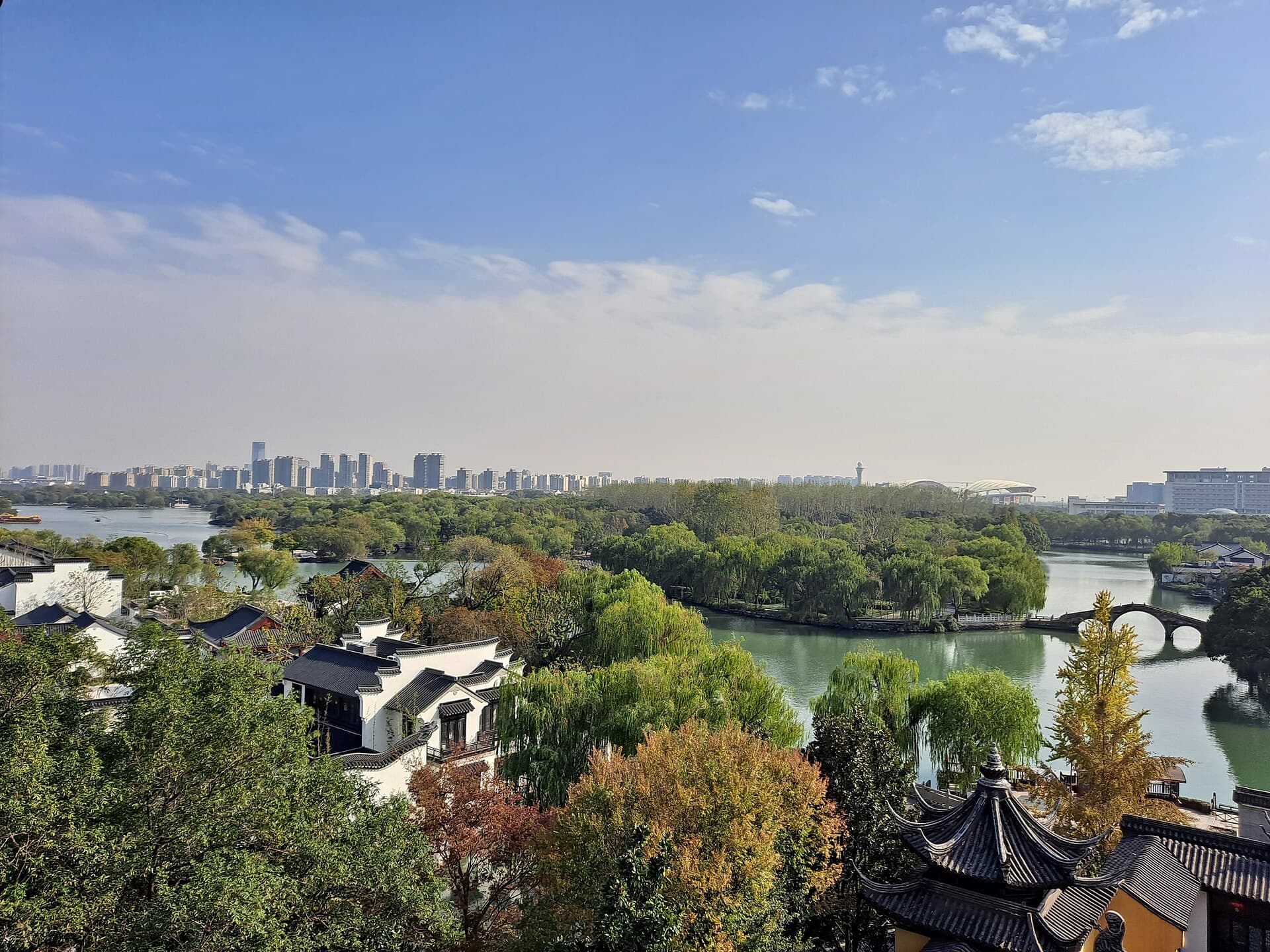 钉钉 / CC BY-SA 4.0, via Wikimedia Commons
Self-guided audio walking tour of Jiaxing — GPS route, offline playback, story-driven narration in 32 languages.
“Where ancient waterways echo with revolution and quietude.”
Not the postcards. The stories even locals don't know — whispered in your ear, right where they happened.
This tranquil lake holds a secret that reshaped a nation's destiny.
Beyond its ancient bridges and covered corridors, this water town has a surprising connection to Hollywood.
Jiaxing's most famous culinary export has its own dedicated museum, but its daily significance goes far beyond a seasonal festival.
Discover every secret of Jiaxing
Every address, every reveal in full — in your ear, right where it happened.
You pick your stops. You walk. The voice reveals what the others miss.


Your self-guided audio tour of Jiaxing is ready — pick your landmarks, choose your language, and start the moment you arrive.
BuyLume has a built-in augmented-reality guide. Hold your phone up and its camera shows the street ahead of you, with a glowing arrow laid over the real view that always points to your next stop — no map to puzzle over, no wrong turns. Like everything in Lume, it works fully offline.
Jiaxing, a city in northern Zhejiang province, presents an engaging destination where ancient history and scenic water towns converge. Situated at the core of the Yangtze River Delta, it functions as a crucial economic and transportation nexus, readily accessible from major cities like Shanghai and Hangzhou. Known as the 'Land of Fish and Rice' for millennia, Jiaxing offers a more serene and authentic Chinese experience compared to its bustling neighbors, inviting visitors to immerse themselves in local culture and a gentler pace of life.
The city is particularly recognized for its well-preserved traditional water towns, such as Wuzhen and Xitang, which feature intricate networks of canals, stone bridges, and historic architecture. Beyond these iconic waterways, Jiaxing carries considerable historical weight as the birthplace of the Communist Party of China, a pivotal event commemorated at South Lake. Whether exploring sites of revolution, wandering through ancient alleyways, or savoring local delicacies, Jiaxing offers a thoughtful blend of cultural depth and scenic allure.
The history of Jiaxing extends back over two millennia, with the earliest settlements appearing thousands of years ago. The city was formally established as an administrative unit during the Qin Dynasty (221–206 BCE), initially named Youquan county. Its strategic location on a fertile plain interwoven with rivers and canals quickly earned it the moniker 'Land of Fish and Rice,' underscoring its agricultural importance.
In 231 CE, the city's name was changed to Hexing, meaning 'Flourishing Grain,' before being renamed Jiaxing, or 'auspicious and flourishing,' in 242 CE. The construction of the southern section of the Grand Canal in the 7th century CE further solidified Jiaxing's role as a vital transport and trade hub, significantly boosting its economic development. During the Ming Dynasty (1368–1644), Jiaxing became one of China's primary centers for silk production, earning it the unofficial title of the 'House of Silk.'
The 14th to 19th centuries marked a flourishing period for the water towns within modern Jiaxing, such as Wuzhen and Xitang, which developed their distinctive architectural styles with stone bridges and canals. However, Jiaxing also faced adversity, enduring considerable damage during the Taiping Rebellion in the mid-19th century.
A defining moment in Jiaxing's modern history occurred in July 1921, when the First National Congress of the Communist Party of China concluded its meeting on a boat on South Lake, making the city a landmark in the country's revolutionary narrative. This event imbued Jiaxing with a special political and cultural status, which is celebrated today by memorial complexes and draws numerous visitors.
Jiaxing presents a variety of attractions, from historical sites to scenic water towns. The South Lake Scenic Area (Nanhu) is a compelling stop, known for its tranquil waters, traditional Chinese architecture, and its profound historical significance as the birthplace of the Communist Party of China. Here, you can observe the iconic Red Boat, a replica of the vessel where the CPC's First National Congress concluded. The Nanhu Revolutionary Memorial Hall offers a detailed account of the party's history through artifacts and multimedia displays.
Beyond the city center, Jiaxing is celebrated for its ancient water towns. Wuzhen Water Town and Xitang Water Town are particularly well-known, featuring well-preserved traditional houses, stone bridges, and a dense network of narrow waterways. Visitors can embark on boat rides, explore ancient lanes, and experience a glimpse of traditional life in the lower Yangtze Delta. Xitang is especially recognized for its long covered corridors and many alleyways. Other notable attractions include the Yuehe Historic District, known for its traditional architecture and canals, and the Jiaxing Museum, which offers insights into the city's cultural evolution.
The most pleasant times to visit Jiaxing are during spring (March to May) and autumn (September to November). During these seasons, the weather is mild and comfortable, making it ideal for exploring the city's historical sites and water towns. Summers (June to August) are hot, humid, and rainy, with average temperatures often rising above 25°C. Winters (December to February) are cold and generally drier, with average temperatures around 5-7°C.
Jiaxing is well-connected by public transportation. The most efficient way to reach the city is by high-speed train, with Jiaxing South Railway Station serving as a major stop on lines connecting to Shanghai, Hangzhou, and Suzhou. Jiaxing Railway Station handles non-high-speed services. While Jiaxing does not have its own civil airport, it is conveniently located near major aviation hubs like Hangzhou Xiaoshan International Airport, from which you can reach Jiaxing by ground transport. Buses are also available, connecting Jiaxing with surrounding cities. Once in the city, public buses, taxis, and trams are available for getting around. Renting a bicycle is also a popular way to explore the city. Tipping is generally not customary in China.
Jiaxing in Korean, in Chinese or in Hebrew — and 29 more languages, every stop narrated by a native voice. The widest language range of any self-guided audio tour.
Available in: