Kochi Castle
This castle conceals a unique defense mechanism, unlike any other.
Full story unlocks in the tour
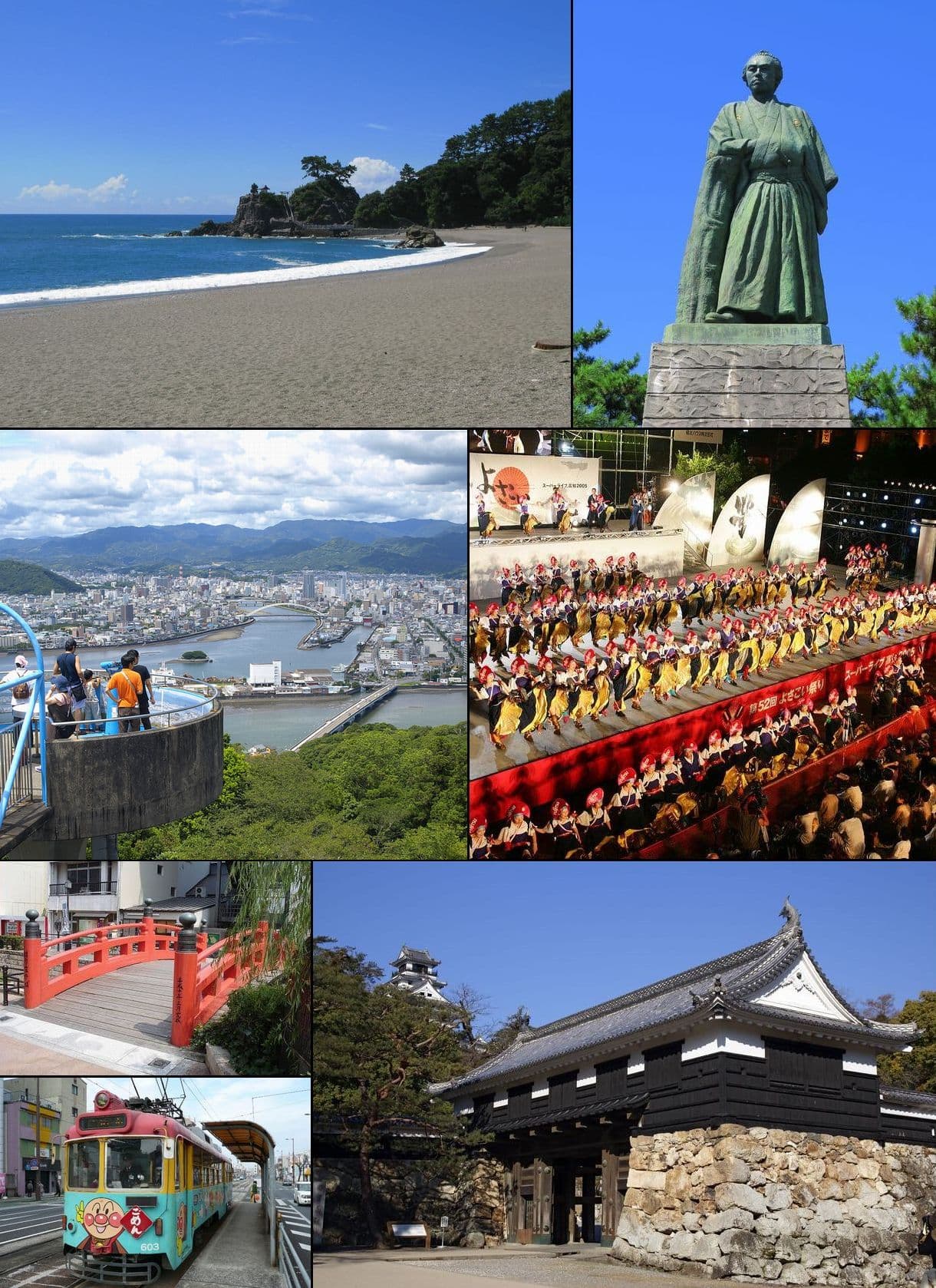 File:Kochi Katsurahama Daytime 1.JPG by ja:利用者:京浜にけ (Japanese Wikipedia), Uploaded by User:Fjkelfeimvvn File:Kochi Katsurahama Sakamoto Ryoma Statue 2.JPG by ja:利用者:京浜にけ (Japanese Wikipedia), Uploaded by User:Fjkelfeimvvn File:Yosakoi Performers at Kochi Yosakoi Matsuri 2005 74.jpg by やまもも工房, Uploaded by User:Corpse Reviver File:Harimayabashi.JPG by en:User:Nobunaga24 (English Wikipedia), Uploaded by User:Liftarn File:Anpanmantram1.jpg by User:Randwick File:Kochi Castle02s3872.jpg by User:663highland Composition by User:Fjkelfeimvvn / CC BY-SA 3.0, via Wikimedia Commons
Self-guided audio walking tour of Kōchi — GPS route, offline playback, story-driven narration in 32 languages.
“Where ancient legends intertwine with the pulse of modern life.”
Not the postcards. The stories even locals don't know — whispered in your ear, right where they happened.
This castle conceals a unique defense mechanism, unlike any other.
Many Japanese castles lost their original residential quarters to fire or the passage of time. Kochi's story is different.
This small, crimson bridge carries a tale of forbidden affection, a story echoed in local melodies.
Discover every secret of Kōchi
Every address, every reveal in full — in your ear, right where it happened.
You pick your stops. You walk. The voice reveals what the others miss.

Your self-guided audio tour of Kōchi is ready — pick your landmarks, choose your language, and start the moment you arrive.
BuyKōchi City, the capital of Kōchi Prefecture on Japan's smallest main island of Shikoku, offers a compelling fusion of history, lively culture, and natural splendor. With mountains to its north and the vast Pacific Ocean to its south, the city enjoys a mild climate and abundant sunshine, fostering a fertile agricultural landscape. It is a place where ancient samurai narratives interweave with energetic modern festivals, and traditional markets flourish alongside contemporary daily life.
Often overlooked by first-time visitors to Japan, Kōchi provides an authentic and deeply rewarding experience. From its remarkably preserved castle to its animated street markets and scenic coastal vistas, the city invites exploration beyond the familiar tourist paths. It is a destination that cherishes its unique identity, from its distinctive cuisine to the enduring legacy of its most renowned son, Sakamoto Ryoma.
## From Feudal Stronghold to Modern Hub Kōchi's story begins as a castle town, thoughtfully developed around Kōchi Castle, the seat of the daimyō of the Tosa Domain. The location was selected in 1601 by Yamauchi Kazutoyo, the first lord of the Tosa Domain, following the Battle of Sekigahara. The castle, completed in 1611, was constructed to oversee the growing city and served as the administrative heart of the province for over two centuries. While much of the original castle was consumed by a major fire in 1727, it was painstakingly rebuilt by 1749, ensuring its historical integrity.
During the Edo period, Kōchi thrived as a center of commerce and culture. The city's celebrated Sunday Market, for instance, has been a continuous institution since 1690, connecting local producers with townspeople for over 300 years. The late Edo period witnessed the emergence of Sakamoto Ryoma, a low-ranking samurai born in Kōchi in 1836, who would become one of Japan's most influential figures. Ryoma played a crucial role in the Meiji Restoration, advocating for the peaceful overthrow of the Tokugawa shogunate and the return of political power to the Emperor, thereby ushering in modern Japan. His vision and diplomatic efforts, including brokering the Satsuma-Choshu Alliance, left an enduring mark on Japanese history.
Kōchi officially became a city on April 1, 1889, and continued to evolve with the introduction of trams in 1904 and connection to the national rail network in 1951. However, the city faced adversity during World War II, when an air raid on July 3, 1945, devastated nearly half of its developed areas. Despite this, Kōchi has consistently rebuilt and adapted, becoming the first "core city" on Shikoku in 1998. Today, Kōchi remains a dynamic regional center, blending its profound historical legacy with a forward-looking spirit, evident in its lively festivals like Yosakoi and its reputation for delicious local cuisine.
Begin your exploration at Kōchi Castle, one of only 12 original castles in Japan with its keep still intact, and uniquely, the only one to retain both its original keep and Honmaru Palace. Ascend to the top for sweeping city views. A short walk away, the Kochi Castle Museum of History offers deeper insights into the Tosa Domain and the Yamauchi clan.
Immerse yourself in local life at the Sunday Market (Nichiyo-ichi), a 300-year-old open-air market extending for over a kilometer along Otesuji Street, presenting everything from fresh produce and street food to local crafts. For a taste of Kochi's culinary delights, proceed to Hirome Market, a bustling indoor food court where you can savor local specialties like katsuo no tataki (seared bonito).
No visit to Kōchi is complete without a journey to Katsurahama Beach, an elegant crescent-shaped beach celebrated for its dramatic views of the Pacific Ocean and the iconic statue of Sakamoto Ryoma. While swimming is forbidden due to powerful currents, you can explore the Sakamoto Ryoma Memorial Museum and the Katsurahama Aquarium nearby. In the city center, seek out the small, vermilion Harimayabashi Bridge, famed for its romantic legend, and listen for the hourly chimes of the automaton clock across the street, playing the 'Yosakoi-bushi' folk song.
For a spiritual detour, visit Chikurin-ji Temple on Mt. Godaisan, the 31st temple on the Shikoku Pilgrimage, featuring a beautiful five-tiered pagoda and serene gardens. And for those who appreciate nature, venture to the Niyodo River to observe its mesmerizing 'Niyodo Blue' waters, or explore the Shimanto River, Shikoku's longest, known for its untouched environment and distinctive submersible bridges.
Kōchi experiences a humid subtropical climate with four distinct seasons. The most favorable time to visit for warm-weather activities is from early September to mid-October, when temperatures are comfortable and humidity lessens. Spring (March to May) offers mild, pleasant weather, with cherry blossoms unfolding around Kochi Castle. Autumn (September to November) is also ideal, with agreeable temperatures and lively fall foliage in areas like Nakatsu Valley. Summers (June to August) are hot and humid, with the highest rainfall, but this is when the energetic Yosakoi Festival takes place. Winters (December to February) are mild and the driest period, providing a quieter sightseeing experience.
Kōchi City is well-served by public transportation. From JR Kōchi Station, you can reach many key attractions via tram or bus. The Harimayabashi tram stop is a central hub, offering simple access to Hirome Market and Kōchi Castle. Buses are recommended for reaching Katsurahama Beach, with services available from JR Kōchi Station or Harimayabashi. Consider purchasing a one-day pass if you anticipate extensive travel on public transport. For those venturing further afield to natural sites like the Niyodo or Shimanto Rivers, renting a car might provide greater flexibility. English signage is generally present at major tourist sites, and tourist information centers can offer maps and assistance. Be prepared for humid conditions and potential rain during the summer months, and always wear comfortable walking shoes for exploring the city and its natural surroundings.
Kōchi in Korean, in Chinese or in Hebrew — and 29 more languages, every stop narrated by a native voice. The widest language range of any self-guided audio tour.
Available in: