Museo de la República del Río Grande
Laredo fue una vez la capital de su propia nación independiente, una república que duró menos de un año.
La historia completa se desbloquea en el tour
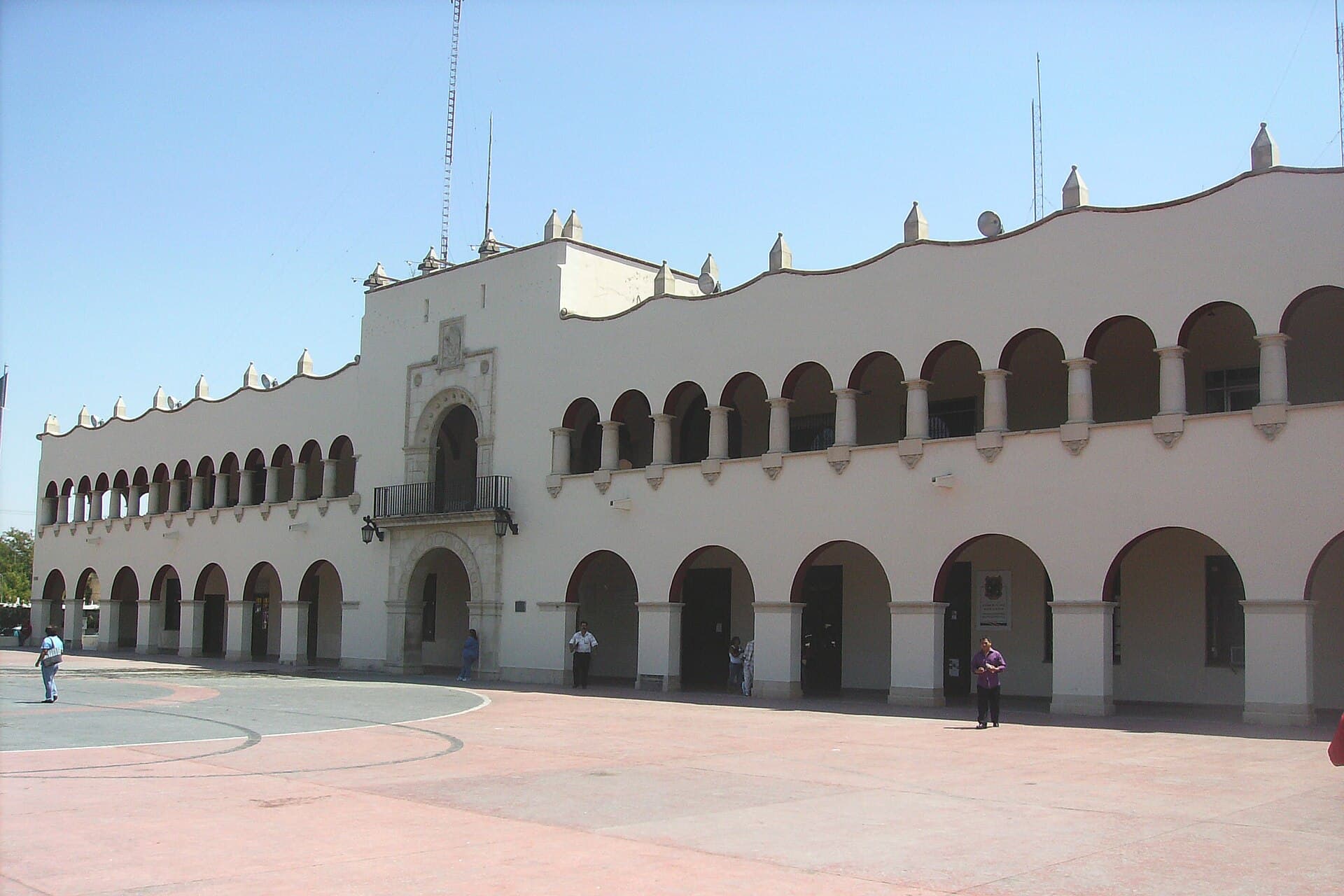 AMAPO / CC BY 3.0, via Wikimedia Commons
Tour de audio autoguiado de Laredo — ruta GPS a pie, reproducción offline, narración en 32 idiomas.
“Donde siete banderas han ondeado, Laredo prospera como un crisol de culturas y comercio.”
No las postales. Las historias que ni los locales conocen — al oído, justo donde ocurrieron.
Laredo fue una vez la capital de su propia nación independiente, una república que duró menos de un año.
Bajo la histórica Plaza de San Agustín, algunos dicen que los primeros colonos aún permanecen.
El elegante Hotel La Posada podría tener un huésped permanente que nunca hizo el check-out.
Descubre todos los secretos de Laredo
Cada dirección, cada revelación al completo — a tu oído, justo donde ocurrió.
Eliges tus paradas. Caminas. La voz te revela lo que los demás ignoran.
Tu tour de audioguía por Laredo te espera — elige tus lugares, tu idioma y empieza al llegar.
ComprarLaredo, Texas, es una ciudad donde las corrientes de la historia y la cultura convergen, creando una experiencia fronteriza verdaderamente única. Situada en la orilla norte del Río Grande, directamente frente a Nuevo Laredo, México, esta dinámica ciudad sirve como el puerto interior más grande de los Estados Unidos, un testimonio de su papel duradero como puerta de entrada entre dos naciones. Con una población de más de 255,000 habitantes, Laredo es la undécima ciudad más poblada de Texas, poseyendo una herencia predominantemente hispana que moldea profundamente su identidad.
Fundada en 1755, la historia de Laredo es de resiliencia y adaptación, habiendo sido gobernada bajo siete banderas diferentes a lo largo de su existencia, una característica distintiva que la diferencia. Desde sus orígenes coloniales españoles hasta su breve período como capital de una república independiente, el pasado de Laredo está grabado en su centro histórico, donde la arquitectura colonial española se mezcla con murales y una vibrante escena artística. Esta esencia bicultural no es simplemente una nota histórica, sino un aspecto vivo y palpitante de la vida diaria, evidente en sus festivales, gastronomía y la perfecta mezcla de español e inglés que se habla en sus calles.
## De Puesto Avanzado Español a Capital de la República Los orígenes de Laredo se remontan al 15 de mayo de 1755, cuando el Capitán Tomás Sánchez, con permiso del Coronel español José de Escandón, estableció la Villa de San Agustín de Laredo. Llevando el nombre de un pueblo en Cantabria, España, fue un asentamiento estratégico cerca de un vado indígena en el Río Grande, destinado como puesto avanzado en la provincia española de Nuevo Santander. A diferencia de otros asentamientos tempranos de Texas, Laredo fue fundado sin misiones ni presidios, lo que lo convierte en el asentamiento colonial español independiente más antiguo en la orilla norte del Río Grande. La ganadería se convirtió rápidamente en el sustento de la comunidad, y para el siglo XVIII, Laredo era un importante puesto fronterizo en el bajo Camino Real, el Camino del Rey, siendo testigo de las primeras conducciones de ganado de Texas.
La independencia de México de España en 1821 puso a Laredo bajo el dominio mexicano, y por un tiempo, su importancia como puerta de entrada se hizo evidente durante la Revolución de Texas. Un capítulo verdaderamente único se desarrolló en 1840 cuando Laredo se convirtió en la capital de la República del Río Grande, un estado insurgente de corta duración formado en oposición a Antonio López de Santa Anna. Esta república independiente, con el objetivo de una unión con Texas, duró menos de un año antes de ser reabsorbida por México.
## Una Ciudad Dividida y Renacida La anexión de Texas por los Estados Unidos en 1845 condujo a la Guerra México-Americana, y con el Tratado de Guadalupe Hidalgo en 1848, el Río Grande fue declarado la frontera internacional. Laredo se convirtió oficialmente en parte de los Estados Unidos. Esta división impulsó a muchos residentes de Laredo, leales a México, a cruzar el río y fundar Nuevo Laredo. Sin embargo, muchos de los concesionarios de tierras originales permanecieron, convirtiéndose en tejanos y solidificando la identidad binacional única de Laredo. En 1849, el Ejército de los EE. UU. estableció Fort McIntosh cerca, y Laredo fue recharteado como ciudad en 1852. La llegada de los ferrocarriles a finales del siglo XIX, conectando Laredo con Corpus Christi y más tarde con la Ciudad de México a través de Nuevo Laredo, solidificó su papel como un centro comercial vital y la "puerta de entrada a México". Esta ubicación estratégica continúa impulsando la economía de Laredo, convirtiéndola en el puerto interior más grande en la frontera entre EE. UU. y México hoy en día.
La mezcla de culturas e historia de Laredo ofrece una variedad de atracciones. Comience su exploración en el Distrito Histórico de San Agustín de Laredo, la sección más antigua de la ciudad, con sus calles de ladrillo y arquitectura colonial española. Aquí encontrará la Catedral de San Agustín, una estructura de estilo neogótico construida en 1872, que ancla la plaza central. Cerca, el Museo de la República del Río Grande, ubicado en una casa colonial mexicana de la década de 1830 meticulosamente restaurada, ofrece información sobre el breve período de Laredo como nación independiente. No se pierda Casa Ortiz, otra casa histórica que ofrece hermosos jardines y vistas del Río Grande.
Para compras únicas, explore la Avenida San Bernardo y la Plaza San Agustín en busca de tiendas de importación mexicanas que ofrecen productos artesanales como ropa bordada y cerámica. Los entusiastas del arte pueden visitar el Laredo Center for the Arts o la Helen Richter Watson Art Gallery en el campus de Texas A&M International University. La recreación al aire libre espera en el Lake Casa Blanca International State Park, donde puede pescar, nadar, hacer kayak o explorar senderos para caminar y andar en bicicleta. Para los amantes de las estrellas, el Planetario Lamar Bruni Vergara en el campus de Texas A&M International University ofrece películas educativas y eventos de observación de estrellas.
Las épocas más cómodas para visitar Laredo para actividades turísticas generales al aire libre son de mediados de marzo a mediados de mayo y de principios de octubre a mediados de noviembre, con un pico en la última semana de octubre. Durante estos períodos, el clima es agradable, con temperaturas percibidas generalmente entre 18°C y 27°C, y menos lluvia. Para actividades de clima cálido como visitar la playa o la piscina, de finales de abril a mediados de julio y de mediados de septiembre a principios de octubre son ideales. Los inviernos, de diciembre a febrero, son generalmente templados, aunque las temperaturas a veces pueden bajar, particularmente en diciembre y enero. Los veranos suelen ser calurosos y pueden ser húmedos, con máximas diarias promedio alrededor de 38°C en agosto.
Laredo es fácilmente accesible por aire, con el Aeropuerto Internacional de Laredo (LRD) que ofrece servicios diarios a los principales centros como Dallas-Fort Worth y Houston, y vuelos semanales a Las Vegas y Los Ángeles. Para el transporte terrestre, El Metro Transit opera 23 rutas de autobús en toda la ciudad, con un centro de tránsito en el centro. Varias compañías de autobuses, incluyendo Greyhound, Americanos USA, Omnibus y Tornado Bus Company, también sirven a Laredo. Los servicios de alquiler de coches están disponibles en las principales compañías como Avis, Budget, Enterprise y National. Si conduce, Laredo se encuentra en el extremo sur de la I-35, una carretera principal que conecta las fábricas del norte de México con las rutas comerciales en todo EE. UU. Laredo tiene cuatro puentes internacionales y un puente ferroviario para cruzar a Nuevo Laredo, México; recuerde tener la documentación necesaria como pasaporte y consultar las advertencias de viaje actuales.
Laredo en coreano, en chino o en hebreo — y 29 idiomas más, cada parada narrada por una voz nativa. La mayor variedad de idiomas de cualquier audioguía autoguiada.
Disponible en: