Pont Zhengyang
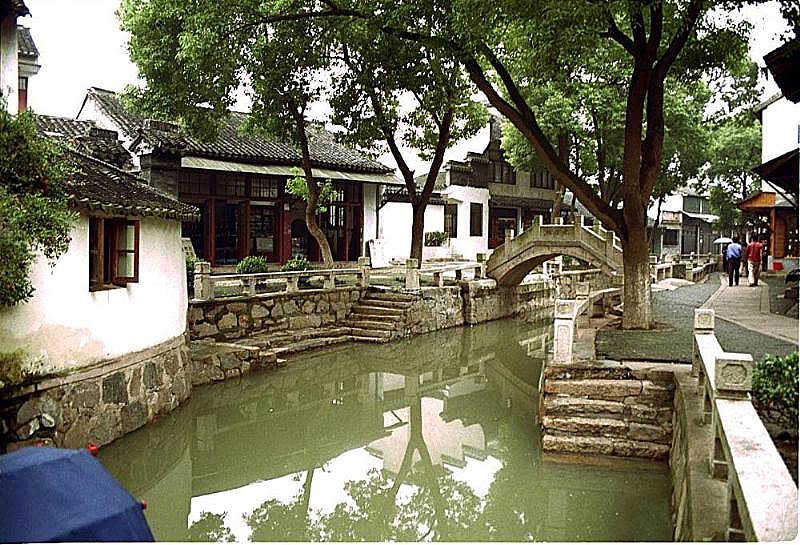
Ce pont en arc de pierre revendique une distinction particulière chaque matin.
L'histoire complète se débloque dans le tour
 Gisling / CC BY 2.5, via Wikimedia Commons
Visite audio autoguidée de Luzhi — parcours GPS à pied, lecture hors ligne, narration en 32 langues.
“Là où les ponts anciens dialoguent avec les eaux vives.”
Pas les cartes postales. Les histoires que même les habitants ignorent — soufflées à l'oreille, là où elles se sont passées.
Ce pont en arc de pierre revendique une distinction particulière chaque matin.
Dans les murs durables du temple, neuf figures défient le passage des siècles.
Le nom même de la ville fait allusion à une caractéristique géographique particulière.
Découvrez tous les secrets de Luzhi
Chaque adresse, chaque révélation en entier — dans ton oreille, là où elle s'est passée.
Tu choisis tes lieux. Tu marches. La voix te révèle ce que les autres ignorent.


Votre visite audioguidée de Luzhi vous attend — choisissez vos lieux, votre langue, et lancez-vous dès votre arrivée.
AcheterLume intègre un guide en réalité augmentée. Levez votre téléphone : sa caméra montre la rue devant vous, avec une flèche lumineuse posée sur l'image réelle qui pointe toujours vers votre prochain arrêt — aucune carte à déchiffrer, aucun mauvais virage. Comme tout dans Lume, ça fonctionne entièrement hors-ligne.
Luzhi, une ancienne ville lacustre de la province du Jiangsu, offre une évasion sereine dans un passé bien préservé. Son histoire s'étend sur plus de 2 500 ans, précédant de nombreuses villes plus célèbres de la région. Située à environ 18 kilomètres (11 miles) à l'est de Suzhou, Luzhi est définie par son réseau complexe de canaux, ses habitations traditionnelles et une impressionnante collection d'anciens ponts de pierre.
Souvent appelée le « Musée des anciens ponts chinois », Luzhi comptait autrefois 72 ponts, dont 41 sont encore debout et remarquablement intacts. Ces ponts, datant des dynasties Song, Yuan, Ming et Qing, présentent une variété de styles et de conceptions, formant des scènes pittoresques sur les voies navigables de la ville. Contrairement à certaines villes lacustres plus commercialisées, Luzhi conserve un fort sentiment de vie locale authentique, où les habitants continuent leurs routines quotidiennes le long des canaux. Cette authenticité a été reconnue par un prix de préservation des cantons de l'UNESCO en 2004.
Une promenade à travers Luzhi est un voyage dans une époque révolue, où le doux clapotis de l'eau contre la pierre et le rythme tranquille de la vie locale offrent une expérience apaisante. L'architecture de la ville, avec ses murs blanchis à la chaux et ses toits de tuiles noires, reflète le style classique de Jiangnan, créant un paysage qui évoque une aquarelle chinoise traditionnelle.
Les origines de Luzhi s'étendent sur plus de deux millénaires et demi, ce qui en fait l'une des plus anciennes villes lacustres de Chine, comparable en âge à Suzhou elle-même. Initialement identifiée comme Puli, le nom de la ville a évolué de « Liuzhi », qui faisait référence à ses six rivières droites. Dans le dialecte local de Suzhou, « liu » sonnait comme « lu », ce qui a finalement conduit au nom de Luzhi.
Tout au long de sa longue existence, Luzhi a été sous la juridiction de divers comtés, y compris Changzhou, Yuanhe et Wu County. Son emplacement stratégique et ses vastes voies navigables ont contribué à sa croissance en tant que centre commercial important de l'est de Suzhou après le XVe siècle. Le développement de la ville a vu la construction de nombreux ponts, dont certains remontent à la dynastie Song (960-1279 après J.-C.). À son apogée, il y avait 72 ponts, ce qui a valu à Luzhi la désignation de « Musée des anciens ponts chinois ».
Luzhi a également servi de centre de culture et de religion. Le temple Baosheng, établi en 503 après J.-C. sous la dynastie des Liang du Sud, témoigne de l'ancien héritage bouddhiste de la ville. Il abritait autrefois des milliers de moines et présentait d'impressionnantes sculptures de la dynastie Tang. La ville est également liée à des figures notables comme le poète ermite de la dynastie Tang Lu Guimeng, dont la tombe et les ginkgos plantés à la main se trouvent ici, et l'éducateur et écrivain Ye Shengtao, qui a enseigné à Luzhi au début du XXe siècle. En reconnaissance de son patrimoine préservé, Luzhi a été classée comme l'un des « Dix cantons historiques chinois célèbres » en 2003 et a reçu un prix de préservation des cantons de l'UNESCO en 2004.
Luzhi présente un éventail de sites qui révèlent sa profondeur historique et culturelle. La caractéristique la plus distinctive de la ville est sa collection de ponts anciens ; 41 des 72 ponts originaux subsistent, chacun possédant son propre caractère. Le pont Zhengyang, un grand pont en arc de pierre de la dynastie Ming, est remarquable pour être le premier à accueillir le soleil matinal et offre des vues étendues sur la ville. Le pont Dongmei, avec son design circulaire distinctif et ses gravures bouddhistes, est un autre point fort architectural.
Le temple Baosheng, datant de 503 après J.-C., est une attraction centrale, abritant neuf statues d'arhats en argile rares et bien conservées de la dynastie Tang. Les visiteurs peuvent également explorer le Mémorial Ye Shengtao, situé sur l'ancien site de l'école où l'estimé écrivain et éducateur a enseigné. Le manoir Xiao, une résidence bien conservée de la dynastie Qing, offre un aperçu du mode de vie d'une famille prospère du XIXe siècle, avec son architecture traditionnelle et sa ruelle privée. Pour un sens du commerce historique, la rizerie Wansheng, construite en 1910, expose des outils agricoles anciens et fonctionnait autrefois comme un important centre de distribution de riz. Une excursion en bateau le long des canaux offre une perspective différente de l'attrait de la ville, avec des bateaux en bois à rames pouvant accueillir jusqu'à six personnes.
Luzhi est une destination qui peut être appréciée tout au long de l'année. Cependant, le printemps et l'automne offrent généralement le temps le plus agréable pour l'exploration. Pour ceux qui recherchent des scènes automnales évocatrices, la fin de l'automne, en particulier de mi-novembre à début décembre, est idéale pour observer les ginkgos dorés. Bien que Luzhi soit généralement moins fréquentée que d'autres villes lacustres comme Zhouzhuang ou Tongli, elle peut connaître davantage de visiteurs les week-ends et les jours fériés. Il est conseillé d'arriver avant 9h du matin les jours fériés pour éviter les foules de pointe.
Luzhi est facilement accessible depuis les grandes villes voisines. De Suzhou, vous pouvez prendre diverses lignes de bus (par exemple, 52, 518, 521, 523, 525, 527, 528, 563) ou un taxi/DiDi, avec des temps de trajet allant de 30 minutes à une heure. De Shanghai, prenez un train à grande vitesse jusqu'à la gare de Suzhou, puis transférez-vous vers un bus local ou un taxi. L'accès aux rues de la vieille ville est gratuit, mais un billet combiné (environ 45-78 RMB) est requis pour accéder à des attractions spécifiques comme le temple Baosheng et les résidences historiques. Les heures d'ouverture de ces sites sont généralement de 8h00 à 17h00 d'avril à octobre, et de 8h00 à 16h30 de novembre à mars. Bien que certaines attractions aient une signalisation bilingue, il est recommandé d'engager un guide privé anglophone de Suzhou ou Shanghai pour une compréhension approfondie. Pour une expérience vraiment immersive, envisagez un séjour d'une nuit dans un hôtel de charme local.
Luzhi en coréen, en chinois ou en hébreu — et dans 29 autres langues, chaque étape narrée par une voix native. La plus large gamme de langues de tous les audioguides autoguidés.
Disponible en :