Missoula's Early Streetlights
Before the glow of modern grids, Missoula found a distinctive way to brighten its evenings.
Full story unlocks in the tour
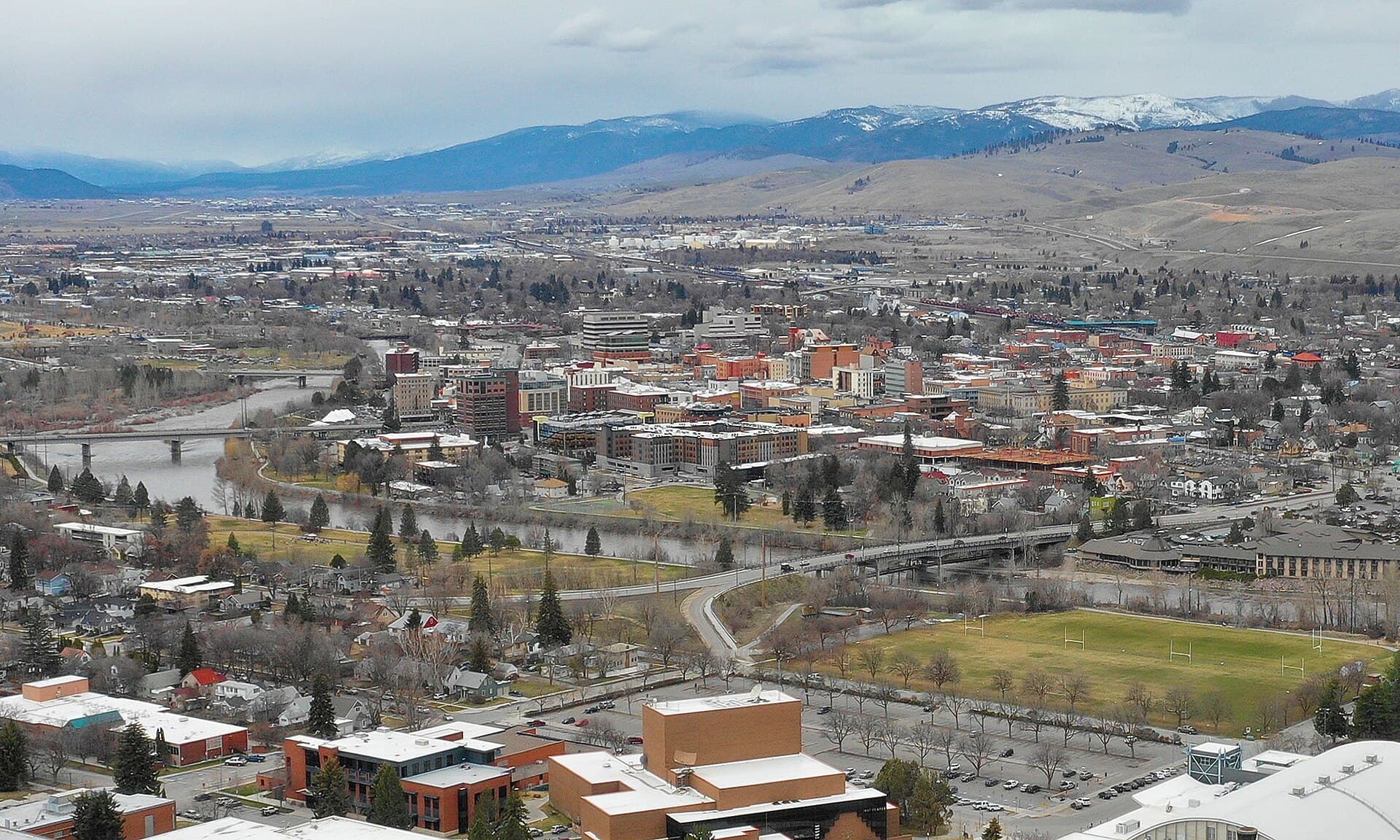 Quintin Soloviev / CC BY 4.0, via Wikimedia Commons
Self-guided audio walking tour of Missoula — GPS route, offline playback, story-driven narration in 32 languages.
“Where mountain grandeur meets urban pulse, Missoula invites you to explore its spirited core and expansive wildlands.”
Not the postcards. The stories even locals don't know — whispered in your ear, right where they happened.
Before the glow of modern grids, Missoula found a distinctive way to brighten its evenings.
The University of Montana once embraced a living, breathing mascot that became a local fixture.
A cherished local spot, now known for its morning meals, once maintained a more exclusive atmosphere.
Discover every secret of Missoula
Every address, every reveal in full — in your ear, right where it happened.
You pick your stops. You walk. The voice reveals what the others miss.


Your self-guided audio tour of Missoula is ready — pick your landmarks, choose your language, and start the moment you arrive.
BuyLume has a built-in augmented-reality guide. Hold your phone up and its camera shows the street ahead of you, with a glowing arrow laid over the real view that always points to your next stop — no map to puzzle over, no wrong turns. Like everything in Lume, it works fully offline.
Missoula, Montana, is a city where the dramatic contours of the Northern Rockies converge with a lively urban core. Situated along the Clark Fork River and at the meeting point of five mountain ranges, it is often called the "hub of five valleys." This city, Montana's second most populous, offers a distinct blend of outdoor adventure and cultural sophistication.
From the moment you arrive, Missoula presents a dynamic atmosphere. The city's downtown area is a walkable district filled with historical architecture, local shops, diverse dining, and a palpable artistic energy. Beyond the city limits, Missoula serves as a gateway to expansive wild areas, providing immediate access to hiking, fishing, and opportunities to explore the natural splendor that defines Montana.
## From Glacial Lake to Trading Post Missoula's story stretches back approximately 12,000 years, to the close of a glacial lake period when the valley lay submerged under 2,000 feet of water, known as Glacial Lake Missoula. Evidence of this ancient past, such as large boulders and ancient shorelines, can still be observed in the surrounding landscape. The area was historically inhabited by various Indigenous tribes, including the Salish, Kootenai, Pend d'Oreille, Blackfeet, and Shoshone. The Salish people called the area "Nemissoolatakoo," which translates to "river of ambush" or "place of frozen water," the origin of the city's name.
European exploration of the Missoula Valley began with the Lewis and Clark Expedition in 1805. However, permanent white settlement didn't commence until 1860, with the establishment of the Hellgate Trading Post by Christopher P. Higgins and Francis L. Worden. This trading post, initially located near modern Frenchtown, moved five miles upstream by 1866 and was renamed "Missoula Mills," a nod to the sawmills and flour mills that supported settlers traversing the Mullan Road. The Mullan Road, constructed in the 1860s, was the first wagon road to cross the Rocky Mountains, connecting the Missouri River to the Pacific.
## Growth and Development The establishment of Fort Missoula in 1877 provided protection for settlers and further stabilized the local economy. The arrival of the Northern Pacific Railway in 1883 spurred rapid expansion, transforming Missoula from a town of 300 to a city of 12,000 by 1920. The railway's demand for lumber fueled the burgeoning timber industry, which remained a cornerstone of Missoula's economy for a century. In 1893, Missoula was selected as the site for Montana's first university, the University of Montana, which opened in 1895. The U.S. Forest Service also established its regional headquarters in Missoula in 1908, later training smokejumpers there starting in 1942.
Throughout the 20th century, Missoula continued to evolve, becoming a center for trade, education, and government. Its strategic location at the convergence of river systems and mountain valleys has always played a crucial role in its development, making it a focal point for both commerce and outdoor recreation.
Missoula offers a diverse array of attractions, blending outdoor pursuits with cultural experiences. Begin with a walk along the Clark Fork Riverfront Trail, a paved pathway that winds through downtown and connects various parks and attractions. From the Higgins Bridge, you can often observe surfers and kayakers riding Brennan's Wave, a constructed wave in the middle of the river.
In Caras Park, situated along the river, you will discover the Carousel for Missoula, a hand-carved carousel crafted by volunteers, and the imaginative Dragon Hollow playground. Downtown Missoula itself is a lively area with an assortment of shops, galleries, and restaurants. The Missoula Art Museum displays contemporary art with an emphasis on regional and Native American artists, offering complimentary admission.
For expansive views of the Missoula Valley, ascend the "M" Trail on Mount Sentinel, a zigzagging path that commences from the University of Montana campus. Other outdoor opportunities include exploring the extensive trail networks of the Blue Mountain Recreation Area for hiking and mountain biking, or visiting the Rattlesnake Wilderness. Those interested in history can visit the Historical Museum at Fort Missoula to learn about Missoula County and Western Montana's past.
The ideal period to experience Missoula's blend of outdoor activities and urban appeal is from early July to mid-August, when the weather is perfect for warm-weather pursuits. During these summer months, anticipate average high temperatures around 85°F. However, Missoula remains a year-round destination, with spring and early autumn offering pleasant weather and fewer crowds, making them excellent shoulder seasons. Fall brings brilliant foliage and a spirited atmosphere as the university term commences. Even winter holds its allure, with opportunities for skiing and a quieter, often more affordable, experience.
Missoula is a highly walkable city, particularly in the downtown area, with many attractions accessible on foot. For those looking to explore further, the city is known for being bicycle-friendly, with over 20 miles of bike lanes. If you are planning to explore the surrounding natural areas or nearby national parks like Glacier or Yellowstone, renting a car is advisable. Missoula is approximately a 2-hour and 40-minute drive from West Glacier and about a 4-hour drive from West Yellowstone.
When packing, layers are essential, as Missoula's weather can be changeable, with cooler mornings and evenings. While Missoula is generally drier than other parts of Montana due to its valley location, May and June can be wet, so a rain jacket is recommended during those months. Montana does not have a sales tax, which can be a pleasant surprise for shoppers.
Missoula in Korean, in Chinese or in Hebrew — and 29 more languages, every stop narrated by a native voice. The widest language range of any self-guided audio tour.
Available in: