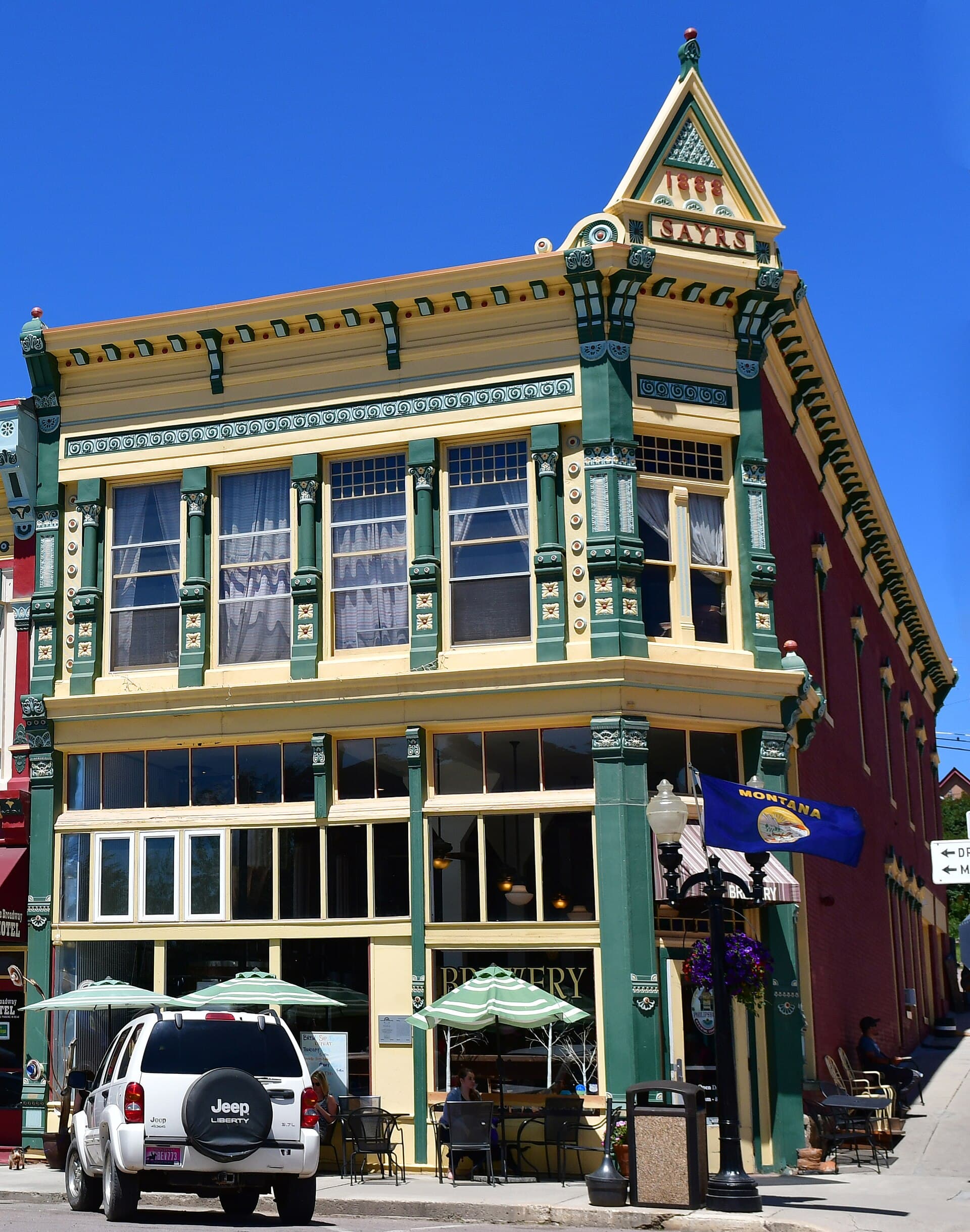
Philipsburg's main street appears like a postcard today, but it wasn't always so lively. What intervention rescued it from becoming another deserted settlement?
Martina Nolte / CC BY-SA 3.0 de, via Wikimedia CommonsPhilipsburg
Self-guided audio walking tour of Philipsburg — GPS route, offline playback, story-driven narration in 32 languages.
“Where silver veins meet sapphire dreams, and history wears a fresh coat of paint.”
Philipsburg, as no one tells it.
Not the postcards. The stories even locals don't know — whispered in your ear, right where they happened.
Just a few miles from Philipsburg stands a ghost town that once contained one of the world's most productive silver strikes. What was its immense output?
The mountains surrounding Philipsburg hold a sparkling secret, a gemstone that once traveled across oceans for a specific purpose. What was it?
Discover every secret of Philipsburg
Every address, every reveal in full — in your ear, right where it happened.
You pick your stops. You walk. The voice reveals what the others miss.
How long do you have in Philipsburg?
Your self-guided audio tour of Philipsburg is ready — pick your landmarks, choose your language, and start the moment you arrive.
BuyThe story of Philipsburg
In the Flint Creek Valley of western Montana, Philipsburg is a captivating town that beautifully marries its rugged mining past with a lively present. At an elevation of 5,240 feet, it is encircled by the Pintler Mountains and the Beaverhead-Deerlodge National Forest, offering a scenic backdrop for exploration. Once a busy silver and sapphire mining center, Philipsburg has gracefully transitioned into a welcoming destination, earning a reputation as one of Montana's best-preserved late-nineteenth-century mining towns.
Walk along Broadway Street, the heart of Philipsburg, and you will encounter a kaleidoscope of colorful Victorian 'Painted Lady' architecture, housing an array of unique shops, eateries, and attractions. From highlight stores where you can try your hand at sapphire mining to an old-fashioned candy emporium and a craft brewery, Philipsburg offers a delightful blend of history and hospitality. It is a place where the echoes of a boomtown era resonate through meticulously maintained buildings, inviting visitors to step back in time while enjoying modern comforts and abundant outdoor adventures.
From Silver Rush to Sapphire Dreams
Philipsburg's story begins in the mid-1860s with the discovery of abundant mineral deposits in Granite County. Silver was found south of the area in 1864, and by 1866, Philipsburg emerged as a trading post and mining camp. The town was officially registered in 1867 and named after Philip Deidesheimer, a renowned mining engineer who designed and supervised the construction of the Hope Mill, Montana's first silver mill. Philipsburg experienced an initial surge of activity, with reports of a new house being built daily, and its population reaching around 1,500 by December 1867.
However, Philipsburg's fortunes were linked to the unpredictable mining industry. The Hope Mill's closure in 1869 led to a period of decline, with the town being referred to as 'the Deserted Village' and its population plummeting to just 36 people by the end of that summer. A significant resurgence occurred from the mid-1880s to the mid-1890s, fueled by the discovery of a massive silver deposit at the Granite Mountain mine, which produced an astounding $20 million in silver. This era saw Philipsburg's greatest expansion, with wooden false-front buildings on Broadway being replaced by more substantial masonry structures.
The curtailment of silver mining in 1893 could have spelled the end, but the timely discovery of sapphires in Rock Creek that same year helped stabilize the local economy. Philipsburg was also designated the county seat of the newly formed Granite County in 1893. Another period of prosperity arrived during World War I, as Philipsburg became the largest domestic supplier of manganese, a crucial mineral for war production. After the mining booms subsided in the 1980s, Philipsburg transitioned to a tourism-based economy, with a strong focus on preserving its historic district, which was listed on the U.S. National Register of Historic Places in 1986.
Begin your exploration on Broadway Street, Philipsburg's main thoroughfare, recognized for its beautifully preserved Victorian architecture. Here, you can browse unique shops, art galleries, and gift stores. An essential stop is the Sweet Palace, an old-fashioned candy store offering hundreds of varieties of treats, including homemade fudge and taffy. Next door, the Sapphire Gallery provides an opportunity to sift for your own Montana sapphires, with experts on hand to help you identify and even design custom jewelry from your finds.
Delve into the town's past at the Montana Law Enforcement Museum, which houses historical records and an actual jail cell from the defunct Anaconda prison. The Philipsburg Brewing Company, located in a restored 1888 bank building, offers craft beers made with local ingredients. For a deeper dive into mining history, take a short drive to Granite Ghost Town State Park, where you can explore the ruins of what was once a thriving silver mining community. Outdoor enthusiasts will find plenty to do, from fishing and boating at nearby Georgetown Lake to hiking and mountain biking in the Pintler Mountains, or skiing and snowboarding at Discovery Ski Area in winter.
Philipsburg is a year-round destination, each season offering a distinct experience. For warm-weather activities like hiking, fishing, sapphire mining, and exploring ghost towns, early July to mid-August is ideal, with average daily highs around 77°F. Summer also brings events like Flint Creek Valley Days. Fall, from September to November, is often overlooked, offering brilliant mountain scenery, fewer crowds, and excellent fly-fishing opportunities with average September highs of 68°F. Winter, from December to March, transforms Philipsburg into a cozy ski community, perfect for skiing at Discovery Ski Area, ice fishing on Georgetown Lake, or enjoying the annual Yule Night. Spring, from April to May, sees warming temperatures and blooming lilacs, signaling the start of outdoor recreation.
Philipsburg is located in Granite County, Montana, approximately a 75-minute drive from Missoula and about an hour from Butte. While Philipsburg itself is walkable, a car is recommended for exploring the surrounding scenic byways, ghost towns, and outdoor recreation areas. The town sits at an elevation of 5,240 to 5,270 feet, so be mindful of potential altitude changes if you are not accustomed to it. The population is around 841 (2020 census), offering a small-town feel. The economy is largely driven by tourism, agriculture, and educational services. Accommodations include local motels, hotels, and vacation rentals, with options ranging from historic properties to mountain cabins. Be aware that cell service can be intermittent on some of the more remote scenic routes, such as Skalkaho Pass.
- What is Philipsburg known for?
- Philipsburg is recognized for its well-preserved Victorian historic district, its significant silver and sapphire mining past, and its active tourism, including attractions like the Sweet Palace candy store and sapphire mining opportunities.
- Can I really find sapphires in Philipsburg?
- Yes, Philipsburg is in the heart of Montana sapphire country. You can try your hand at sifting for sapphires at local shops like the Sapphire Gallery or Highlight Mountain Mine, which offer bags of gravel guaranteed to contain sapphires.
- What kind of outdoor activities are available near Philipsburg?
- Philipsburg offers a wide range of outdoor activities, including fishing and boating at Georgetown Lake, hiking and mountain biking in the Pintler Mountains, skiing and snowboarding at Discovery Ski Area, and exploring nearby ghost towns.
- Is Philipsburg a good place for families?
- Yes, Philipsburg is considered family-friendly, with activities like sapphire mining, the Sweet Palace, and outdoor recreation suitable for all ages.
- What is the best way to get to Philipsburg?
- Philipsburg is accessible by car, located off Montana Highway 1. The closest major airport is in Missoula, approximately a 75-minute drive away.
- Are there any ghost towns to visit near Philipsburg?
- Yes, Granite Ghost Town State Park, once a thriving silver mining town, is located southeast of Philipsburg and offers preserved historic structures for exploration. There are also 24 other ghost towns scattered throughout Granite County.