Nelson City Hall
Nelson's inaugural mayor, John 'Truth' Houston, was a man whose word carried weight, especially concerning fire safety.
Full story unlocks in the tour
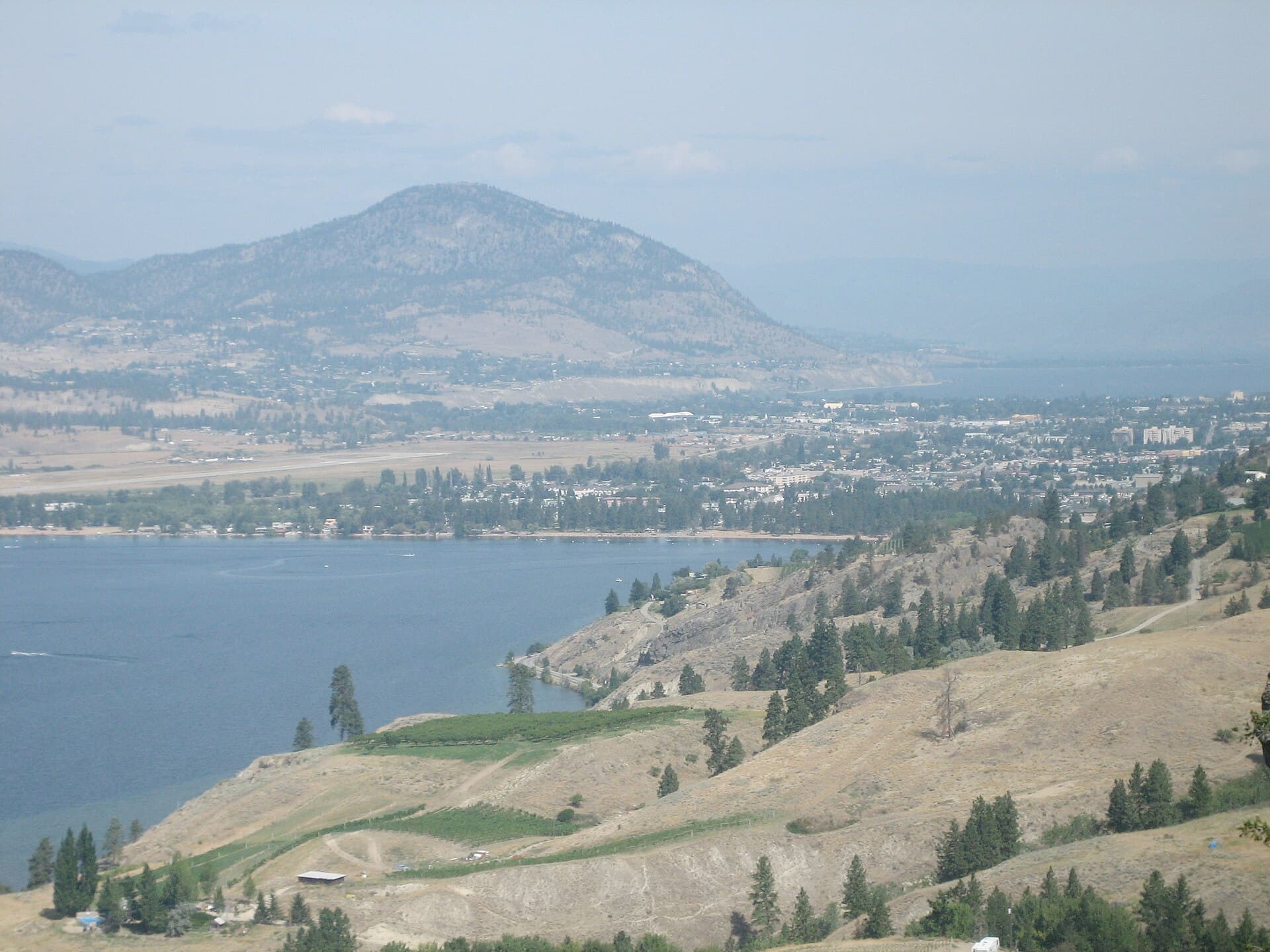 Photo of Penticton, via Wikimedia Commons
Self-guided audio walking tour of Nelson — GPS route, offline playback, story-driven narration in 32 languages.
“Where Victorian elegance meets Kootenay cool, alongside unexpected historical layers.”
Not the postcards. The stories even locals don't know — whispered in your ear, right where they happened.
Nelson's inaugural mayor, John 'Truth' Houston, was a man whose word carried weight, especially concerning fire safety.
Beneath a venerable brewery, a natural current persists, shaping its very foundation.
The very industry that forged Nelson's early prosperity also met a fiery end, orchestrated by a local enigma.
Discover every secret of Nelson
Every address, every reveal in full — in your ear, right where it happened.
You pick your stops. You walk. The voice reveals what the others miss.


Your self-guided audio tour of Nelson is ready — pick your landmarks, choose your language, and start the moment you arrive.
BuyLume has a built-in augmented-reality guide. Hold your phone up and its camera shows the street ahead of you, with a glowing arrow laid over the real view that always points to your next stop — no map to puzzle over, no wrong turns. Like everything in Lume, it works fully offline.
Situated on the western arm of Kootenay Lake and embraced by the Selkirk Mountains, Nelson, British Columbia, is a city that gracefully intertwines natural grandeur with a compelling past. Known as the 'Queen City of the Kootenays,' Nelson's downtown core is a living archive, featuring over 350 meticulously preserved heritage buildings that narrate stories of a bygone era. This distinctive architectural legacy, combined with a thriving arts and culture scene and abundant outdoor recreational opportunities, cultivates an atmosphere both historically engaging and refreshingly current.
From its beginnings as a bustling mining town to its evolution into a center for artists, outdoor enthusiasts, and those seeking a more measured pace of life, Nelson offers a singular experience. The city's walkable streets invite exploration, guiding visitors past ornate Victorian facades, independent shops, and a diverse array of dining establishments. Whether you are drawn to its detailed past, the allure of Kootenay Lake, or the promise of mountain adventures, Nelson presents a compelling fusion of urban refinement and wild, expansive landscapes.
Nelson's contemporary story began in 1886 with the discovery of substantial silver and copper deposits on Toad Mountain by the Hall brothers, triggering a swift influx of prospectors and the spontaneous development of a settlement along Ward Creek. Initially, there was a naming debate between 'Stanley' and 'Salisbury,' but the town was officially named Nelson in 1889 after British Columbia's then-Lieutenant Governor, Hugh Nelson. By 1897, Nelson was incorporated as a city, rapidly transitioning from a tent encampment into a flourishing regional center.
The city's early economic prosperity, fueled by mining and later forestry, permitted unusual urban development for a boomtown. Under its first mayor, John 'Truth' Houston, a bylaw was enacted requiring new downtown structures to be built of stone or brick with firewalls, a prescient decision that protected many buildings from the fires that afflicted other mining communities. This dedication to durable construction led to the erection of grand Victorian-style buildings, many of which remain today, solidifying Nelson's reputation as the 'Heritage Capital of British Columbia.'
Nelson also pioneered in infrastructure, establishing British Columbia's first hydroelectric generating plant in 1896 and an electric streetcar system by 1899. The arrival of two railways, the Canadian Pacific Railway (CPR) and the Nelson and Fort Sheppard Railway (N&FS), by 1894 cemented Nelson's role as a vital transportation and distribution hub for the Kootenay region. The CPR even designated Nelson its Kootenay Region Headquarters in 1899, further reinforcing its importance.
The early 20th century saw continued expansion, with a diverse population including considerable Chinese, Italian, and Doukhobor communities. While mining eventually gave way to forestry as the primary industry, Nelson also evolved into an educational center with the establishment of Notre Dame College in the 1950s. The city faced economic difficulties in the early 1980s, but a renewed focus on its heritage and a burgeoning arts scene, notably featured in the 1987 film Roxanne, helped Nelson recover, solidifying its distinctive character as a lively, historic, and culturally rich destination.
Begin your exploration of Nelson with a self-guided Heritage Walking Tour to appreciate the city's more than 350 preserved Victorian buildings. Walk along Baker Street, the primary commercial thoroughfare, to discover independent shops, art galleries, cafes, and pubs, all situated within historic 19th-century storefronts. Observe the impressive granite courthouse, designed by architect Francis Rattenbury, who also conceived the BC Parliament Buildings.
For a deeper understanding of local history, visit Touchstones Nelson: Museum of Art and History, which offers insights into the area's First Nations people, early settlers, and the mining period. Experience a fragment of Nelson's past by riding the historic Streetcar No. 23 along the waterfront to Lakeside Park, a favored spot for recreation with a beach and swimming area. The park also serves as an excellent starting point for walks and hikes, including trails that follow former railway routes.
Beyond the city center, consider a scenic drive along Kootenay Lake. The Kootenay Lake Ferry provides a complimentary and picturesque crossing, and nearby attractions include the distinctive Glass House, constructed from over half a million embalming fluid bottles, and the peaceful Ainsworth Hot Springs, featuring a horseshoe-shaped cave pool.
Nelson is a year-round destination, with each season presenting distinct experiences.
Summer (June-August) is the most favored time to visit, with long, sun-drenched, and warm days ideal for hiking, biking, boating, swimming, and exploring Kootenay Lake. Average temperatures range from 20-25°C (68-77°F).
Spring (March-May) brings mild weather, blooming flora, and active wildlife, making it a rewarding time for outdoor activities and fewer crowds.
Fall (September-November) displays striking autumn foliage, particularly in late September and early October, perfect for scenic drives and walks. Temperatures cool from 10-15°C (50-59°F) in September to 0-10°C (32-50°F) in November.
Winter (December-February) transforms Nelson into a snow-covered expanse, drawing skiing and snowboarding enthusiasts to nearby Whitewater Ski Resort. Average temperatures hover around -5°C (23°F), with ample snowfall.
Nelson is situated approximately halfway between Vancouver and Calgary. While intercity buses serve the area, traveling by car is often the most convenient way to arrive in Nelson and explore the surrounding Kootenay region. The Nelson & Area Visitor Centre, located in the historic CP Rail Station at the west end of Baker Street, is an excellent initial stop for maps, event listings, brochures, and current information. They also provide visitor parking, including space for RVs.
Many activities in Nelson are accessible, and the city encourages responsible tourism, asking visitors to respect the natural environment, local places, and people. For those interested in self-guided exploration, the Kootenay Lake Road Trip App offers GPS-guided audio tours, including a Mural Tour of Nelson's public art.
When planning your journey, be mindful of road conditions, especially during winter, and consult the Kootenay Lake Ferry schedule if your travels include a crossing.
Nelson in Korean, in Chinese or in Hebrew — and 29 more languages, every stop narrated by a native voice. The widest language range of any self-guided audio tour.
Available in: