Osoyoos Lake
Osoyoos Lake holds a surprising record for Canada.
Full story unlocks in the tour
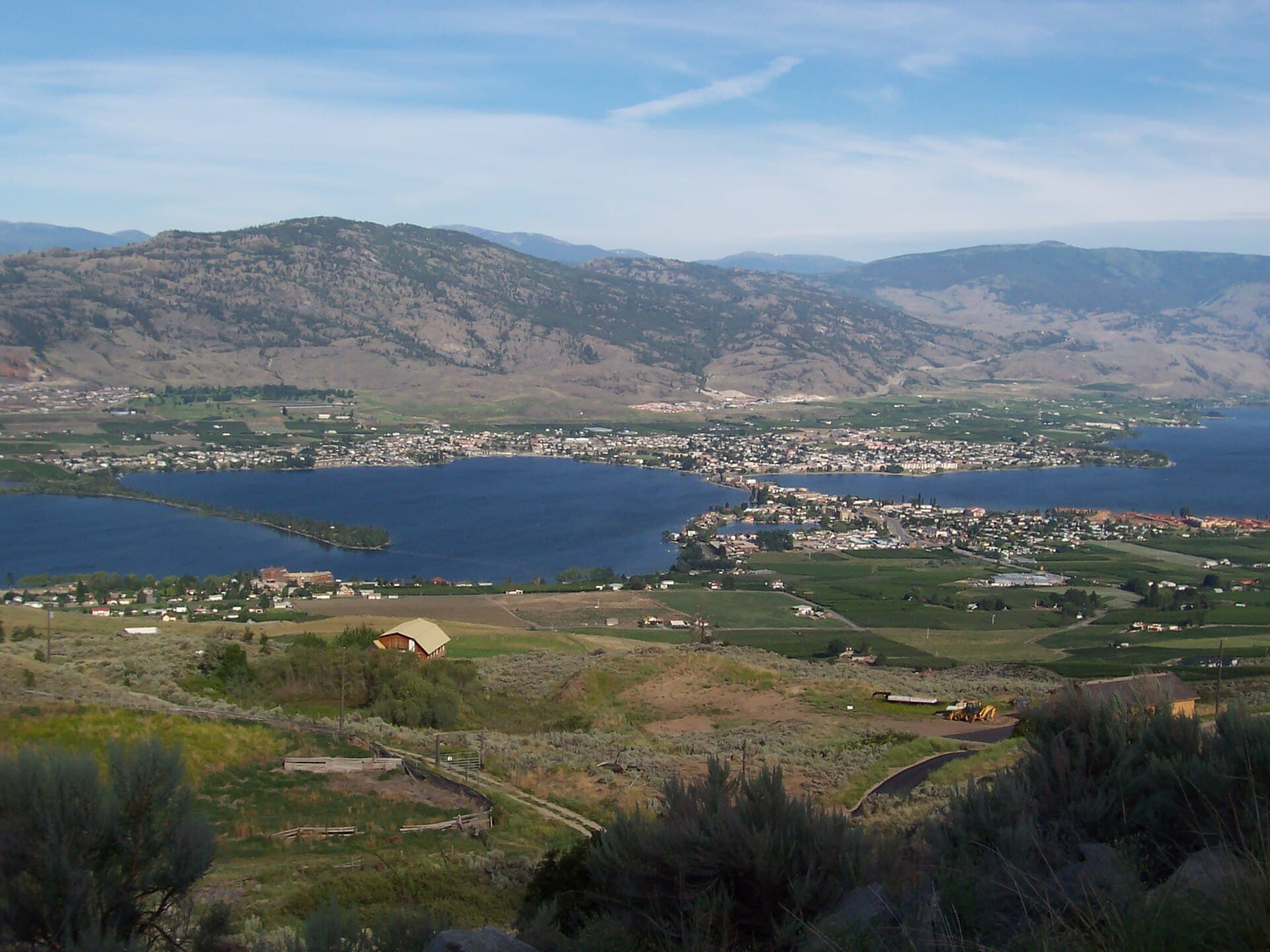 Samuel.jt.boisvert at English Wikipedia / Public domain, via Wikimedia Commons
Self-guided audio walking tour of Osoyoos — GPS route, offline playback, story-driven narration in 32 languages.
“Where Canada's desert sun meets the warmest lake.”
Not the postcards. The stories even locals don't know — whispered in your ear, right where they happened.
Osoyoos Lake holds a surprising record for Canada.
Despite common perception, Osoyoos isn't technically a true desert.
North America's first Indigenous-owned winery has a unique origin story.
Discover every secret of Osoyoos
Every address, every reveal in full — in your ear, right where it happened.
You pick your stops. You walk. The voice reveals what the others miss.

Your self-guided audio tour of Osoyoos is ready — pick your landmarks, choose your language, and start the moment you arrive.
BuyLume has a built-in augmented-reality guide. Hold your phone up and its camera shows the street ahead of you, with a glowing arrow laid over the real view that always points to your next stop — no map to puzzle over, no wrong turns. Like everything in Lume, it works fully offline.
Osoyoos, in the southernmost part of British Columbia's Okanagan Valley, unfolds a distinct landscape unlike anywhere else in Canada. This town is characterized by its arid, almost desert-like environment, framed by sagebrush hills, orchards, and vineyards. At its core lies Osoyoos Lake, celebrated as the warmest freshwater lake in the country, drawing visitors to its inviting waters and sandy shores.
The region's singular microclimate, known as the "Osoyoos Arid Biotic Zone," brings forth hot, dry summers and mild winters, making it a favored destination year-round. Beyond its natural appeal, Osoyoos serves as a center for agriculture, particularly fruit growing and viticulture, contributing to its lively local culture and economy.
## Indigenous Roots and Early European Contact The story of Osoyoos stretches back thousands of years, with the Syilx (Okanagan Indian) people inhabiting the valley long before European arrival. The name Osoyoos itself is derived from the Syilx word soo-yoos, meaning "narrowing of the waters," referring to the distinct shape of Osoyoos Lake. Evidence of their long-standing presence is found in rock art and oral traditions.
European fur traders, working for the Pacific Fur Company, were the first to venture into the area in 1811, traveling up the Okanagan River to Osoyoos Lake. Following the Hudson's Bay Company's takeover of the fur trade in 1821, the Okanagan Valley became a significant trade route. The gold rushes of the late 1850s transformed the region's economy, leading to increased crossings of the 49th parallel by miners and drovers.
## Settlement, Agriculture, and Border Dynamics In 1861, a custom house was established in Osoyoos, with John Carmichael Haynes serving as the tax collector. Haynes, considered a pioneer settler, acquired land along the Okanagan River. The first commercial orchard in the area was established in 1907, growing a variety of fruits like cherries, apricots, peaches, plums, and apples. The Osoyoos Orchard Limited formed in 1920, and an irrigation project, "The Ditch," brought water to the west bench in 1927, transforming the shrub-steppe environment into a fertile agricultural belt. Osoyoos became known for producing "the earliest fruit in Canada."
Osoyoos was incorporated as a Village on January 14, 1946, and later became a Town on June 30, 1983. Today, agriculture and tourism are the community's primary economic sectors. The region is also notable for being home to Nk'Mip Cellars, North America's first Indigenous-owned and operated winery, which blends premium wines with the heritage of the Osoyoos Indian Band. The Osoyoos Indian Band has also been instrumental in creating a 1,600-acre desert conservation area in 2007, and the Nk'Mip Desert Cultural Centre, dedicated to preserving and educating about the natural landscape and Syilx culture.
Begin your exploration at Osoyoos Lake, Canada's warmest freshwater lake, ideal for swimming, boating, and various watersports like paddleboarding, kayaking, and jet skiing. Public boat launches are available at Haynes Point Provincial Park and Lion's Park. For wide views of the lake, town, and surrounding vineyards, drive to the Anarchist Mountain Lookout on Highway 3.
Immerse yourself in Indigenous culture at the Nk'Mip Desert Cultural Centre, which offers insights into the history and traditions of the Syilx (Okanagan) people through interactive exhibits, outdoor trails, and cultural demonstrations. Another unique natural attraction is Spotted Lake, known for its distinctive polka-dotted appearance due to mineral deposits. The Osoyoos Desert Centre provides a 1.5-kilometer elevated boardwalk through a semi-arid shrub-steppe environment, allowing visitors to learn about Canada's only desert ecosystem.
For those interested in local history, the Osoyoos and District Museum and Archives houses artifacts, photographs, and documents detailing the area's past. The town also has a flourishing arts community, with the Art Gallery Osoyoos showcasing works by local and regional artists. Wine enthusiasts can explore the many wineries in the Okanagan Valley, including Nk'Mip Cellars, North America's first Indigenous-owned winery. Families might enjoy Rattlesnake Canyon, an amusement park offering mini-golf, go-karts, and bumper boats.
The best time to visit Osoyoos for warm-weather activities is from early July to late August, when daily high temperatures average above 25°C (77°F) and the lake water reaches around 24°C (75°F). This period offers ample sunshine for beach activities, water sports, and wine-tasting excursions.
Spring (March to May) and Fall (September to October) are considered shoulder seasons, providing comfortable temperatures, fewer crowds, and lower accommodation rates. September still offers mild days, suitable for golfing, cycling, and hiking, with the lake remaining warm enough for swimming. Autumn also brings beautiful fall foliage to the vineyards. Even in winter, Osoyoos offers a milder climate than much of Canada, with limited snowfall and common sunny days, attracting those seeking a gentler cold season.
Osoyoos is approximately a five-hour drive from Vancouver and a two-hour drive from Kelowna. While Osoyoos does not have its own airport, the nearest option is Penticton (YYF), located about 30 miles away, with regular flights from major Canadian airlines. Visitors can obtain more information at the Osoyoos Visitor Centre, located at the junction of Highway 3 and Highway 97.
Accommodation options range from motels to lakefront resorts, with many properties along Highway 3 offering beach access. For those who enjoy walking or cycling, the Canal Walkway and Pioneer Walkway offer scenic paths along the lake and through orchards. If you plan to operate a boat or jet ski on Osoyoos Lake, federal regulations require a Pleasure Craft Operator Card.
Osoyoos in Korean, in Chinese or in Hebrew — and 29 more languages, every stop narrated by a native voice. The widest language range of any self-guided audio tour.
Available in: